Are eastern fox snakes rare?
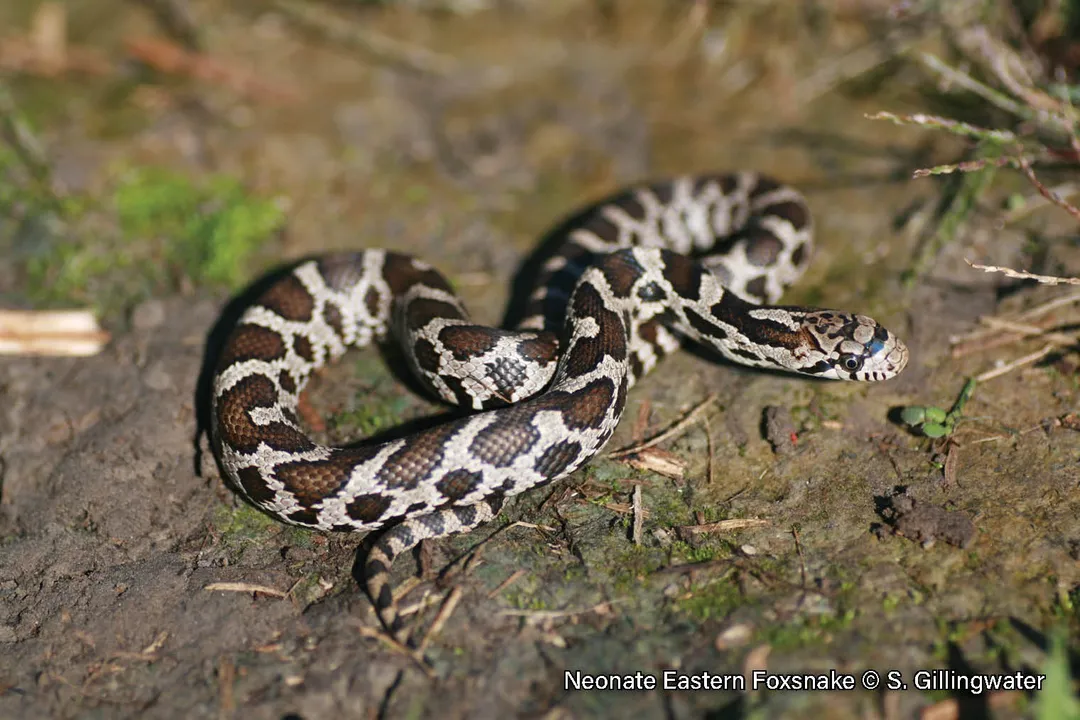
The question of whether the Eastern Fox Snake is a rare creature isn't one with a simple yes or no answer; it’s a geographical riddle wrapped in scientific nomenclature. Look at a map of its range across the Great Lakes region and the upper Midwest, and you'll see a story of pockets of abundance contrasted sharply with areas where the species is clinging to existence. [1][6] What might be considered common and relatively secure in one state can be listed as critically imperiled just a few hundred miles away in the next. This snake, known scientifically at various times as Pantherophis gloydi or Pantherophis vulpinus depending on taxonomic revisions, demands a nuanced look at its presence before declaring it rare or plentiful. [1][4] For those outside of its core habitat, it is certainly rare, but within that core, its status shifts dramatically based on local conservation efforts and land use patterns.
# Range Status
The distribution of the Eastern Fox Snake is intrinsically linked to the Great Lakes ecosystem, spanning parts of the United States and Canada. [1][6] In the US, its range generally covers areas east of the Mississippi River, including southern Michigan, northern Ohio, and small portions of surrounding states. [1]
In stark contrast to the conservation concerns elsewhere, the snake appears quite successful in certain areas. The Michigan Department of Natural Resources notes that the Eastern Fox Snake (Pantherophis gloydi) is actually one of the most common snakes found in southern Michigan. Similarly, in Missouri, while the state’s overall snake population is diverse, the Eastern Fox Snake is restricted but locally common along the Mississippi River floodplain north of St. Louis. [3] Illinois also reports the species as locally common in its extreme southern regions. [7] Even Wisconsin, which lists the snake as "Common" overall, adds the qualifier that they are "not abundant" throughout the state. [2]
However, the picture darkens considerably when looking north toward Ontario, Canada. Here, the Eastern Fox Snake is considered a globally rare species, with a staggering 70% of its entire global population residing within the province's boundaries. [5][6] This concentration of the global population in one region makes any local decline particularly significant for the species as a whole. [6] In Ontario, the snake is listed as Threatened under both provincial and national Species at Risk legislation. [6][8] The situation is so serious that within Ontario, the population is often divided into two, with one group (the Carolinian population) facing even greater threats than the other (the Great Lakes / St. Lawrence population). [6]
The stark contrast between being common in parts of the US Midwest, such as Southern Michigan and Missouri, and being federally listed as Threatened in Ontario suggests that habitat fragmentation and specific regulatory structures have a much greater impact on this species than broad continental range shifts. The eastern edge of its distribution appears far more sensitive to human encroachment and development. [1][3][6]
# Varying Protection
The difference in conservation status across jurisdictions highlights a complicated reality for this reptile. Globally, the International Union for Conservation of Nature (IUCN) lists the species as "Least Concern". [1] This global assessment contrasts sharply with the localized legal protections put in place by states and provinces. [1]
In Michigan, the species is listed as "Threatened Species" by the DNR and is legally protected. [3] Missouri classifies it as "Critically imperiled" within the state and assigns it as a "Species of Conservation Concern," citing habitat loss and collection pressures as key factors. [3]
The necessary protective measures in Ontario underscore the species' vulnerability in that region. For instance, organizations work to combat the lack of suitable nesting habitat by building artificial nesting boxes made of straw, mulch, and compost, providing safe incubation spots away from predators. [5] These actions are necessary precisely because the snake is not considered abundant enough to recover naturally under current pressures. [2] While legal protection is a start, the variation shows that blanket assumptions about its overall rarity are inaccurate; its survival relies on hyper-local management. [1]
# Identification Cues
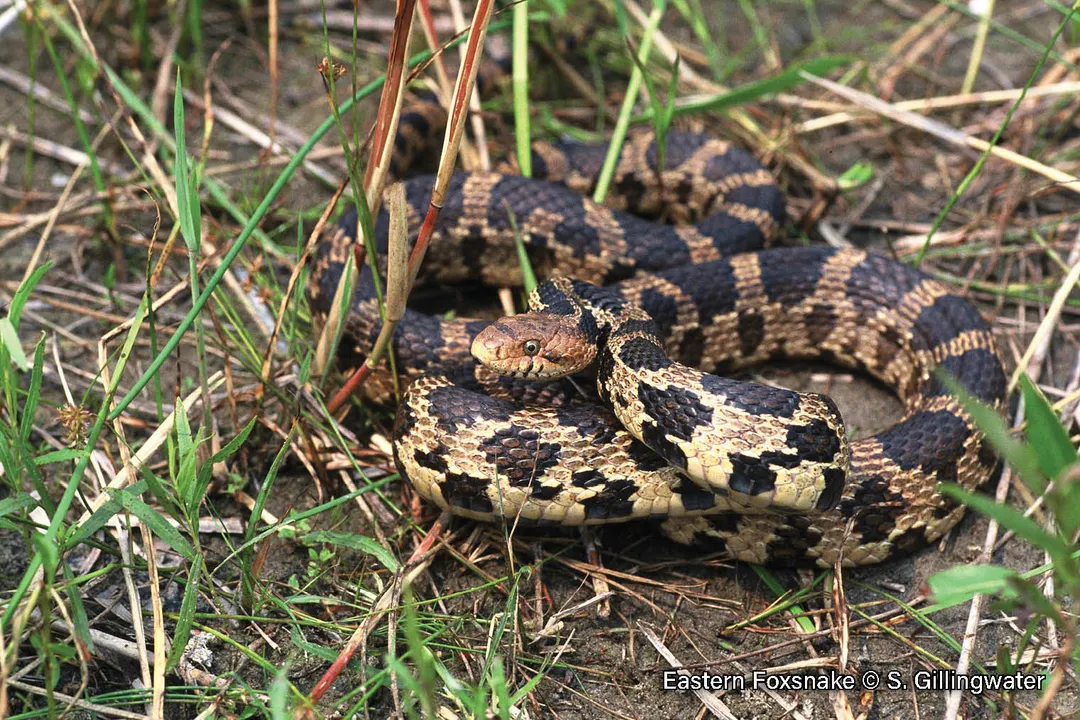
Part of the trouble in assessing the Eastern Fox Snake’s rarity stems from its tendency to be confused with other species, leading to both misidentification and, unfortunately, unnecessary persecution. [2][5] Adult Eastern Fox Snakes are impressive reptiles, often reaching lengths between three and six feet, making them one of the largest snakes in their range. [1][5]
Key identifying characteristics include:
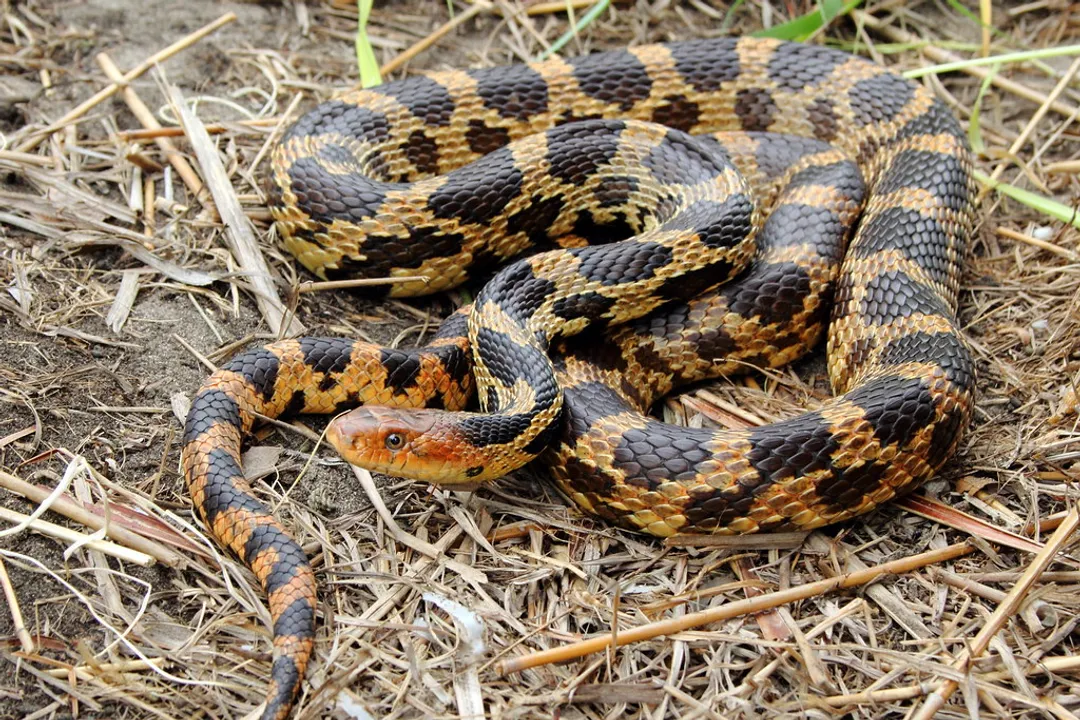
- Coloration: A light golden brown, tan, or olive-gray body background. [2][7]
- Pattern: Large, dark brown or black blotches run down the center of the back, alternating with smaller blotches along the sides. [1]
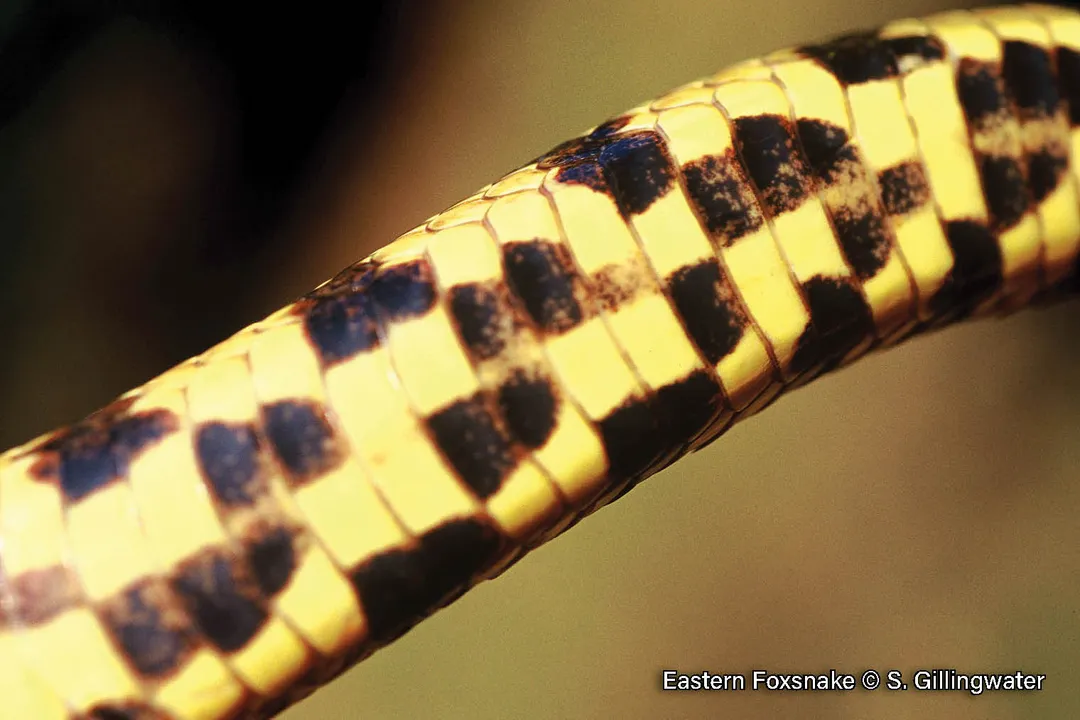
- Belly: A distinctive yellow background boldly checkered with black or dark brown patches. [1][3]
- Head: The head is often tinged yellow, orange, or reddish-copper, which frequently leads to confusion with the venomous Copperhead—a snake that does not naturally occur in Canada or Wisconsin. [2][5]
When threatened, the fox snake employs mimicry, rapidly vibrating its tail in dry leaves to sound like a rattlesnake, an act that often backfires by leading to its own demise when encountered by humans. [1][5] Furthermore, like other snakes in its genus, it can release a musky odor when handled, reminiscent of a red fox, which is the origin of its common name. [1][3] Distinguishing between the Eastern Fox Snake (P. vulpinus) and its western relative (P. ramspotti) can be difficult, sometimes relying on subtle differences in blotch counts or geographic location relative to the Mississippi River. [1][3][4]
# Habitat Needs
Eastern Fox Snakes are adaptable when it comes to the types of cover they use, but they require a specific mosaic of environments to thrive throughout the year. [5] Their preferred natural habitats are varied, including open woodlands, prairies, pastures, farmland edges, and marshlands. [1][6] They are frequently found near water sources, such as large rivers and Great Lakes shorelines, and are capable swimmers, moving between islands in search of prey. [3][5]
They need suitable spots for critical life stages:
- Foraging: They hunt small mammals like mice and voles, as well as birds and eggs, sometimes actively hunting or ambushing prey. [3][6]
- Thermoregulation: Being cold-blooded, they rely on hiding spots like burrows, logs, or rocks to manage body temperature. [1]
- Hibernation (Brumation): They overwinter underground in rock crevices, abandoned mammal burrows, muskrat lodges, or even human structures like building foundations. [3][6]
- Nesting: Females seek out warm, moist locations to bury clutches of eggs, such as under logs, in sawdust piles, or in decaying vegetation. [1][5]
Observing an Eastern Fox Snake often implies a relatively healthy mix of habitat types nearby. Unlike species found exclusively in deep, untouched wilderness, finding one suggests that the surrounding human-dominated landscape still supports the necessary mixture of cover, basking spots, and the rodent populations that serve as its primary food source. [2][5]
# Threat Factors
The primary drivers pushing this species toward rarity or protected status across much of its range center on human activity and misunderstanding. [6]
Habitat loss, degradation, and fragmentation are perhaps the most persistent issues. [6] The development of wetlands and coastal habitats, especially in the more populated southern parts of its range, removes vital areas for foraging and reproduction. [1][5] Even where the snake tolerates disturbed areas, increasing road construction and urban expansion further reduce quality habitat and increase danger. [6]
Road mortality is a critical, immediate threat, particularly in areas with high road density like southwestern Ontario. [6] Fox snakes are large and relatively slow-moving, and they often bask on warm pavement, making them easy targets for vehicles, whether intentional or accidental. [6]
Persecution remains a serious, ongoing problem driven by myth and fear. [5] The snake’s defensive tail-rattling and its resemblance to venomous species—the Copperhead or the Massasauga Rattlesnake—cause many people to kill them on sight rather than allowing them to continue their beneficial work controlling rodents. [2][5] Finally, illegal collection for the pet trade contributes to declines in certain areas. [1][5]
Mitigation efforts, such as constructing specialized rock structures for hibernating or providing artificial nesting sites in Ontario, show that direct, hands-on intervention can help populations persist where habitat remains fragmented or scarce. [3][5] For the Eastern Fox Snake, its status is not a monolithic declaration of rarity, but rather a detailed inventory of success stories and conservation emergencies across the Great Lakes basin.
Related Questions
#Citations
Pantherophis gloydi (Eastern fox snake)
Eastern Foxsnake | Pantherophis vulpinus - Wisconsin DNR
Eastern Foxsnake | Missouri Department of Conservation
Pantherophis vulpinus - Wikipedia
Eastern Foxsnake - Sydenham River Watershed
Eastern Foxsnake- Species At Risk in The Land Between
eastern foxsnake - Illinois Department of Natural Resources
Eastern Foxsnake - Ontario Nature