Yellow Tang Physical Characteristics
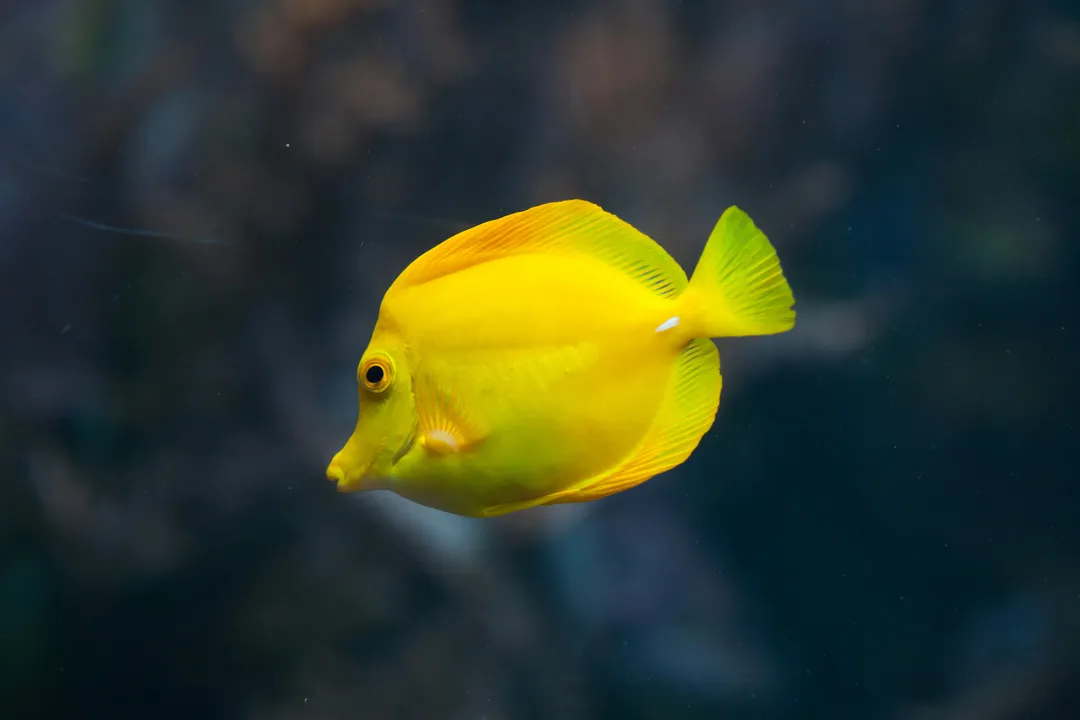
The appearance of the Yellow Tang (Zebrasoma flavescens) is instantly recognizable, marked by its brilliant, uniform coloration that makes it a standout inhabitant of Indo-Pacific reefs. What strikes most people initially is the intense, almost luminous shade of yellow that covers nearly its entire body, a characteristic maintained from its earliest juvenile stages right through adulthood. [1][2][6] This striking hue serves as both camouflage among the similarly colored sponges and algae it grazes upon, and as a warning signal, given its formidable defensive weapon. [4]
# Body Shape
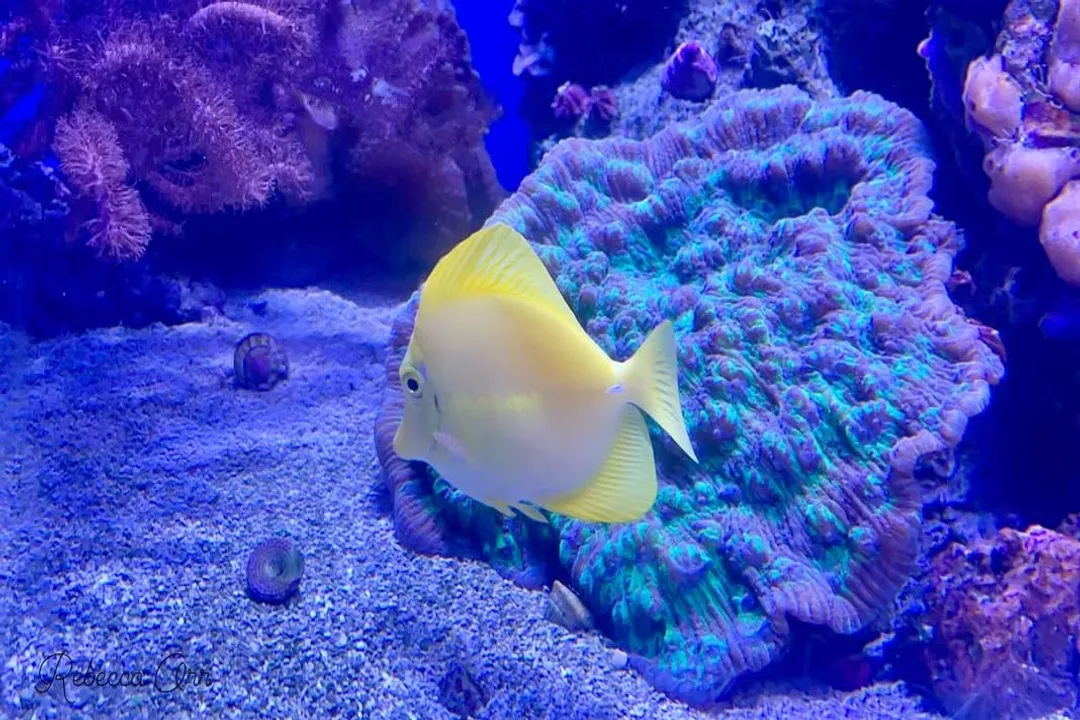
The overall silhouette of the Yellow Tang is distinctly compressed and disc-shaped, giving it a somewhat tall and flattened appearance from side to side. [5][6][7] This compression is quite significant; the body depth is greater than the standard length measurements might suggest. [3] Coupled with a noticeably pointed snout, this profile gives the fish a sleek, almost arrow-like look when viewed head-on, despite its general oval body form. [1][2] When fully grown, these marine fish typically reach a maximum total length of about 20 centimeters, or roughly 8 inches, though they are often slightly smaller in captivity or in certain reef locations. [1][2][6] Considering how highly compressed their bodies are, achieving that 8-inch length means they are substantially taller than many other fish of similar length, which creates a unique hydrodynamic challenge and advantage. The way this deep, compressed shape interacts with the relatively pointed head might suggest a design optimized for quick, sharp turns rather than sustained high-speed swimming, which aligns with their routine grazing behavior. [3]
# Coloration Details
While the primary coloration is universally described as bright yellow, subtle distinctions in hue can sometimes be observed based on location or environmental factors, though sources consistently emphasize the pure yellow nature of the species. [1][3][6] The fins, apart from the caudal (tail) area, generally share this yellow pigmentation, though some descriptions note that the pectoral fins, which are used for fine maneuvering, may appear more clear or transparent. [3]
A key feature that differentiates life stages, however, is not the body color itself, but the color of the caudal spines, often called the "scalpel," discussed in detail below. [2][7]
| Life Stage | Body Color | Caudal Spine Color |
|---|---|---|
| Juvenile | Bright Yellow | Black [2][7] |
| Adult | Bright Yellow | White [1][2][6][7] |
It is interesting to note that the change from a black spine in the juvenile to a white spine in the adult represents a clear, consistent visual indicator of maturity that an observer underwater could potentially use to gauge the age class of a passing individual, often more readily than estimating size in fluctuating light conditions. [2][7]

# Scalpel Defense
Perhaps the most crucial physical characteristic defining the Yellow Tang, and indeed all members of the surgeonfish family to which it belongs, is the presence of a sharp, retractable spine located on either side of the caudal peduncle—the narrow section connecting the main body to the tail fin. [4][5] This spine is commonly referred to as the scalpel due to its resemblance to a surgical blade. [1][6]
This scalpel is formidable; it is sharp and rigid, and the fish can deploy it rapidly when threatened. [4][6] Its primary purpose is defense against predators or in territorial disputes with other tangs. [2][5] While the body is dedicated to brilliant display and grazing, the scalpel is the ultimate deterrent. [6] As noted in the preceding table, the color of this weapon shifts from black in younger specimens to stark white in fully developed adults. [2][7] Being aware of this spine is vital for anyone handling the fish, as even a minor scrape can result in a painful wound. [6]
# Mouth Structure
The head structure further supports the Yellow Tang's ecological role as a primary grazer on the reef. [2][3] They possess a relatively small mouth situated at the end of that pointed snout. [1][3][6] This morphology is perfectly adapted for nipping off minute portions of algae and detritus that adhere to rocks and coral skeletons. [1] Unlike some larger parrotfish that might scrape entire sections of substrate, the tang's mouth facilitates meticulous grazing, allowing it to selectively consume the fine turf algae that covers the reef surface. [3]

# Fin Arrangement
The arrangement of the fins is typical for many reef fish, but specifics are important for understanding their movement. The Yellow Tang features a single dorsal fin running along the top length of its body. [3] Similarly, the anal fin is located on the underside. Interestingly, the anal fin contains two spines, which, along with the dorsal fin spines, contribute to the overall structure but are less famous than the caudal scalpels. [3] Locomotion is primarily powered by the rapid undulation of the tail fin, while the pectoral fins are essential for precise, delicate movements necessary when hovering or maneuvering close to the substrate to feed. [3]
Related Questions
#Citations
Yellow Tang | Online Learning Center - Aquarium of the Pacific
Yellow tang - Wikipedia
Zebrasoma flavescens (Lemon sailfin) - Animal Diversity Web
Yellow Tang - National Aquarium
Yellow Tang - Sustainable Aquatics
Yellow Tang - Oregon Coast Aquarium
Yellow Tang - Waikiki Aquarium
Yellow tang fish description and facts - Facebook
Hawaiian Yellow Tang - The Biota Group