Yakutian Laika Physical Characteristics
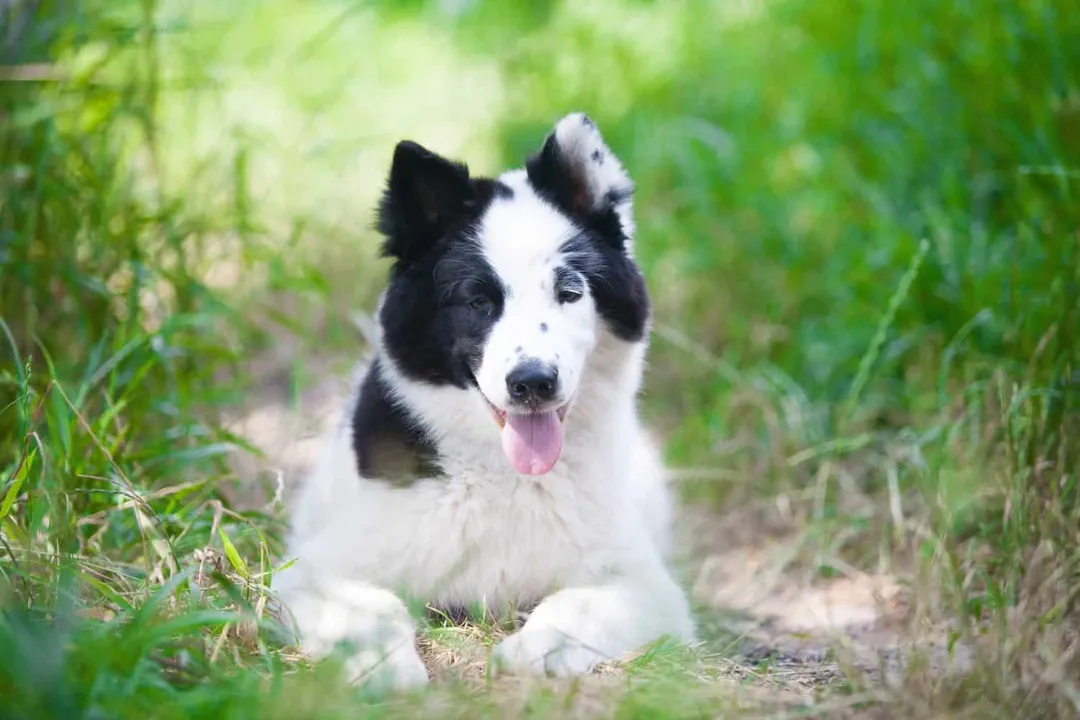
The Yakutian Laika presents a striking image, immediately conveying the ruggedness required of a dog bred for survival and work in the extreme cold of Siberia. [3][7] These are medium-sized, powerful dogs, built for endurance over short sprints, which reflects their historical role as sled dogs, hunters, and companions to the native peoples of Yakutia. [1][4] Their overall appearance is balanced and proportionate, designed to handle long journeys across icy terrain without unnecessary bulk that would drain vital energy reserves. [5]
# Stature Form
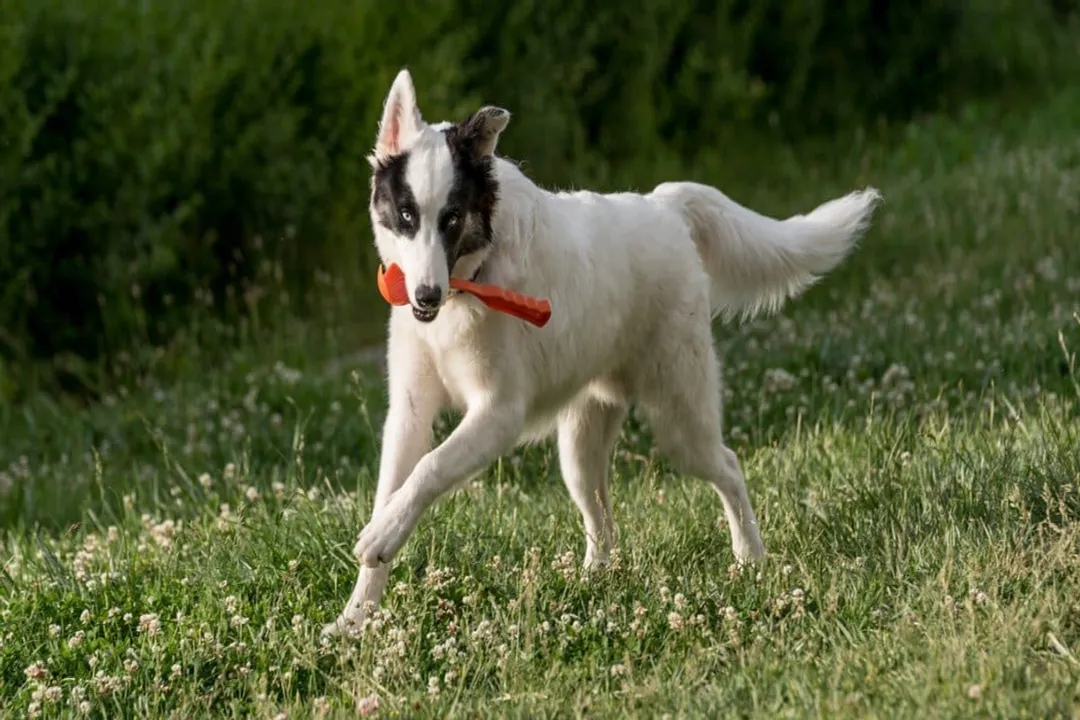
The structure of the Yakutian Laika is sturdy, muscular, and slightly longer in body length than they are tall at the withers, giving them a rectangular profile. [1][3][5] They possess a deep chest that hints at excellent lung capacity, necessary for their high-output working life. [5] Their topline should be level, and their bone structure substantial enough to support their working roles but not so heavy as to impede agility. [7] The breed standard emphasizes that the dog should look fit and hardy, possessing the athletic ability to cover significant distances efficiently in harsh conditions. [5]
Considering their environment, their moderate stature—typically falling into the medium size range—is an adaptation for efficiency. While some of the giant sled breeds prioritize sheer pulling power, the Laika's build suggests a finely tuned balance where stamina outweighs brute force, allowing them to maintain a sustainable pace over vast, unforgiving distances in the Arctic. [1][4]
# Coat Texture
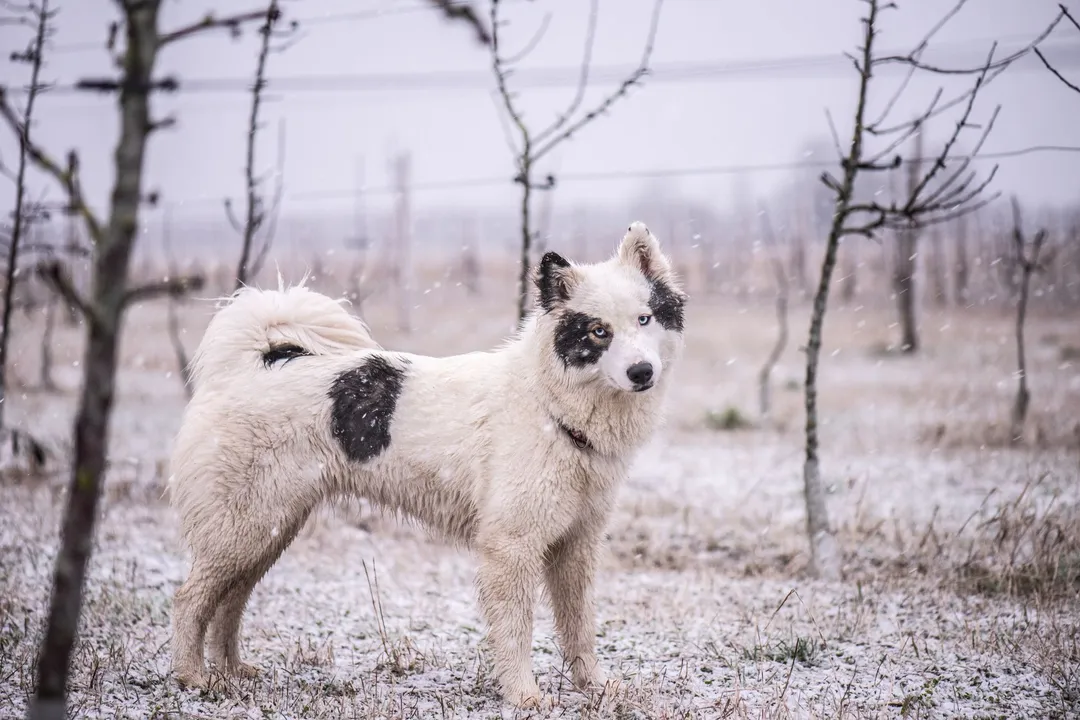
Perhaps the most defining physical characteristic of the Yakutian Laika is its magnificent coat, a testament to its origin in one of the coldest inhabited regions on Earth. [1][7] This is a true double coat, essential for insulation against sub-zero temperatures. [3] The outer coat consists of guard hairs that are relatively straight or slightly wavy, dense, and water-repellent. [5][7] Beneath this lies a thick, soft, and dense undercoat that provides the primary thermal barrier. [5] This luxurious double layer means the coat is usually thicker and longer around the neck, forming a noticeable ruff, and also features longer feathering on the backs of the legs and the tail. [1][3]
The breed comes in a wide spectrum of colors, which is less rigidly defined than in many other standardized breeds. [3][4] Common accepted colors include black, white, various shades of gray, red, and patterns such as piebald or spotted. [5][7] While the nose leather is generally expected to be black, the overall coat coloration allows for considerable variation. [5]
Prospective owners must be prepared for the intense shedding periods associated with this dense coat type. Owners frequently note that the undercoat sheds out dramatically twice a year, a process sometimes called "blowing the coat." Managing this massive volume of loose hair during these seasonal transitions requires dedicated effort, far exceeding the maintenance needed during the rest of the year when regular brushing is usually sufficient to keep the coat functional and clean. [7]
# Cranial Features
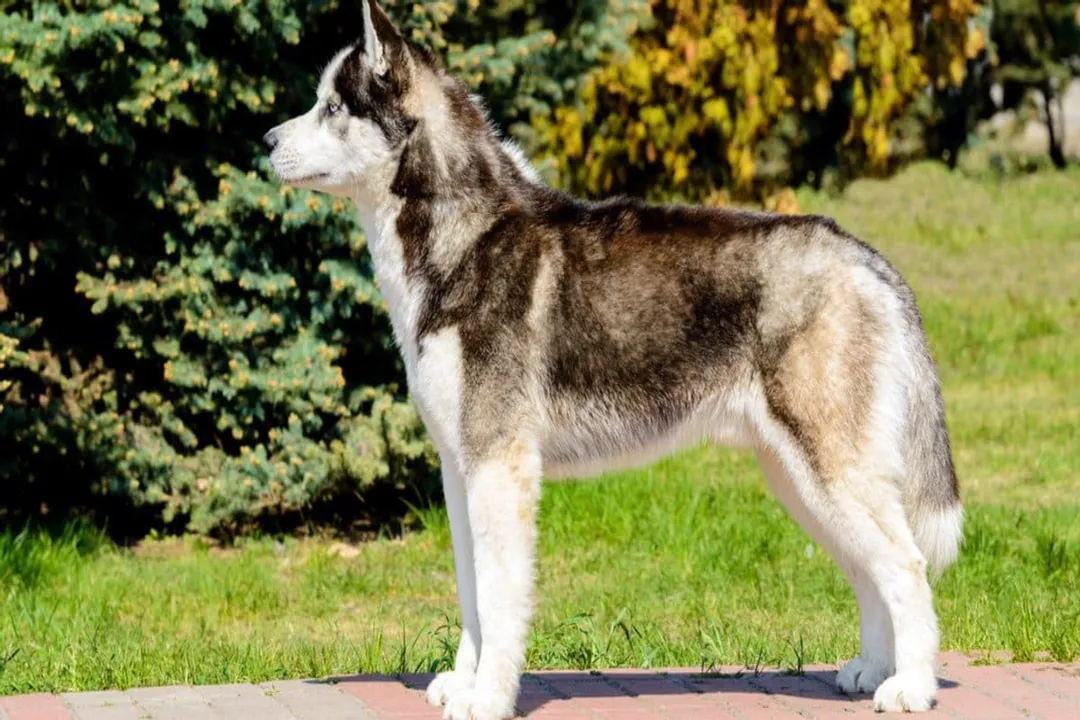
The head of the Yakutian Laika is designed to be proportional to the body, often described as wedge-shaped. [1][3] When viewed from above, the skull is typically slightly convex or flat, and importantly, it is described as being wider than it is long. [5] There is a moderate stop, meaning the transition from the forehead to the muzzle is distinct but not abrupt. [5]
The muzzle itself should be strong and taper slightly toward the nose, ending in a well-developed nose leather, preferably black. [5] The jaws are strong, capable of handling rough work or prey if necessary. [5]
The eyes are set obliquely and are almond-shaped. [1] Eye color shows more variability than in many established breeds; while brown eyes are common, blue eyes are also accepted. [1][4] A particularly striking feature noted in the breed is the frequent presence of heterochromia, where one eye is blue and the other is brown, though some sources may regard this as less desirable than solid colors depending on the specific kennel club standard being referenced. [4][7]
The ears are set high on the head, distinctly triangular in shape, and stand fully erect. [1][3] They are mobile, allowing the dog to express alertness and accurately pinpoint sounds in the vast, open environment they evolved in. [5]
# Tail Gait
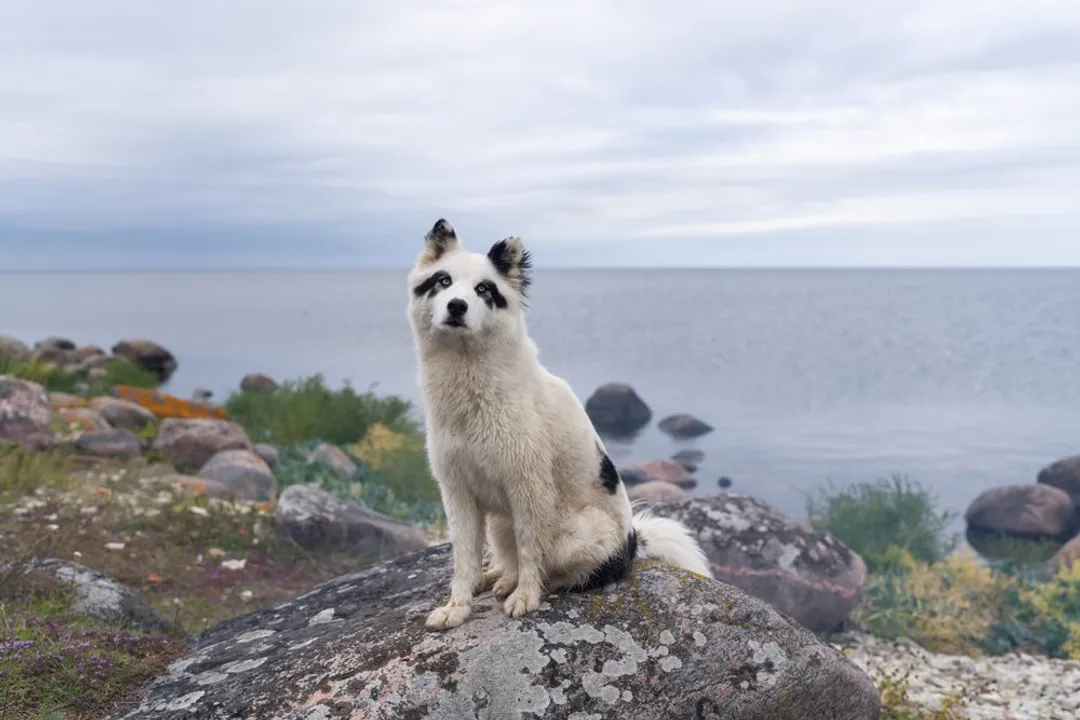
The tail carries significant functional importance, acting almost like a rudder or blanket in extreme cold. It is thick at the base and set relatively high. [1] When the dog is moving or alert, the tail is typically carried curled over the back or in a sickle shape. [3][4][5] This carriage serves two purposes: it keeps the tail clear of obstacles while running and, when curled tightly over the back, it helps conserve body heat by protecting the sensitive nose and face during sleep or periods of rest in deep snow or extreme cold. [4]
The movement of the Yakutian Laika is characterized by its efficiency. Their gait is described as light, covering ground easily, and appearing tireless. [1][5] They move with a balanced reach and drive, indicating powerful hindquarters that propel them forward in a manner built for long-distance travel rather than explosive speed. [5]
# Dimensions Weight
When assessing the size of the Yakutian Laika, it is helpful to look at the general breed parameters, which tend to align across different registering bodies, though minor variations exist between working standards and those used for conformation shows. [1][5]
A comparison of typical mature male and female measurements shows relative consistency:
| Feature | Male Range (Approximate) | Female Range (Approximate) | Source Basis |
|---|---|---|---|
| Height at Withers | 55 cm (21.5 in) | 53 cm (21 in) | General Standard [5] |
| Height Range (AKC) | 20.5 – 23.5 inches | 19.5 – 22.5 inches | AKC Range [1] |
| Weight (Approximate) | 25 kg (55 lbs) | 22 kg (48 lbs) | General Standard [5] |
| Weight Range (AKC) | 45 – 65 lbs | 45 – 65 lbs | AKC Range [1] |
It is noteworthy that the AKC weight range provided covers both sexes equally, suggesting that the body condition and muscle mass, rather than strict weight stratification, are the key indicators of proper physical development. [1] The general standard cited by some European sources leans toward slightly lighter averages for females. [5] Ultimately, the physical presentation should always reflect a fit dog capable of sustained physical activity, irrespective of hitting an exact number on the scale. [7]
Related Questions
#Citations
Yakutian Laika - Dog Breed Information - American Kennel Club
Yakutian Laika Dog Breed Complete Guide - A-Z Animals
Yakutian Laika - Wikipedia
Yakutian Laika - American Stock Dog Registry
[PDF] Yakutian Laika Breed Standard (Kolyma-Indigirsk)
Yakutian Laika Dog - American Breeder
Yakutian Laika: Dog Breed Characteristics & Care - The Spruce Pets
Yakutian Laika: Your Complete Guide - Dog Academy
Yakutian Laika | Dog Breed Facts and Information - Wag!