Yakutian Laika Evolution
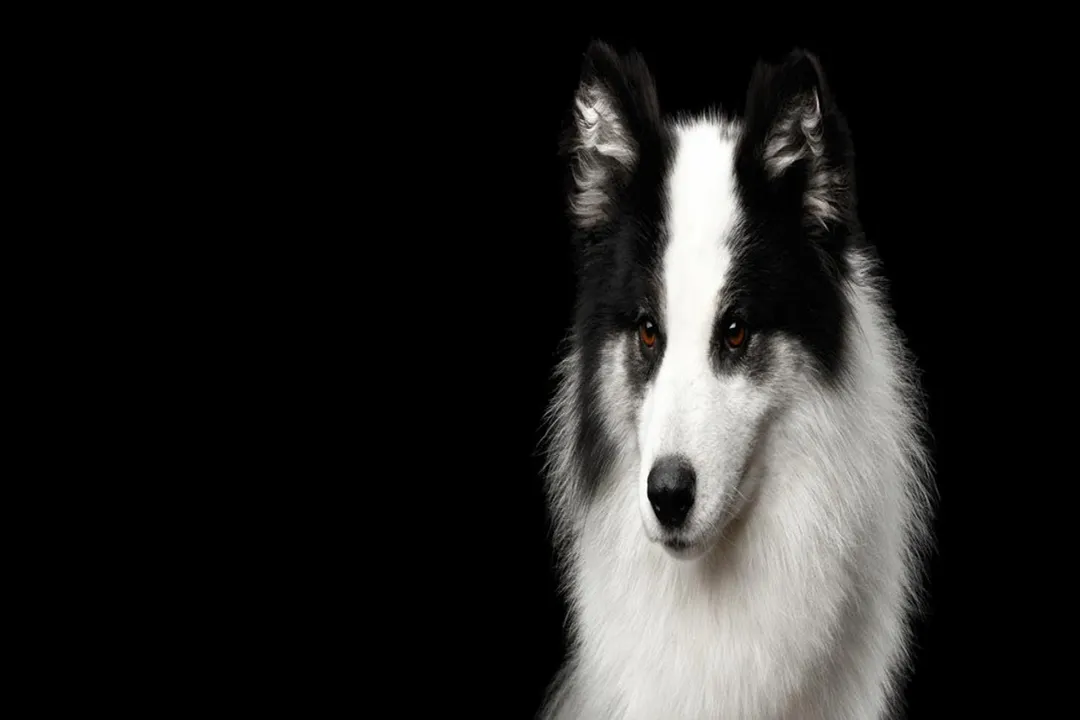
The Yakutian Laika stands as a testament to canine resilience, forged over millennia in one of the planet's harshest inhabited environments. These dogs are not merely relics of a distant past but living history, integral to the survival and culture of the indigenous peoples of the vast Sakha Republic, formerly known as Yakutia. [3][2] Their evolution is a story tightly woven with the extreme conditions of the Siberian taiga and tundra, where only the most efficient and hardy animals could thrive. Unlike breeds developed for specific aesthetic traits in later centuries, the Laika's form and function were relentlessly sculpted by the necessity of a dual purpose: pulling heavy loads across frozen landscapes and successfully hunting forest and steppe game. [2][3]
# Ancient Origins
The documented history of the Yakutian Laika traces back thousands of years, rooted deeply within the Sakha people's way of life in Northeast Siberia. [3][2] This region presents an unparalleled challenge to life, characterized by the extreme temperature fluctuations of a continental climate where winters can see temperatures plummeting well below -50°C. [2] The dogs were essential partners to the nomadic and semi-nomadic groups, serving as providers of transportation and sustenance. [3] While precise ancient population data is scarce, their presence is undeniable in the cultural fabric of the region long before modern kennel clubs existed. [2] The breed maintained a remarkable degree of genetic purity due to the geographic isolation imposed by the expansive, severe Siberian wilderness. [4] This geographical separation acted as a strong selective barrier, ensuring that only dogs perfectly suited to the local environment—and the specific demands of the Yakut hunters and herders—survived and reproduced. [2] Their long association with the Sakha people means that their evolution is intrinsically linked to the specific needs of this culture, which valued utility and endurance above all else. [1]
# Dual Function

The survival mechanism of the Yakutian Laika depended entirely on its ability to perform two distinctly different, yet equally vital, jobs: sledding and hunting. [2][3] In the context of sledding, these dogs were the engines of their communities. They were expected to haul freight, move people, and maintain a steady pace over immense distances, often under conditions of sparse caloric intake. [2] This demanded exceptional stamina, a high pain threshold for cold, and an efficient metabolism capable of conserving energy. [3] Their size, generally described as medium, strikes a balance between the powerful draft capability needed for heavy loads and the agility required for navigating varied terrain. [7]
The hunting role further complicated their evolutionary requirements. They needed the sharp senses, prey drive, and vocalization skills typical of hunting spitzes to track and corner various game animals, ranging from forest birds and hares to larger mammals like reindeer or boar, depending on the specific sub-group or family tradition. [2][3] A dog that excelled only at pulling a sled might be a liability in the forest, and one too focused on the chase might fail to pull its weight at the harness. [2] The Laika that flourished was the one capable of switching efficiently between these modes—a true generalist adapted to the demanding schedule of the hunter-gatherer lifestyle. [2]
This ingrained dual nature contrasts sharply with many modern breeds where selection pressures often favored specialization, such as pure freighting or pure companionship. Considering the metabolic demands of sustained low-temperature pulling versus the high-burst energy needed for hunting, it is insightful to consider that the Laika likely evolved a highly adaptable energy partitioning system. This means their bodies had to be adept at maximizing every available calorie for endurance, while still retaining the explosive power required for a sudden chase or escape. [2] Such extreme environmental and occupational selection pressure over millennia results in a genetic profile finely tuned to survival, which often translates into hardiness when contrasted with breeds developed more recently under less stringent conditions.
# Breed Isolation
The deep history of the Yakutian Laika in relative isolation provides a fascinating case study for geneticists studying canine evolution. [4] For centuries, the gene pool was largely closed, restricted to breeding within the local community stock, which naturally favored traits that passed the daily test of survival. [2] This isolation meant that detrimental mutations that might persist in a smaller, more closed modern breed might have been rapidly purged from the Laika population by the harsh environment itself. [3]
Genetic studies involving Siberian spitz types often look at markers that delineate ancient divergence points. [4] The Laika’s lineage is distinct, reflecting its specific development within the Sakha Republic, differentiating it from breeds like the Siberian Husky or Alaskan Malamute, which evolved in other, albeit nearby, Arctic regions under different selection pressures. [4][3] While all are spitz types, the environmental filter in Yakutia seems to have retained specific characteristics related to their unique dual function and the extreme cold unique to that area. [2] The ability of the Laika to thrive suggests a stable, well-adapted genotype that has resisted major dilution from outside influences until relatively recent times. [4]
# Formal Recognition
The journey from a regional working dog to a recognized international breed standard is a relatively recent chapter in the Laika's story. [1] For much of its existence, documentation was oral and experiential, passed down through generations of dog handlers. [2] Serious formal efforts to study, define, and standardize the breed began in the mid-20th century within the Soviet Union, driven by the need to preserve this valuable working genetic resource. [2]
The Fédération Cynologique Internationale (FCI) eventually recognized the breed, listing it under their purview. [1][8] In other parts of the world, the path to recognition varies; for example, in the United States, the breed has often found entry into organizations like the American Kennel Club's Foundation Stock Service (FSS). [1] This designation means the breed is under observation for full recognition, indicating that its numbers and standardized documentation are still growing outside its native land. [1] The challenge in standardization lies in balancing the desire for a consistent appearance with the absolute requirement to maintain the breed’s working ability—a common conflict when formalizing ancient landraces. [2] Those involved in the breed’s preservation often emphasize that preserving the working aptitude is paramount to maintaining the breed's integrity, even if it means accepting some variation in conformation. [2]
# Appearance Traits
The physical characteristics of the Yakutian Laika are direct expressions of its environment and work. [7] They are powerful, well-muscled dogs, typically falling into a medium size range. [2][7] Their weight generally ranges between 15 to 25 kilograms, with heights around 48 to 55 centimeters at the withers, though this can vary depending on the specific local type and function. [2][7]
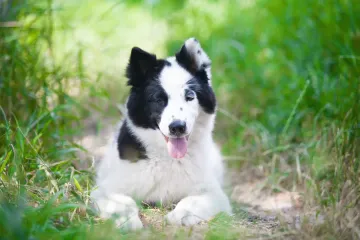
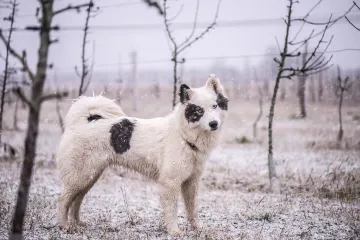
The coat is perhaps their most obvious adaptation. It is a dense, weather-resistant double coat designed to handle the intense cold. [2][6] The outer coat is coarse and straight, while the undercoat is thick, soft, and insulating. [2] Colors are highly varied, including black, white, grey, and various piebald patterns. [2] This diversity in coloration is often seen in ancient breeds that developed without strict aesthetic breeding mandates from a central authority. [3] Their eyes are typically almond-shaped, often dark, but blue eyes or heterochromia (one blue eye, one dark) are not uncommon features in the breed. [2] The tail is usually carried in a sickle or ring over the back when the dog is alert or moving. [2] Structurally, they possess a wedge-shaped head and strong jaws, built for endurance in movement and effective gripping when hunting. [2]
| Feature | Typical Range (Approximate) | Evolutionary Significance |
|---|---|---|
| Height (Withers) | 48 – 55 cm | Balance of agility and power for varied terrain [2][7] |
| Weight | 15 – 25 kg | Efficient mass for both pulling and travel over snow [2][7] |
| Coat Type | Dense Double Coat | Protection against extreme continental Siberian cold [2][6] |
| Eye Color | Dark, but Blue/Partially Blue accepted | Non-selected trait reflecting genetic diversity [2] |
# Temperament
The temperament of the Yakutian Laika reflects its history as a close partner to humans in survival situations. [5] They are generally known for being highly intelligent, trainable, and possessing a strong desire to work alongside their handlers. [5][2] However, their intelligence requires consistent management and mental stimulation; without a job, their energy and drive can manifest as destructive behavior or restlessness. [5]
They tend to be very social dogs, often forming strong bonds with their immediate human family. [5][6] Historically, they would have lived in close proximity to their owners, functioning as part of the household unit rather than being relegated to an isolated kennel. [2] This closeness means they are often good with children when properly socialized from a young age. [5]
Despite their sociability with their own group, their heritage as a hunting dog means they often possess a significant prey drive, which must be managed carefully around smaller domestic animals. [5] Furthermore, they are not naturally inclined to be subservient guard dogs; rather, they are more likely to be alerted to strangers than aggressively defensive, though their presence alone can be a deterrent. [2] Their deep vocalization, often described as a deep bark or howl, is characteristic of many northern breeds, serving roles in communication across distances in the open tundra. [2] One interesting observation noted by those who live with them is their high level of adaptability; they seem capable of quickly transitioning from an intense work mode to a calm, resting state when the work is done, a trait absolutely vital for conserving energy in environments where food is scarce. [2] This switch is a remarkable attribute that many modern companion breeds have lost in favor of continuous alertness or high arousal levels.
# Contemporary Status
Today, the Yakutian Laika maintains its cultural importance in its native Sakha Republic, where they continue to perform the essential duties their ancestors perfected. [9] Reports from Russian media highlight that the breed remains actively used by reindeer herders and hunters, confirming that their evolutionary path is still being reinforced by practical application, even in the modern era. [9] This continued working life outside the sphere of pure conformation shows helps ensure the breed retains the hardiness valued by its original stewards. [2]
As the breed gains slow but steady international traction, it presents a unique opportunity for dog enthusiasts: connecting with an ancient, functional canine lineage. [1] Prospective owners, whether in Siberia or elsewhere, must approach this breed with respect for its deep working heritage. Success with a Yakutian Laika is often predicated on the owner's willingness to provide appropriate mental and physical outlets that mirror the demands of its evolutionary past, be it extensive trekking, serious training, or providing a genuine purpose within a busy household. [5] The evolution of the Yakutian Laika is not over; it continues to adapt to its environment, whether that environment is the frozen Lena River delta or a suburban backyard requiring firm, knowledgeable guidance. [2]
Related Questions
#Citations
Yakutian Laika History: Where the Breed Originated
Yakutian Laika breed history
Yakutian Laika
Articles
Yakutian Laika | Dog Breed Facts and Information
All about Yakutian Laika breed
Yakutian Laika
Yakutian Laika
Yakutian Laika's clone: Reviving Siberian ... - TASS