Xiongguanlong Physical Characteristics
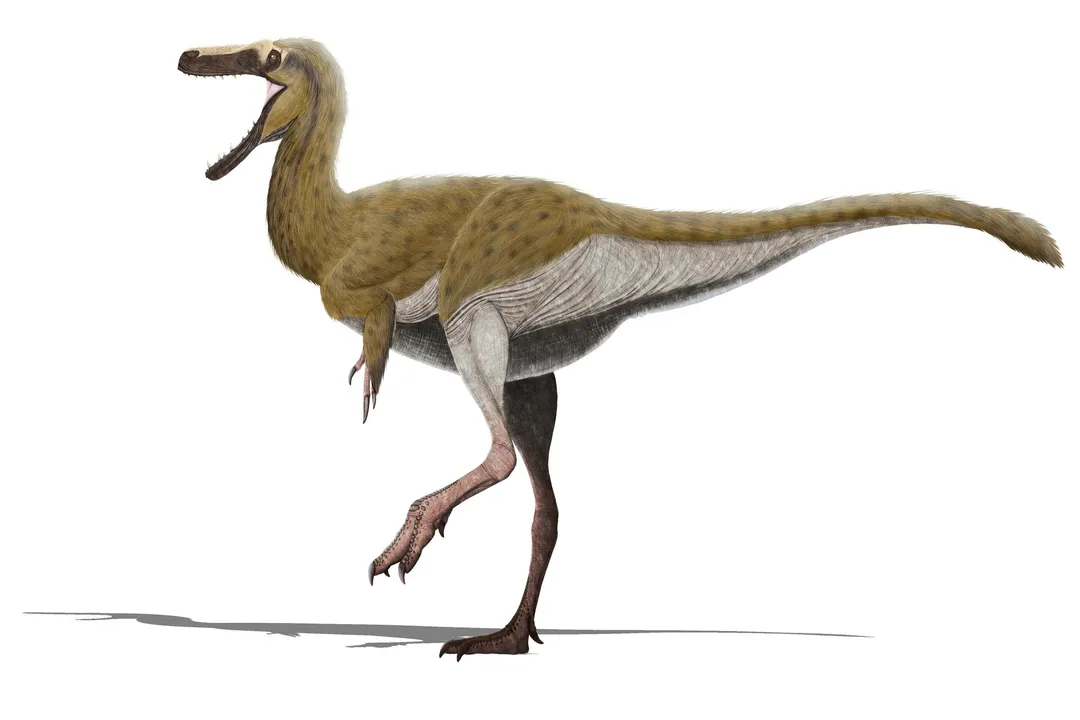
The discovery of Xiongguanlong baimoensis provided paleontologists with a rare, nearly complete snapshot of an Early Cretaceous tyrannosauroid, fundamentally reshaping our view of how the lineage leading to giants like Tyrannosaurus rex initially evolved. Unearthed from the Xiagou Formation in China, this animal fills a significant 40 to 50 million-year gap in the fossil record, bridging smaller, older forms from the Barremian stage with the massive predators of the Late Cretaceous. Analyzing its physical structure shows a creature unlike the later, robust hunters, possessing a unique set of traits that mark it as a crucial intermediate form.
# Size and Stature
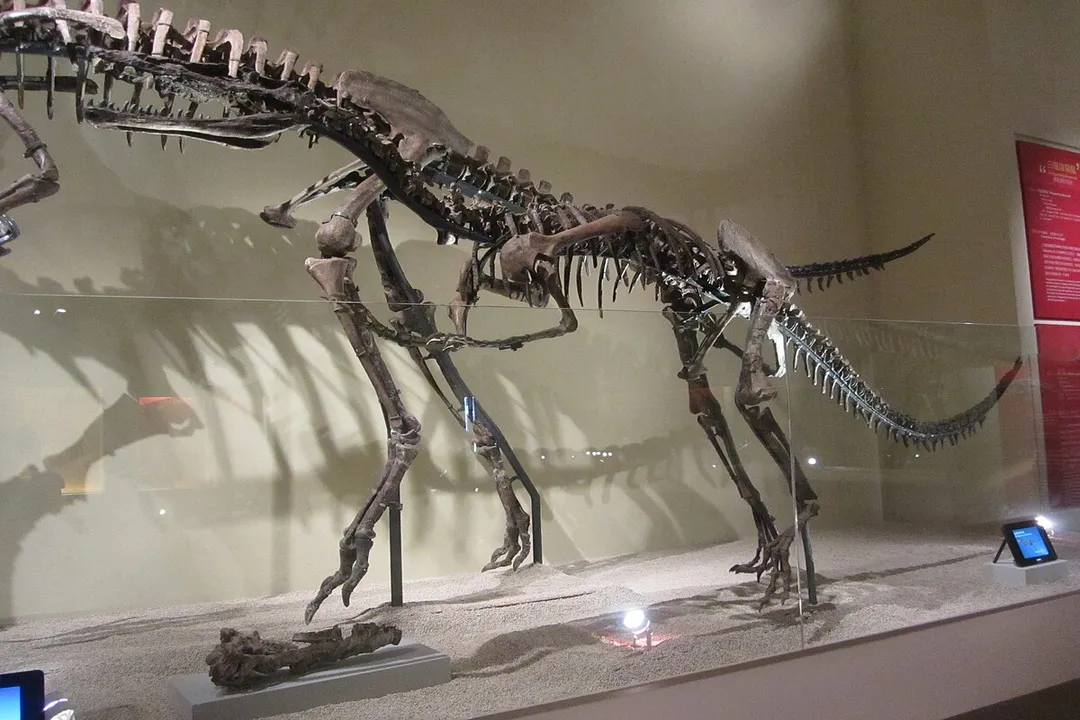
Xiongguanlong was decidedly a mid-sized carnivore, a stark contrast to the behemoths that would eventually dominate North America and Asia. Estimates for the holotype specimen, which was likely fully or nearly fully grown based on the fusion of its neurocentral sutures, generally place its length around 5 meters, or about 16 feet. Its estimated body mass hovers between 270 and 300 kilograms, or approximately 600 to 660 pounds. To put this into perspective, this is significantly larger than earlier basal tyrannosauroids like Dilong, yet it remains a relative lightweight compared to the later derived tyrannosaurids. The famous T. rex specimen SUE, for example, approached 14 feet in height at the hips and weighed in the range of six to seven tons—making Xiongguanlong appear almost like a flyweight in comparison. While most of the tail and legs did not fully preserve, available elements suggest body proportions similar to the longirostrine tyrannosauroid Alioramus.
# The Defining Skull
The most immediately striking physical characteristic of Xiongguanlong is its exceptionally long and narrow skull. This feature gives it the descriptor longirostrine. The preorbital region—the area in front of the eye sockets—is remarkably elongated, accounting for more than two-thirds of the total skull length. This morphology contrasts sharply with the deep, wide, and massive skulls typical of Late Cretaceous tyrannosaurids, which were structurally optimized for generating immense bite forces.
Despite its elongated nature, the postorbital region (behind the eye sockets) shows an expansion laterally, resembling later tyrannosaurids, being nearly twice as wide as the narrow snout itself. The skull is described as relatively long and low overall. The authors who first described the specimen noted that the proportions of the snout in Xiongguanlong are similar to those found in juvenile specimens of larger tyrannosaurids, suggesting that the shift toward massive, short snouts occurred later in the lineage's growth cycle or in adult stages of derived species. While the skull of the holotype is nearly complete, its preservation within a mineralized nodule made differentiating sutures difficult, obscuring features like the maxillary fenestrae.
# Nasal Structure
The nasal bones are a key area of comparative anatomy for Xiongguanlong. They are fused rostrally, a trait shared with other tyrannosauroids. However, they are slender and lack the pronounced dorsal rugosities (ornamentation or texture) that characterize Late Cretaceous tyrannosaurids. Furthermore, the nasals in Xiongguanlong lack the pneumatic elements along their lateral sides that are present in less-derived genera such as Dilong and Eotyrannus. The nasals also exhibit little transverse vaulting, again differing from the thickened, sculpted structures associated with extreme bite forces in later, larger forms.
This combination of traits—lacking rugosities and significant vaulting—presents an interesting puzzle regarding the evolution of feeding mechanics. Xiongguanlong's shallow, narrow snout, combined with its relatively small size, suggests a predator whose bite was more focused on slicing and gripping rather than pure bone-crushing power associated with later apex predators. The structure of this animal implies that the development of thickened, ornamented nasals seen in giant tyrannosaurids likely followed the loss of nasal pneumatics and crests in its immediate ancestors, indicating a more intricate progression of skull remodeling than a simple, linear increase in robustness.
# Dental Characteristics
The teeth of Xiongguanlong show a mixture of ancestral and derived characteristics. In the front of the snout, the premaxillary teeth display features seen in derived tyrannosaurids, specifically a D-shaped cross-section and a distinctive median lingual ridge. However, these teeth lack serrations, a trait shared with juvenile T. rex specimens but not adults.
The maxillary teeth, situated further back in the upper jaw, present a different picture. They are described as being labiolingually narrow and more blade-like, differentiating them from the generally more conical crowns seen in later tyrannosaurs like Tyrannosaurus. While serrations are present on both carinae (edges) of these maxillary teeth, they are small and block-shaped, similar to those found in Campanian tyrannosaurids. This dental configuration, with slicing maxillary teeth paired with uniquely ridged, unserrated premaxillary teeth, suggests a specialized method for dealing with prey, perhaps involving initial gripping and subsequent deep cutting of flesh into manageable portions. If we consider the function, this dinosaur was likely an obligate carnivore, but one equipped for precision tearing rather than overwhelming crushing.
# Post-Cranial Evidence
The preserved post-cranial skeleton, though damaged in parts, reveals specific anatomical details linking Xiongguanlong to its relatives. The entire presacral vertebral series was recovered, showing strong co-ossification between the neural arches and centra across the neck, typical of mature tyrannosauroids.
A significant detail lies within the cervical vertebrae. Xiongguanlong possesses only a single pair of pneumatic foramina (air openings) on each cervical centrum. This differs markedly from the condition in derived tyrannosaurids such as Albertosaurus, Daspletosaurus, and Tyrannosaurus, which all exhibit two pairs of these openings in the cervicals. This difference highlights that not all derived features evolved simultaneously; Xiongguanlong held onto this more primitive vertebral trait while simultaneously gaining derived skull features. Conversely, the axial neural spine (on the axis vertebra) is expanded and features distinct processes at its corners, a feature considered a hallmark of more derived tyrannosaurids.
In the hip region, the preserved ilium shows highly convex dorsal borders that pressed against each other above the sacrum, resembling the condition in Late Cretaceous tyrannosaurids, but contrasting with the straighter ilia of earlier forms like Guanlong. On the femur, the location and extent of the fourth trochanter are very similar to those seen in derived tyrannosauroids. The presence of a deep, well-developed extensor groove on the femur, bordered by a medial entepicondylar crest, further aligns it with later members of the family.
The fossil assemblage from which Xiongguanlong comes—the Xiagou Formation—was a warm, humid environment near a coast, suggesting this mid-sized predator lived among animals like the giant herbivorous ornithomimosaur Beishanlong. Given that the paleontologists found the holotype preserved close to maturity, it represents a genuine snapshot of an adult or near-adult animal at this specific point in the Early Cretaceous, providing solid morphological data rather than the often misleading proportions of juvenile late-stage relatives. Its distinct blend of advanced skull architecture with seemingly primitive vertebral pneumaticity makes it an indispensable specimen for charting the actual sequence of physical acquisition within Tyrannosauroidea.
Related Questions
#Citations
Xiongguanlong - Wikipedia
Xiongguanlong baimoensis - A-Z Animals
Xiongguanlong - Dinosaur Wiki | Fandom
Xiongguanlong - Grokipedia
A longirostrine tyrannosauroid from the Early Cretaceous of China
Xiongguanlong - Dinosaur Alive Wiki - Fandom
Tyrannosaur 'Missing Link' Among New Dinosaurs From China
Sino- American Paleontologists Found Tyrannosaur Fossils in China