Xenotarsosaurus Scientific Classification
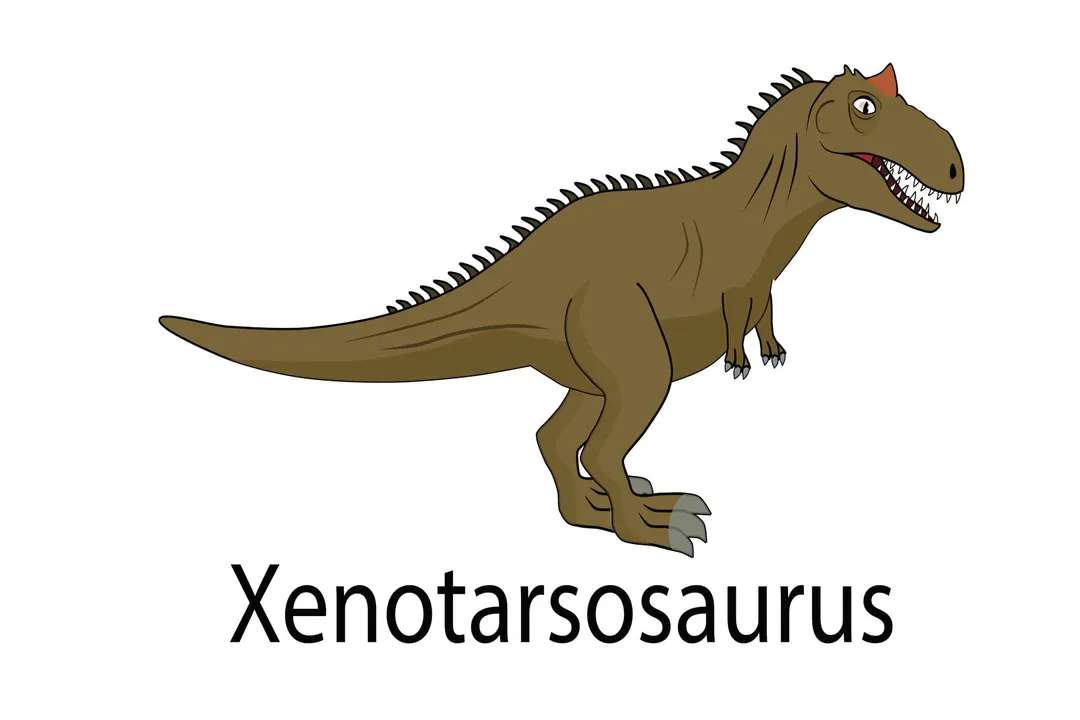
The journey into understanding any extinct creature begins with placing it correctly within the grand catalog of life, a system known as scientific classification. For Xenotarsosaurus, a creature known from the Late Cretaceous of Argentina, this cataloging process reveals its placement among the most famous groups of dinosaurs. [8] The name itself provides an immediate clue about its distinctive features, translating roughly from Greek to mean "strange tarsus lizard". [7] This nomenclature likely points to a unique feature in its ankle bones, or tarsus, which helps paleontologists distinguish it from its relatives. [7] Understanding this classification is not merely about labeling; it’s about recognizing the shared ancestry and evolutionary constraints that shaped this animal. [1][2]
# Naming Authority
The formal scientific designation we use today is Xenotarsosaurus bonapartei. [1][2][4][8][9] The authority citation attached to this species name, "(Bonaparte, 1991)," tells us that it was first scientifically described and named by paleontologist José Bonaparte in the year 1991. [4][9] This places the formal establishment of the genus and species relatively recently within the history of paleontology, providing a modern anchor point for its study. [9]
# Hierarchical Ranks
The taxonomic classification of Xenotarsosaurus follows the standard biological hierarchy, starting from the broadest category and narrowing down to the specific species. While nearly all sources agree on the fundamental structure, some resources provide finer detail regarding clade placement, such as specifying the suborder or superorder. [1][2][3][5]
Here is a summary of the established placement, moving from the very general to the highly specific:
| Rank | Classification | Supporting Sources |
|---|---|---|
| Kingdom | Animalia | , [2][3],, [4][5] |
| Phylum | Chordata | , [2][3],, [4][5] |
| Class | Reptilia | , [2][3],, [4][5] |
| Order | Saurischia | , [1][2],, , [3][4][5] |
| Clade/Suborder | Theropoda | , [1][2],, , [3][5][8] |
| Clade/Superfamily | Abelisauroidea | , , [1][3][5] |
| Family | Abelisauridae | , [1][2],, [3][4],, [5][8] |
| Genus | Xenotarsosaurus | , [1][2],, [3][4],, [5][9] |
| Species | X. bonapartei | , [1][2],, [3][4],, [8][9] |
This table highlights a nuance in the available records: while the placement within the Family Abelisauridae is universally agreed upon, [1][2][4][8] the inclusion of the intermediate clades like Abelisauroidea or the specific mention of Theropoda varies slightly depending on the database or wiki consulted. [1][3][5]
# Saurischian Ancestry
As a member of the Order Saurischia, Xenotarsosaurus belongs to the group affectionately known as the "lizard-hipped" dinosaurs. [2][4] This classification is based on the structure of its pelvis, which retained a hip bone arrangement more ancestral to modern reptiles, unlike the Ornithischians ("bird-hipped" dinosaurs) whose pubis bone pointed forward. [2] While the term Saurischia encompasses both the massive long-necked sauropods and the fearsome predatory theropods, Xenotarsosaurus falls decisively into the latter, more specialized subgroup. [1][5]
# Theropod Placement
The suborder or clade Theropoda groups together all carnivorous dinosaurs, which walk primarily on two legs. [1][8] This places Xenotarsosaurus in the company of giants like Tyrannosaurus and velociraptors, though its specific features would have set it apart from those more famous northern hemisphere lineages. [8] Being a theropod dictates fundamental characteristics, such as the presence of sharp teeth and a generally bipedal stance, even if the specific skeletal adaptations of the abelisaurids were unique. [1][8]
# Abelisaurid Context
Perhaps the most informative placement for understanding the creature's likely appearance and ecological role is its position within the Family Abelisauridae. [1][2][4] This family is particularly well-represented in the fossil record of the southern continents—the ancient landmass of Gondwana—during the Late Cretaceous period. [8] Abelisaurids are generally characterized by their robust builds, deep skulls, and often remarkably reduced forelimbs, sometimes even more vestigial than those seen in tyrannosaurids. [2]
When we consider that Xenotarsosaurus hails from Argentina and fits neatly into Abelisauridae, it suggests it was part of a distinct evolutionary radiation that dominated the apex predator niches in the southern landmasses while tyrannosaurs held sway in the north. [8] This parallel evolution, where two distinct groups independently evolve to fill the top predator role on separate continents, is a fascinating pattern in dinosaur biogeography. The peculiar nature of Xenotarsosaurus's tarsus, which gave it its name, must therefore be an adaptation unique enough within the Abelisaurid family to warrant its own genus designation, rather than just being lumped into a broader group like Carnotaurus or Aucasaurus. [7][8]
# Species Definition
The final step in the classification process is the species level: bonapartei. [4][8] Naming a species after a person, in this case, Bonaparte himself, is a common practice in taxonomy and serves to honor the discoverer. [9] The specific combination of features defining Xenotarsosaurus bonapartei must be sufficient to differentiate it from all other known species within the Xenotarsosaurus genus (though, based on the sources, only one species is currently recognized) and all other species within the Abelisauridae family. [9]
This complete classification string—Animalia through X. bonapartei—is the scientific passport for the dinosaur. It immediately tells an expert that this was a land-dwelling, warm-blooded relative of birds, possessing a hip structure characteristic of ancient reptiles, walking on two legs, being carnivorous, belonging to the specialized group of Southern Hemisphere predators known as abelisaurs, and possessing that one specific, odd ankle structure that secured its place as a unique genus. [1][2][3][7] Every part of that classification implies a wealth of associated anatomical and lifestyle expectations derived from studying its cousins. [5]
Related Questions
#Citations
Xenotarsosaurus bonapartei - A-Z Animals
Xenotarsosaurus - Prehistoric Wiki - Fandom
Xenotarsosaurus - Mindat
Xenotarsosaurus - World Species
Xenotarsosaurus bonapartei Martínez et al., 1986 - GBIF
A detailed osteological description of Xenotarsosaurus bonapartei ...
Xenotarsosaurus - Wiktionary, the free dictionary
Xenotarsosaurus bonapartei - A Dinosaur A Day
Xenotarsosaurus - PaleoCodex