Xenoposeidon Physical Characteristics
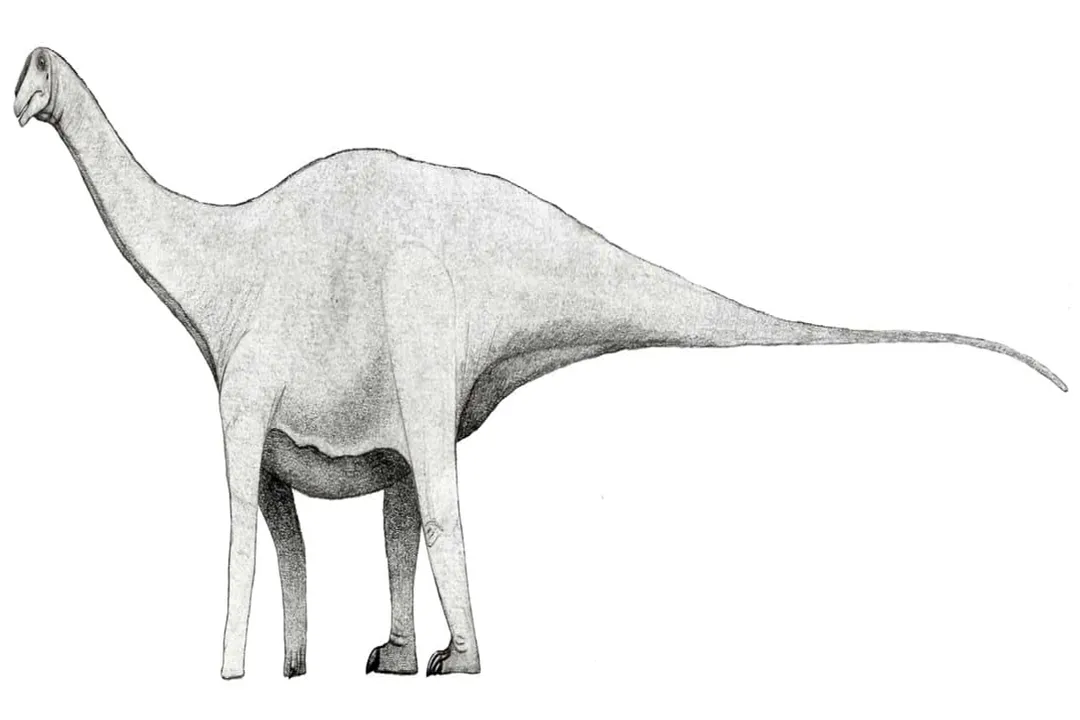
The story of Xenoposeidon begins not with a majestic skeleton, but with a single, overlooked piece of bone that spent over a century residing in a museum drawer. Meaning "strange or alien Poseidon," a nod to its unusual anatomy and its namesake, the giant Sauroposeidon, this dinosaur represents a fascinating glimpse into the diversity of sauropods during the Early Cretaceous period. Formally named Xenoposeidon proneneukos in 2007 by paleontologists Michael P. Taylor and Darren Naish, the genus is defined entirely by this unique specimen.
# Single Bone
The entirety of our knowledge regarding the physical characteristics of Xenoposeidon stems from one partial dorsal vertebra—a bone from the back, specifically located near the hips of the animal. This specific specimen, cataloged as BMNH R2095, was originally unearthed in the early 1890s near Hastings in East Sussex, England, by Philip James Rufford, within rocks belonging to the Hastings Bed Group. For a remarkable 113 years, the bone sat in the collections of the Natural History Museum in London, initially described briefly by Richard Lydekker in 1893, who suggested it might belong to Cetiosaurus or Pelorosaurus. It was only when Mike Taylor rediscovered it in 2006 that its truly anomalous nature was appreciated, prompting its formal description against the backdrop of a century of new sauropod discoveries. The species name, proneneukos, is Greek for "forward sloping," a direct reference to the distinct tilt of the preserved neural arch.
# Vertebra Anatomy
The physical uniqueness of Xenoposeidon rests entirely on the morphology of this dorsal vertebra, which displays a combination of features unseen together in other known sauropods. The preserved portion of the bone stands about 30 centimeters (or 12 inches) tall. While the entire structure is incomplete, missing the front face of the centrum and the top of the neural arch, enough remains to reveal several key characteristics.
One striking feature is the structure where the vertebra articulates with its neighbors. The posterior (rear) face of the main body, or centrum, exhibits a deep concavity. This suggests that the vertebra immediately in front of this one must have possessed a highly convex (bulging) anterior face to fit snugly. This reciprocal fit implies a specific vertebral locking mechanism. One might speculate that this deep articulation, particularly if it extended across several segments, could have imparted a degree of stiffness to that section of the spine, perhaps creating a relatively rigid transition zone between the lower back and the area nearer the hips, contrasting with the expectations of a smoothly flexible torso common in many long-necked dinosaurs.
The neural arch, which protects the spinal cord, is another area of interest. It leans significantly forward, angling at roughly 35 degrees relative to the vertical axis of the centrum. Furthermore, the bony struts and sheets that form this arch present a configuration that Taylor and Naish found unparalleled among contemporary sauropod material. Close examination reveals features like v-shaped laminae on the arch, and broad, featureless areas on the lateral (side) surfaces of the arch. In life, a series of about a dozen vertebrae sharing this structure would have formed a significant section of the animal's backbone.
# Body Dimensions
Because only one back bone is known, estimating the overall size and shape of Xenoposeidon requires comparison to more complete skeletons, leading to a range of possibilities rather than a single definitive measurement. The estimates pivot on whether the animal possessed a more gracile (slender) build, like a Diplodocus, or a more robust build, like a Brachiosaurus.
If Xenoposeidon was constructed similarly to the long, lighter-bodied Diplodocus, estimations place its length at around 20 meters (about 66 feet) but with a lower weight, perhaps closer to 2.8 metric tons. Conversely, if it was built more heavily like Brachiosaurus, the length estimate drops slightly to approximately 15 meters (49 feet), but the animal would have carried significantly more mass, around 7.6 metric tons. Other general estimates place its length between 30 and 50 feet and its height at the shoulder between 15 and 20 feet, classifying it as a medium-sized sauropod compared to the true giants that exceeded 100 feet and 100 tons. This dependency on comparative anatomy highlights a core challenge in paleontology: a single, atypical bone can only offer so much certainty about the complete animal.
# Family Place
Placing Xenoposeidon on the sauropod family tree has proven difficult due to the bizarre nature of its single diagnostic bone. Initial phylogenetic analyses, which map evolutionary relationships, confirmed it was a neosauropod, but it did not fit neatly into the major established subgroups like Diplodocoidea, Camarasauridae, Brachiosauridae, or Titanosauria. The authors initially left it as a neosauropod of uncertain affinities.
However, subsequent research has brought more clarity, although not total consensus. A 2018 analysis by Taylor recovered Xenoposeidon proneneukos as a basal member of the Rebbachisauridae family. If correct, this placement is particularly significant, as it would make Xenoposeidon potentially 10 million years older than the next oldest known member of that family, Histriasaurus. Rebbachisaurids are known for having somewhat specialized, wide vertebral structures, which aligns with the known oddities of the Xenoposeidon specimen. It is worth noting that classification remains fluid; other sources have suggested affinity with the Euhelopodidae, reflecting the ongoing debate surrounding incomplete material.
It is important to remember the sheer advantage Taylor and Naish had over Lydekker, who examined the bone a century earlier. They could compare the specimen against a massive existing literature base and over a hundred named sauropod groups, something impossible in the 1890s. The very existence of Xenoposeidon underscores how the context of current scientific understanding—built up over decades of subsequent finds—is essential to recognizing the significance of old, overlooked fossils.

# Paleo Context
Xenoposeidon inhabited southern England during the Berriasian to Valanginian stages of the Early Cretaceous, roughly 140 million years ago. This ancient environment was far from the dry plains often imagined; it was a warm, humid, sub-tropical setting dominated by extensive river systems, floodplains, and dense forests. This rich environment supported a diverse fauna. Xenoposeidon would have shared its world with famous contemporary dinosaurs such as the large ornithopod Iguanodon, the bizarre, fish-eating theropod Baryonyx, and the heavily armored Polacanthus. As a large, quadrupedal herbivore, Xenoposeidon's primary lifestyle would have involved browsing high into the canopy for conifers, ferns, and cycads, using its long neck to reach vegetation inaccessible to smaller herbivores. Like all sauropods, it was built for bulk and browsing, not for speed, likely moving with a slow, plodding stride, though short sprints may have been possible by leaning into its mass.
Fossils of Xenoposeidon are exclusive to the United Kingdom, though as with any single bone, the possibility remains that it was transported by water action far from where the animal actually lived and died. The discovery of Xenoposeidon, alongside contemporaries like Pelorosaurus and Eucamerotus in the same general area, suggests that Early Cretaceous England was a hotspot for sauropod diversification, even if the remains recovered are often fragmentary.
Related Questions
#Citations
Xenoposeidon - Wikipedia
Xenoposeidon proneneukos - A-Z Animals
Introducing Xenoposeidon - Mike Taylor
Xenoposeidon - Prehistoric Wildlife
Xenoposeidon | Novum Terram Wiki - Fandom
Xenoposeidon - - Dinos and Designs