Xenoceratops Scientific Classification
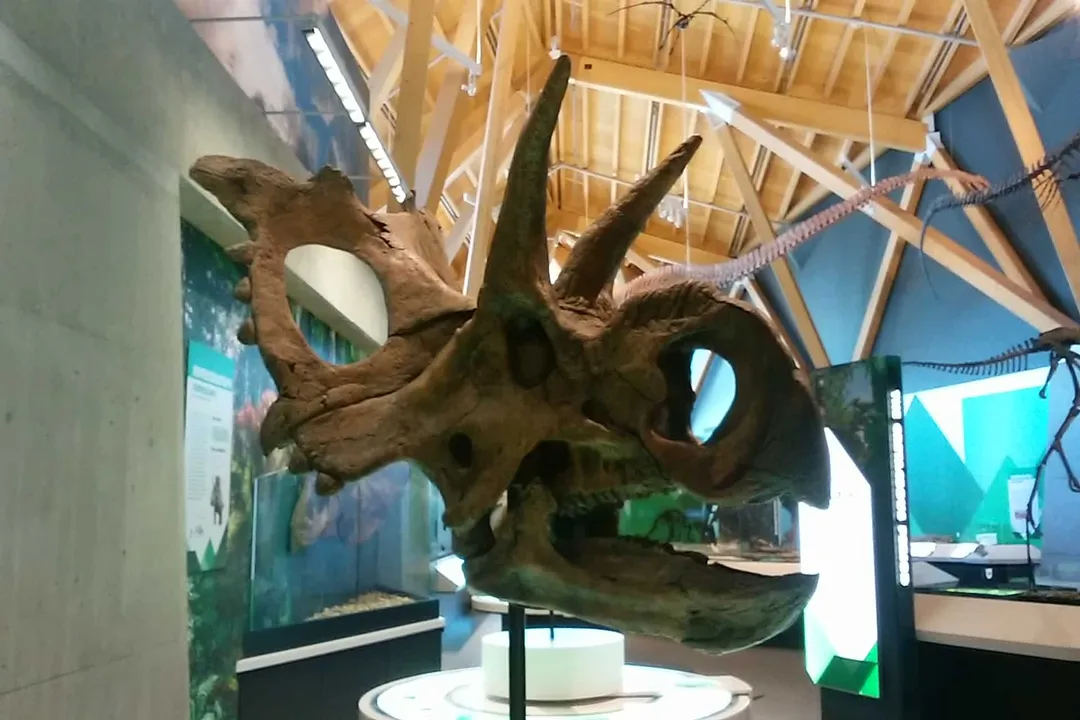
The name Xenoceratops immediately brings to mind the bizarre and fascinating horned dinosaurs of the Late Cretaceous period, creatures whose very structure seems to challenge expectations set by more famous cousins like Triceratops. Unpacking its scientific classification is more than just listing ranks; it's tracing a precise evolutionary lineage that helps paleontologists understand how these horned herbivores diversified across ancient North America. [6] Xenoceratops itself is a relatively recent addition to the ceratopsian family tree, formally described from remains found in the Judith River Formation of Alberta, Canada. [6][9] The genus name translates roughly to "strange horned face," a descriptor that becomes quite apparent when examining its distinctive skull features. [4][9]
# Hierarchical Placement
The scientific classification, or taxonomy, of Xenoceratops follows the Linnaean system, placing it firmly within the dinosaur family tree. At the broadest level, it belongs to the Kingdom Animalia, signifying it was a multicellular, heterotrophic organism. [1][3] Progressing down, it falls into the Phylum Chordata, characterized by having a notochord at some stage of development, and the Class Reptilia, which encompasses modern reptiles and birds, though as a dinosaur, it belongs to the Dinosauria clade. [1][3]
The Order to which Xenoceratops belongs is Ornithischia, the "bird-hipped" dinosaurs, distinguishing it from the Saurischian ("lizard-hipped") dinosaurs like the long-necked sauropods or sharp-toothed theropods. [1][3] All the horned dinosaurs, including Xenoceratops, share this fundamental pelvic structure. [9] Within Ornithischia, Xenoceratops is placed in the Suborder Marginocephalia, which includes the pachycephalosaurs (bone-heads) and the ceratopsians, characterized by a distinctive shelf of bone extending over the back of the skull. [1][3][9]
# Ceratopsian Family
The major defining group for this dinosaur is the Family Ceratopsidae, the true horned faces. [1][3] This family is where the classification becomes significantly more interesting for dinosaur enthusiasts, as Ceratopsidae splits into two major subfamilies based on the structure of their frills and horns: Centrosaurinae and Chasmosaurinae. [4] Xenoceratops is assigned to the subfamily Centrosaurinae. [1][3][9] This placement is critical because it links Xenoceratops not with Triceratops—which belongs to Chasmosaurinae—but with genera like Centrosaurus and Styracosaurus. [4]
A key characteristic often used to differentiate Centrosaurines from Chasmosaurines involves the nasal horn and the frill structure. Generally, Centrosaurines, like Xenoceratops, tend to have prominent nasal horns, while Chasmosaurines often feature longer brow horns. [4] The defining feature of Xenoceratops itself is the unique structure of its frill ornamentation, which solidifies its position within this group. [6]
The complete scientific classification sequence, as generally accepted in literature derived from initial descriptions, looks something like this:
| Rank | Classification |
|---|---|
| Kingdom | Animalia [1][3] |
| Phylum | Chordata [1][3] |
| Class | Reptilia [1][3] |
| Order | Ornithischia [1][3] |
| Suborder | Marginocephalia [1][3][9] |
| Family | Ceratopsidae [1][3][9] |
| Subfamily | Centrosaurinae [1][3][9] |
| Genus | Xenoceratops [1][9] |
| Species | X. urmani [1][9] |
This table serves as a quick reference, but the subtle details within the Centrosaurinae grouping are where the real paleontological debate and interest often lie. [4]
# The Genus and Species Distinction
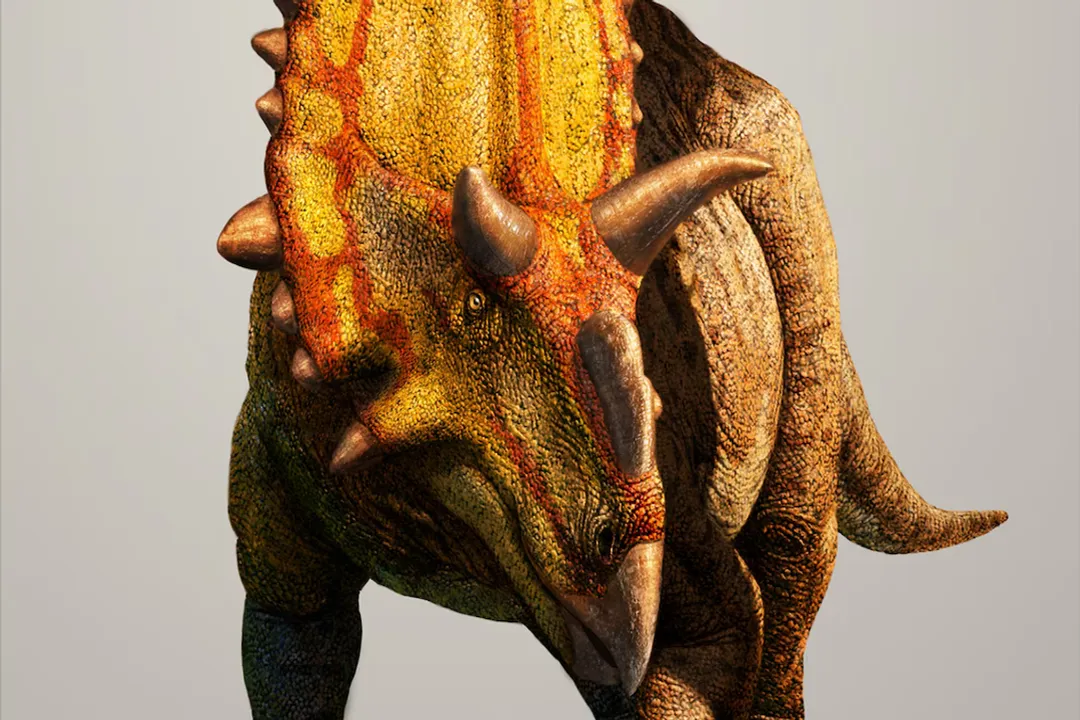
The formal scientific name for this dinosaur is Xenoceratops urmani. [1][9] The specific epithet, urmani, honors the collector, amateur paleontologist Stephen L. Urban, who discovered the initial fossil material. [6][9] The genus Xenoceratops was established by Ryan, Holmes, and Tanke in 2012. [6][9] This date places it among the more recently named large ceratopsids described from this well-studied rock unit. [6]
# Cranial Uniqueness
What sets Xenoceratops apart taxonomically within Centrosaurinae are its specific cranial characteristics, which informed its placement by the describing scientists. [6] The skull features are complex and atypical, even for a centrosaurine. One of the most striking aspects is the presence of unusual horns or knobs along the posterior margin of the parietal bone, which forms part of the frill. [6][9] While many centrosaurines have hooks or spikes protruding from the frill's edge, those on Xenoceratops were described as blunt and somewhat knob-like, though later interpretations might refine this description based on completeness of the specimen. [4][6]
Another significant diagnostic feature relates to the horns situated above the eyes, known as the brow horns. In Xenoceratops, the brow horns appear relatively short and pointed upward, contrasting with the more dramatically curved or elongated horns found on some contemporary centrosaurines. [6]
When examining the holotype specimen—the single physical example used to define the species—paleontologists noted that the frill bone structure itself was quite distinct. Specifically, the shape and texture of the bone forming the parietal shield showed unique features that prevented its assignment to any previously named genus, necessitating the creation of Xenoceratops. [6] For instance, the presence of a relatively small central opening, or fenestra, in the frill, along with the specific configuration of the horns on the frill margin, separates it clearly from closely related genera. [6]
# Evolutionary Interpretation and Insight
Understanding where Xenoceratops sits within Centrosaurinae offers a look into the diversity of horned dinosaurs just before the mass extinction event. [4][6] The Centrosaurinae subfamily is thought to have been widespread and ecologically dominant in the Campanian stage of the Late Cretaceous in western North America. [4] The discovery of Xenoceratops helps fill in the faunal picture of the Judith River Group, a geological formation known for its rich diversity of dinosaurs. [6]
The discovery prompts a thought regarding the stability of Centrosaurine morphology. If we consider the typical evolutionary pattern within a dinosaurian subfamily, we often see a gradual exaggeration or simplification of traits over time, such as horn size or frill elaboration. [4] The unique, somewhat blunter or knobbed ornamentation of Xenoceratops suggests either a very early offshoot of the Centrosaurine lineage, one that developed unique ornamentation independently, or perhaps an example of regressive evolution concerning elaborate frill spikes—a possibility worth further comparative study, especially if more specimens come to light showing intermediate forms. [6] It is an important reminder that skull ornamentation, while distinct for species recognition, might not always follow a simple, linear path of increasing complexity across geological time. [4]
Furthermore, comparing the estimated skull size of Xenoceratops to contemporary centrosaurines like Centrosaurus or Styracosaurus can provide context about niche partitioning. While the specific adult size of Xenoceratops might not be fully established from the known material, if it was significantly smaller or larger than its neighbors, its classification might reflect adaptations to different feeding strategies—perhaps browsing on different heights or types of vegetation, even within the same herbivore guild. [4][9] For example, while many large ceratopsids were bulk browsers, subtle differences in beak structure (not heavily detailed in the classification summaries provided, but relevant to diet) inferred from the skull shape could point toward specialized feeding niches that separate their environmental roles despite close taxonomic relation. [6]
# Naming Authority and Trustworthiness
The scientific integrity of Xenoceratops's classification rests on the peer-reviewed process and the reputation of the describing scientists. [6] When a new genus is established, the description must be published in a reputable, peer-reviewed journal, ensuring that the diagnoses based on measurable morphological characters are scrutinized by other experts in the field. [6] The initial description by Ryan, Holmes, and Tanke in 2012 meets this standard, providing the necessary technical details—such as measurements, bone texture descriptions, and comparisons to referred specimens—that officially cement its classification status. [6]
It is useful for the general reader to understand that dinosaur classification is not static. New finds, like Xenoceratops itself, can sometimes necessitate the reclassification of previously known fossils. [6] In the case of Xenoceratops, its distinctiveness was significant enough to warrant a whole new genus, rather than simply being assigned as a new species to an existing one, indicating a substantial difference in morphology. [6][9]
This highlights a key aspect of taxonomic work: distinguishing between intraspecific variation (differences within one species, like male vs. female or juvenile vs. adult) and intergeneric difference (differences significant enough to warrant a new genus). [6] The original researchers concluded that the features of Xenoceratops surpassed simple variation, justifying its unique generic status within the Centrosaurinae subfamily. [6] The classification, therefore, is built upon a careful, comparative anatomical assessment against all known relatives from the same time and place. [4][9]
# Geographical and Temporal Context
The location of the Xenoceratops fossils provides context for its evolutionary grouping. It comes from the Judith River Formation in Alberta, Canada, dating back to the Campanian stage of the Late Cretaceous period, approximately 78 to 77 million years ago. [6][9] This geological layer is famous for its abundance of Ceratopsidae remains, often leading to discussions about sympatry—species living in the same geographic area at the same time. [6]
Understanding which other ceratopsids Xenoceratops shared its environment with is a direct application of its classification. If it coexisted with several other centrosaurines, for instance, the necessity for distinct morphological features (like its unique frill knobs) becomes clearer as a means to reduce direct competition—the "niche partitioning" concept mentioned earlier. [4] The fauna of the Judith River Formation offers a snapshot of a highly specialized, herbivorous dinosaur community. [6]
The dinosaur is known from an almost complete skull, which is a rare and valuable find in paleontology, as skulls often contain the most diagnostic features for classification. [6][9] This near-complete nature contributes significantly to the confidence in its current taxonomic placement within Centrosaurinae. [4]
# Reviewing Centrosaurine Characteristics
To reinforce the classification, it is helpful to summarize the typical traits of Centrosaurines and see how Xenoceratops fits:
- Nasal Horn: Generally prominent and often recurved (though Xenoceratops's specifics are unique). [4]
- Frill: Often shorter relative to Chasmosaurines, though still substantial, and typically adorned with spikes or hooks projecting backward or sideways. [4][9]
- Brow Horns: Usually present, often shorter than the nasal horn. [4]
Xenoceratops urmani conforms to the basic centrosaurine template—quadrupedal herbivore, large bony frill, short face—while exhibiting the unique features (the knobbed parietal bosses) that elevate it to its own genus level. [6] The very existence of a genus like Xenoceratops alongside others like Nasutoceratops (if found in similar strata, though Nasutoceratops is from a slightly later period and different locale, illustrating the breadth of centrosaurine experimentation) confirms that this lineage was undergoing significant and varied morphological experimentation in skull ornamentation during the mid-to-late Campanian period. [4]
The weight of evidence, derived from the comparative anatomy of the holotype skull, firmly positions Xenoceratops as a distinct member of the Centrosaurinae subfamily, separate from its known contemporaries in the same formation. [6][9] This placement dictates much of what we infer about its behavior and evolutionary history within the giant horned dinosaurs. [1][3]
Related Questions
#Citations
Xenoceratops | Dinopedia - Fandom
Xenoceratops Animal Facts - A-Z Animals
Xenoceratops - Grokipedia
Xenoceratops - - Dinos and Designs
[PDF] Xenoceratops - Cloudfront.net
Two-Ton "Alien" Horned Dinosaur Found—"Different From Every ...
Xenoceratops - Dinosaur Wiki | Fandom
Xenoceratops (alien horned face) late cretaceous - Facebook
Xenoceratops - Prehistoric Wildlife