Xenacanthus Evolution
The ancient world of the early vertebrates held many creatures that strike us today as profoundly alien, yet they were entirely successful in their time. Among these early residents of Paleozoic waters was Xenacanthus, an extinct genus of shark that swam in freshwater environments when terrestrial life was still beginning its major expansion. Its very name, meaning “strange spine,” hints at the most unusual feature defining this group of sharks belonging to the order Xenacanthiformes. These ancient cartilaginous fishes carved out a long and distinct evolutionary niche, surviving for hundreds of millions of years across several geological periods.
# Defining Morphology
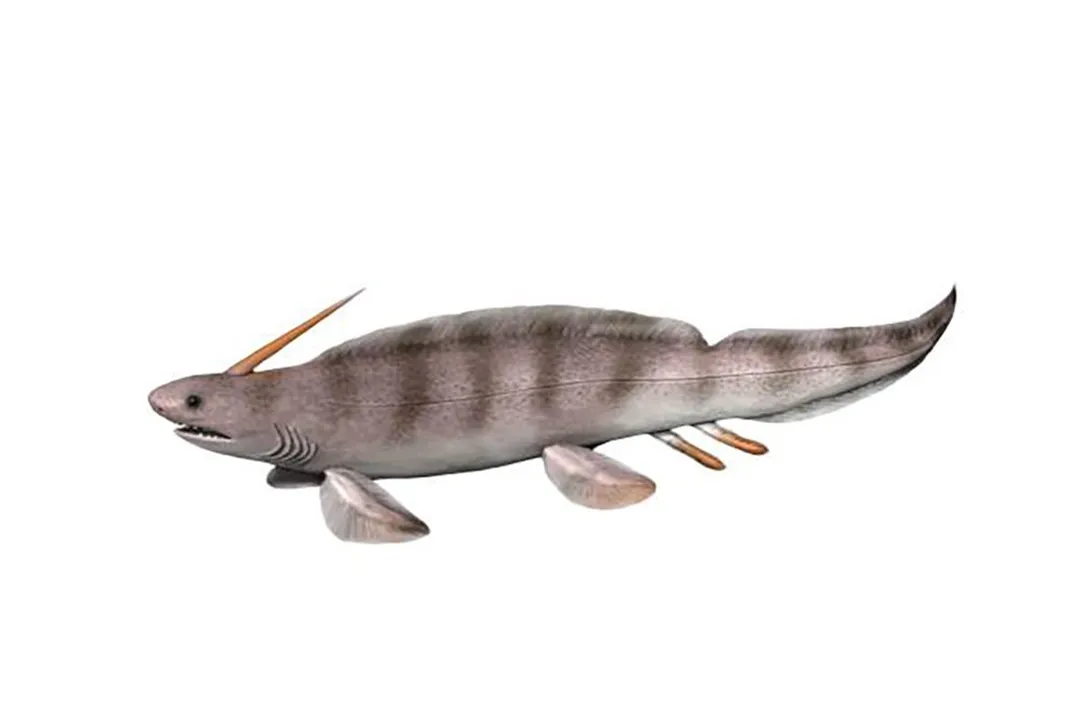
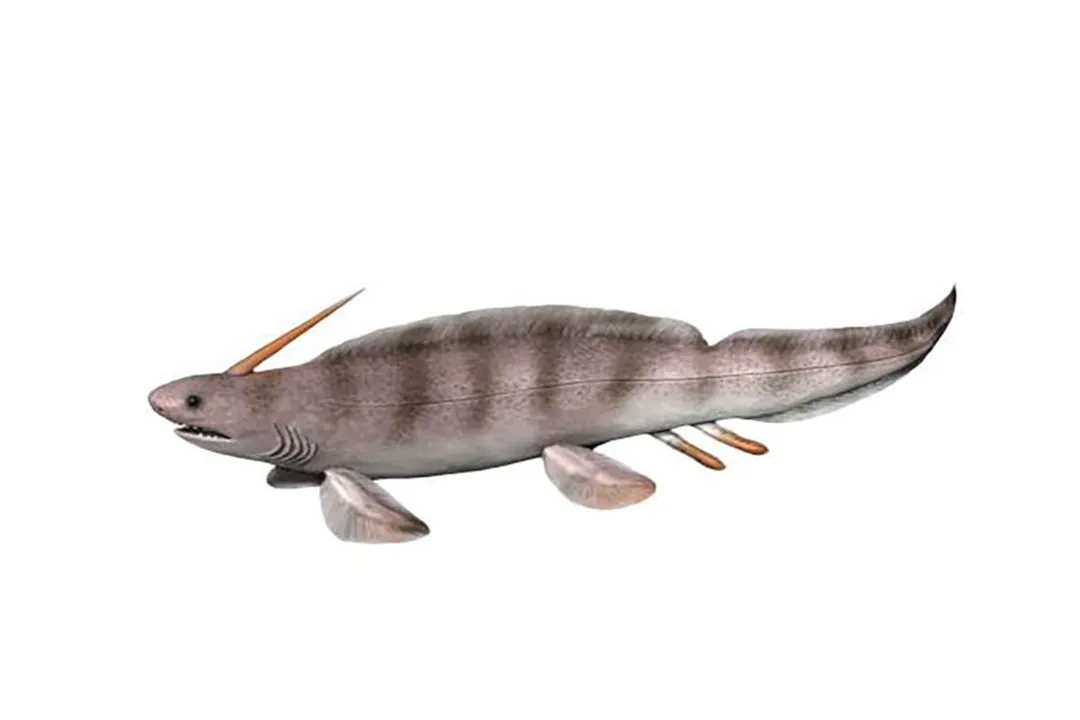
The general body plan of Xenacanthus was radically different from the streamlined torpedo shape we typically associate with sharks today, such as the Carcharhinus or even the slightly earlier Cladoselache. Instead, Xenacanthus possessed an elongated, almost eel-like body. This streamlined form was supported by a unique fin arrangement: it featured two separate dorsal fins situated along its back, unlike the single dorsal fin common to most modern sharks. Supplementing these were a single anal fin and a distinctively shaped tail fin. This tail was often described as V-shaped, suggesting a morphology closer to homocercal (symmetrical) fins than the heterocercal (asymmetrical) tails common in many extant sharks.
However, the feature that grants the genus its recognition is the prominent, stiff spine projecting backward from the nape of its skull. This structure gave the shark its scientific moniker and served as an immediate identifier for paleontologists studying its fossil remains. While superficially resembling some modern jawless fishes, like the lamprey, Xenacanthus was firmly established as a cartilaginous fish, sharing a distant ancestry with modern sharks but representing a separate, early evolutionary experiment.
# Temporal Span
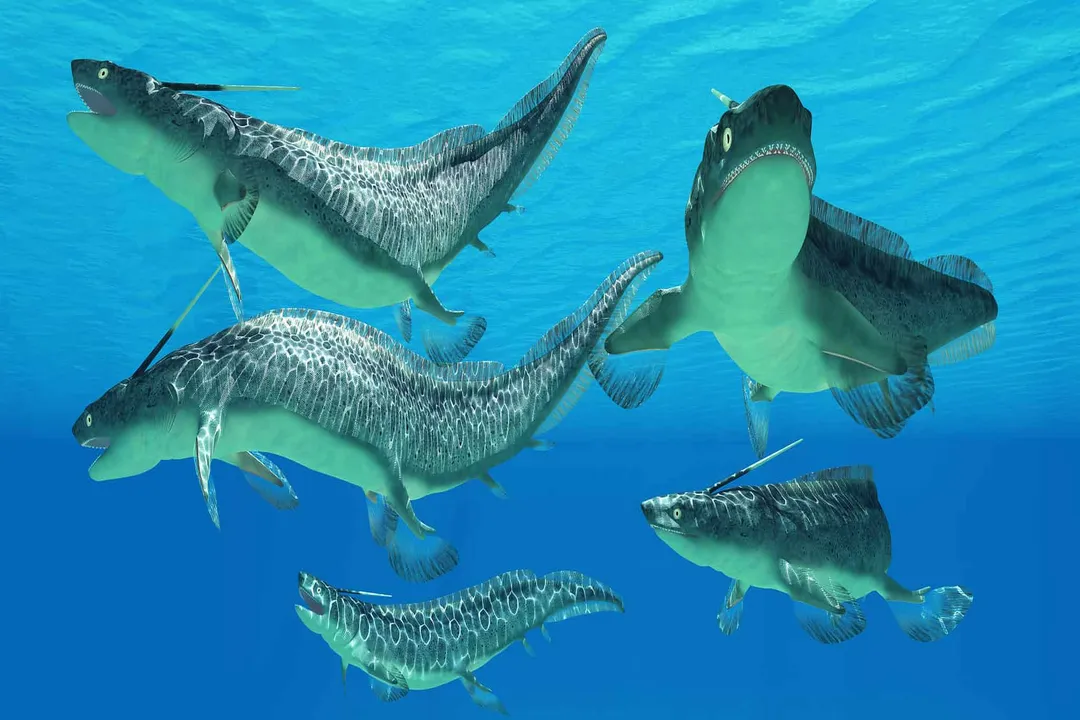
The evolutionary story of the order encompassing Xenacanthus spans an immense stretch of geological time. The Xenacanthiformes first appeared during the Devonian Period and persisted until the Early Cretaceous Period. This longevity—hundreds of millions of years—speaks to the adaptability of their fundamental design. Within this order, the genus Xenacanthus itself saw its peak activity during the Carboniferous and Permian Periods. The fossil record indicates that these sharks achieved a remarkably global distribution, with remains found across various continents, underscoring their success in the freshwater systems of the late Paleozoic era.
The persistence across the transition from the Paleozoic to the Mesozoic, surviving major extinction events that claimed countless other species, makes their morphology particularly interesting. A modern observer might assume that such a long-lived lineage would have seen subtle shifts toward marine habitats over time, given the dominance of bony fishes in contemporary oceans; yet, Xenacanthus appears to have remained steadfastly freshwater throughout its documented history.

# The Strange Spine
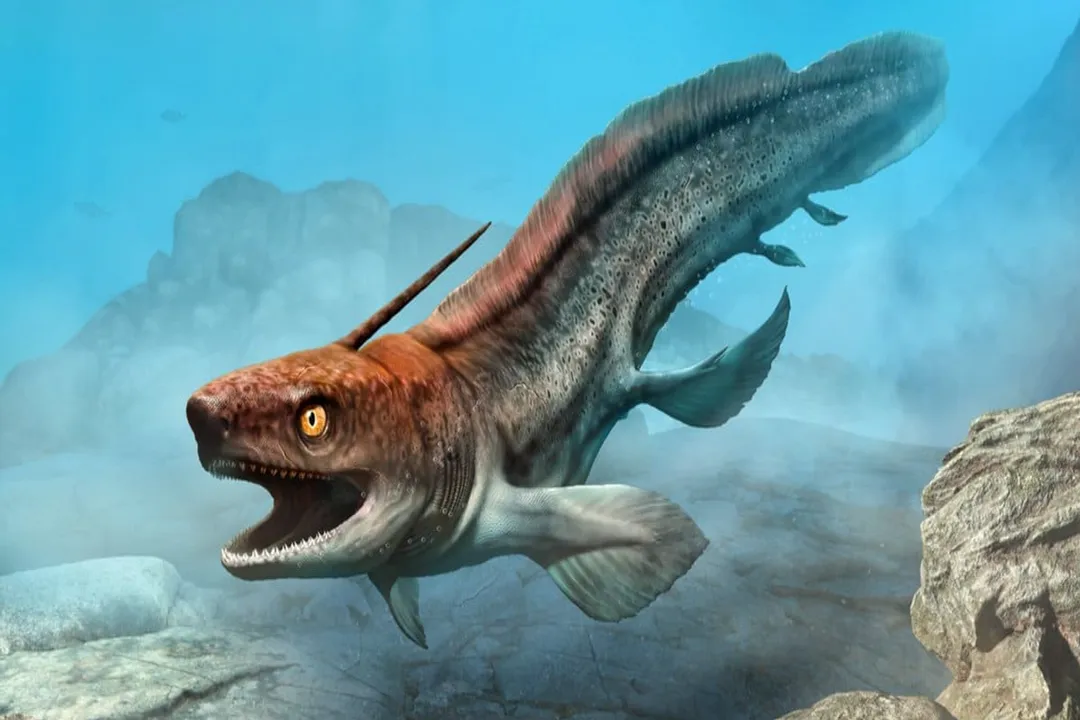
The cephalic spine is the signature feature, and its function has been a subject of paleoecological discussion. The name Xenacanthus—derived from Greek xenos (strange) and akantha (spine)—directly references this structure. Paleontologists have hypothesized that the spine served one or both of two main purposes: defense against predators or as an element of sexual display. Fossil evidence sometimes suggests that the spine might have been present in both male and female individuals, though definitive sexual dimorphism regarding spine size is often unclear from fragmented remains.
If we consider the spine primarily as a defensive tool, it represents a fascinating case of developing passive protection in an environment where heavy dermal armor was less common among the early elasmobranchs than it was among contemporary bony fishes. While contemporaneous freshwater bony fishes might have relied on thick scales or bony plates for protection, Xenacanthus evolved a sharp, projecting weapon fixed to its skull, perhaps deterring a larger, crocodile-like amphibian or an early teleostome from attempting a fatal head-first strike. The specialized nature of this single, prominent feature sets it apart from the scattered osteoderms or placoid scales seen in other early fish groups.
# Niche Ecology
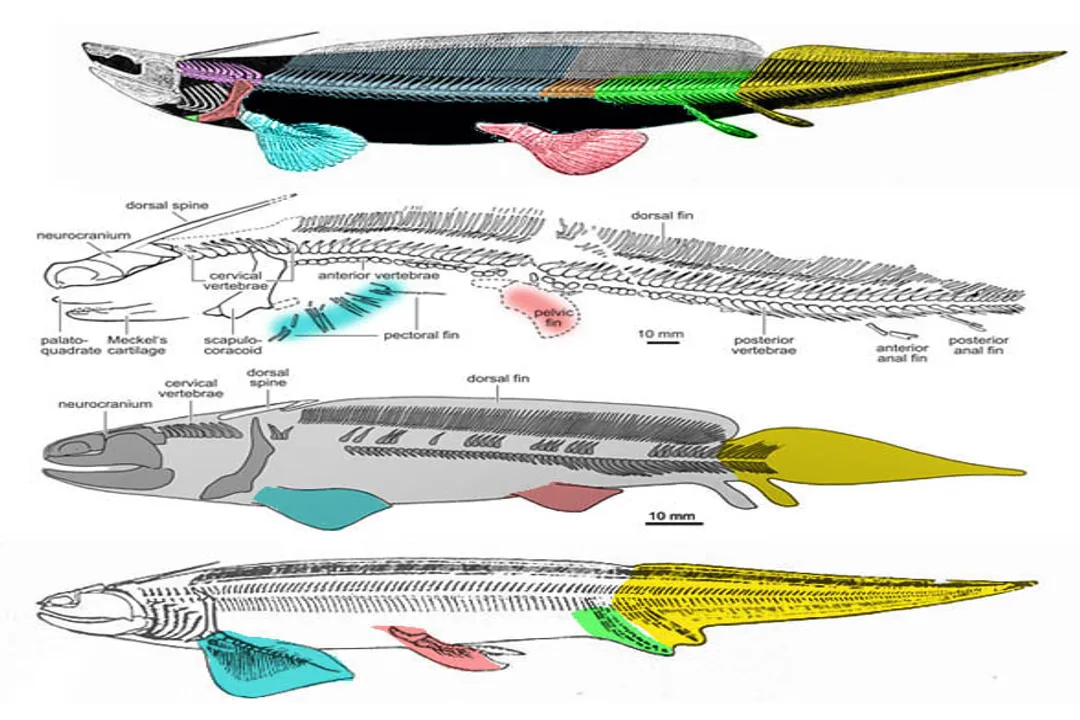
The ecological specialization of Xenacanthus is as defining as its appearance. Unlike most sharks today, these animals were strictly freshwater dwellers. Thriving in rivers, lakes, and floodplains during the Carboniferous and Permian implies a physiological adaptation to osmotic stress that differs significantly from their marine cousins. This success in a purely freshwater setting presents a remarkable example of adaptation within the Chondrichthyes, a group usually associated with saline environments. The ability of Xenacanthus to regulate its internal chemistry for long-term residence in low-salinity water showcases a physiological tolerance that perhaps later, more successful shark lineages never needed to fully develop.
Furthermore, their feeding apparatus suggests a specialized diet. Fossil studies indicate that Xenacanthus had a unique arrangement of teeth and jaws. This morphology suggests an adaptation for capturing and consuming smaller, perhaps soft-bodied, invertebrate or fish prey within the murkier confines of river systems, rather than ambushing large, scaled prey in open water. This dietary focus would have required precise movements enabled by its elongated, flexible body, contrasting with the more generalized predatory styles of early marine sharks.
# Evolutionary Relationship
The classification of Xenacanthus places it within the Xenacanthiformes order, which is considered a sister group to the main lineage leading to modern sharks (Chondrichthyes) or at least a very early, divergent branch within that larger clade. They represent an evolutionary side branch that flourished and then faded away, leaving no direct descendants in the modern fauna.
To map out their evolutionary divergence, we must look at the traits they lack compared to modern sharks, as much as the traits they possess. The presence of two dorsal fins and the specific cranial spine are clear departures from the body plan that eventually dominated the shark world. While the earliest sharks exhibited a variety of forms, the Xenacanthiformes maintained this distinct bauplan for hundreds of millions of years. This suggests that the initial environmental pressures that drove diversification in the early cartilaginous fishes produced at least two highly successful, yet morphologically distinct, blueprints: the marine-focused lineage that led to modern sharks, and the freshwater-focused lineage represented by Xenacanthus. Their survival through the great Permian extinction event—a time when terrestrial life struggled—and their continued presence into the Cretaceous show a resilience that should not be understated, even if the lineage eventually ended.
# End of an Era
By the Early Cretaceous, the reign of the Xenacanthiformes was over. What caused the final disappearance of the Xenacanthus genus, following the order’s long history, remains an area where paleontology continues to seek clarity. It is possible that increased competition from the rapidly diversifying bony fishes (Teleostei), which were becoming more ecologically dominant in both marine and freshwater systems during the Mesozoic, gradually squeezed the specialized Xenacanthus out of its ecological niches. The ecological role once filled by this strange, spined freshwater shark was likely absorbed by other, evolutionarily newer inhabitants of those ancient rivers, closing a very long and distinctive chapter in vertebrate history.
Related Questions
#Citations
Xenacanthiformes - Wikipedia
Xenacanthus | Ancient, Prehistoric, Extinct - Britannica
Xenacanthus Fish Facts - A-Z Animals
A semi-terrestrial Xenacanthus? : r/SpeculativeEvolution - Reddit
Hamiltonichthys, Akmonistion and Xenacanthus - Reptile Evolution
Xenacanthus - The Australian Museum
Paleo Profiles: Xenacanthus - Lewis Twiby's Past and Present
Shark fins have evolved over 450M years! The ancient Xenacanthus ...