Woma Python Facts
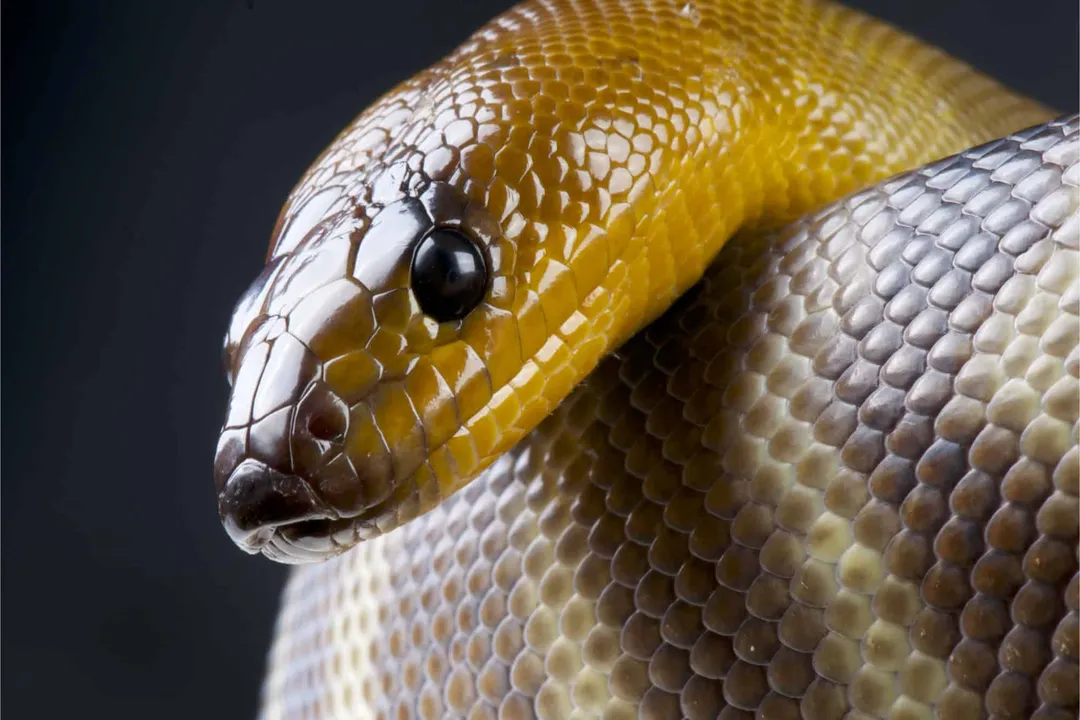
The Woma Python, scientifically known as Aspidites ramsayi, presents a fascinating study in adaptation, thriving where many other large snakes would struggle. This species is one of only two pythons belonging to the genus Aspidites, distinguishing it from many of its Australian python relatives. Often referred to by its older or alternative common name, Ramsay's Python, the Woma is a non-venomous constrictor perfectly suited to the harsh, dry interior of Australia. Understanding this snake requires looking closely at the subtle ways it interacts with its challenging environment, from its cryptic coloration to its reliance on underground retreats.
# Naming and Lineage
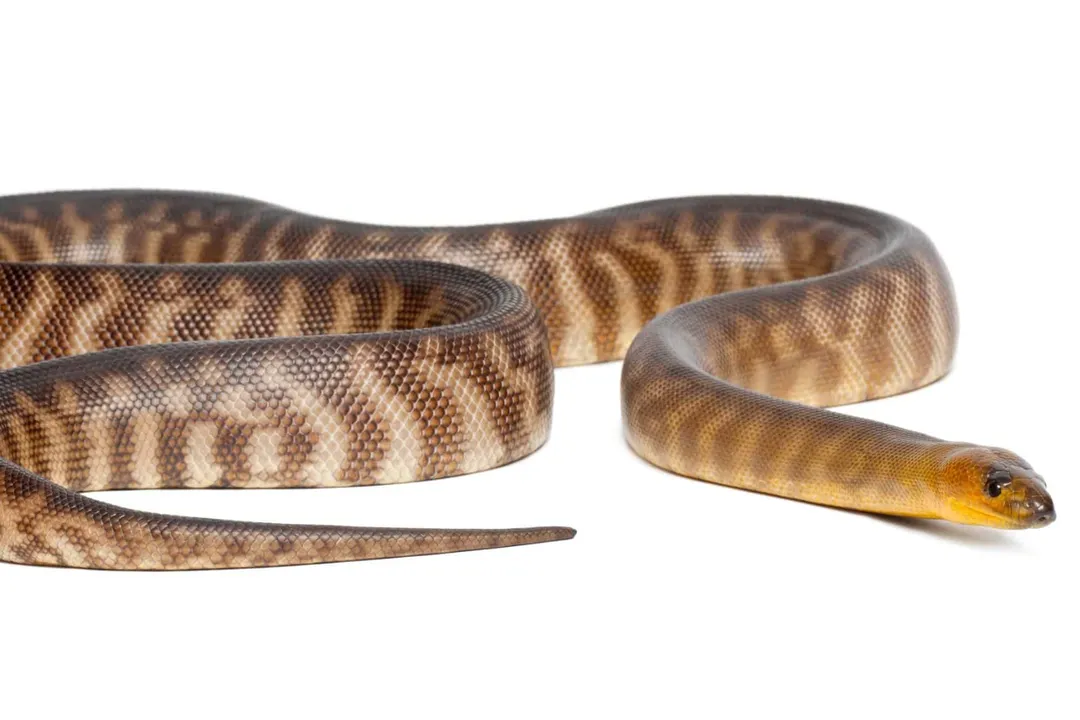
The designation Aspidites ramsayi formally identifies this creature, linking it within the Pythonidae family. The genus name Aspidites itself hints at the snake's appearance, derived from the Greek word for "shield-bearer," which some speculate refers to the snake's sturdy build or perhaps the slightly raised supraocular scales above its eyes. While "Woma" is the preferred common name today, the historical inclusion of "Ramsay's Python" helps connect it to past herpetological studies. Contrast this genus placement with the Black-headed Python (Aspidites melanocephalus), its only close relative within the genus, which generally exhibits a much darker head coloration.
# Physical Traits
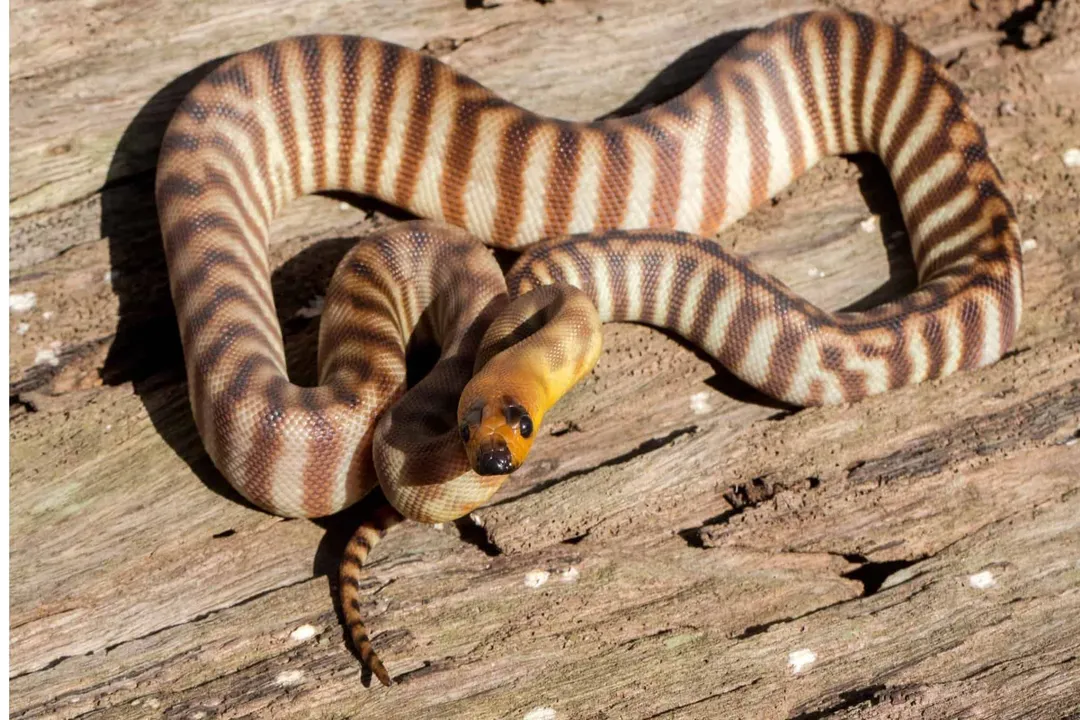
Physically, the Woma Python is generally described as a medium-sized snake, though its build is quite heavy-set for its length. Adults typically measure between four to six feet in length, with some individuals potentially reaching slightly more. Males and females do not show significant sexual dimorphism in size.
The coloration serves as excellent camouflage across the arid landscape it calls home. The base color ranges from a light tan or pale brown to a richer orange-brown, which is often overlaid with irregular dark brown or black speckles and blotches. These markings are rarely organized into distinct bands, instead appearing more scattered. A feature often noted by observers is a dark stripe running from the snout through the eye, providing a contrast to the lighter facial features. The belly scales are usually much lighter, approaching white or cream.
| Characteristic | Typical Measurement | Noted Variation |
|---|---|---|
| Length | 1.2 to 1.8 meters (4 to 6 feet) | Capable of exceeding 2 meters |
| Weight | Moderate for its length | Heavy-bodied build |
| Activity | Primarily Nocturnal/Crepuscular | Can be seen basking |
A quick mental check on camouflage effectiveness illustrates a key adaptation: the Woma’s subdued, earthy tones blend exceptionally well with the pale sand and leaf litter found in mulga scrub. Where a brightly colored snake relies on speed or warning displays, the Woma relies on stillness against a background that mirrors its own skin pigments almost perfectly. This strategy is highly effective in open, dry terrain where cover is sparse.
# Home Ground
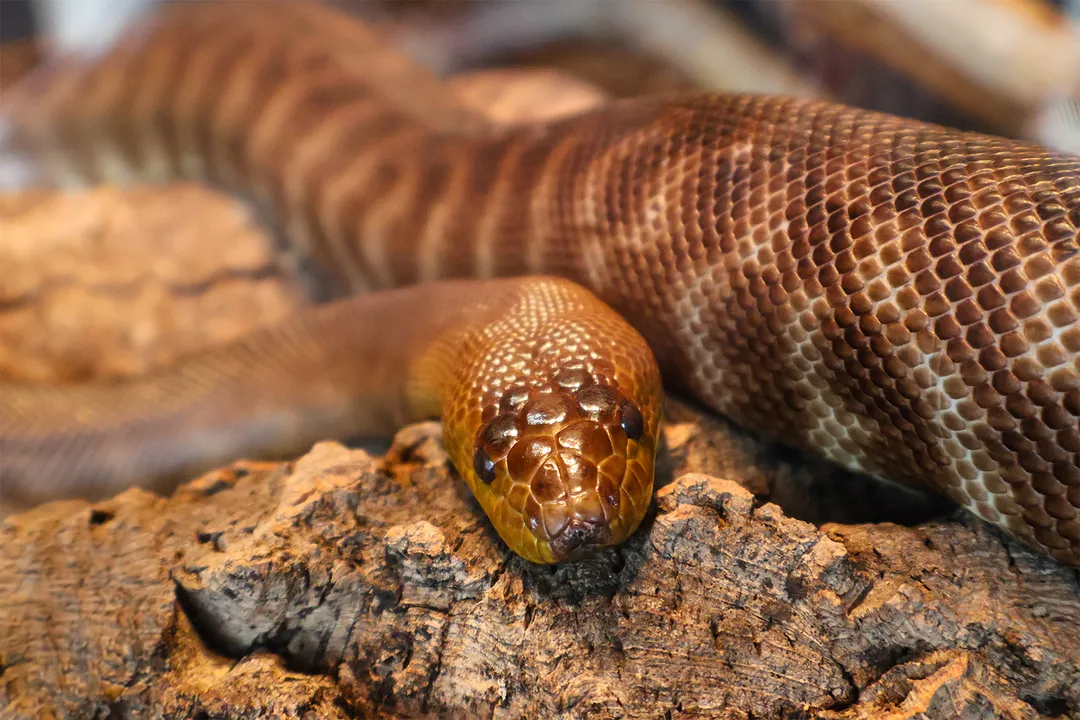
The Woma Python's preferred habitat is firmly rooted in the drier zones of Australia. They are creatures of the arid and semi-arid inland regions, avoiding the wetter coastal areas that support larger python species. Specifically, they are found across a significant swath of central and western Australia.
Their habitat selection is strongly tied to soil type and available shelter. They show a marked preference for sandy soils, often associated with spinifex grasslands and mulga scrublands. This preference is not arbitrary; the soil type dictates the availability of safe retreats. Womas are highly reliant on existing burrows—often those dug by other animals like rabbits, rodents, or even ancient mammal burrows—to escape the intense daytime heat and to ambush prey. They are considered largely terrestrial, spending most of their time on or beneath the ground surface.
# Life Ways
As a nocturnal or crepuscular species, the Woma is most active during the cooler hours of dawn, dusk, and night. This activity pattern helps them conserve energy and avoid overheating in the Australian desert environment. Despite being generally terrestrial, they are capable climbers, though they do so infrequently.
The Woma is a specialized carnivore, relying on ambush tactics rather than active pursuit. Its diet primarily consists of small to medium-sized mammals, with rodents frequently making up a substantial portion of their food intake. However, like many pythons, their menu is flexible and can also include birds, lizards, and other small reptiles encountered in their habitat. They subdue their prey by constriction, using their powerful bodies to overpower the animal before ingestion.
Unlike some of its more famous venomous neighbors in the desert, such as the Inland Taipan, the Woma maintains a relatively sedentary approach to hunting, waiting for prey to wander within striking distance of its hidden position. The success of this waiting game is directly dependent on the density of local mammal populations within its burrow system territory.
# Reproduction and Growth
Reproduction in the Woma Python follows the standard pattern for oviparous (egg-laying) snakes. The female is responsible for caring for the clutch after laying. She exhibits classic maternal behavior, coiling her body around the eggs to provide both protection from predators and necessary thermal regulation until they are ready to hatch.
Clutch sizes tend to be small to moderate, typically ranging from about five to ten eggs, although records may show variation. Incubation periods depend heavily on ambient temperatures, but the period often lasts several weeks to a couple of months before the young pythons emerge. Young Womas are miniature replicas of the adults and must immediately begin hunting small prey to survive in the competitive arid zone. When cared for in captivity, Woma Pythons have demonstrated impressive longevity, sometimes living for over two decades, suggesting a potentially long lifespan in the wild as well.
# Handling and Temperament
While Womas are generally regarded as less aggressive than some other Australian pythons, they are still wild animals deserving of respect. Their defensive posture, when threatened, might involve hissing or striking, but their primary defense mechanism remains camouflage and retreat into a burrow. In the hands of experienced keepers, they can become relatively placid. However, their bite, while not medically significant due to their lack of venom, can still cause tissue damage due to their strong teeth. Anyone interacting with them should remember that they are powerful constrictors equipped with excellent teeth for grasping prey, even if they aren't venomous.
If we consider the environment they inhabit, which includes proximity to burrowing mammals, it becomes clear that their behavior is deeply linked to minimizing exposure. An amateur keeper observing a Woma should resist the urge to constantly handle it, especially immediately after feeding. A practical approach involves allowing the snake at least 48 to 72 hours post-feeding before any interaction, giving the snake time to settle its digestion without stress, which can sometimes lead to regurgitation—a very detrimental event for a reptile already expending significant energy regulating its body temperature in a harsh climate. This patience is key to building trust with this desert specialist.
Related Questions
#Citations
Woma Python - San Diego Zoo Animals & Plants
Woma python
Woma Python
Woma Python | Our Animals
Woma Python Animal Facts - A. ramsayi
WOMA PYTHON
Woma Python - What is It and How Big Does It Get? ...