Why is the Atlas Moth illegal?
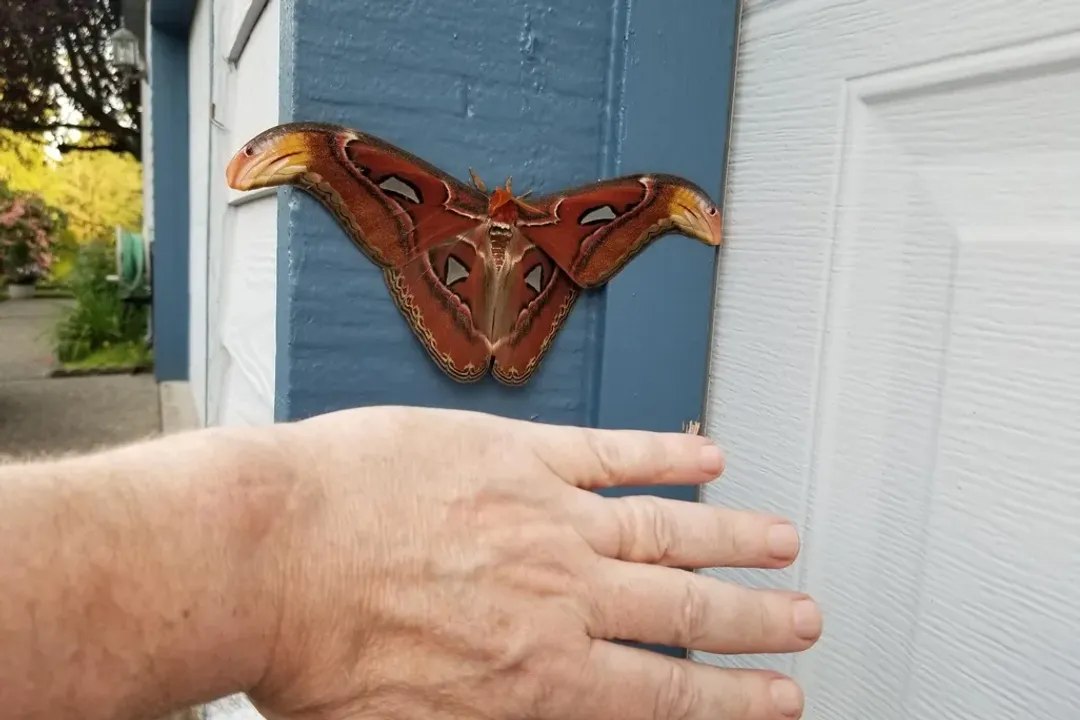
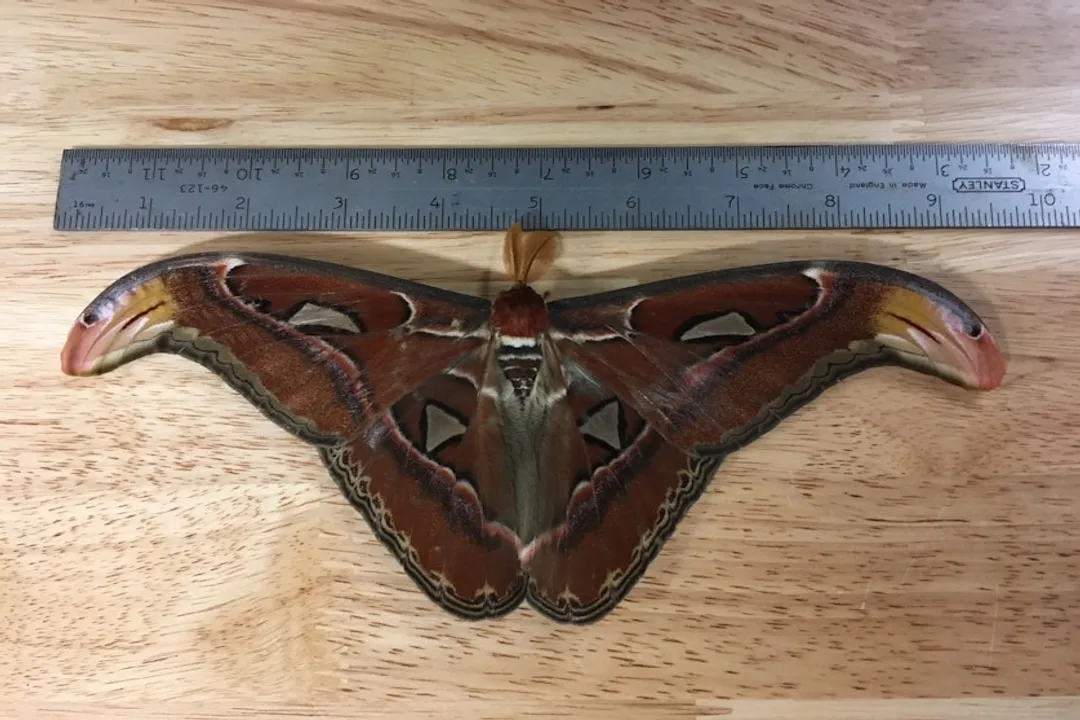
The massive Attacus atlas, known globally as the Atlas Moth, often captures the imagination of entomology enthusiasts due to its staggering size, easily ranking it among the world's largest lepidopterans. [2] Its wingspan can approach a full 10 inches, making any sighting a memorable event. [3] However, for residents of the United States, the fascination stops abruptly at the legal boundary. Possession, trade, and transport of these magnificent tropical insects are strictly prohibited because they are classified as a federally quarantined pest. [5]
# Legal Status
The primary reason the Atlas Moth faces these stringent restrictions is its status as a non-native, invasive species in the US ecosystem. [3] When an organism is not indigenous to a region, its introduction—whether intentional or accidental—carries the risk of ecological disruption. [3] In the context of the United States Department of Agriculture (USDA) regulations, the Atlas Moth falls under a quarantine intended to prevent its establishment outside its native range. [5] This means that possessing, buying, selling, or importing the moth, in any life stage from egg to adult, is illegal without proper permits, which are generally reserved for accredited research or government work. [5][6]
# Invasive Threat
The core of the regulatory action against the Atlas Moth revolves around the potential damage its larval stage—the caterpillar—can inflict on local agriculture and native plant life. [3] As a generalist feeder, the caterpillars are known to consume a wide variety of plant material. [3] If an established, reproducing population were to take hold in a new environment, it could potentially cause significant defoliation to host plants, including commercially important crops or ecologically sensitive native flora. [3] The concern is not about the adult moth, which lives only a short time and does not feed, but about the continuous cycle of reproduction that an invasive species represents. [7] The threat isn't just theoretical; the discovery of even a single specimen prompts immediate, high-level investigation precisely because preventing establishment is far easier than attempting eradication later. [2][4]
# US Discovery
The reality of the threat was underscored by confirmed sightings within the US, specifically in the Pacific Northwest. [4] In August 2022, the first confirmed sighting of a wild Atlas Moth in North America was recorded in Bellevue, Washington. [2][4][8] This event immediately validated the concerns held by agricultural and ecological authorities, as the appearance of a giant, tropical species in a temperate climate signaled either a rare, accidental arrival or, more concerningly, the escape of a pet specimen. [4][9] The appearance of such a large, exotic insect in the US reignited public conversation regarding the ethics and legality of keeping non-native invertebrates. [6] This specific moth was identified as Attacus atlas, the quintessential giant of its kind. [2]
# Regulatory Framework
The federal quarantine designation is a powerful tool used by regulatory bodies to manage risks associated with exotic pests. [5] This designation effectively closes off commercial pathways and pet trade routes that might otherwise supply this species to hobbyists. [1] For the public, this translates to a clear prohibition: if you find one, you should not attempt to keep it or ship it anywhere. [5] In the case of the Washington sighting, authorities were called in to manage the situation, treating it as a potential invasive outbreak. [4] The strictness of the ban stems from lessons learned with other invasive insects that established themselves after hitchhiking or intentional release, leading to long-term environmental and economic costs. [7] When a large, exotic insect like the Atlas moth is found, the immediate concern shifts from mere possession to potential establishment. The vast, often unmonitored suburban and rural landscapes in areas like the Pacific Northwest present a significant challenge for rapid eradication, making the pre-emptive ban essential for controlling supply chains that could introduce new breeding populations. [2][4]
# Hobbyist Interest
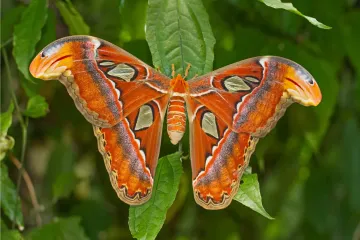
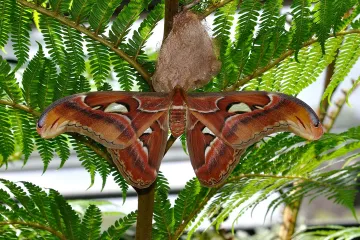
Despite the strict legality, there remains a detectable curiosity and demand for the Atlas Moth among certain segments of the insect-keeping community. [1] People are drawn to its imposing size and its dramatic, wing-tip markings that famously mimic the head of a snake or cobra as a defensive display. [9] This interest exists in the space between appreciation for biodiversity and adherence to quarantine laws. [6] Hobbyists who might normally seek out large or unusual invertebrates must navigate the knowledge that importing or possessing Attacus atlas carries serious legal repercussions in the US. [5] While large moths are native to North America, the sheer size and pattern of the Atlas moth differentiate it significantly. For instance, while many large native moths exist, such as the various Sphinx or Silk moths, the Atlas moth's distinct, often pale, triangular "window" patches on its wings—which can resemble clear plastic or glass—is a telltale sign that an observer might be looking at a non-native species warranting immediate reporting rather than a large native one. This distinction is vital for accurately assessing risk upon discovery.
# Identification Clues
When encountering a moth of unusual size, knowing the difference between native giants and quarantined imports can be important, though any large, unfamiliar moth should be treated with caution and reported to local agricultural extension offices. [3] Atlas moths hail from tropical and subtropical regions of Asia. [2] They are characterized by their enormous scale and complex, earthy coloration. The wing shape itself is distinctive, often lacking the small tails seen on some other large Saturniids. While they share the large size category with some native silk moths, the Attacus genus is distinctly non-North American. For those documenting specimens, noting the primary colors—browns, oranges, and creams—along with the signature transparent wing patches, helps confirm identification against native species that might top out at a slightly smaller size or possess different color signatures. [9]
| Feature | Atlas Moth (Attacus atlas) | Representative Native Giant (e.g., Luna Moth) | Regulatory Status (US) |
|---|---|---|---|
| Origin | Southeast Asia | North America | Federally Quarantined Pest [5] |
| Max Wingspan | Approximately 10 inches [3] | Typically 4-6 inches | Legal Possession Prohibited [5] |
| Key Marking | Large, clear/pale wing "windows" [9] | Typically uniform green/pale coloration | Risk of Invasive Establishment [3] |
The regulations surrounding the Atlas Moth are a clear example of preventative biological containment. Unlike restrictions placed on endangered species, the ban here serves to protect the native environment from the species in question, a necessary precaution given the moth’s demonstrated ability to survive and thrive in varied habitats when transported outside its natural range. [3]
Related Questions
#Citations
Does Anybody know where I can find Atlas moth cocoons ...
One of the world's largest moths has been found for the first ...
The Giant Atlas Moth is Here - Threats and Facts
First U.S. Sighting of Massive Atlas Moth Confirmed
Atlas moths are federally quarantined pests, which means ...
Are Atlas moths legal in US?
What to Know About the Giant Atlas Moth
Behemoth moth lands in Bellevue, alarming agriculture ...
Enormous Tropical Moth That Mimics Cobras Spotted in ...