Why is it called a turtle frog?

The reason this peculiar amphibian carries the name turtle frog is immediately apparent once you observe its most defining physical characteristic: its remarkably dome-shaped back, which strongly evokes the carapace of a small turtle. [1][5][8] This unique morphology sets it apart from almost every other frog species known. It is not an external shell in the reptilian sense, but rather the body structure itself, leading to a common name that sticks immediately in the memory of anyone who sees one. [8]
# Dome Shape
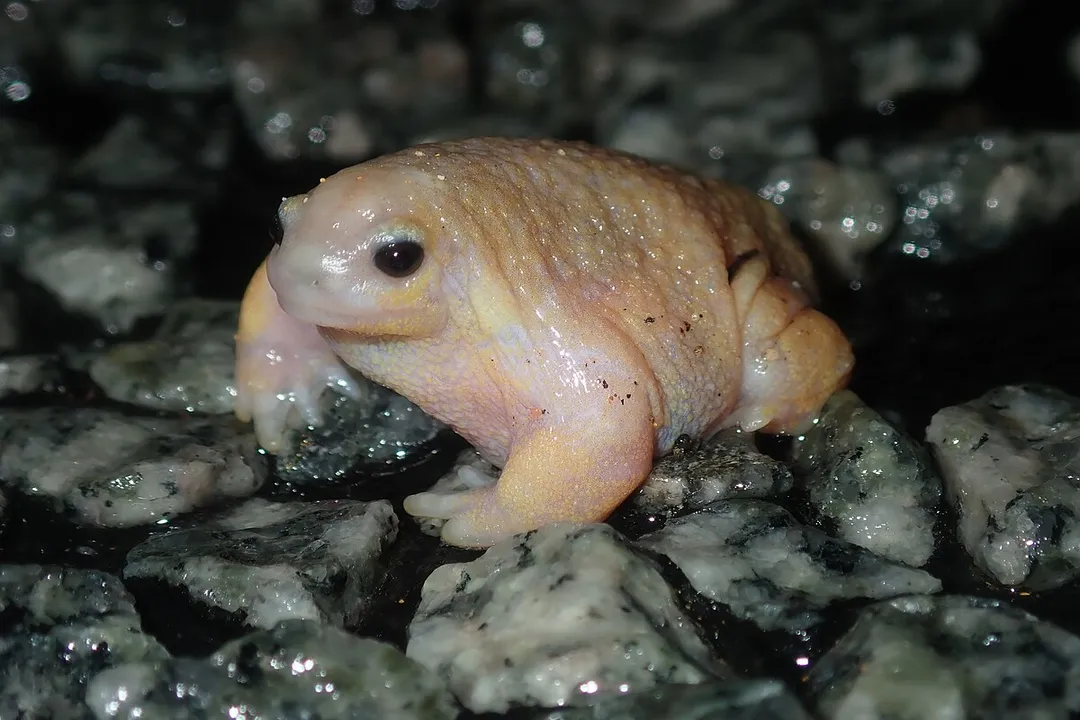
The visual association is the key to its common appellation. [5] The turtle frog, scientifically classified as Myobatrachus gouldii, [1][8] possesses a very rounded, thick body with a flattened underside. [5] This shape, combined with its short, stocky limbs, creates an appearance that is distinctly un-frog-like when compared to more typical, slender-bodied frogs. [1] The common description often highlights that the frog looks as if its body has been squeezed or compressed into that distinctive, heavy-looking dome. [5] This physical attribute is so dominant that it overrides any other characteristic when it comes to casual identification and naming conventions. [8]
If you consider the vast array of anurans found globally, most are built for leaping or swimming, featuring streamlined bodies. The turtle frog, by contrast, seems built for pushing through soil, and its compact form is less about explosive movement on land and entirely about subterranean efficiency. It’s a fascinating case of convergent evolution, where the function of living primarily underground dictates a shape that mimics something entirely different in the terrestrial realm—a reptile shell—simply because that shape offers the best resistance and push-through capability in dense earth. [1][5] This adaptation is critical because, unlike most frogs that seek temporary shelter under logs or rocks, the turtle frog spends the vast majority of its life entirely beneath the soil surface. [5]
# Scientific Name

While "turtle frog" is the common name derived from its appearance, its scientific designation tells a slightly different story about its history and location. The species is formally known as Myobatrachus gouldii. [1][8] The genus name, Myobatrachus, translates roughly from Greek as "mouse frog," which might seem contradictory given its rounded appearance, perhaps referring to its small size or movements in certain contexts. [1] The specific epithet, gouldii, honors the early British naturalist and explorer, John Gould, who was instrumental in documenting Australian fauna. [1] This binomial nomenclature grounds the creature firmly within the established biological classification, even as its common name emphasizes its most striking visual feature. [7]
# Burrowing Life

The environment and lifestyle of M. gouldii provide context for why that shell-like body is advantageous. This species is endemic to Western Australia, [3][7] primarily inhabiting the sandy soils of the Swan Coastal Plain and the Wheatbelt regions. [7] These frogs are exceptional fossorial specialists, meaning they are adapted for digging and living underground. [1][5] They spend nearly their entire lives below the surface, emerging only after significant rainfall, often for brief periods. [5]
Imagine a typical frog needing to squeeze under a log or into a crevice to escape a predator or dry conditions. The turtle frog doesn't need to find a space; it makes its space using its body as a tool. [5] The smooth, hard, dome-like back likely acts as a perfect ploughshare to push through the soil matrix. When you contrast this with the soft, delicate skin and elongated limbs of a tree frog, the evolutionary divergence becomes stark. The turtle frog has sacrificed agility above ground for unparalleled durability and mobility underground. [1] This dedication to the subsurface lifestyle means that finding one is a rare event for the casual observer, making any sighting a special occasion. [3][7]
# No Tadpole

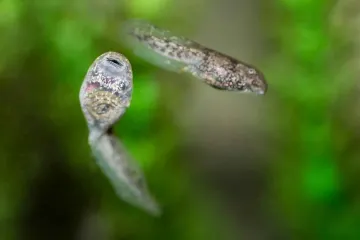
Another feature that makes the turtle frog truly unique, and worth noting alongside its name, is its reproductive strategy. Most people associate frogs with a tadpole stage—an aquatic larval phase. [1][7] The turtle frog completely bypasses this step through a process known as direct development. [1][5] The female lays her small clutch of eggs underground, and the young hatch directly into miniature versions of the adult frog, or froglets. [5][7]
This reproductive method is intimately tied to its secretive, subterranean existence. Since the eggs are deposited in the moist soil beneath the surface, there is no need for temporary ponds or streams for tadpole development. [1] This strategy reduces the risk associated with exposed water bodies, such as predation or complete drying out during dry spells, giving the species a built-in resilience that water-dependent frogs lack. It is a complete life cycle adapted to arid conditions and terrestrial living, far removed from the typical amphibian blueprint. [5]
Here is a quick comparison to illustrate how specialized this life cycle is relative to other local Western Australian frogs:
| Feature | Myobatrachus gouldii (Turtle Frog) | Typical Small Frog (e.g., Crinia spp.) |
|---|---|---|
| Primary Habitat | Subterranean (underground) [5] | On ground surface, under debris [7] |
| Larval Stage | None (Direct Development) [1][5] | Aquatic Tadpole [1] |
| Body Shape | Dome-shaped, short limbs [1][5] | Slender, longer limbs for hopping [1] |
| Primary Diet | Termites (underground) [1][5] | Various small insects (surface) |

# Conservation Note
Due to its highly specific habitat requirements—namely the right soil composition and moisture levels for burrowing—the turtle frog faces potential threats from habitat modification. [7] Its dependence on the specific conditions of the Swan Coastal Plain and Wheatbelt regions makes it vulnerable to changes in land use and potentially climate shifts that alter soil moisture profiles. [7] Because they are so rarely seen above ground, monitoring their populations and health can be challenging for researchers. [6] This difficulty has spurred interest in citizen science initiatives, like the FrogWatch program run by local institutions, which encourage the public to report sightings. [6][7] Any confirmed observation, especially outside of known core areas, provides valuable data to assess the true distribution and stability of this unique, dome-backed amphibian. [6] Supporting local conservation groups focused on Western Australian endemic species can indirectly help ensure that the 'turtle frog' remains a feature of the landscape, visible or not. [7]
#Videos
What Exactly Is: Turtle Frog | The Muscular Frog - YouTube
Related Questions
#Citations
Myobatrachus - Wikipedia
What Exactly Is: Turtle Frog | The Muscular Frog - YouTube
The turtle frog is found in Western Australia. It gets its name ... - Reddit
Turtle frog's unique digging behavior in western Australia - Facebook
Turtle Frog - Curious Species
Citizen science could aid conservation efforts for turtle frogs in ...
Turtle Frog | Western Australian Museum
Turtle frog - Whiteman Park