Why are jacanas called Jesus birds?
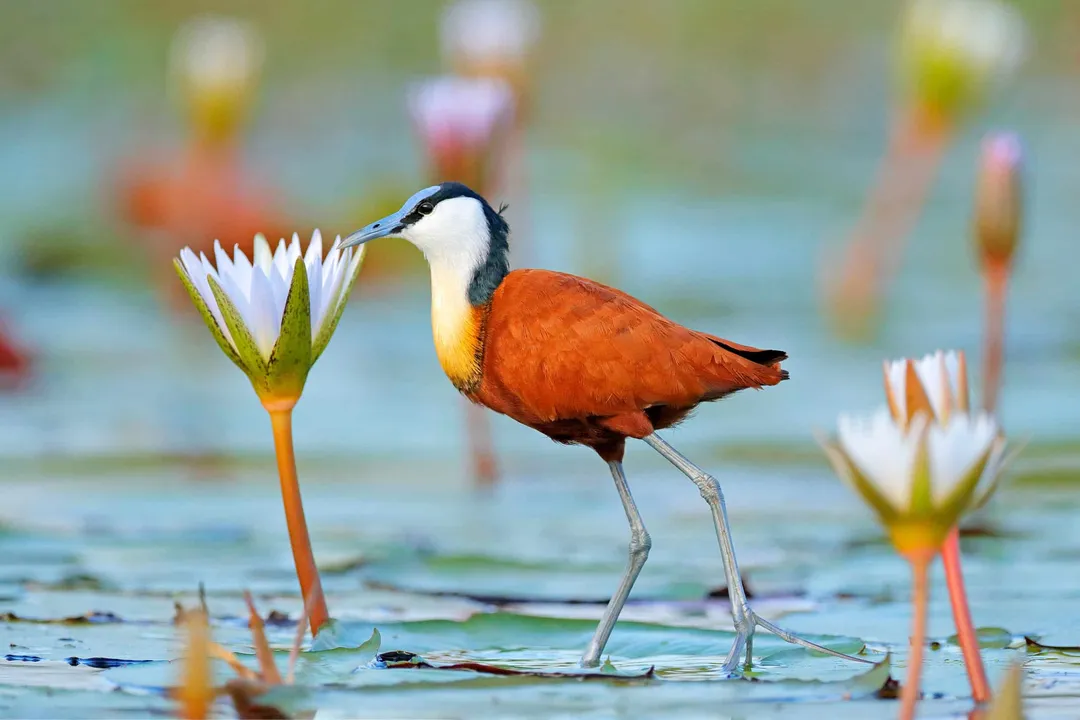
The nickname "Jesus bird" follows the jacana wherever it goes, often accompanied by the equally evocative moniker "lily-trotter". [1][4][7] This unusual association stems directly from the bird's astonishing method of locomotion. When an observer witnesses this creature moving across a pond covered in lily pads, the visual effect is undeniably reminiscent of the biblical story of Jesus walking on water. [4][7] This apparent miracle, however, is explained not by divine intervention but by truly exceptional anatomical engineering. [7]
# Physical Structure
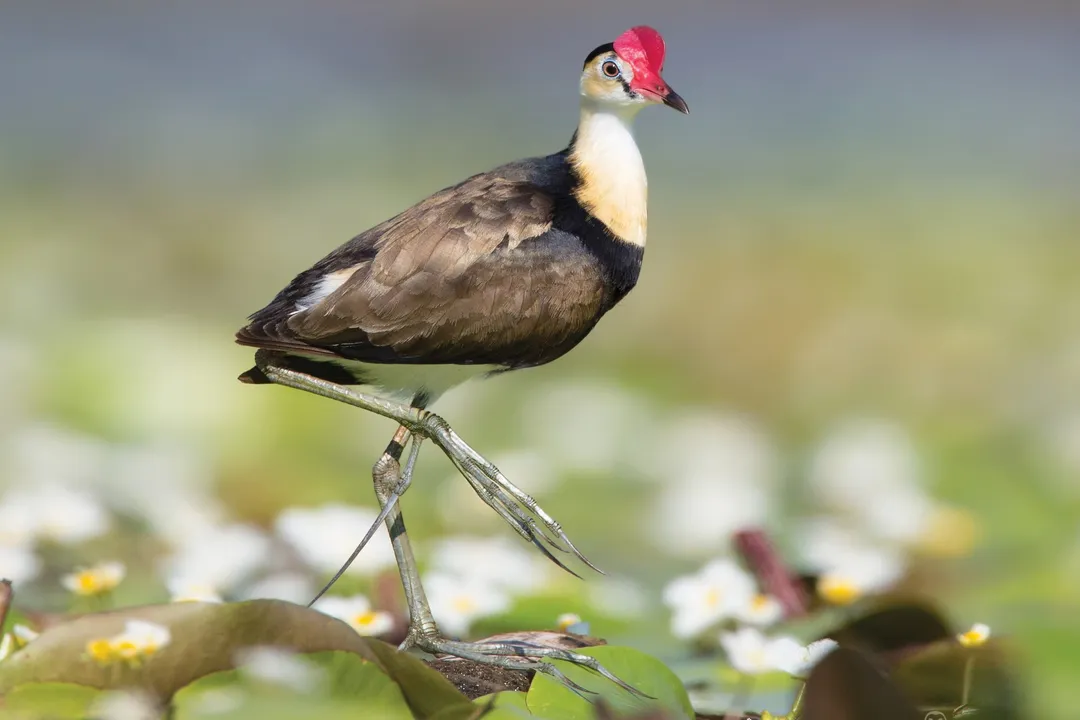
The secret to the jacana’s seemingly supernatural ability lies in its feet. [4] Jacanas possess disproportionately long toes and claws relative to their body size. [1][4] These elongated appendages function to spread the bird's relatively light body weight over a much larger surface area. [1] Think of it like snowshoes for the water's surface. [7] This distribution allows the bird to stand and walk across floating vegetation, such as water hyacinth or lily pads, without sinking through the gaps between the leaves. [1][4]
It is important to understand that the bird is not actually walking on the water itself, but rather on the dense, often tangled network of aquatic plants that carpet the surface of the water body. [7] The bird steps lightly, placing one foot carefully after another on the pads. [2] This precise weight distribution is essential; if the bird were heavier or its feet less specialized, it would plunge right through the mat of greenery. [4] This specialized foot structure grants the jacana access to a foraging habitat that remains largely inaccessible to most other wading birds. [4]
# Aquatic Realm
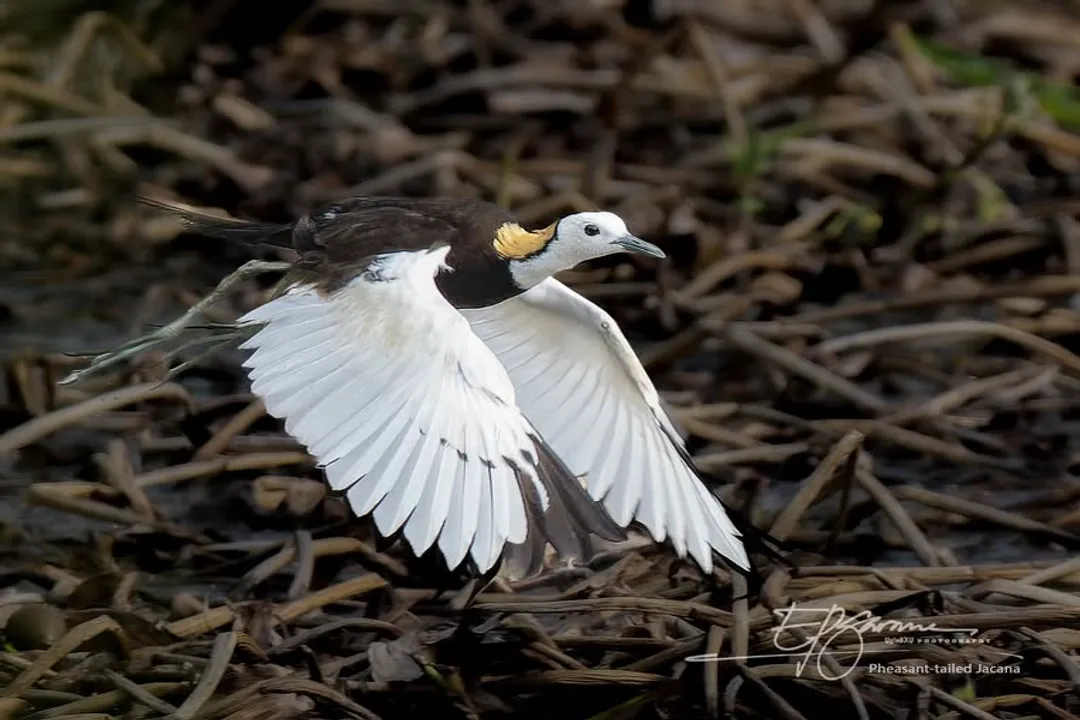
Jacanas are perfectly suited to life in freshwater marshes, ponds, and slow-moving bodies of water. [4] They favor environments where floating aquatic plants are abundant, creating a living, spongy substrate upon which they can hunt insects, seeds, and small invertebrates. [7] The genus name for this family of birds is Jacanidae. [3]
This lifestyle leads to a unique foraging strategy. While a heron might stalk the edges or a duck might swim through open patches, the jacana claims the entire surface area of the dense floatage as its territory. [4] This allows them to exploit resources in the central, most inaccessible parts of the pond. In many ways, their feet define their entire ecological niche, turning the surface layer of the water into their personal, private feeding ground. [4]

# Mating System
While the water-walking ability is responsible for the "Jesus bird" nickname, the jacana's social behavior offers an equally compelling, if less widely known, reason for fascination. [1] Many bird species follow a monogamous or polygynous model, but the jacana, particularly the African Jacana, showcases one of the most extreme examples of polyandry found in the avian world. [1][7]
In this system, the roles are almost entirely reversed compared to what one might typically expect. The female jacana is larger and more brightly colored than the male. [1] She is the aggressive defender of the territory, which often encompasses several small nesting sites occupied by different males. [7] The female maintains these multiple breeding partnerships. [1]
Once the eggs are laid, the male takes over all parental duties. [7] He is solely responsible for incubating the clutch, usually keeping the eggs warm beneath his body while floating on the water surface or a secure pad. [1] He also undertakes the entire responsibility of brooding and feeding the hatchlings. [7] The female, having ensured the continuation of her genes through multiple pairings, focuses her energy on territorial defense and finding the next male to breed with. [1] This reproductive strategy is biologically remarkable, contrasting sharply with the common visual interpretation of a lone bird gracefully stepping across the water. [1][7] The physical adaptation for walking is the famous sight, but the social structure represents one of nature’s most profound reversals of typical avian gender expectations. [1][7]
# Types Found
The term "jacana" applies to several species across the globe. [3] The general family encompasses eight species. [3] Different species are known by specific names depending on their geographic location. [4]
For instance, the African Jacana is often the bird specifically referenced when discussing the "Jesus bird" in an African context. [1] The Wattled Jacana is another well-known species, easily recognized by its colorful wattles extending from the forehead. [1] In the Americas, the Northern Jacana and the Wattled Jacana are found, though they share the same specialized foot structure and penchant for walking on floating vegetation. [4]
The appearance can vary slightly between the species. Some, like the African Jacana, have darker plumage, while others might display more striking colors or wattles. [1] Regardless of the specific species, the physical mechanism for walking on water remains consistent across the Jacanidae family. [3][4]

# Evolutionary Advantage
The development of such specialized feet points to a strong selective pressure within their specific marsh environments. [4] While the polyandrous mating system likely evolved due to the patchy, ephemeral nature of prime nesting sites—where a female can maximize reproductive success by securing multiple mates quickly—the feet address a constant daily challenge: movement and foraging efficiency. [1][7]
If we map out the typical day for a jacana, the feet are indispensable. A bird restricted to land or swimming would be significantly less effective at exploiting the rich insect life hidden within the dense flora that floats just above the waterline. [4] This ability to utilize the surface layer means the jacana essentially commands a domain unavailable to competitors, making the evolutionary investment in those long toes worthwhile. [4] It is this practical, day-to-day mastery of the floating landscape, coupled with the surprising domestic arrangement, that cements the jacana's place as a truly unique subject of ornithological study. [1][7]
#Videos
Why is the Jacana also called ''Jesus Bird"? - YouTube
African Jacana the Jesus Bird - YouTube
Related Questions
#Citations
The male African Jacanas (also known as Jesus birds) signature ...
Why is the Jacana also called ''Jesus Bird"? - YouTube
Jacanidae - Wikipedia
Jacana, aka Lily-trotter - BirdNote
Why Jacana is referred to as Jesus bird …. Jacanas often appear to ...
Birds: Jesus Bird | Henry E. Hooper
BirdNote®: Lily-Trotters, Jesus Birds - Living on Earth
This is Jesus bird and they're making it go through undue stress. Its ...