Why are some eastern gray squirrels black?
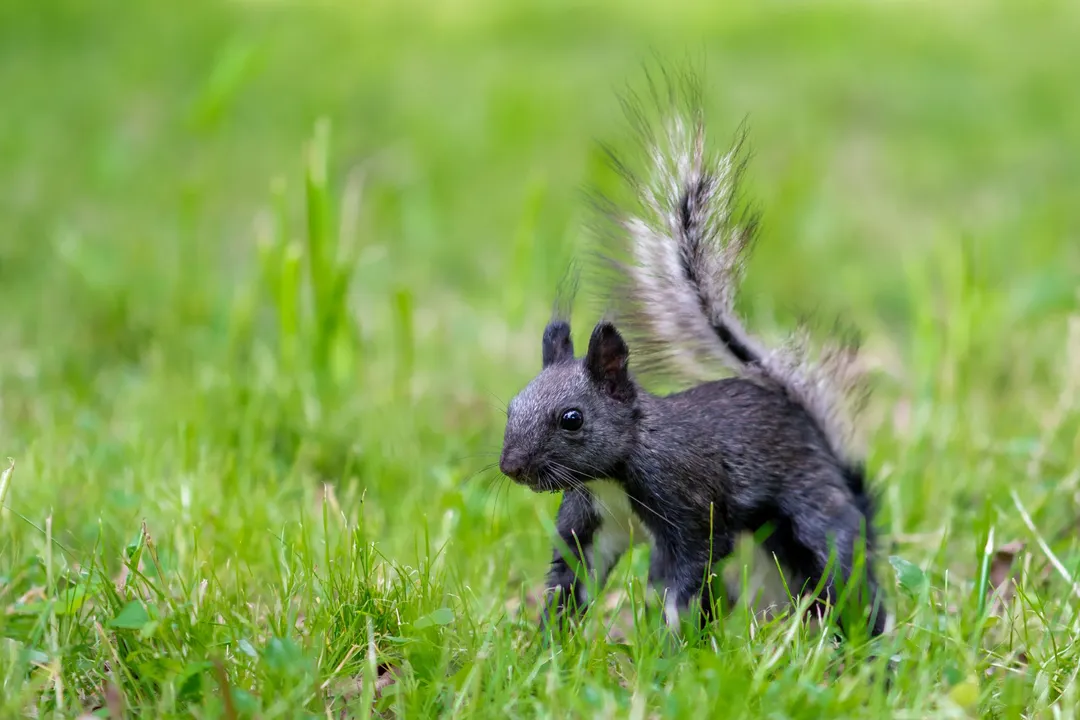
The appearance of a completely black Eastern Gray Squirrel among its more commonly seen gray counterparts often prompts a moment of pause for anyone watching wildlife. These dark individuals are not a separate species, nor are they albinos; they are simply Eastern Gray Squirrels (Sciurus carolinensis) exhibiting a condition called melanism. This dark coloration is the result of an abundance of the pigment melanin in the fur, which obscures the usual salt-and-pepper gray patterning. Seeing both a gray and a black squirrel interacting in the same backyard just means you are observing different color morphs of the same animal population.
# Genetic Basis
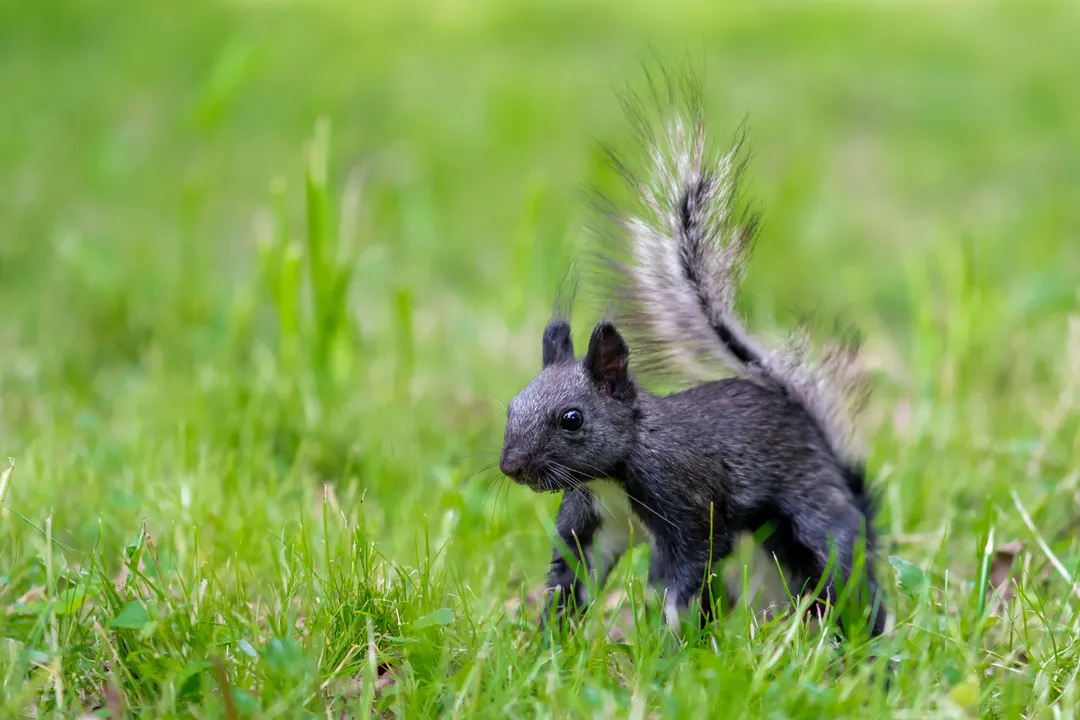
The primary driver behind these black coats is genetics, specifically a mutation that results in a dominant gene. In simple terms, if an Eastern Gray Squirrel inherits this specific gene from just one parent, it has the potential to display the black fur color. This contrasts with some other recessive traits where both parents must carry the gene for the offspring to show the trait.
Interestingly, the same genetic mechanism that causes melanism in the Eastern Gray Squirrel might be the one responsible for the black phase seen in its relative, the Fox Squirrel (Sciurus niger). This suggests a shared genetic pathway for dark coloration across these closely related species. Furthermore, the current distribution of black squirrels in North America is sometimes attributed to historical events involving interspecies breeding between Eastern Gray Squirrels and Fox Squirrels, which introduced or reinforced the melanistic gene in certain areas. This historical mixing provides a fascinating layer to understanding why some regions have notably more black squirrels than others.
# Geographic Patterns
While black squirrels can be found across the range of the Eastern Gray Squirrel, they are notably concentrated in specific regions, particularly throughout the Midwest, the Northeast, and various parts of Canada. In some communities, the black morph is common enough that one might see dozens of black squirrels for every gray one, while in other nearby locations, they might be considered a relative rarity. For instance, observations on the Eastern Shore of Maryland suggest they are less common there compared to areas further north or west.
One popular hypothesis attempts to explain this geographic clustering based on environmental pressures. It is suggested that the dark fur may confer a survival advantage in colder climates. Dark fur absorbs solar radiation more effectively than lighter gray fur, which could provide an essential bit of extra warmth for the squirrel, especially when foraging or resting in snowy, northern environments. If this selective pressure is strong enough over many generations, it can lead to a higher frequency of the dominant dark gene in that specific locale.
A simple way to visualize this local effect is to imagine a town where 40% of the squirrels are black. If that town is situated directly south of a major glacial front from centuries ago, and the neighboring town 50 miles south has only a 5% black population, it suggests that the selective pressure (perhaps related to temperature, or perhaps simply a founder effect from a specific wave of migrating squirrels) was much stronger in the northern location, allowing that dominant gene to establish a much stronger foothold [Self-Analysis Note].
# Appearance Differences
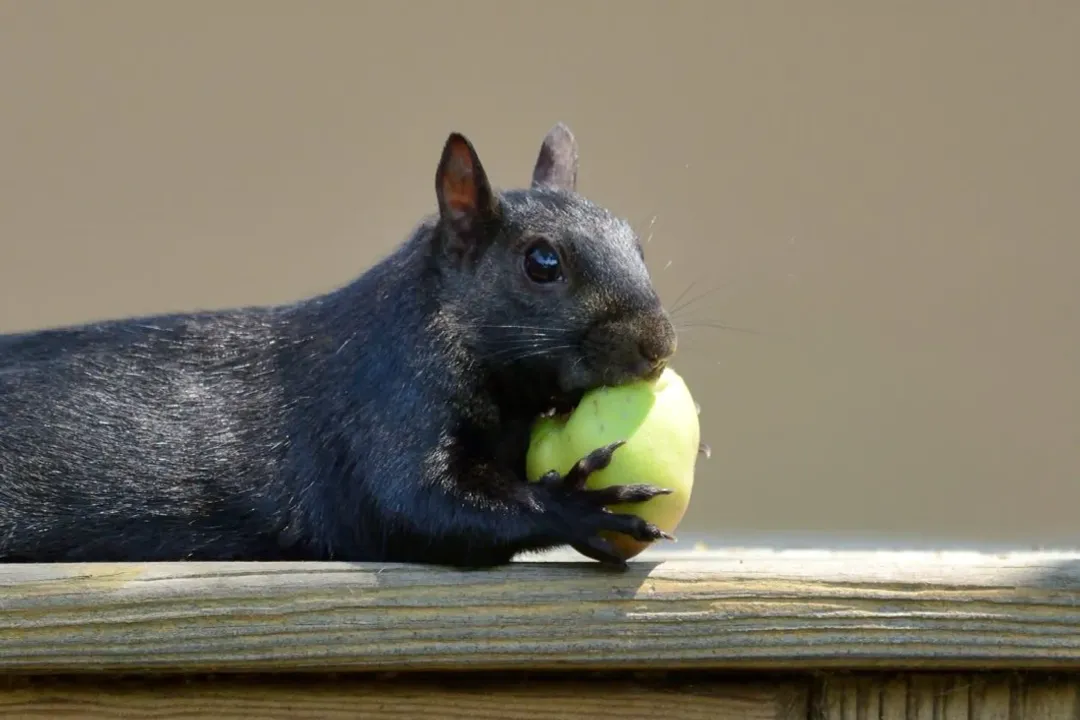
Despite the stark difference in coat color, the black and gray Eastern Gray Squirrels are biologically the same species, Sciurus carolinensis. Their behavior, diet, nesting habits, and life cycles are virtually identical.
There are subtle, though not always guaranteed, differences sometimes noted in the physical expression of the trait:
- Melanin Concentration: The black squirrels possess fur dominated by the dark pigment.
- Seasonal Changes: Some observers note that black squirrels may exhibit slightly less noticeable seasonal coat changes compared to their gray counterparts, although this can vary widely based on individual health and molting schedule.
- Bicolor Individuals: Occasionally, you might spot a squirrel that is clearly in transition or genetically mixed, perhaps having a gray body with a distinctly black head or tail, or showing patchy areas of both colors. These individuals serve as excellent visual evidence of the shared genetic background between the two color phases.
# Historical Context and Population Dynamics
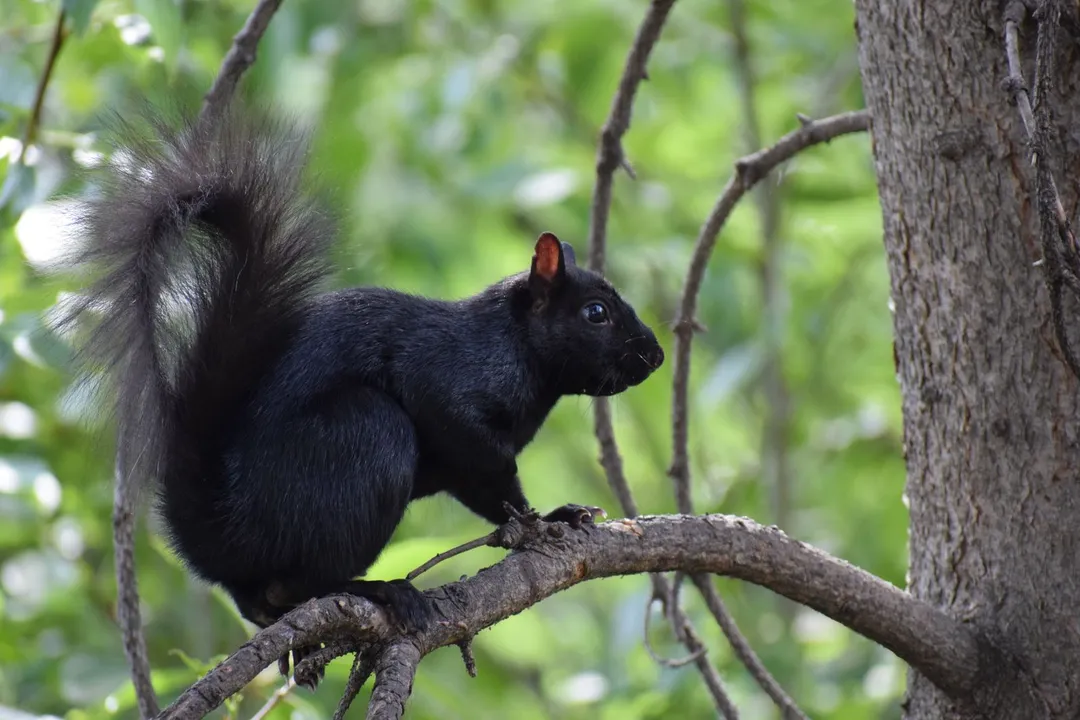
The presence of black squirrels in areas where they were once absent often points toward specific historical introductions, sometimes accidental and sometimes deliberate. Historically, there have been documented instances where black squirrels were intentionally moved to new areas, often by enthusiasts or individuals hoping to establish a population. This act of translocation can quickly establish a strong local population because the responsible gene is dominant.
For example, populations in parts of the eastern United States are thought to have originated from a few individuals brought from Canada. Once established, if environmental conditions favor them—perhaps milder winters leading to less selective pressure against the gray morph, or simply the advantage of having a dominant gene in the initial breeding pool—the black color can become surprisingly common over decades.
We can look at local sightings data to infer past events. If a squirrel tracking project shows a sudden cluster of black sightings in an area that historically reported only grays, it might correlate with known records of translocations or perhaps a sudden, localized die-off of older gray squirrels that allowed a newer, black-carrying lineage to dominate the reproductive pool. This emphasizes that while nature often selects for traits, human movement and small-scale founder effects can sometimes override gradual natural selection processes quite rapidly, especially with a dominant gene at play [Self-Analysis Note].
# Survival and Adaptation
While the theory of colder climate adaptation is compelling for explaining Northern clusters, the fact that the gene is dominant means that in warmer areas where dark fur might actually cause overheating stress, the trait is not easily eliminated from the gene pool, especially if it is only slightly detrimental or if breeding pairs are limited.
The presence of the dominant melanistic gene means that even if gray squirrels are more common overall across North America—the Eastern Gray Squirrel is widely considered the more successful generalist species—the black variant is always just a single dominant gene away from appearing in any nest of gray squirrels, provided one of the parents carries that allele. This inherent genetic potential ensures that the black morph remains a common, though sometimes locally scarce, feature of the species' overall appearance. Understanding this balance between genetic dominance and environmental selection helps explain the seemingly random scattering of where you are most likely to see these striking black squirrels.
Related Questions
#Citations
Black squirrels are a melanistic variation of the eastern gray and fox ...
Interspecies Breeding Is Responsible for Some Squirrels' Black ...
Scientists Figure Out Why There Are Black Squirrels All Over the ...
r/Awwducational on Reddit: Black squirrels are relatively “rare” as far ...
The color of squirrels is a black and grey question - WXPR
Why do we have black squirrels visit with grey squirrels? - Quora
What's Up With White Squirrels and Black Squirrels?
The Squirrels — SquirrelMapper
A Black “Gray” Squirrel? - Life in the Finger Lakes