What kind of ground squirrels are in Utah?

Utah is home to a surprising variety of small mammals, and within the broader squirrel family, Sciuridae, several species of ground squirrels make their homes across the state's varied landscapes. While the state boasts approximately a dozen squirrel species in total, one of the most recognizable and widespread is the Uinta ground squirrel (Urocitellus armatus).
# Utah Species Count
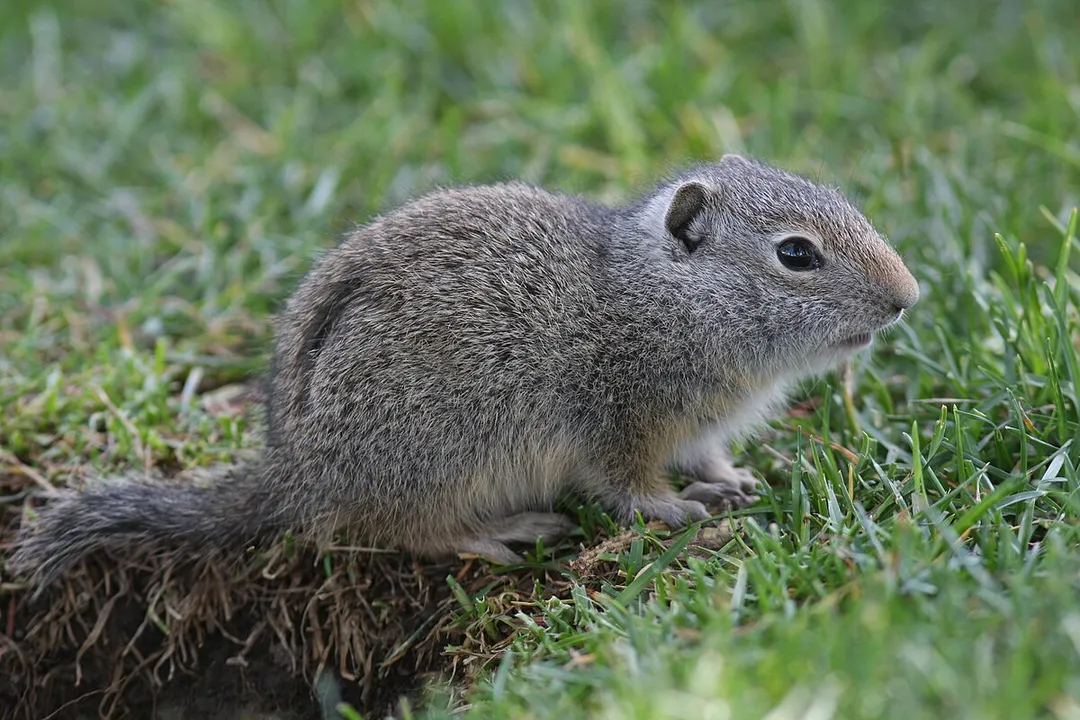
The sheer number of squirrel species present in Utah speaks to the diversity of its ecosystems, ranging from high alpine zones to arid desert floors. Although many species fall under the broad umbrella of Sciuridae, which includes tree squirrels and chipmunks, the true ground squirrels occupy specific ecological niches. The Uinta ground squirrel is perhaps the most frequently encountered in the mountainous regions, often being the focus of public attention when they emerge en masse for their brief summer activity period.
# Uinta Appearance
The Uinta ground squirrel is a medium-sized mammal with a distinctly stocky build. Its fur typically presents a grizzled grayish-brown or tawny coloration, helping it blend into the rocky, grassy environments it prefers. A key identifying feature is the dark, almost black, ring that encircles the eye, which sets it apart from some of its relatives. They possess relatively short ears and a tail that, while present, is not as long or bushy as those found on tree squirrels.
Physically, adults generally measure between 300 and 380 millimeters in total length. Mass can vary significantly depending on the time of year and gender, with weights commonly falling between 300 and 500 grams, though males tend to be heavier before hibernation. Their physical adaptations are geared toward life both above and below ground, with strong claws useful for digging their extensive burrow systems.
| Characteristic | Measurement / Description | Source |
|---|---|---|
| Scientific Name | Urocitellus armatus | |
| Total Length | 300–380 mm | |
| Weight Range | 300–500 grams | |
| Distinctive Mark | Black ring around the eye | |
| Primary Habitat | High-elevation meadows |
# Habitat Niche
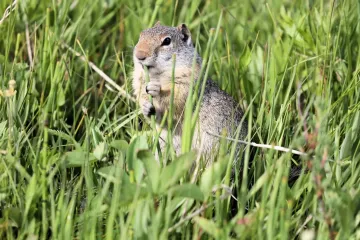
The preferred environment for Urocitellus armatus is quite specific compared to the broader needs of the Sciuridae family across the entire state. Uinta ground squirrels favor high-elevation mountain meadows, open sagebrush flats, and the edges of coniferous forests. They thrive in areas that offer both good forage and access to well-drained soil for burrow construction. In places like the Uinta and Wasatch Mountains, they are commonly found inhabiting disturbed areas, including roadsides and campgrounds, which can bring them into close, albeit often brief, contact with human visitors.
If one were to track the distribution, you would notice that the Uinta ground squirrel strongly correlates with specific elevation bands, typically staying in cooler, more mesic (moist) environments than some of their desert-dwelling relatives might prefer. While other ground squirrels exist in Utah, the Uinta species is defined by this association with the montane zones. Understanding this preference is helpful for predicting where you might encounter them while hiking or recreating in the summer months.
# Social Life and Habits
Uinta ground squirrels are decidedly not solitary creatures; they are known for being highly social, living in distinct colonies that can be quite dense. These colonies consist of several burrow systems concentrated in a favorable patch of habitat, allowing for communal vigilance against predators. They are primarily diurnal, meaning their activity is centered around the daylight hours.
Their day-to-day existence revolves around foraging and maintaining their complex underground homes. They spend significant time standing upright, often on prominent rocks or hummocks, surveying the area for danger—a classic ground squirrel posture. While they are herbivores, consuming grasses, seeds, and roots, they are known to occasionally supplement their diet with insects.
When the cooler temperatures of late summer and early fall arrive, signaled perhaps by changing foliage at higher elevations, these animals prepare for their long sleep. Hibernation is a critical period, lasting an extensive seven to eight months, usually beginning around September or October. The timing of emergence is also worth noting: males typically awaken first in the early spring, often before the snow has completely melted from all shaded areas, while females and juveniles follow shortly after. This early emergence by the males sets the stage for the breeding season.
For those documenting wildlife in the state, recognizing the Uinta squirrel's emergence period—which is relatively short compared to their long dormancy—is key to observing their peak activity. This focused window of summer presence means that in many high-elevation parks, the landscape feels dramatically different just a few weeks after the squirrels disappear underground for the winter.
# Distinguishing Ground Squirrels
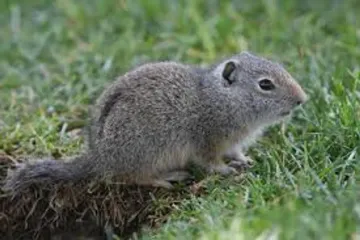
While the Uinta ground squirrel is a known quantity in the mountains, Utah’s environment supports other members of the squirrel and rodent families that can sometimes be confused with them, especially by casual observers. For instance, smaller, faster squirrels might be chipmunks, or species adapted to hotter, lower elevations, like the White-tailed Antelope Squirrel (if present in a specific region), will exhibit different social behaviors and emergence timings.
The key distinction often comes down to habitat and social structure. If you are in a high mountain meadow, seeing dozens of these animals interacting in a large colony strongly suggests the Uinta species. Conversely, a solitary, very fast-moving squirrel in a hot, rocky canyon far below the timberline might belong to a different genus altogether, one less dependent on rich summer forage and deep winter sleep.
A practical consideration for anyone enjoying Utah's backcountry is understanding the Urocitellus armatus life cycle relative to human recreational seasons. Since their active period is condensed into the warm months, many summer campers or hikers only see them during their brief, intense period of feeding and reproduction. By the time autumn colors peak, the colonies are generally already preparing for their months-long fast, often leaving campsites quieted significantly. Planning a wildlife viewing trip to see them actively foraging should prioritize mid-June through August in their established ranges.
# Adaptations for Survival
Life in the mountains requires special adaptations, particularly when facing long winters with scarce food. The Uinta ground squirrel’s ability to enter deep torpor during hibernation is vital for energy conservation. During this state, their heart rate and body temperature drop significantly, sometimes approaching freezing. Building substantial fat reserves during their short active season is a matter of survival, making their summer diet critically important.
Furthermore, their social organization indirectly aids survival. Living in colonies allows for an early warning system; multiple sets of eyes increase the probability that a predator, whether it be a hawk soaring overhead or a coyote traversing the meadow, will be spotted in time for the alarm to spread through the group. This vigilance is a cooperative effort that benefits the entire colony sharing the connected burrow network. The complexity of their underground architecture itself is an adaptation, providing escape routes and protection from both weather extremes and predators.
#Videos
Wild Science: Uinta Ground Squirrel - YouTube
Related Questions
#Citations
Uinta ground squirrel - Wikipedia
(family) sciuridae - Utah Natural Heritage Program Field Guide
Uinta Ground Squirrel (Urocitellus armatus) - iNaturalist
Urocitellus armatus | INFORMATION - Animal Diversity Web
Wild Science: Uinta Ground Squirrel - YouTube
Uinta Ground Squirrels of Red Rock Lakes National Wildlife Refuge
Happy #SquirrelAppreciationDay! Utah is home to a dozen squirrel ...
Golden-mantled Ground Squirrel - Bryce Canyon National Park ...