Whippet Physical Characteristics
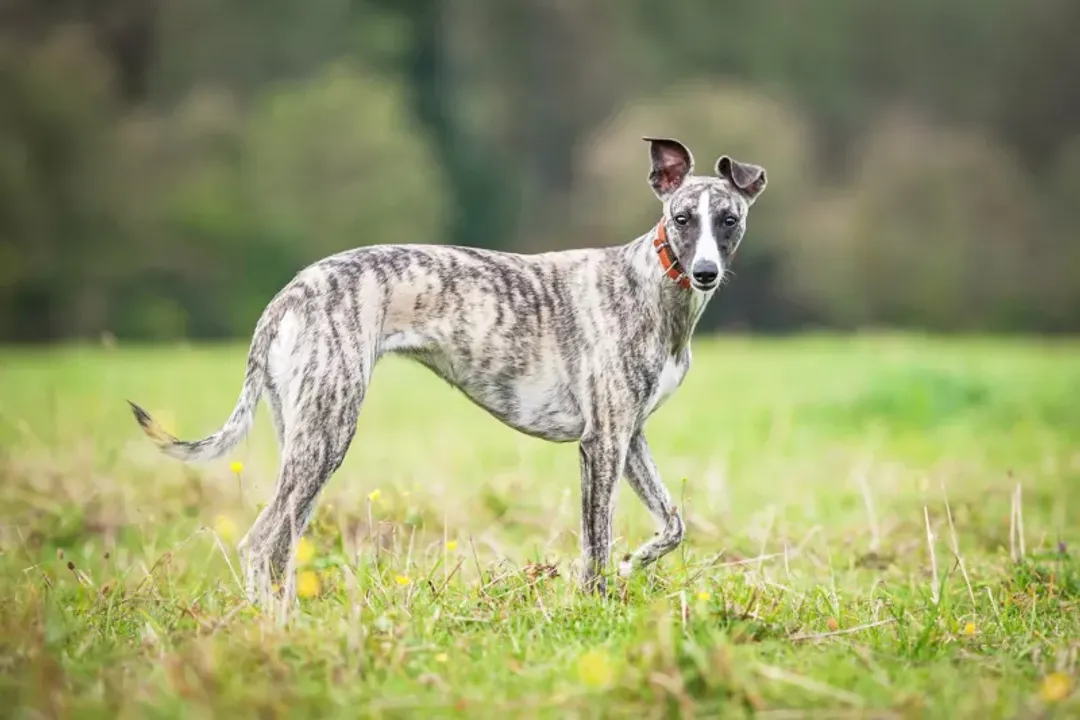
The Whippet is immediately recognizable as a dog sculpted by the pursuit of speed, possessing a silhouette that speaks directly to its history as a coursing hound. Often described as a miniature Greyhound, this breed carries an air of delicate strength, where every line and muscle group appears designed for explosive, efficient motion. [3][6] They are medium-sized dogs, fitting comfortably into a home environment while retaining the powerful physique of a true athlete. [1]
# Sleek Silhouette
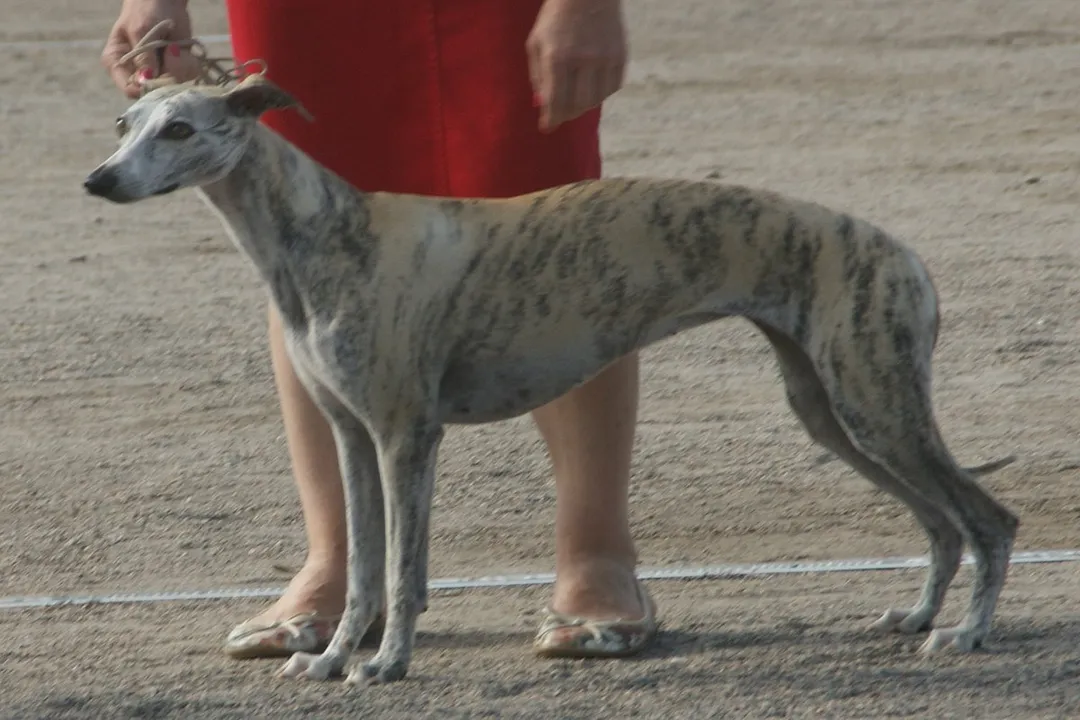
The overall impression one gets from a Whippet is one of elegance and moderation. They are finely chiseled without being overly coarse or heavy in bone structure. [1] Their build reflects the need for high velocity over moderate distances, balancing power with low wind resistance. [6] They are built to cover ground quickly and gracefully, a trait that should be immediately apparent when observing them standing or moving. [1]
# Refined Head
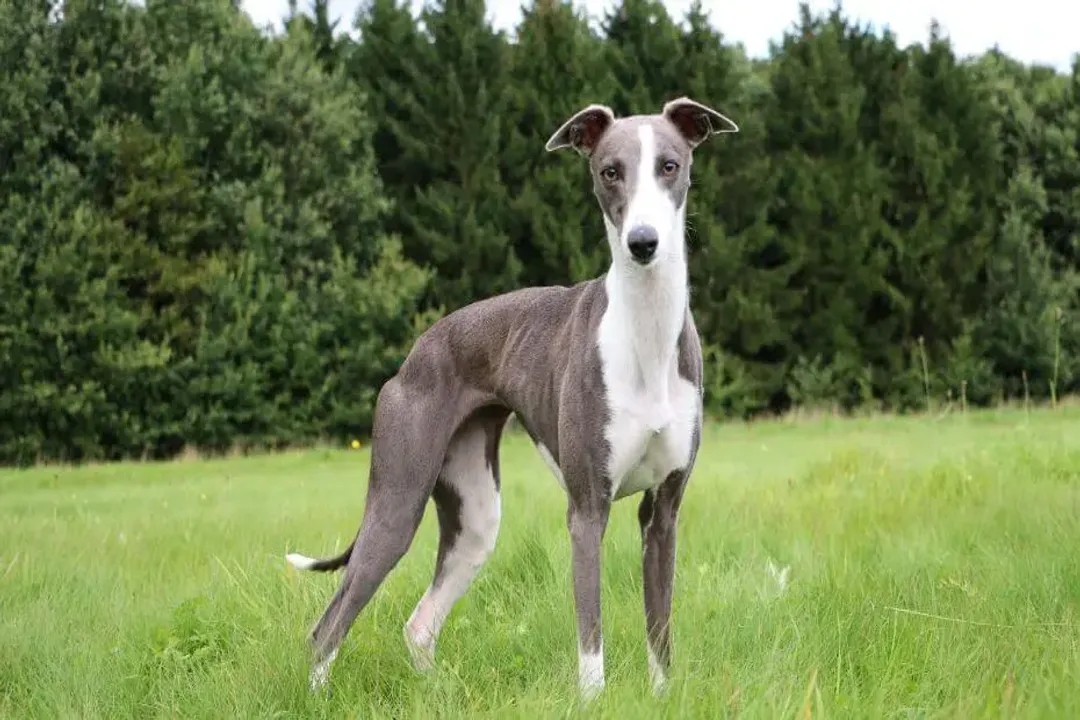
The head of the Whippet is one of its most distinguished features, often described as long and refined. [1] When viewed from the top, the skull appears almost flat, gradually tapering down to a fine, strong muzzle. [1][4] The stop—the indentation where the muzzle meets the forehead—is moderate, not abrupt. [1] Their eyes are typically large, dark, and intelligent, set somewhat obliquely, contributing to an alert yet gentle expression. [1] The ears are small and rose-shaped, folding back against the neck, though they may prick forward when the dog is keenly interested in something. [1][3] The dental structure is strong, providing a clean, scissor bite where the upper teeth fit closely over the lower. [1]

# Torso Detail
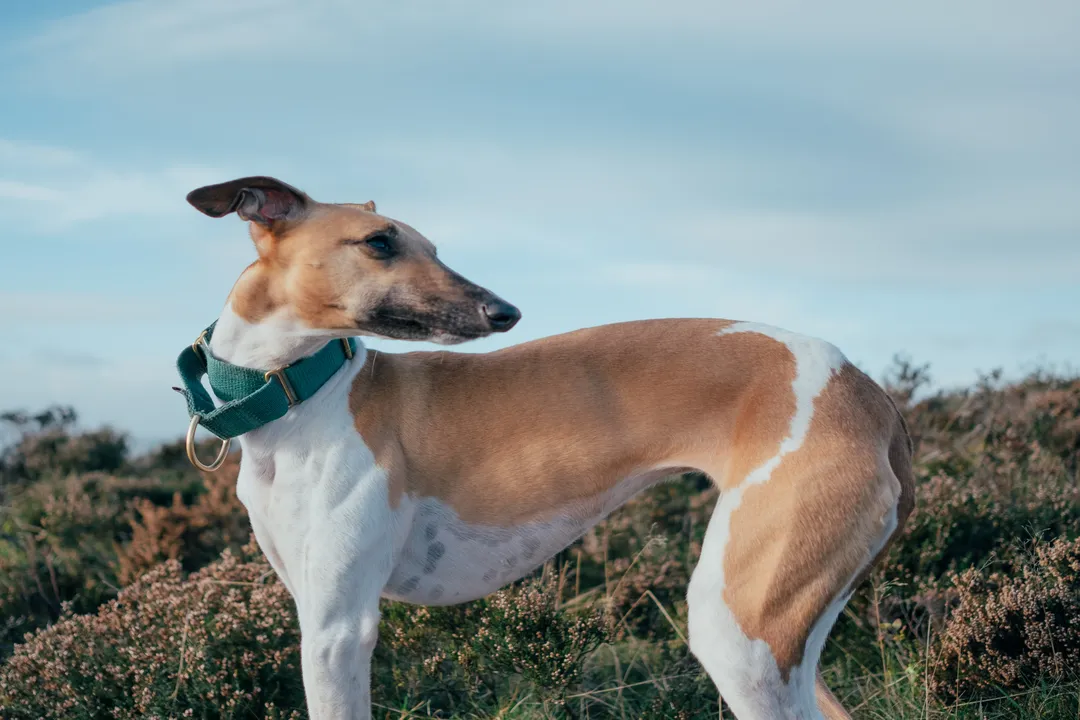
The physical architecture that enables the Whippet’s famous top speed is concentrated along its body structure, particularly in the chest and loin area. [1] The chest must be deep—capable of holding large lungs—and well-sprung, meaning the ribs curve outward significantly before tucking in tightly toward the abdomen. [1][6] This deep-keeled arrangement is essential for maximizing respiratory capacity during a full sprint. [1]
Following the deep chest is a short, strong loin that exhibits a decided arch. [1] This arch is the engine of the sighthound; it acts like a spring, allowing the dog to coil and extend its rear legs far underneath its body during the double suspension gallop. [1][4] While this arch is pronounced, it should not be exaggerated to the point of weakness. The waist tucks in sharply behind the loin, contributing to the breed’s notably slender, almost ethereal appearance when viewed in profile. [1]
Considering this powerful, spring-loaded rear assembly and deep chest, it is interesting to note how critical the lack of excess weight is to their performance. Any extra fat acts as ballast, slowing the elastic recoil of the back and reducing their famous acceleration. Owners who keep their Whippets in racing condition often monitor their ribs closely, ensuring they can be easily felt beneath the skin—a physical characteristic that demands consistent, appropriate exercise to maintain health, not just aesthetics. [6]
# Agile Movement
The Whippet’s gait is a direct reflection of its athletic design. It should be long, free, elastic, and appear virtually effortless. [1] When standing, the forelegs should be straight and well-boned, setting the dog squarely beneath the shoulders. [1] The hindquarters, as mentioned, are powerfully muscled, providing the propulsion. The stifle (knee joint) should be well bent, allowing for a long reach in the stride. [1] When moving, the rear legs should follow a line parallel to the forelegs without sweeping in or out, demonstrating straight tracking. [1] The overall impression of movement is smooth and ground-covering.
A small but significant characteristic relates to the feet. Whippets possess feet that are small, finely formed, and strongly arched—often described as cat-like. [1][3] This conformation helps distribute the tremendous force generated during a sprint without sacrificing agility or causing the pads to splay.
# Coat Finish
Physically, the Whippet is very easy to maintain concerning grooming, as the coat is fine, short, and smooth lying close to the body. [1][4] This sleek covering enhances their aerodynamic shape. Regarding color, the breed standard is remarkably open; nearly any color or combination of colors is acceptable, making for a visually diverse breed. [1][4]
This thin, close coat is a functional trait tied directly to their racing heritage, reducing friction and drag. However, this physical attribute has a significant implication for daily care. Because they lack the insulating undercoat found in many other breeds, Whippets are notoriously sensitive to cold weather. [2][5] Even a chilly autumn evening can necessitate a warm coat or sweater for an extended outdoor walk, a practical consideration derived entirely from their elegant physical makeup.
# Dimensions Chart
While the overall picture is one of refinement, specific measurements help define the breed standard. These figures represent ideal targets rather than rigid boundaries, allowing for individual variation within the general structure:
| Feature | Male Standard | Female Standard |
|---|---|---|
| Height (Shoulder) | 18.5–19.5 inches | 17.5–18.5 inches |
| Weight Range | Typically 25–40 pounds | Typically 25–40 pounds |
| Head Length | Long and refined | Long and refined |
| Body Type | Deep chest, arched loin | Deep chest, arched loin |
| [1][2][3] |

# Tail Carriage
The tail is another key indicator of the Whippet’s conformation and mood. It is long and tapering, set low on the body. [1] Crucially, the tail is carried down or slightly curved upward, but it must never be carried over the back. [1][4] A correctly carried tail contributes to the clean, unbroken line from the slightly arched loin that defines the hindquarters.
# Structure Comparison
It is helpful to compare the Whippet not just to the Greyhound, but also to its probable ancestors, the English Greyhound and the smaller, faster Terrier stock used in its development. [4] While they share the deep chest and flexible spine of the Greyhound, Whippets are distinctly lighter and more moderate overall, preventing the heavier bone structure that could impede their quick acceleration over shorter distances typical of their traditional work. [6] The overall impression is of a "medium dog in a small dog's body," maintaining the classic sighthound proportions scaled down appropriately. [1] Their structure is a masterclass in aerodynamic efficiency for moderate-speed bursts.
Related Questions
#Citations
Whippet Dog Breed Information - American Kennel Club
Whippet Dog Breed Information | Purina UK
Dog Breed Profile: Whippet - Woof
Whippet - Wikipedia
Whippet - All About Dogs - Orvis
Whippet Dog Breed - Hill's Pet Nutrition
Whippet Facts - Dog Breeds - Wisdom Panel
What You Should Know About the Whippet Dog Breed
[PDF] Official Standard of the Whippet General Appearance