Are harlequin coral snakes poisonous?
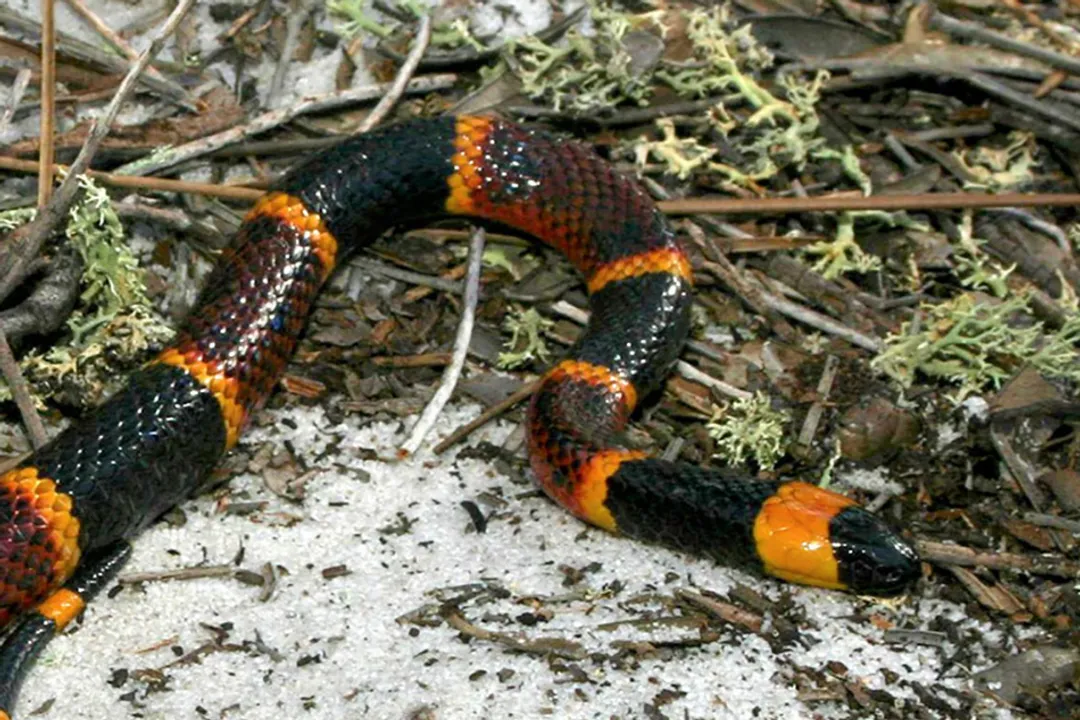
The Harlequin Coral Snake, scientifically known as Micrurus fulvius, is unquestionably a reptile that commands respect due to its potent toxin, though the term "poisonous" is technically inaccurate when describing a creature that injects its toxins through a bite. In herpetological circles, the distinction is important: this species is venomous, meaning it produces a toxin delivered actively, as opposed to being poisonous, where the toxin is passively absorbed or ingested. This slender, brightly colored snake, also called the Eastern Coral Snake, is one of only two native elapid snakes in the United States, placing it in the same family as cobras and kraits. [2][3]
# Appearance Striking
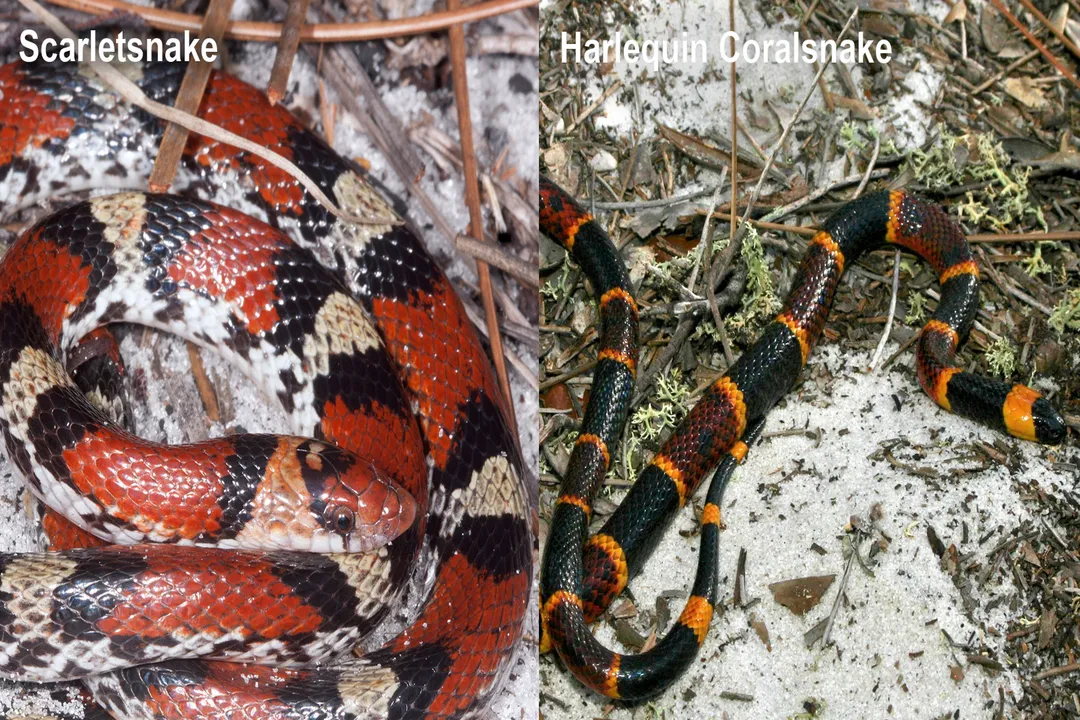
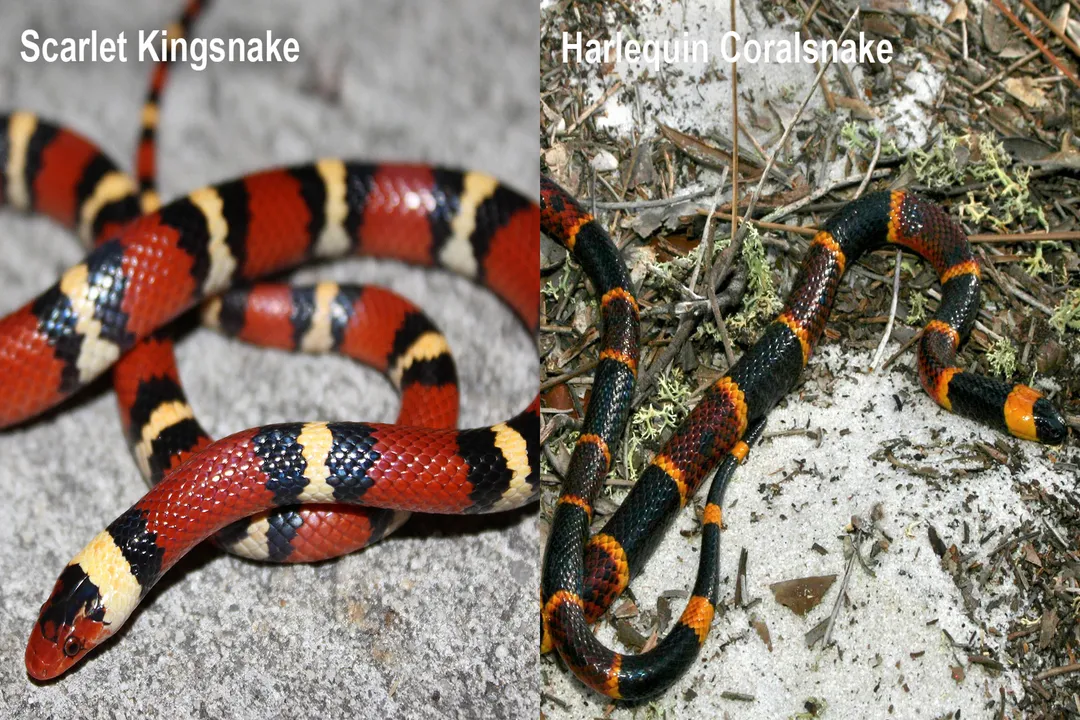
The visual signature of the Harlequin Coral Snake is instantly recognizable, yet frequently causes confusion with harmless lookalikes. Adults typically measure between 20 to 30 inches in total length, though some rare individuals can exceed 47 inches. [4] They are characterized by smooth, glossy scales and a repeating pattern of broad red and black rings, sharply separated by narrower yellow rings. [3][4][7] The red bands often display black flecks or spots, and the tail features alternating black and yellow bands. [4]
Crucially, the small head blends into the neck without a distinct widening, and a defining feature within their native range is a rounded black snout followed immediately by a broad yellow band behind the eyes. [3][4][7] This combination of features helps separate the truly dangerous coral snake from common mimics. [3]
While the folkloric rhyme, "Red touches yellow, kill a fellow; red touches black, venom lack," is often recited to help the public distinguish these snakes, experts caution strongly against relying on it as foolproof identification. [2][4] While the rhyme generally holds true for M. fulvius in many areas of the southeastern US, aberrant color patterns are encountered regularly, meaning the rule can be broken even within its native territory. [4] Furthermore, this rhyme does not apply reliably outside of the US. [2]
To provide clearer distinctions for general readers who might encounter a similar-looking snake, the differences between the coral snake and its common mimics can be summarized:
| Feature | Harlequin Coral Snake (M. fulvius) | Scarlet Kingsnake (L. elapsoides) | Scarlet Snake (C. coccinea) |
|---|---|---|---|
| Red Band Contact | Touches Yellow bands [4][5][7] | Touches Black bands [4][5][7] | Touches Black bands [3][4] |
| Snout Color | Black [3][4] | Red [3][4] | Red [3][4] |
| Pattern Encircles Body | Yes, complete bands [4][7] | Yes, complete bands [4] | No, belly is cream/white [3] |
| Head/Scale | Black snout followed by yellow band [3][4] | Red snout [4] | Pointed, red snout [3] |
If you are not one hundred percent certain of a snake's identification, the safest policy, as many experts recommend, is to leave it alone entirely—"Don't know it? Don't mess with it!". [2][4]
# Venom Potency
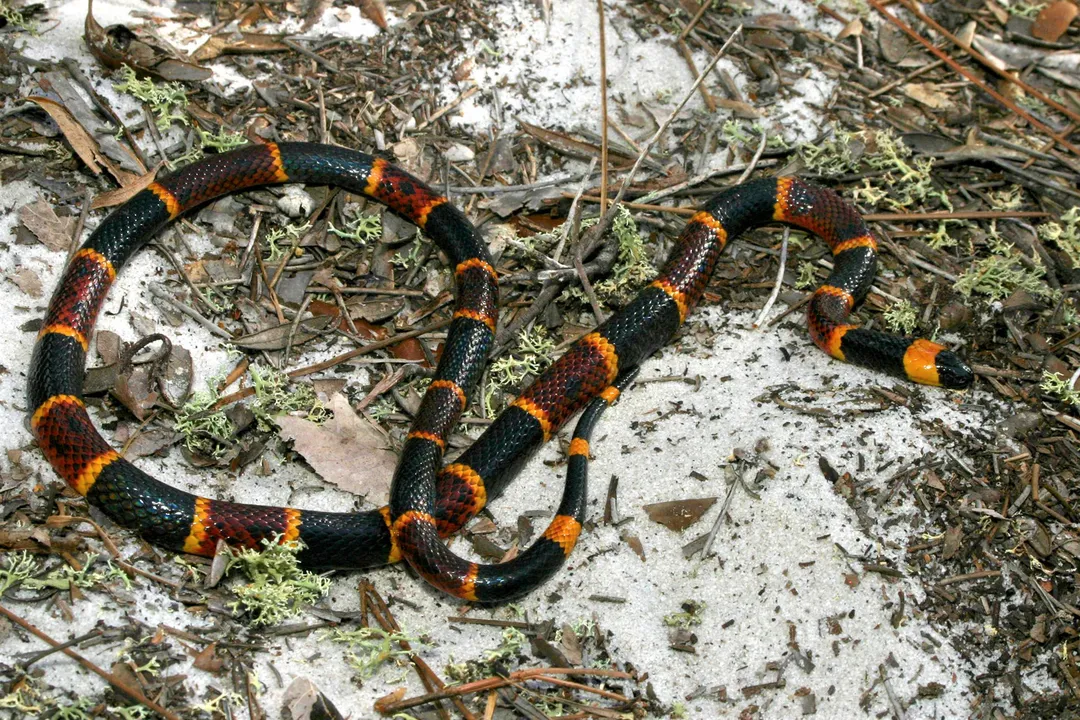
The danger associated with the Harlequin Coral Snake lies in its potent neurotoxic venom. [3][5][7] This venom specifically attacks the nervous system, interfering with nerve signals. [5] Unlike the cytotoxic effects often seen with pit viper bites that cause immediate, dramatic swelling and tissue damage, the effects of coral snake venom are more insidious and often delayed. [5]
This neurotoxicity can lead to serious systemic issues, including muscle weakness, paralysis, slurred speech, and, most critically, respiratory depression or failure. [5] One major concern is the deceptive period between the bite and the onset of symptoms, which can sometimes last for hours. [5] This delay can lull a victim into a false sense of security, but once symptoms manifest, they can progress rapidly, demanding urgent medical intervention. [5]
Physically, coral snakes are proteroglyphous, meaning they possess short, fixed fangs located at the front of the upper jaw. [3][4] Contrary to some myths, they do not necessarily need to "chew" to deliver their toxin; venom can be effectively injected even with a brief or partial bite. [5] They typically inject a small amount—around 2 to 5 mg per bite. [3] While bites are rare, they are considered a medical emergency, though prompt treatment with antivenom significantly reduces the risk of fatality. [2][5]
# Reclusive Living
Understanding the snake’s lifestyle is key to avoiding negative encounters. The Harlequin Coral Snake is known for being extremely secretive and reclusive. [4][5] They are primarily fossorial, meaning they spend the majority of their time underground, buried under leaf litter, logs, rocks, or in existing burrows. [3][4][7]
Their activity cycle leans towards being nocturnal or crepuscular (active at dawn and dusk). [3][5] During the day, especially when it is hottest, they retreat to cooler, protected spots. [3][5] This preference for cover explains why direct sightings are uncommon, even in areas where the species is established. [4][7] They are native to the southeastern US, with a range covering the Atlantic Coastal Plain from southeastern North Carolina down through Florida, and westward along the Gulf Coast into eastern Louisiana. [3][7] In Alabama, they are considered rare and possibly threatened, with habitat destruction cited as a major threat. [7]
When they are above ground, their diet consists almost entirely of other small reptiles, especially snakes—including their own species—as well as lizards, frogs, and insects. [2][3][5] They actively forage by slowly probing leaf litter with their heads. [4][7]
Because these snakes are so seldom seen above ground and actively avoid confrontation, bites are statistically rare, often occurring only when the animal is intentionally handled, grabbed, or aggressively approached. [4][5] It is worthwhile to note that their camouflage, the aposematic coloration meant to warn predators, can be unintentionally attractive to humans who fail to recognize the danger, often leading them to approach a beautiful but deadly animal out of curiosity. [2]
Given their preference for dense ground cover and subterranean habits, if you live in a suitable habitat—like areas with pine flatwoods, scrub oak, or nearby wetlands—taking a moment before walking or working in thick leaf litter or around brush piles can be a proactive step. Snakes often bask or move near these areas for cover, and a slow, deliberate approach to yard work minimizes the chances of accidentally disturbing one. [3][4][7]
# Safety Protocols
The presence of a Harlequin Coral Snake, while a rare natural occurrence, requires a measured, non-confrontational response. If you observe one, the overriding instruction is to retreat and leave it undisturbed. [4][5] They are not aggressive and prefer to flee into cover when sensing a threat. [4][5] Never attempt to handle, corner, or kill one, as nearly all bites happen during these interactions. [2][5] If the snake is in a location where it poses an immediate threat, such as inside a home, the best course of action is to contact a local wildlife relocation expert who is trained to safely remove venomous species. [2][5]
Should the worst happen—a bite occurs—immediate action is critical:
- Seek Emergency Care: Contact emergency services or arrange immediate transport to a hospital experienced in treating snakebites. [2][5]
- Stay Calm and Still: Try to keep the victim calm and minimize movement, particularly of the bitten limb, to slow the spread of venom. [2][5]
- Do Not Interfere: Avoid making incisions, applying ice, or attempting to suck out the venom. Novelty snakebite kits are ineffective and can cause further harm. [2][5]
With appropriate, prompt medical care, fatalities are rare, highlighting that awareness and preparation are the best defense against this striking, yet highly venomous, resident of the southeastern United States. [5]
Related Questions
#Citations
Harlequin Coralsnake – Florida Snake ID Guide
Micrurus fulvius (Eastern Coral Snake, Harlequin Coralsnake)
Eastern Coral Snakes: Identification, Habitat, and Behavior
Coral Snake in my back yard. It is a Beautiful but very poisonous ...
Eastern Coral Snake - | Outdoor Alabama
Micrurus fulvius - Harlequin Coralsnake - Reptiles of North Carolina