Where do tanagers live in the US?
The presence of vibrant, colorful tanagers across the United States offers a rewarding spectacle for birdwatchers, though pinpointing exactly where you might spot one depends entirely on the species you are looking for. These tropical-hued birds aren't evenly distributed; some are firmly rooted in the Deep South, while others stick to the eastern forests during their nesting season, and a few might only pass through on migration routes that stretch far west or north. [1][2] Understanding their specific ranges is key to successfully finding these jewel-toned visitors in the American landscape.
# Summer Tanager Range
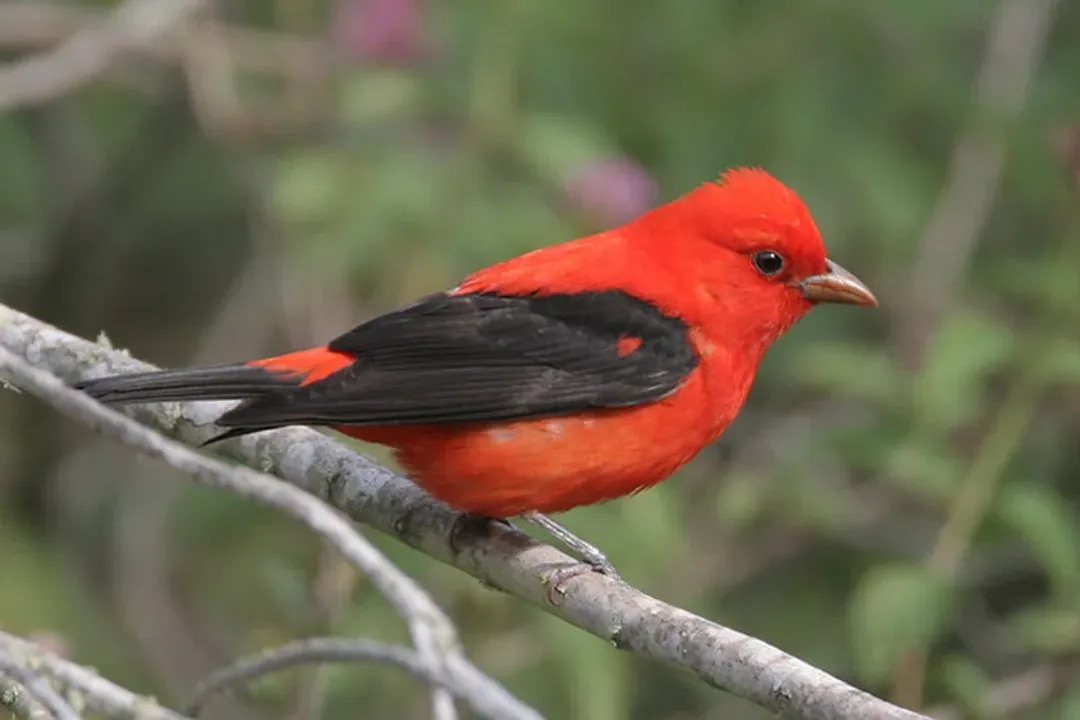
The Summer Tanager (Piranga rubra) is arguably the most widespread tanager across the southern and central United States during the breeding season. [2] Its range typically covers the southern states, extending northward through the Mississippi River Valley and into the Mid-Atlantic region. [3]
For instance, in Texas, the Summer Tanager is a common sight throughout the state, though concentrations vary by region. [8] Observers in Arizona can find them, particularly in areas with suitable riparian woodlands, such as the Sky Island regions around Tucson. [7] Moving further north, their summer home includes states like Minnesota, where they are found during the breeding season, usually near rivers or in deciduous woodlands. [6]
What's interesting about the Summer Tanager's distribution, especially when compared to its relatives, is its preference for warmer climates even during nesting. [2] While the Scarlet Tanager favors the dense, mature deciduous forests of the East, the Summer Tanager often prefers open woodlands, streamsides, and often seems more comfortable further south and west, even into parts of the Southwest where other eastern species might not venture. [7]
# Breeding Distribution Summary
While a comprehensive list requires examining migration maps, the core breeding zones for the Summer Tanager cover a significant portion of the southern half of the US. [3]
| State Category | Summer Tanager Status | Key Habitat Note |
|---|---|---|
| Deep South/Gulf Coast | Year-round residents or early breeders | Commonly found in urban and natural areas [8] |
| Midwest/Mid-Atlantic | Summer Breeder | Requires scattered trees near water sources [6] |
| Southwest (e.g., AZ) | Summer Breeder/Passerby | Often found in riparian corridors [7] |
When observing a brilliant red bird in the southern US, especially one that lacks black markings, the Summer Tanager is a strong candidate. [1] This lack of black is a defining feature against its closest North American relative, the Scarlet Tanager. [9]
# Scarlet Tanager Presence
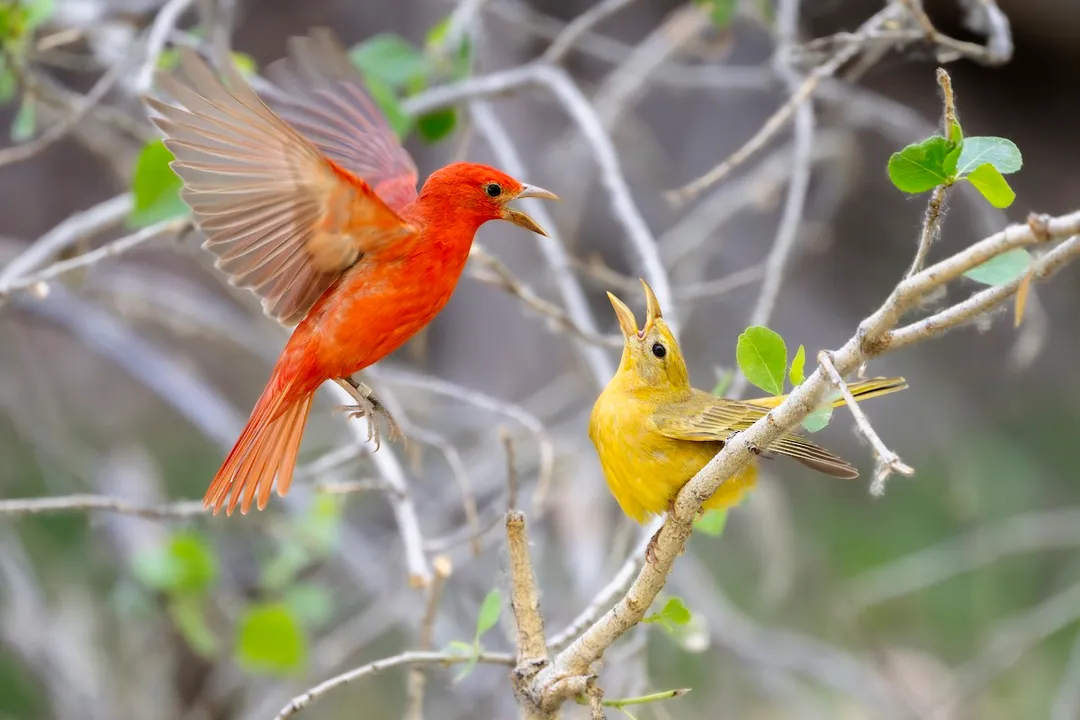
The Scarlet Tanager (Piranga olivacea) has a distinctly different distribution pattern, centering heavily on the eastern and midwestern deciduous forests. [2] Unlike the Summer Tanager, which often appears in the dry Southwest, the Scarlet Tanager requires the lusher, mature forests typical of the eastern two-thirds of the country for its summer residency. [9]
During the breeding season, you would expect to find them nested high in the canopy of hardwood trees throughout the Eastern US, ranging from the Great Plains eastward to the Atlantic coast. [2] They are not typically year-round residents in the US; they migrate south for the winter, often heading to northern South America. [9] This means that if you are in New York or Michigan during July, the bright red male you see is likely a Scarlet Tanager, not a Summer Tanager, provided you are in a mature deciduous forest setting. [9]
Their migratory path often takes them through the central and eastern states, but their established US breeding territory is generally east of the Rockies, contrasting with the broader, more southerly reach of the Summer Tanager. [3] A practical tip for a birding trip aiming for this species is to focus efforts on mature oak or maple stands in the Eastern or Midwestern states between May and August; seeing a male flash his brilliant red body against the black wings is an unmistakable sign you've found a Scarlet Tanager’s summer home. [9]
# Other Western Species
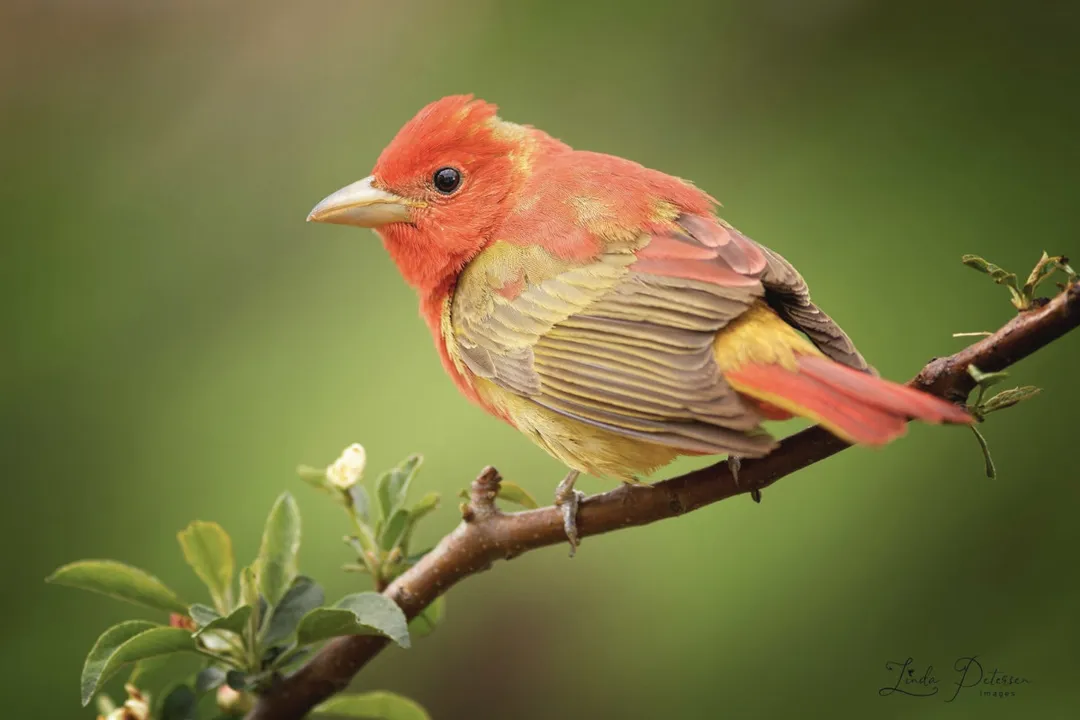
While the Summer and Scarlet Tanagers dominate discussions about the eastern and southern US, the western states host other tanager species that utilize American habitats, even if their presence is less continuous across the continent. [2]
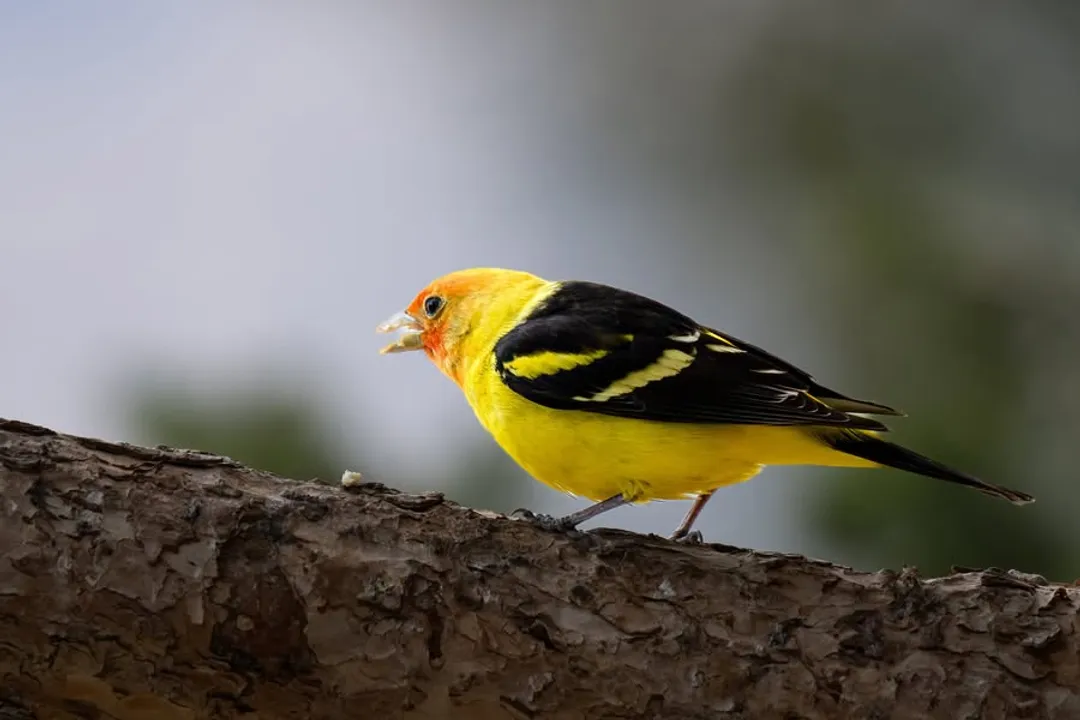
The Western Tanager (Piranga ludoviciana) is a key example. Its breeding grounds are primarily in western North America, extending from the Rocky Mountains westward to the Pacific coast, including forested areas in states like Montana, Idaho, and Washington. [2] The males are unmistakable, featuring a bright yellow body and a striking red head—a color pattern that sets them apart from both the all-red Summer Tanager and the red-and-black Scarlet Tanager. [1] For birders in the West, the Western Tanager becomes the primary target when looking for a nesting tanager in coniferous or mixed forests. [2]
Furthermore, the Flame-colored Tanager (Piranga bidentata) is sometimes recorded in the US, often as a rare visitor primarily in the southwestern border states, especially Arizona and Texas. [2] It is much less common and more localized than the other three mentioned species, often requiring dedicated searching in specific canyon habitats or catching a rare vagrant far north of its main Mexican range. [2]
# Regional Overlap and Identification
The geography of tanagers in the US creates interesting scenarios for identification, especially where the ranges of the Summer and Scarlet Tanagers converge. In transitional zones, like parts of Oklahoma, Arkansas, or along the edges of the Midwest, a birder might encounter both species during the breeding season. [8]
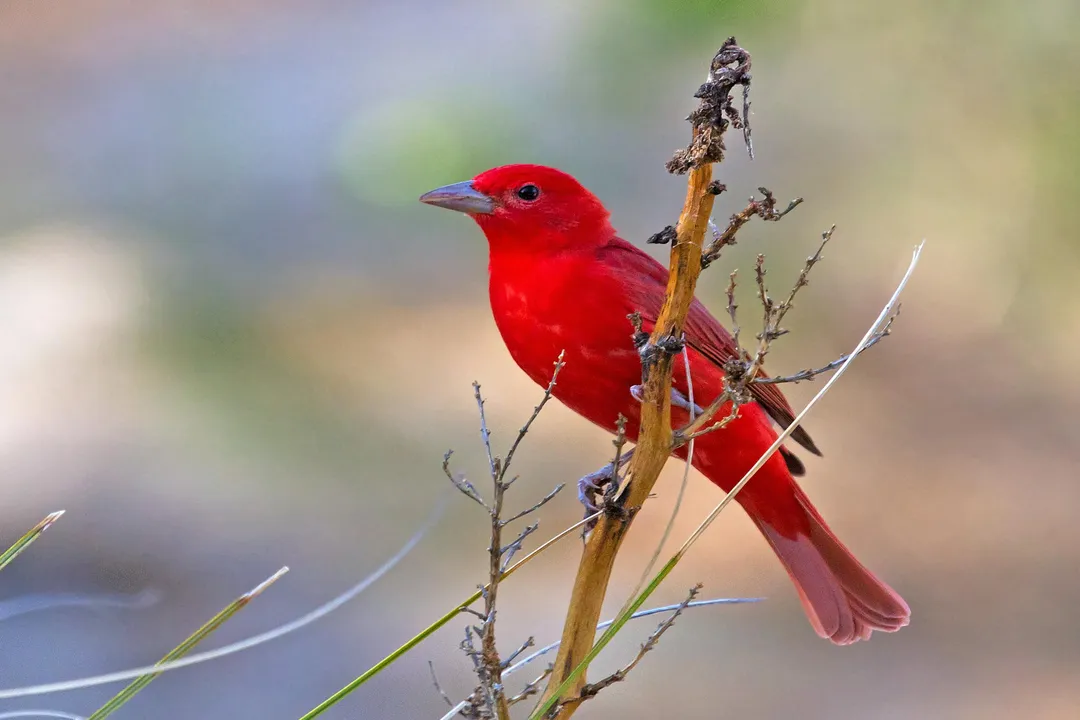
This is where understanding the subtle plumage differences becomes important. The Summer Tanager male is entirely scarlet or rosy-red, lacking black. [1][9] The Scarlet Tanager male, however, is brilliant red but possesses contrasting jet-black wings and tail feathers. [9] If you see an all-red bird in the South, it's likely a Summer Tanager; if you see a red-and-black bird in the East, it's almost certainly a Scarlet Tanager. [2] This simple visual cue can help distinguish between the two species when they are both present in the general American context. [1]
Considering the broader context of North American birds, if you are tracking these species, remember that the Summer Tanager is often the easiest to spot near human development because it frequents slightly more open areas along waterways, whereas the Scarlet Tanager prefers to stay deep within mature, high-canopy forests, making it a bit more secretive during its nesting period. [6][7] This difference in habitat preference, even within similar geographic latitudes, is a crucial element in successfully locating these colorful members of the Cardinalidae family across the diverse habitats the US offers. [2]
Related Questions
#Citations
Meet the Stunning Tanagers That Make the U.S. Their Summertime ...
Tanagers in North America: A Complete Guide | Nest Box Live
Summer Tanager Range Map - All About Birds
Summer Tanager - BirdsCaribbean
Western tanager bird description and habitat - Facebook
Summer Tanager - Minnesota Breeding Bird Atlas
Summer Tanager - Tucson Bird Alliance
SUMMER TANAGER | The Texas Breeding Bird Atlas
Scarlet tanager - National Zoo