Where do cormorants live in the US?
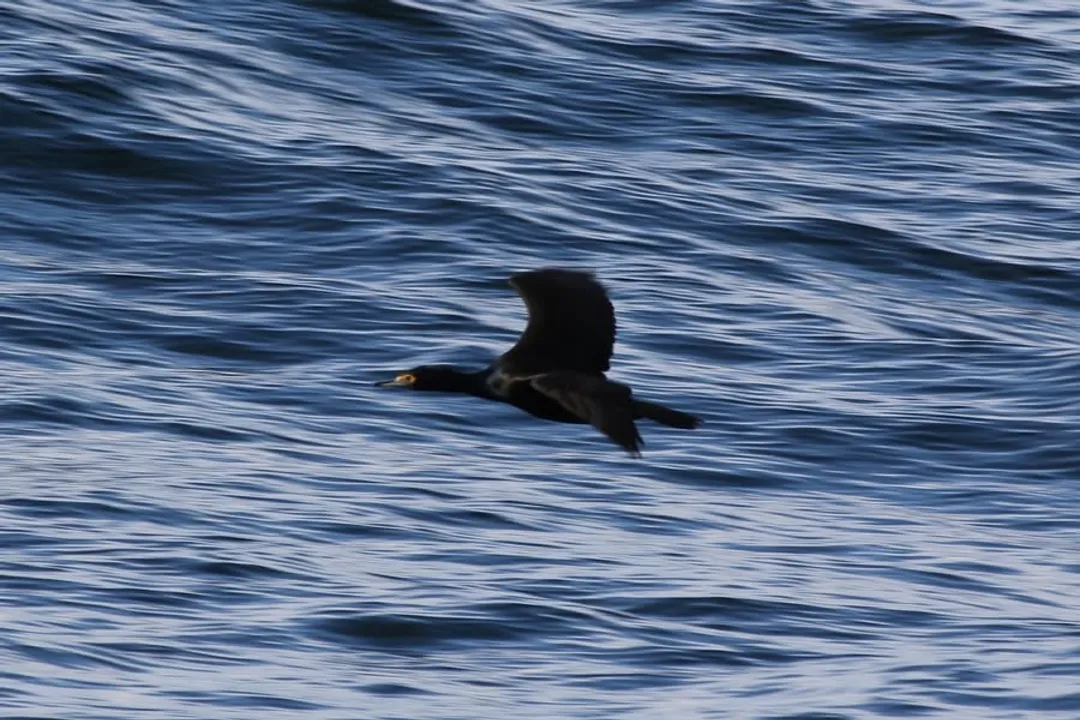
The term "cormorant" in North America most often points us toward the Double-crested Cormorant, a remarkably adaptable waterbird whose presence spans a vast swath of the United States. [3] While many associate these dark, slender birds with ocean coasts, their actual distribution is far more extensive, covering nearly all states and territories, particularly outside of the most extreme northern regions in winter. [1]
# Broad Presence
The range maps for the Double-crested Cormorant illustrate a bird that has firmly established itself across the continent. [1] During the breeding season, their occupancy stretches from the coasts of the Atlantic and Pacific oceans deep into the interior, following major river systems and large bodies of water. [1][3] In the non-breeding season, while populations may shift south, a significant number of birds remain throughout the southern and central United States, often utilizing warm, ice-free waters. [1] This pattern of widespread use, encompassing both freshwater and saltwater environments, speaks to their generalist nature. [3][8]
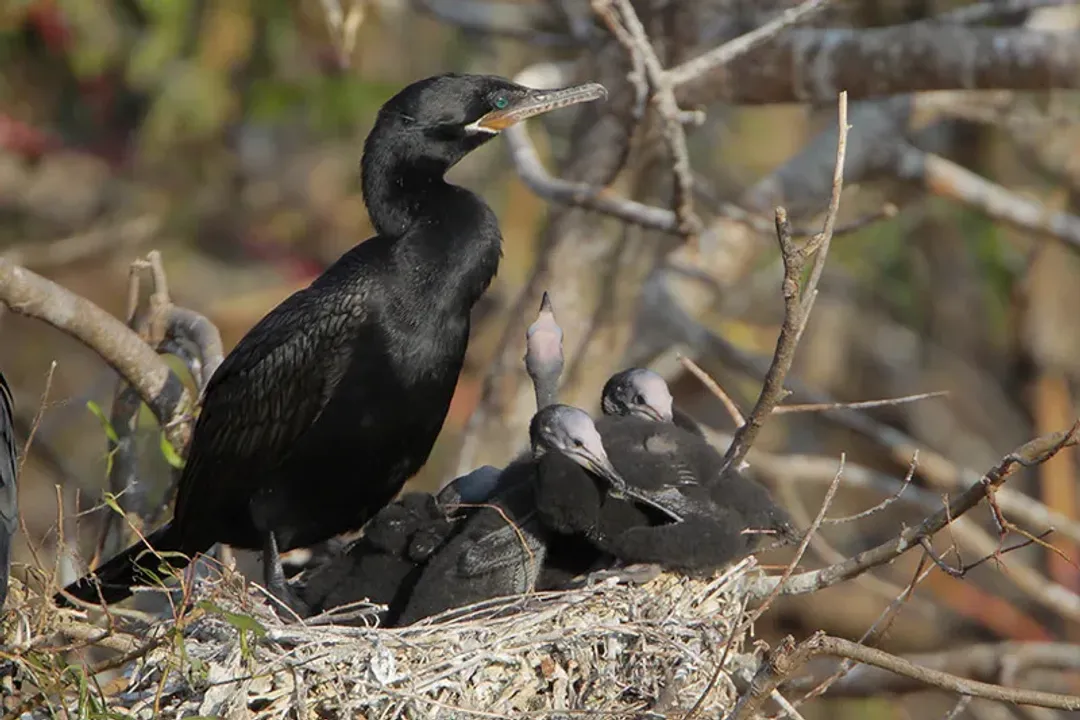
It is worth noting that while the Double-crested species dominates the national picture, a different bird, the Neotropic Cormorant, occupies a much more restricted territory. [9] This smaller relative is primarily found along the Gulf Coast, particularly in southern Texas and extending into the regions bordering Mexico. [9] For birders in these southern zones, differentiating between the two can be a key identification task. [9]
# Habitat Niches
Cormorants, particularly the Double-crested variety, do not limit themselves to just one type of water feature; they thrive wherever there is open water suitable for fishing. [6][8] Along the Pacific and Atlantic coasts, they are readily found perched on rocky shores and man-made structures like piers and navigation markers. [3] However, their presence inland is equally significant. In states like Colorado, for instance, they are found statewide, favoring large reservoirs, rivers, and lakes where fish are accessible. [6]
They are skilled pursuit divers, feeding almost exclusively on fish which they catch by swimming underwater. [3] This dietary specialization dictates their geographical acceptance; if there is sufficient prey below the surface of a lake, reservoir, or slow-moving river, a cormorant is likely to be nearby. [3][6] Their tolerance for various environments allows them to establish large feeding territories away from the sea. For example, observing them along the Sacramento River delta, one can see them using the banks and nearby snags as temporary resting spots between feeding dives. [5]
# Nesting Structures
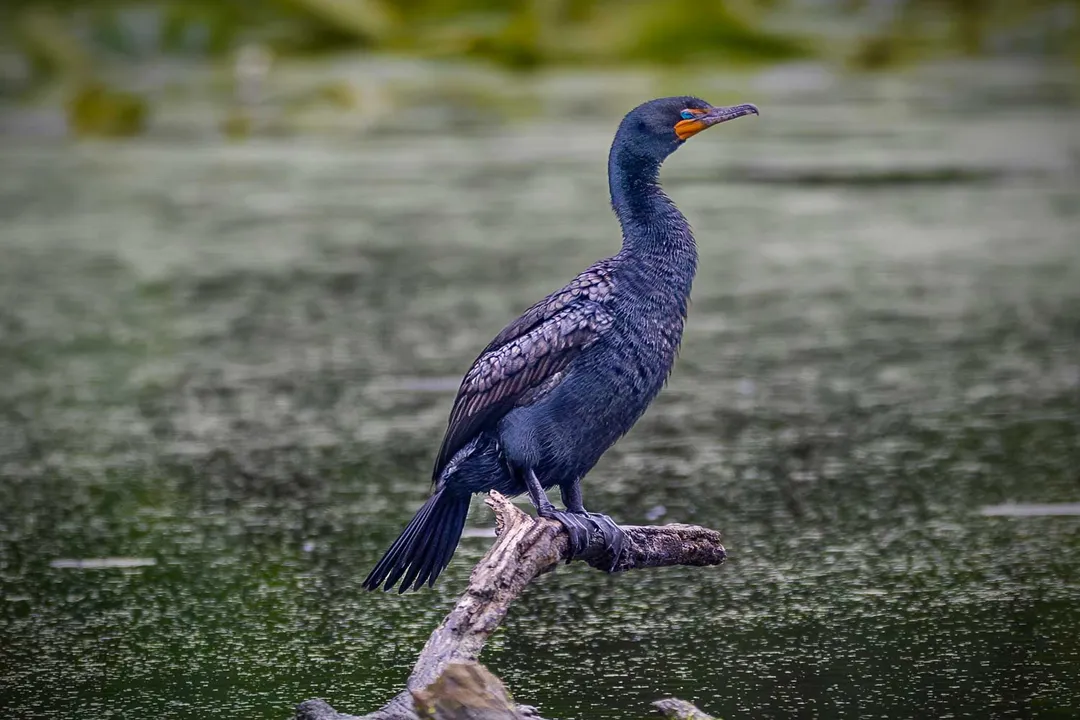
The choice of nesting site reveals another facet of their adaptability. Cormorants require perches that offer elevation and proximity to food sources, but they are not strictly dependent on high cliffs or isolated islands, which are traditional seabird locales. [5][8] While they will certainly nest on cliffs and remote islands, especially where human disturbance is minimal, a large proportion of inland and even coastal colonies are established in trees. [3][6]
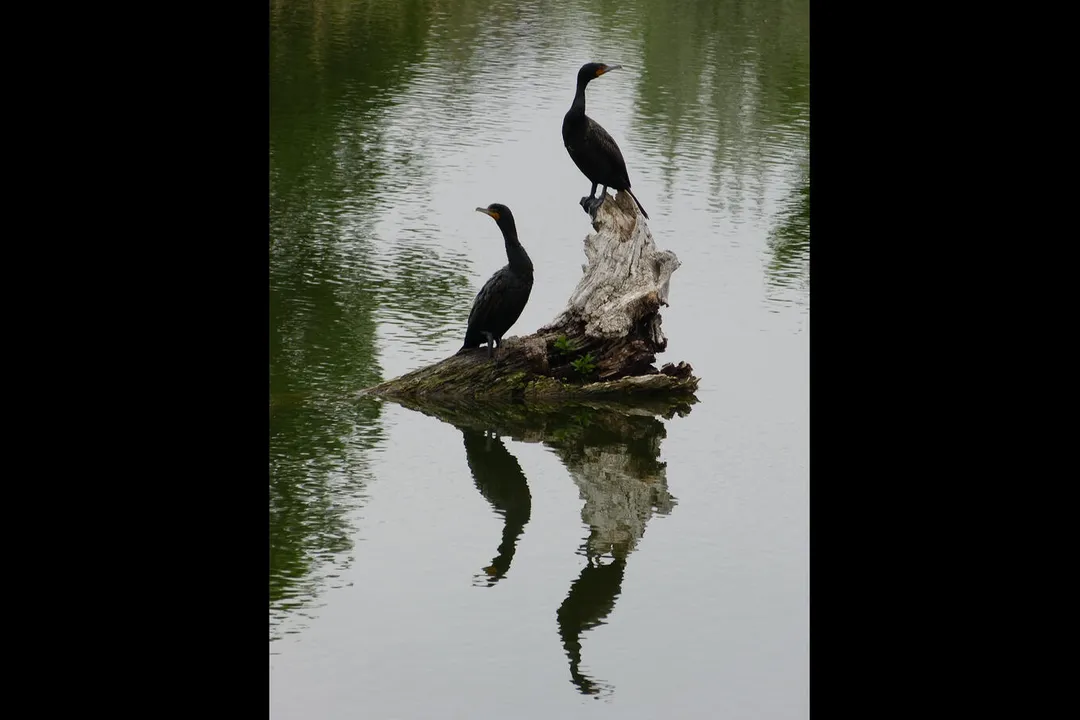
These are often dead trees, sometimes called snags, that provide sturdy, exposed branches necessary for building their bulky nests out of sticks, seaweed, and grasses. [5][8] A fascinating aspect of colony establishment is the potential for site degradation; because they nest communally and deposit nutrient-rich waste (guano), colonies in trees can sometimes lead to the death of the supporting vegetation over time. [5] When natural perches are scarce or disturbed, they readily utilize artificial structures, including towers, bridges, and even large industrial piping, provided they offer a secure platform. [6]
This flexibility in nesting material and location suggests that human-altered landscapes, such as reservoirs or navigable waterways lined with dead trees from past environmental shifts, have inadvertently provided new, high-quality breeding grounds for the species. [3] If you are in an area known to host cormorants, scouting for dead, leafless trees near a large water body is often the best way to locate a colony, even if the birds themselves are not immediately visible overhead. [5]
# Observing Behavior
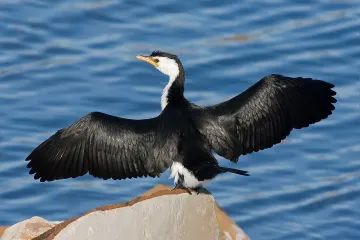
When you spot a cormorant, one of the most defining and easily recognizable behaviors—the one that gives the Double-crested species its common name, though the crest is usually only visible during the breeding season—is their habit of drying their wings. [3] Unlike ducks or geese whose feathers are heavily oiled and waterproof, cormorant feathers absorb water, which reduces buoyancy and allows them to dive more effectively to capture fish. [2][3]
To remedy this waterlogged state, they must perch with their wings spread wide in a characteristic "heraldic" posture, often facing the sun or wind. [2][5] This posture is an immediate clue for identification. If you see a large, dark waterbird sitting on a piling, log, or bare branch with its wings fully extended in a sun-drenched pose, you are almost certainly looking at a cormorant. [3] This behavior is so distinct that even casual observers often recall it, making it a key identifier when sorting through sightings shared online or in local birding groups. [7]
It is helpful to keep an observational distinction in mind: while many birds dry their wings, cormorants typically sit very upright, almost statuesque, with the wings held away from the body. [3] This differs from, say, a vulture, which might spread its wings after feeding, but usually maintains a different, often more horizontal, posture relative to the perch. [2] Understanding this difference in posture is crucial for accurate identification in the field, especially when differentiating them from other large, dark birds near the water. [3]
# Range Comparison Insight
Considering the extensive interior breeding range shown on population maps [1] alongside the bird's reliance on aquatic food sources, [3] a key pattern emerges. The interior distribution is not random; it is fundamentally tied to the construction of large-scale water control projects over the last century. Man-made reservoirs and expanded river navigation channels in the Midwest and Plains states have created vast, relatively shallow, fish-rich habitats that mimic the open-water feeding grounds they use on the coasts. [6] This suggests that the historical limits of the Double-crested Cormorant may have been dictated more by the availability of suitable lakes and rivers rather than just temperature alone, leading to a more successful inland colonization than might be expected for a bird often stereotyped as strictly coastal. [1][8]
# Species Differences Summary
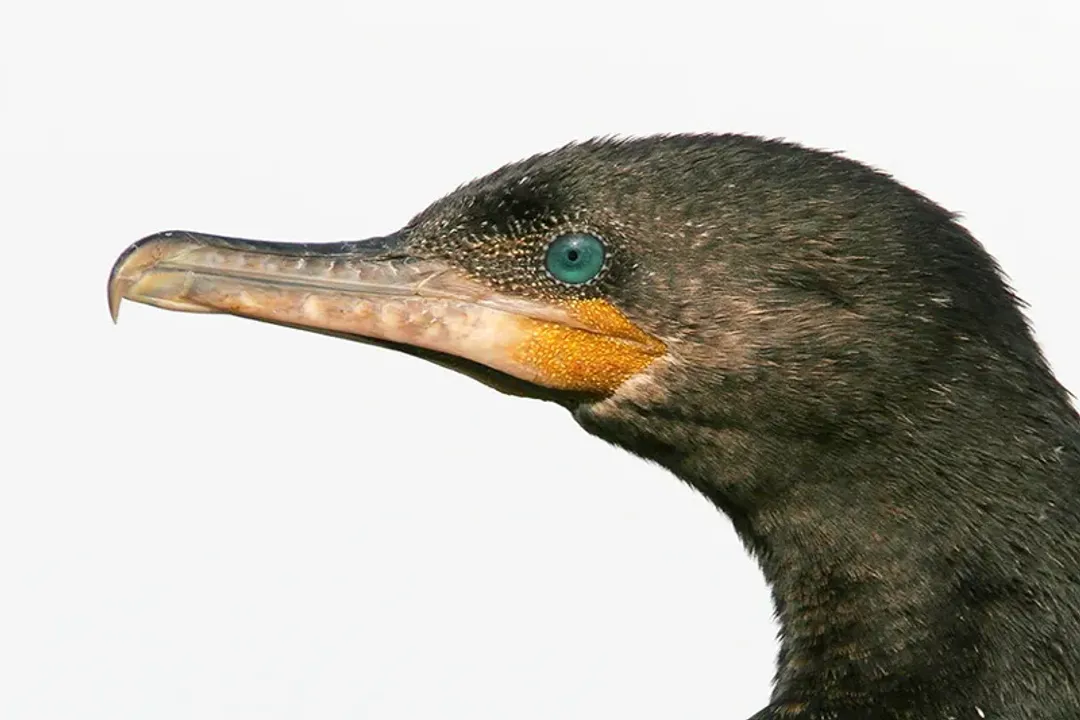
For those living in the southern tier of the US, especially near the Gulf of Mexico, confirming the species can be necessary. While the Double-crested Cormorant is widespread, the Neotropic Cormorant shares similar dark plumage but has some key physical distinctions that keen eyes pick up on. [9] The Neotropic is generally smaller than its northern cousin and lacks the prominent double crest seen on the DCC during breeding displays. [9] Furthermore, while both have colored bare skin around the face (the gular pouch), the specific colors and extent can differ slightly, with the Neotropic often showing a thinner, brighter yellow or orange facial patch. [9] Being aware of these subtle features helps ensure accurate local reporting and population tracking. [9]
# Actionable Birding Tip
When actively searching for these birds in an unfamiliar location—say, a newly visited state park lake—instead of scanning the water surface for movement, focus your search on the highest points of dead trees or distant bridge supports near the main body of water. [6] Cormorants often congregate in a group, or "roost," after feeding, and they prefer to perch high up to sunbathe or digest their meal. [5] By scanning the silhouettes of isolated, bare structures against the sky, you are more likely to spot the distinctive, elongated shape of a resting cormorant than by watching the water where they spend most of their active hunting time. [3] This focusing strategy saves time, especially when looking for colonies rather than just single individuals. [5]
Related Questions
#Citations
Double-crested Cormorant Range Map - All About Birds
6 Types of Cormorants (Phalacrocorax) seen in North America
Double-crested Cormorant | Audubon Field Guide
What is a double-crested cormorant? - U.S. Fish and Wildlife Service
Meet the Double-crested Cormorant - Sacramento Audubon Society
Double-crested Cormorant - Colorado Parks and Wildlife
What are these cormorants, double-crested, pelagic, or red-faced?
Cormorants up close: Learn all about one of our most unique birds
Neotropic Cormorant | Bird Gallery - Houston Audubon Society