Are Eastern Phoebes rare?
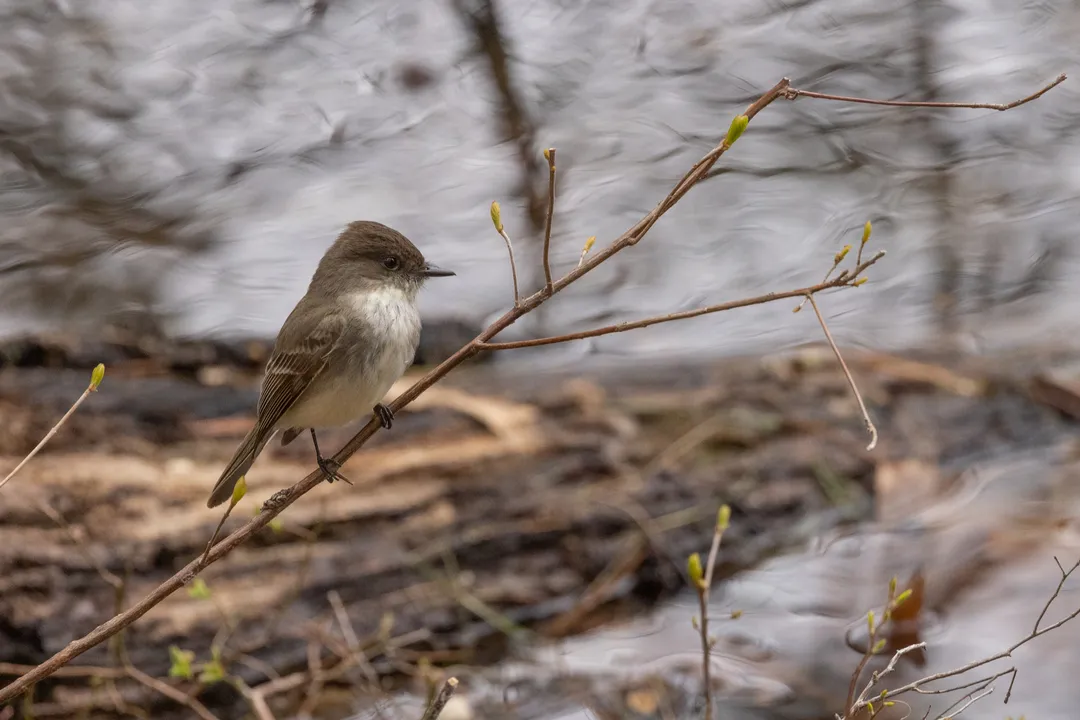
The status of the Eastern Phoebe, that perpetually busy flycatcher, is a subject that often splits birdwatchers depending on where they live and what time of year they are looking. To ask if they are rare is to invite a complicated answer, because for millions of people across the eastern and central parts of North America, the answer is a definite no. This bird is often cited as one of the earliest migrants to return in the spring, signaling the season's change with its gentle, tail-wagging display and its namesake, raspy fee-bee! call. Globally, the International Union for Conservation of Nature (IUCN) lists the species as Least Concern, and data suggests a healthy population, estimated at around 35 million individuals. However, looking closer at regional surveys reveals pockets where the phoebe is indeed scarce, local, or entirely absent during certain seasons.
# Description Glance
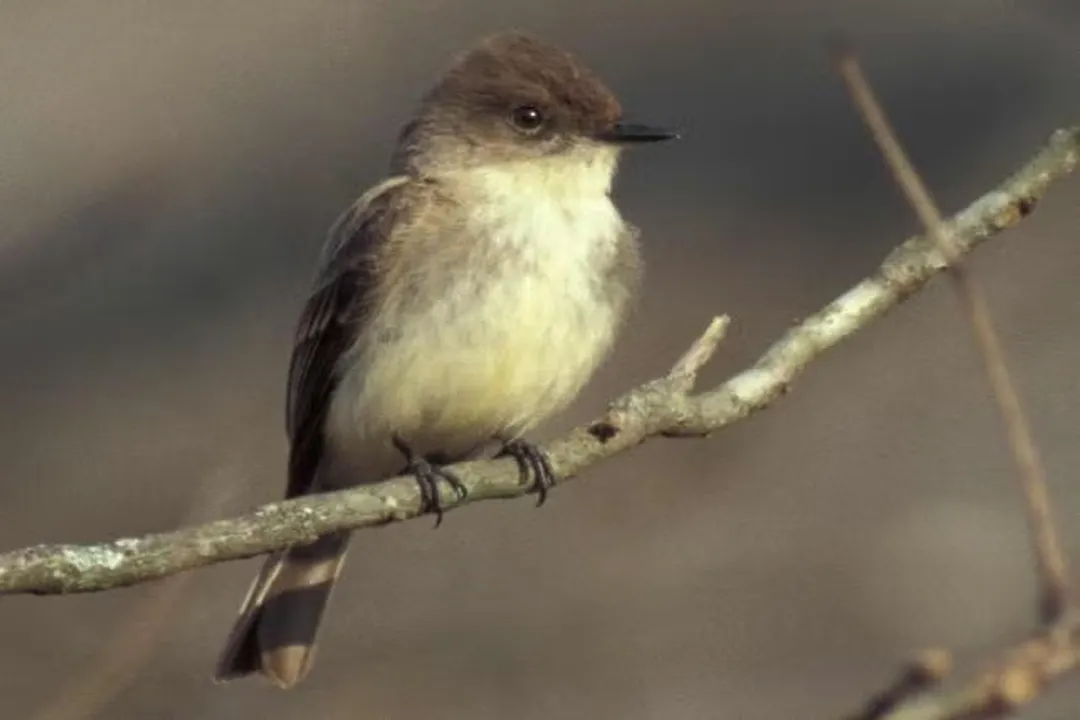
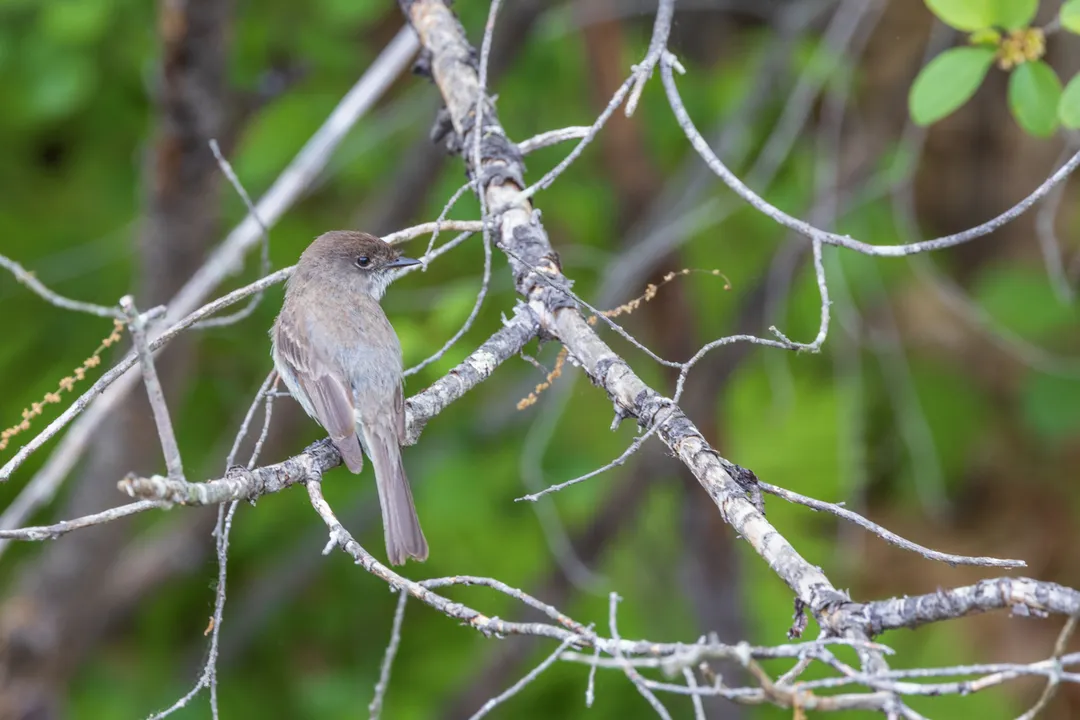
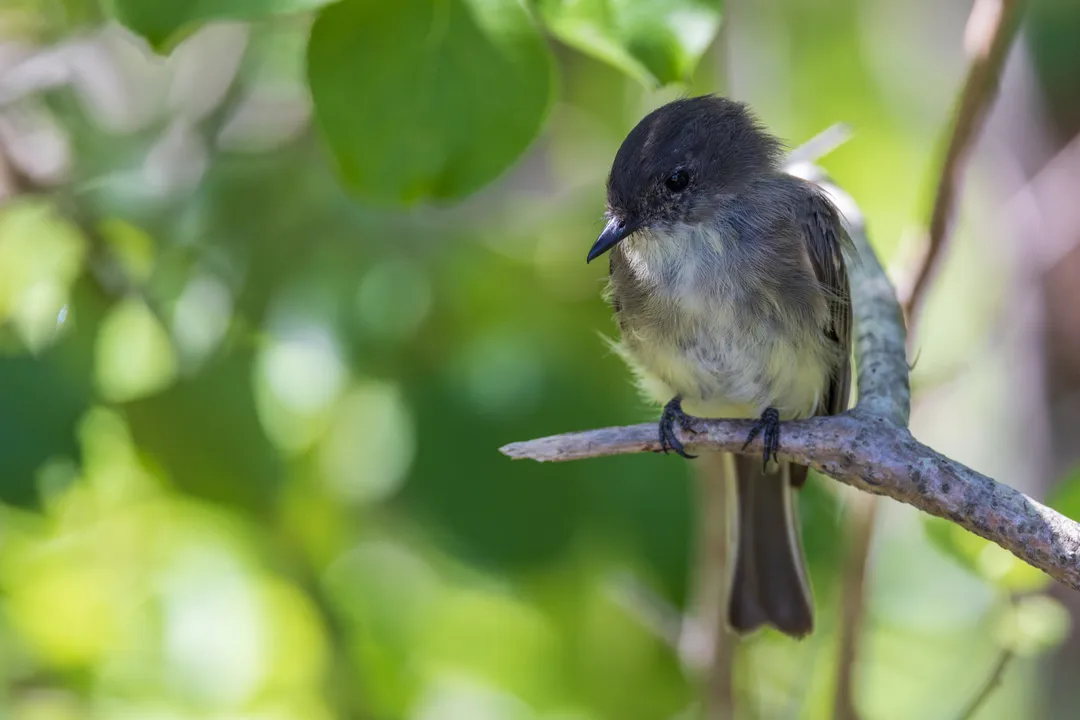
In plumage, the Eastern Phoebe is decidedly subtle, which contributes to why birders often rely so heavily on its behavior and vocalizations for identification. They are small perching birds, about the size of a Robin, measuring between 5.5 to 6.7 inches in length. Adults present a rather plain appearance: sooty brown or grayish-brown above and off-white below, though freshly molted fall birds can have a faint yellow wash underneath. A key feature that sets it apart from many look-alikes in the Tyrannidae family is the lack of a prominent eye-ring or strong wingbars. They possess a dark, slender bill, well-suited for snatching insects.
The tail-wagging habit is unmistakable; the bird repeatedly pumps its tail up and down while perched, a behavior shared with other phoebes but helpful in separating it from the very similar Eastern Wood-Pewee. The call is a sharp, raspy chip, while the song is a clear, repeated fee-bee! where the second syllable can alternate being higher or lower than the first. It is important not to confuse this sound with the sweeter, whistled fee-bee of the Black-capped Chickadee; the phoebe’s delivery is much quicker and decidedly raspier.
# Range Variation
The Eastern Phoebe’s range spans eastern North America, breeding across much of that area, though it excludes the southeastern coastal United States during the breeding season. For wintering, the species travels further north than many other flycatchers, often reaching the southernmost US states and Central America. This northern wintering tendency means that in some areas, like Missouri, they are one of the few flycatchers that can be seen year-round, albeit in much smaller numbers during the colder months.
The perception of rarity changes drastically when one compares the species’ core distribution to its peripheral edges. In states like Massachusetts, phoebes are considered stable or increasing breeders. Similarly, in North Carolina, they are a fairly common breeder across the western two-thirds of the state, though generally uncommon near the coast.
In contrast, a birder in western regions of their range might consider the bird rare. For instance, Texas Breeding Bird Atlas data indicates that while they are fairly common in the eastern half, they are considered a rare and extremely local breeding bird in the Panhandle and the western parts of the state. Nebraska categorizes them as a fairly common regular breeder only in the east and east-central regions, becoming uncommon or rare elsewhere in the west. This suggests that the species is more widely distributed and abundant where conditions are historically right, but its presence becomes much more tenuous and localized as one moves west of the core breeding zone.
# Population Dynamics
Despite local scarcity in certain spots, the overall narrative for the Eastern Phoebe across its established range leans toward stability or growth. The North American Breeding Bird Survey (BBS) data supports this, showing an annual increase of about 2.04% in abundance across the continent between 1966 and 2019. Even in Texas, BBS data from an earlier period showed a yearly increase of over 2.7%.
This apparent increase in numbers, coupled with a range expansion observed in places like the Great Plains, is fascinating because it often correlates directly with human activity. The natural nesting sites were likely small niches on vertical streambanks or rock outcrops. However, the availability of man-made structures like bridges, culverts, barns, and eaves has provided an abundance of secure, sheltered niches, potentially allowing the population to better cope with environmental pressures and expand its historical boundaries. Where natural habitat remains pristine and structures are absent, their presence may be limited by the availability of these specific nest sites.
If you are tracking this species locally, understanding the seasonal shift is crucial for avoiding the "rarity trap." In Missouri, for example, they are a common summer resident but a rare winter resident, with only a few lingering in the extreme southern counties during warm winters. If one were to only bird in that state during January, the phoebe would certainly seem rare, whereas a July visit would reveal them to be quite common.
# Nests and Habitat
The Eastern Phoebe’s close association with human development is one of its most endearing qualities and a major reason for its relative success. They seek out sheltered spots with a good view for foraging, and their nest-building preferences reflect this. The cup-shaped nest is constructed by the female using mud mixed with dry grasses and moss, then lined with finer materials and hair. While historical sites included rock ledges, the modern phoebe often prefers the underside of a bridge deck, a porch eave, or inside a barn. This preference for existing overhangs is a remarkable example of a bird adapting its ancient nesting blueprint to a human-altered landscape. One useful tip for bird enthusiasts who live in areas where phoebes are typically present but rarely nest is to consider installing a purpose-built nest structure well before the breeding season begins, mimicking the sheltered niche they seek out. Maintaining these older, slightly neglected structures on farms or properties can also secure a returning pair. Phoebes are known to reuse the same nest site in successive years, sometimes building a new cup right atop an old one.
# Feeding Habits
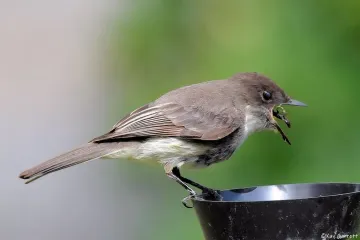
Like all flycatchers, the Eastern Phoebe is an aerial insectivore. Its primary foraging strategy involves sitting upright on a prominent, low perch—often a fence post, wire, or low branch near water—watching the surrounding area. When an insect flies past, the phoebe launches into a quick, direct flight, or a sally, snatches the prey mid-air, and returns precisely to the original perch. The bristly feathers around the bill are believed to help channel the captured insects toward the mouth during these fast maneuvers. Their diet in summer is predominantly insects, including wasps, bees, beetles, flies, and grasshoppers. It is worth noting that they also consume ticks, which is a significant service to both wildlife and humans. When insects become scarcer in the cooler months, the diet shifts to include small fruits and berries, providing necessary sustenance during migration or wintering periods.
# Migration Timing
One feature that guarantees the Eastern Phoebe is not rare in the eyes of spring birders is its early arrival. It is one of the first long-distance migrants to show up across its eastern range, often arriving in mid-to-late March. This early appearance makes them a reliable indicator of the changing season for many observers. Their departure in the fall is later than many other songbirds, lingering into September or early October. This relatively short migration distance compared to many other species might contribute to their ability to exploit conditions farther north during the winter, especially as winters become milder due to climate shifts. A fascinating historical footnote is that the Eastern Phoebe was the very first bird banded in North America, when John James Audubon attached silvered thread to one in 1804 in an attempt to track its return.
# Local Context Versus Overall Abundance
Ultimately, whether the Eastern Phoebe feels rare depends entirely on the observer's context. If you are in the eastern half of the Great Plains or in the Southeast, you are likely to encounter them regularly during the breeding season, and they are officially listed as a common or fairly common breeder. Their status is globally secure. However, if your location is on the western fringe—say, the western plains of Nebraska or the Trans-Pecos region of Texas—the bird becomes rare and extremely local, only showing up in mesic canyons or river valleys where the required microclimates persist. A local checklist compiler might report them as rare, while a continental population survey shows an increasing trend. To reconcile this, one must appreciate that for a species whose range expansion is correlated with tree growth across the Great Plains, the rate of habitat change is a critical variable. Areas where vegetation has changed in a way that favors the Eastern Phoebe over other species, such as Say's Phoebe in parts of Kansas, can see the former species gaining ground while the latter loses it. A dedicated birder interested in the phoebe's actual status in their area should cross-reference continental conservation ratings with local or state-level abundance data, paying close attention to the seasonality mentioned in local guides, as that often reveals why a bird seems to vanish for part of the year. They are common only when and where their specific nesting niche and insect food supply overlap perfectly with their migratory schedule.
Related Questions
#Citations
Eastern Phoebe Overview, All About Birds, Cornell Lab of Ornithology
Eastern phoebe - Wikipedia
EASTERN PHOEBE | The Texas Breeding Bird Atlas
Eastern Phoebes - Mass Audubon
Eastern Phoebe - Missouri Department of Conservation
Eastern Phoebe - Birds of North Carolina
Eastern Phoebe | Audubon Field Guide
EASTERN PHOEBE - Birds of Nebraska – Online