Do Eastern Phoebe eat wasps?
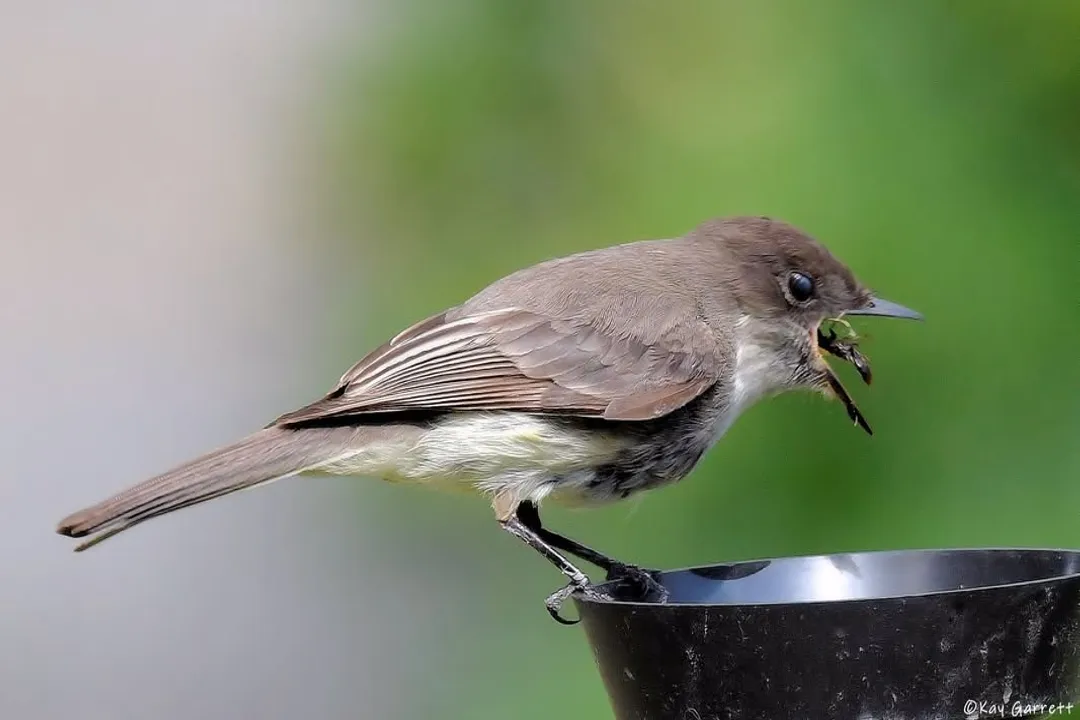
The Eastern Phoebe, that distinctive little bird often seen flicking its tail while perched on a low branch or porch eave, belongs to the flycatcher family, known for their specialized insect diet. When observing these birds, one of the most common curiosities that arises revolves around what, exactly, they are willing to snatch out of the air. Given their assertive hunting style, the question of whether these small, gray-brown birds will consume stinging insects like wasps is a valid one, especially for backyard observers. Evidence suggests that the answer is indeed yes, they do consume wasps, though this behavior is part of a broader, opportunistic feeding strategy focused on aerial insects. [2][6]
# Flycatcher Style
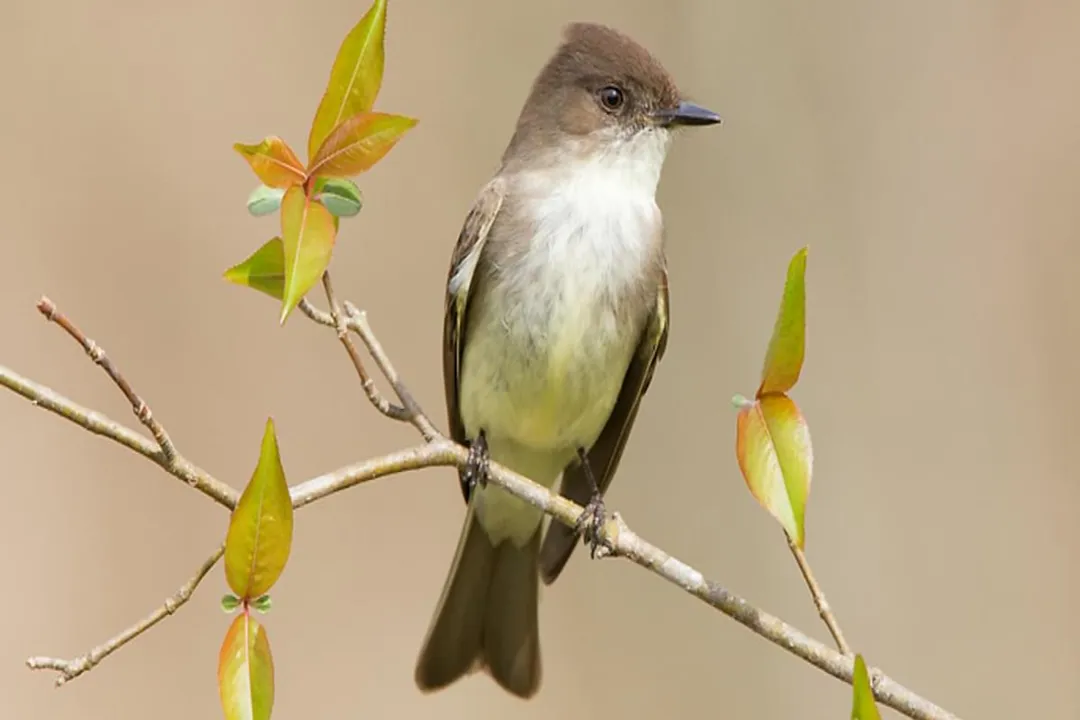
The Eastern Phoebe employs a classic flycatching technique. They are not typically active foragers that spend long periods searching through foliage; instead, they prefer to sit on a stationary perch, often near an open area or a source of insects, watching intently. [3] From this vantage point—which could be a dead snag, a low tree limb, or even a clothesline—the bird will abruptly dart out into the air to capture prey, a maneuver known as "sallying". [3] After a successful catch, the phoebe usually returns to the same or a nearby perch to consume its meal. [3] This method demands excellent aerial agility, allowing them to zero in on fast-moving targets.
# Insect Variety
As insectivores, the bulk of the Eastern Phoebe's diet consists of flying arthropods caught in mid-air. [1][5] Their menu is extensive and generally tailored to what is abundant locally and seasonally. Common fare includes various types of flies, which make up a significant portion of their intake, especially during nesting season when high protein demands are present. [1][5] Moths, beetles, and true bugs also feature prominently in their year-round consumption patterns. [1][6] The bird's activity tends to concentrate near water sources, such as streams or ponds, where flying insects are often densest. [1]
# Stinging Prey
When considering stinging insects, wasps are frequently mentioned alongside bees in the context of birds that consume them. The Eastern Phoebe is listed among species whose diet can include bees and wasps. [6] This indicates that while they are not specialized wasp hunters, they are certainly capable and willing to take them when the opportunity arises. Direct observation supports this dietary inclusion. For instance, there are documented instances, noted by birders sharing observations online, of an Eastern Phoebe being photographed successfully catching and consuming a wasp. [2] This confirmation moves the consumption of wasps from theoretical possibility, based on general insect diet lists, to observed reality.
It is interesting to compare this opportunistic capture with that of other insectivores. While some birds, like certain species of shrikes, are known to impale prey larger than themselves, the phoebe relies on its beak and aerial prowess. [5] A wasp is a sizable and potentially dangerous meal for a bird the size of a phoebe.
# Handling Wasps
If an Eastern Phoebe successfully intercepts a wasp in flight, the immediate challenge is dealing with the stinger and venom, should the wasp be a female capable of stinging. While the sources confirm the bird eats them, they do not detail the exact technique used to neutralize the threat. Based on general flycatcher behavior when catching large or spiky insects, it is highly probable that the phoebe employs a method of subduing the prey immediately after capture. This usually involves rapidly beating the insect against a hard surface, such as its perch, to kill it or, crucially, to shear off the stinger apparatus before ingestion. [5] This swift, decisive action is essential for survival, as a sting in the throat or beak could prove fatal or severely injure the bird. A mature, aggressive wasp requires precise handling, suggesting the phoebe is highly experienced in dispatching its prey quickly.
# Seasonal Shifts
The diet of the Eastern Phoebe is not static throughout the year, which influences the likelihood of wasp encounters. During the warmer months, when insects like wasps are active and abundant, the diet is overwhelmingly focused on these flying arthropods. [1][6] However, as autumn approaches and insect populations decline, the phoebe shows flexibility. This is where their adaptability shines; they will begin supplementing their diet with small fruits and berries, a dietary shift observed in many insectivorous songbirds as a necessary adaptation for overwintering or migration preparation. [5][9] This dietary softening demonstrates that while they are highly specialized hunters during the summer, they are not so specialized that they cannot switch gears when aerial prey becomes scarce. If you are observing phoebes in late summer or early fall, you might notice them consuming fewer large, hard-bodied insects and more smaller, softer prey, perhaps even shifting their perching locations away from open fields toward berry-producing shrubs or trees.
Observing a phoebe year after year near a particular water feature or section of fence line might actually offer insight into a learned, specific foraging territory. A family of phoebes establishing a nest site often relies on a consistent, local supply of food, and if a particular area reliably produces wasps or other desirable insects throughout the season, that location may become a preferred hunting ground for several breeding cycles. The consistency of their perching behavior, returning repeatedly to the same spot, strongly implies a recognition of the area's reliable insect output, be it flying insects near a creek or, occasionally, slower-moving wasps near a sheltered overhang. [3]
# Identification Context
Understanding the phoebe's preference for aerial capture helps differentiate it from other small songbirds. Unlike sparrows or finches that spend much of their time foraging on the ground or in dense shrubbery for seeds or stationary insects, the Eastern Phoebe is visually defined by its aerial pursuits and characteristic tail-wagging motion. [6][7] This visual cue—the tail bob—is an identifying feature common to the species, present even when they are simply perched waiting for a meal. [7] Their presence often signals the warming weather, as they are among the earliest songbirds to return north in the spring, sometimes appearing before insects are plentiful, which necessitates that initial reliance on stored energy or slow-moving early-season bugs. [8]
Ultimately, the Eastern Phoebe is a highly effective, insect-focused predator. While flies form the cornerstone of their summer diet, their willingness to snap up a wasp when the chance presents itself confirms their opportunistic nature. They rely on speed and agility to manage this potentially hazardous, but high-value, protein source, making them effective natural pest controllers in their local environment. [2][6]
Related Questions
#Citations
Eastern Phoebe Life History - All About Birds
Eastern Phoebe with a wasp! : r/birding - Reddit
When an Eastern phoebe is hungry for insects, it just wings it
Eastern phoebe diet consists of insects and spiders - Facebook
Say's Phoebe | Audubon Field Guide
Eastern phoebe - Wikipedia
BIRDING: Eastern Phoebe better known as flycatchers
BIRDING: Eastern Phoebe better known as flycatchers - Barrie News
Get Familiar With the Friendly Phoebe Bird Family - Birds and Blooms