How big do Eastern Barred Bandicoots get?
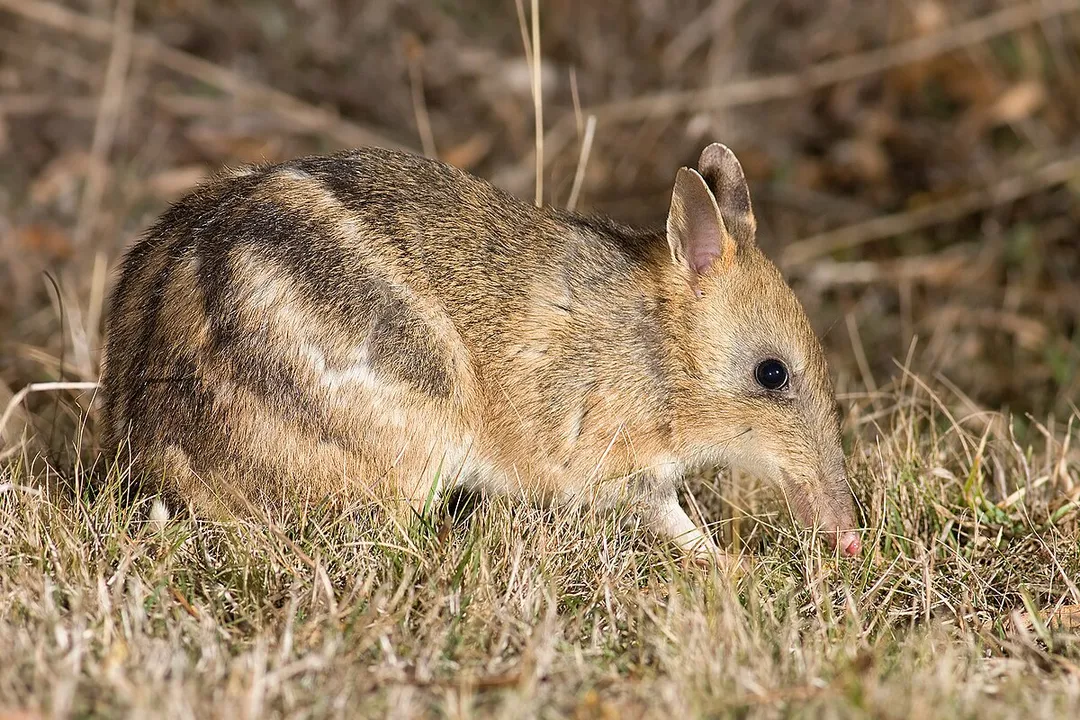
The Eastern Barred Bandicoot, Perameles gunnii, is generally described as a nocturnal, rabbit-sized marsupial, but pinning down its exact dimensions reveals a subtle but important distinction between the island-dwelling populations and their cousins across the Bass Strait. These diminutive diggers are not uniform in size; geographical separation has resulted in variations in average mass, which tells a small story about local environmental pressures and available resources. [2]
# Mass Variations

When discussing how big an Eastern Barred Bandicoot gets, the first thing to note is the significant size difference between those found in Tasmania and those surviving on the Australian mainland. [2] In Tasmania, the bandicoots are somewhat larger, with the average adult mass reported around 1,000 grams, or one kilogram. [2] This is often contrasted with the mainland populations, where the average adult mass sits closer to 750 grams. [2] Supporting data from other refuges suggests mainland averages can range from 640g to 766g, [3] or simply list them as a small marsupial weighing around 750g. [1] Even within the mainland context, weight can fluctuate, with one refuge noting a typical average weight of 600–800g. [4]
This difference in average weight between the two major groups is quite telling. It underscores how crucial habitat quality and the absence of certain threats can be for maximizing body condition. In Tasmania, the species benefits from a relative lack of red fox predation, allowing them to achieve a larger size and potentially greater overall fitness within that population. [2] Conversely, the mainland population, which was once critically endangered and is still classified as endangered in Victoria, has required intense, managed intervention just to maintain numbers, let alone maximize individual size. [1][2]
It is interesting to consider how body condition can shift even within conservation sites. Researchers noted on Phillip Island, where bandicoots were released into a predator-free haven, that the marsupials became "especially fat" after feasting on local crustaceans. [8] This suggests that while the Tasmanian population sets the benchmark for larger size, ideal, predator-free feeding conditions—even in novel island habitats outside their historic range—can lead to bandicoots exceeding typical mainland averages, perhaps achieving weights closer to the Tasmanian standard, or even higher. [8] While the overall weight is usually under 2 kg (4.4 lb), [2] this observation highlights that the potential size is achievable when environmental stress factors like predation are removed. [8]
# Linear Measurements
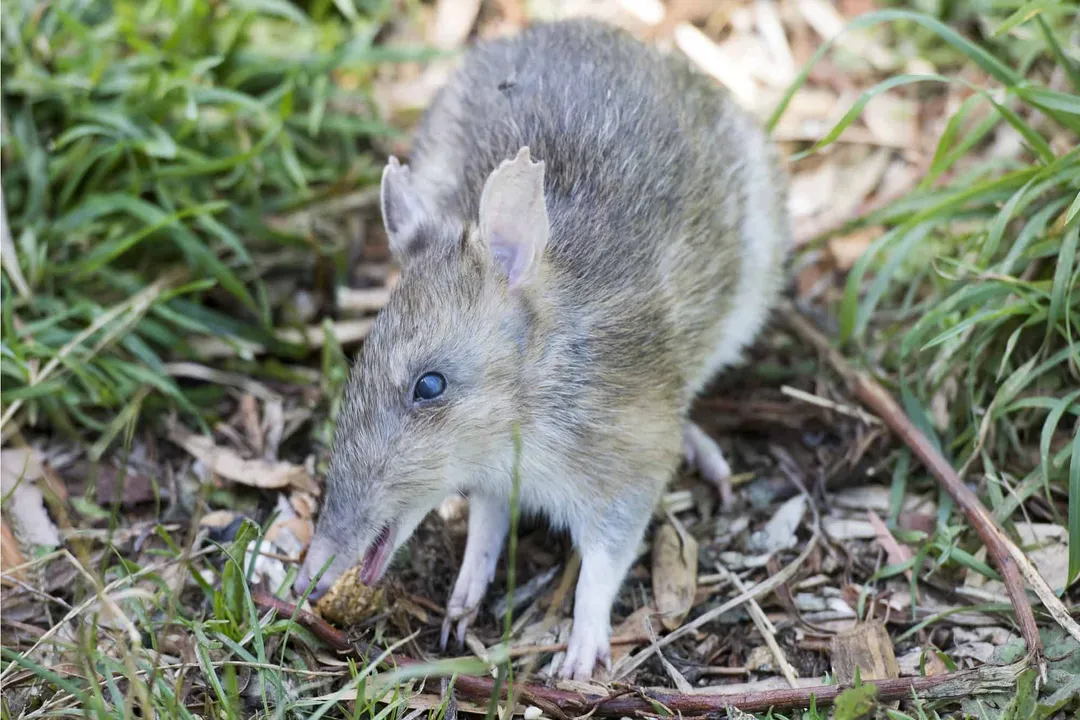
Beyond simple mass, linear dimensions help paint a picture of this animal. The Eastern Barred Bandicoot possesses a slender build, characterized by a head that tapers into a long, pinkish nose. [3][7] Head and body length figures vary slightly across observations. Some sources indicate a maximum head and body length of 340 mm, [3] while another lists it as reaching up to 35 cm (350 mm). [6] On the smaller end of the recorded spectrum, measurements can be as low as 7 to 12 inches long (approximately 178 mm to 305 mm). [5] Another figure suggests an "Average Size" of 400mm, [4] which might include the tail measurement or represent a general maximum length rather than just the head and body. Regardless of the exact measurement, their short, thin tail is generally reported to be around 100 mm long. [3]
Putting these measurements into perspective, a bandicoot reaching the upper end of the length scale (around 35 cm) while weighing just over 1 kg is a lean creature. This body structure, combined with powerful hind legs, allows for surprising bursts of speed, enabling them to gallop or jump distances of up to three feet in a single leap to escape danger. [2][5]
| Measurement Type | Typical Range / Figure (Mainland) | Notes on Variation |
|---|---|---|
| Average Mass | 640g – 750g | Tasmanian form averages closer to 1000g [2] |
| Maximum Mass | Under 2 kg (4.4 lb) [2] | Island populations can become "especially fat" [8] |
| Head/Body Length | Up to 350 mm (35 cm) | Figures vary from 7 to 12 inches (178–305 mm) [5] |
| Tail Length | Approximately 100 mm | Short and creamy white [3] |
# Size and Ecological Impact
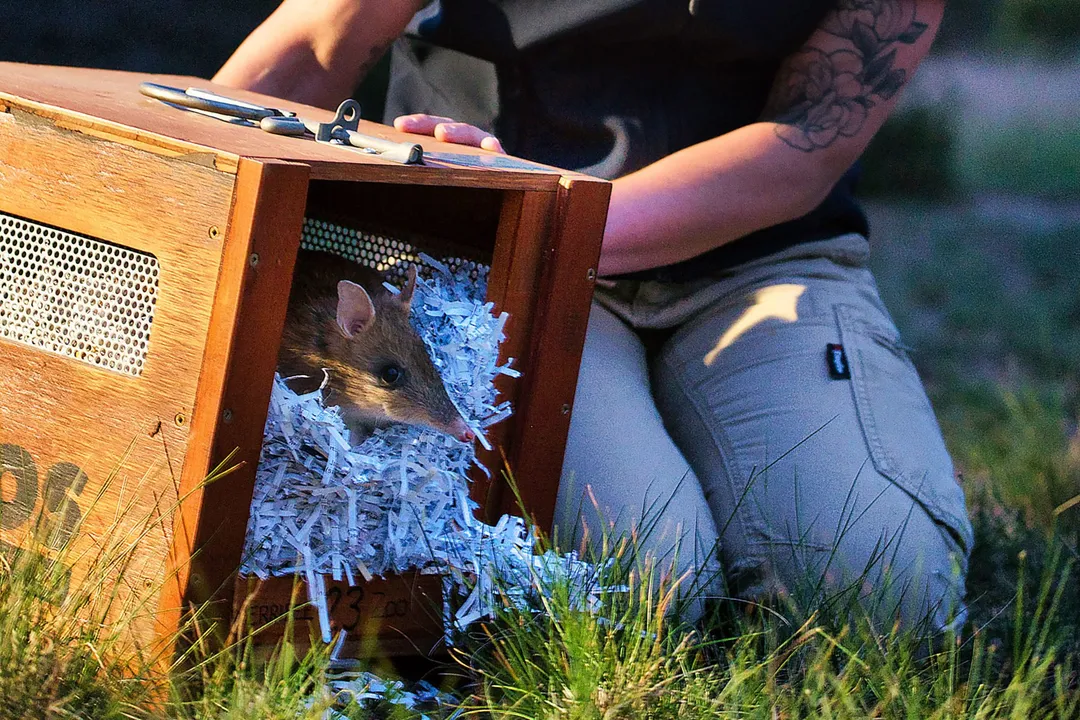
The physical size of the Eastern Barred Bandicoot, particularly its relatively small mass compared to other terrestrial mammals, is deceptive when considering its impact on the landscape. This is where their status as "ecosystem engineers" becomes critically relevant. [1][4][6] An animal weighing around 750 grams accomplishes significant earthworks every night in its search for invertebrates like grubs, beetles, and worms. [1][5] Research indicates that a single bandicoot can turn over an estimated 13 kg of soil in one night in the pursuit of food. [4][8]
This disproportionate level of digging has profound effects: it aerates compacted soil, increases soil moisture retention, promotes seed dispersal, and creates micro-habitats for other organisms. [6][8] Imagine a creature weighing less than a kilogram moving roughly its own body weight in soil every single night. This process of constant, small-scale disturbance is what keeps the grassy woodland and grassland ecosystems functioning as they should, countering soil compaction that results from degradation or over-grazing by kangaroos or domestic livestock. [1][8] Their small size is perfectly adapted for this niche—they are nimble enough to probe deep with their pointed snout and strong claws, yet their digging action is localized and manageable for the soil structure, unlike, perhaps, the movements of a much larger animal. [3][6]
# Size and Lifespan Trade-off
While a larger size might generally correlate with a longer life in the animal kingdom, the Eastern Barred Bandicoot demonstrates a survival strategy based on rapid reproduction rather than longevity. Their lifespan is remarkably short, often lasting less than three years in the wild. [3][7] This brief existence is compensated for by an incredibly high reproductive capacity, including a gestation period of just 12 to 12.5 days—one of the shortest recorded for any mammal. [2][4][6]
This combination of small size and short life mandates that conservation strategies focus on rapidly increasing population numbers through breeding success. [8] A bandicoot that can reach sexual maturity around three months old and potentially produce up to five litters a year can quickly replenish numbers lost to high juvenile mortality, which is driven heavily by introduced predators like foxes and cats. [2][7] Thus, while a Tasmanian bandicoot might be larger, the success of the mainland recovery relies on the sheer reproductive output possible from these small-bodied individuals when protected in predator-free zones. [2][8] The ability of the species to rebound, despite their small stature, proves that how an animal interacts with its environment—through digging and rapid breeding—is often more important to its survival than absolute bulk. [6][8]
Related Questions
#Citations
Eastern barred bandicoot - Wikipedia
Perameles gunnii (eastern barred bandicoot) - Animal Diversity Web
Eastern Barred Bandicoot - SWIFFT
Eastern Barred Bandicoot - Perameles gunnii - A-Z Animals
Eastern barred bandicoot — Odonata Foundation | We Save Species
Eastern barred bandicoot - Penguin Foundation
Eastern Barred Bandicoot
Eastern barred bandicoot: how the little diggers rebounded