Where do Eastern Chipmunks come from?

The story of the Eastern Chipmunk, scientifically named Tamias striatus, begins not with a single location, but across a vast swath of Eastern and Southeastern North America. [1][9] These familiar, stripe-backed rodents are iconic inhabitants of woodlands, gardens, and stone walls throughout this region, immediately recognizable by the distinctive black and white stripes running down their backs and faces. [1][6] Understanding where they "come from" involves mapping their current established territory and considering the habitats they select within those boundaries. [5][7]
# Species Span

The recognized native range of the Eastern Chipmunk is extensive, covering the entire eastern part of the continent. [1] Its territory stretches from the eastern edges of the Great Plains, moving eastward across the continent. [1][5] Generally speaking, their distribution covers the entire eastern half of the United States and extends northward into southeastern Canada. [1][9]
Specifically, their northern limits extend into the southern parts of the Canadian provinces, including areas like Manitoba, Ontario, Quebec, and the Maritime Provinces. [1] Heading south, their range continues down through the eastern United States, reaching as far as Georgia and bordering the Gulf Coast states. [5][6] While they are widespread, the species is notably absent from the arid regions of the West, where they are replaced by other chipmunk species belonging to the genus Neotamias. [1][9] The Tamias genus itself, to which the Eastern Chipmunk belongs, is contrasted sharply with these western relatives, solidifying the Eastern Chipmunk's evolutionary and geographical niche in the eastern deciduous forests. [1]
# Regional Habitats
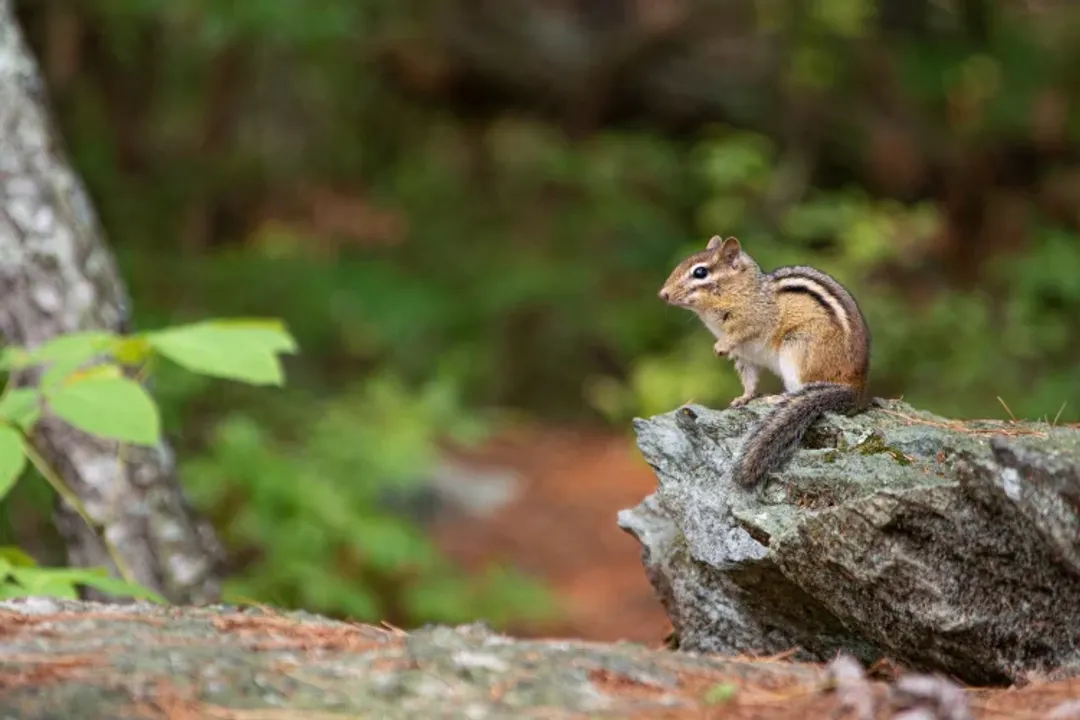
While the continental map shows a large continuous range, chipmunks are highly dependent on specific microclimates and ground cover found within that territory. [2][7] They are strongly associated with forested environments, particularly deciduous or mixed forests, where they find the necessary building materials and food sources. [1][6]
In many states, such as Massachusetts, they are found throughout the entire state, from the coastal areas to the western hills. [5] Similarly, Vermont populations span the state, often seen near the edges of woodlands or in semi-open areas. [7] The Connecticut Division of Energy and Environmental Protection notes their preference for areas with good cover, such as those near rock piles, stone walls, or brush heaps, which provide immediate safety from predators. [2] Maryland wildlife officials emphasize that the presence of rich, well-drained soil is a major factor, as this allows them to excavate their complex underground homes. [6]
It is crucial to note that presence is not uniform. Even within a suitable forested area, populations might be dense in one small patch and entirely absent fifty yards away if the substrate or understory changes significantly. [5] The requirement for cover remains a constant across their range, whether that cover is provided by old logs, dense herbaceous growth, or human-made structures like woodpiles or sheds. [2][4]
# Burrow Construction
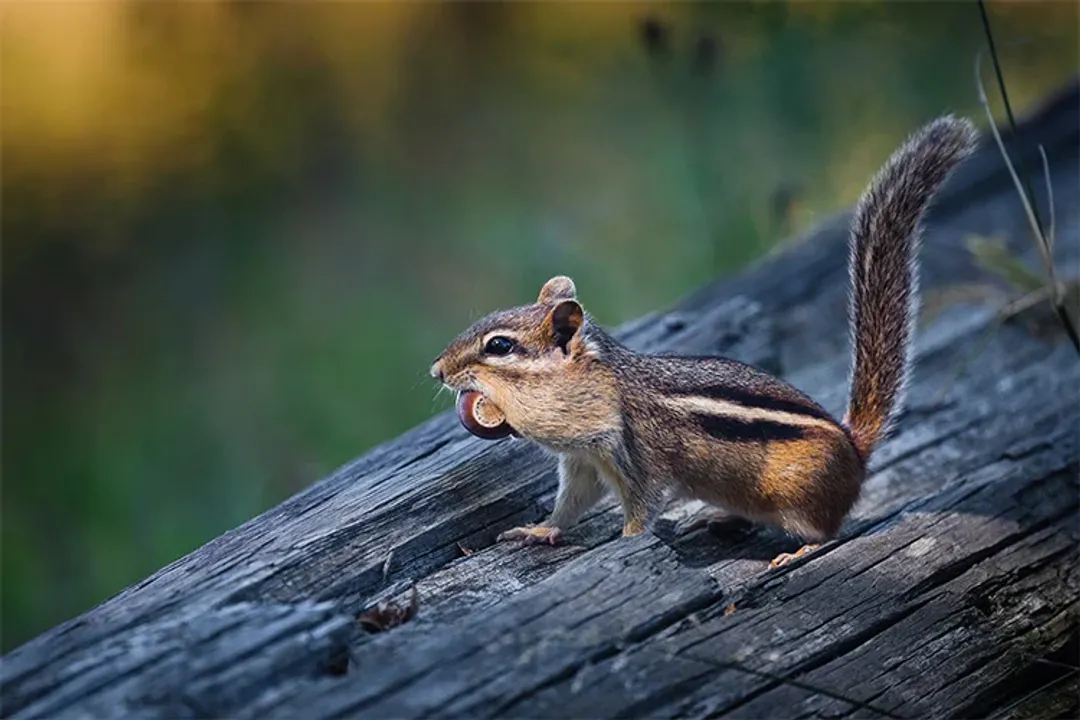
The "home base" for an Eastern Chipmunk is a significant construction project that dictates where they can successfully establish themselves. [2] These burrows are more than just shallow scrapes; they are elaborate underground networks essential for resting, raising young, and surviving the colder months. [1][2] A typical burrow system can extend up to ten feet in length and feature multiple entrances, often carefully concealed beneath stones, roots, or dense vegetation. [2][4]
The construction process itself demands specific soil characteristics. They do not favor areas with heavy clay or waterlogged soil, as these environments make digging difficult and pose a risk of flooding the chambers. [6] Therefore, patches of loam or sandy soil, common in many established woodlands, become prime real estate for these small excavators. [2]
One interesting observation is how the chipmunk's ability to thrive near human habitation often correlates with specific landscape features, such as the presence of dense, established shrub layers for cover near foundation plantings, rather than just the presence of houses. [5] This suggests their success in suburbia isn't mere tolerance, but active selection based on ecological structure that mimics a woodland edge—dense ground cover combined with accessible sunlit patches for foraging. [2][7]
# Classification and Evolutionary Roots

The question of origin also touches upon their evolutionary placement. Eastern Chipmunks are the only chipmunk species native to the eastern part of North America, belonging to the genus Tamias. [1][9] This distinction is significant; nearly all other chipmunk species—about 24 of them—are found in western North America. [1]
This biological separation implies a long period of geographic isolation between the eastern and western populations, suggesting that the ancestors of Tamias striatus populated the eastern forests while a different lineage colonized the Rockies and the Pacific slopes. [1][9] While the exact divergence time is complex, the clear geographic split reinforces why finding one in, say, eastern Pennsylvania is entirely natural, whereas finding a western species there would be highly unusual. [1]
# Survival Tied to Location
The geography of their habitat directly influences their yearly cycle, particularly their relationship with winter. [1][2] Eastern Chipmunks do not undergo true, deep hibernation like some ground squirrels. Instead, they enter periods of torpor, rousing periodically to feed on their cached supplies. [1]
Considering their overwintering behavior—entering periods of rest rather than sustained hibernation—the length and depth of these rests are likely tuned to regional temperature profiles within their expansive range. [2][7] A chipmunk in, for instance, northern New Hampshire might experience much longer, deeper bouts of inactivity required to survive freezing ground temperatures compared to one living in the milder climate near the coast of Maryland or Virginia. [1][6] This physiological adjustment to the local thermal environment within that single species range is a key aspect of their widespread success across diverse northern latitudes. [2] They must store enough high-fat food—nuts, seeds, and fungi—in their burrows to sustain these wake-and-sleep cycles until spring. [4][5]
# Diet and Foraging Territory
Where chipmunks live is inextricably linked to what they eat, as they are primarily foragers of woodland ground cover. [5] Their diet is omnivorous and includes seeds, nuts (especially acorns and beechnuts), berries, fungi, insects, bird eggs, and even small amphibians or bird nestlings when opportunity arises. [1][2][4]
Their dependence on these seasonal food caches means that areas with reliable, hard mast crops (like oak and beech trees) tend to support higher local densities. [5] If an area experiences a "mast failure," the local chipmunk population might suffer or disperse to find better resources. [2]
When assessing a new location, a chipmunk is essentially conducting a cost-benefit analysis: Is the soil good enough to dig a safe burrow, and is the surrounding vegetation productive enough to fill that burrow with enough food to last the winter? A mature suburban yard with established ornamental shrubs and perhaps an old oak tree often meets both criteria better than a heavily manicured, open lawn or a dense, dark, second-growth pine stand. [5][7] In many areas, the edges of suburban development act as an edge effect powerhouse—the transition zone between deep woods and open space often provides the greatest diversity of foraging substrates. [6] For example, while they might forage widely, they rarely stray more than 100 feet from the safety of their primary burrow entrance, making the immediate surroundings the most critical factor in their chosen home range. [2][4] This strong attachment to a central den site defines their short-distance "where" within the larger continental "where". [2]
Related Questions
#Citations
Eastern chipmunk - Wikipedia
[PDF] Eastern Chipmunk Fact Sheet - CT.gov
CHUNKY CHEEKS The Eastern Chipmunks genus name (Tamias ...
Eastern Chipmunk - Tamias striatus - New Hampshire PBS
Chipmunks - Mass Audubon
Eastern Chipmunk - Maryland DNR
Eastern Chipmunk | Vermont Fish & Wildlife Department
The Eastern Chipmunk – Some Facts That Might Surprise You
Tamias striatus (eastern chipmunk) - Animal Diversity Web