Where did the Senegal parrot come from?
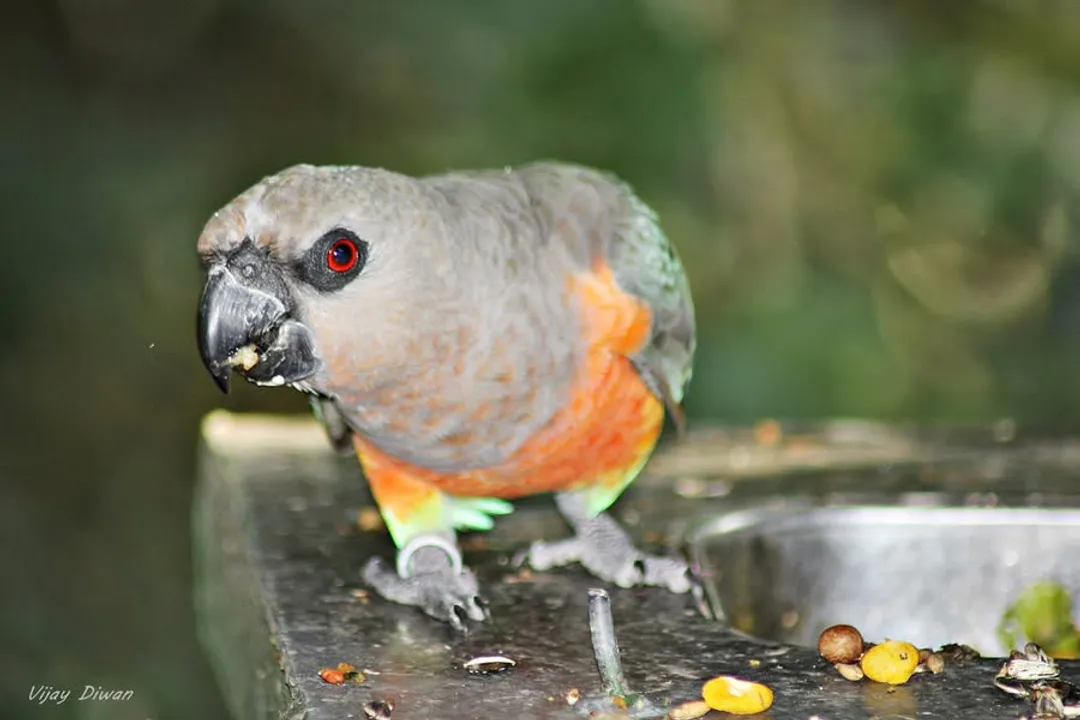
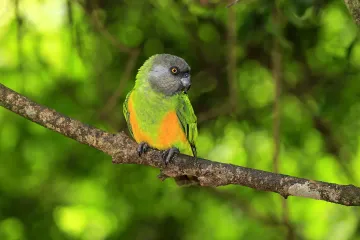
The Senegal parrot, Poicephalus senegalus, is instantly recognizable by its vibrant yellow-to-orange breast plumage contrasting sharply with its slate-gray head and back, a striking image that has captivated aviculturists worldwide for decades. While these birds are familiar sights in aviaries and homes across many continents, their true story begins far from pet stores and breeders—it starts deep within the varied landscapes of West and Central Africa. Understanding their native origins is key to appreciating their natural behaviors, resilience, and the specific needs they carry as companions. [1][7] They are not inhabitants of a single country or even a single type of environment, but rather creatures adapted to a band of latitudes stretching across the continent. [3][9]
# African Range
The native range of the Senegal parrot is distinctly West African, though its distribution extends eastward across the African continent, encompassing a broad equatorial belt. [9] Specifically, populations are scattered across numerous countries, including Senegal—from which the bird takes its common name—Gambia, Guinea-Bissau, Guinea, Sierra Leone, Liberia, Côte d'Ivoire, Ghana, Togo, and Nigeria. [5][9] Moving eastward, the species continues into Cameroon, Gabon, Equatorial Guinea, the Republic of the Congo, and the Democratic Republic of the Congo. [5][3] This extensive geographical spread suggests a high degree of adaptability, allowing the species to persist across various ecological zones within this large region. [9]
It is important to note that the species is divided into several subspecies, and their distributions generally correlate with specific sections of this broad range, which is a common pattern in geographically widespread birds. [3] For example, while the nominate subspecies, Poicephalus senegalus senegalus, is primarily found in the western part of the range, other subspecies occupy the central and eastern segments. [3] This regional variation in appearance, even subtle shifts in feather coloration or size, hints at populations evolving in relative isolation within their respective strongholds across the African landscape. [9] The historical distribution documented by ornithologists often shows gaps or fragmented populations, indicating that while they are widespread, they are not necessarily evenly distributed throughout the entire theoretical band. [8]
The fact that the species is named after Senegal, one of the westernmost countries in its range, highlights the early documentation or observation of the bird by European explorers or traders originating from that maritime region. [1] However, the majority of the population density might lie further inland or in other specific nations along the coast or savannas. [5]
# Habitat Specificity
The environment these parrots call home is not monolithic; it varies significantly from one area to the next within their range, which helps explain their adaptability. [9] Generally, Senegal parrots prefer forested or wooded areas, but they are not strictly confined to dense rainforests, a characteristic that distinguishes them from some other African parrot species. [7][9] Their preferred habitat frequently includes gallery forests—trees lining rivers and streams that cut through drier landscapes—as well as moist savannas and woodland mosaics. [9]
In some areas, they are commonly found near agricultural zones or cultivated areas, suggesting they readily utilize human-modified landscapes as long as sufficient nesting trees and foraging resources remain. [5][1] For instance, in the drier savanna regions, they might congregate near patches of acacia or other drought-resistant, broad-crowned trees which offer both shelter and potential nesting cavities. [9] Conversely, populations situated closer to the coastal regions or in areas with higher rainfall might favor denser, secondary growth woodlands rather than the deep, primary tropical rainforest. [5]
This preference for woodland edges and savannas over deep jungle is a crucial element of their ecological success. Deep rainforest species often rely on year-round fruit availability and high canopy cover. Senegal parrots, by inhabiting more open or transitional zones, are likely better equipped to handle seasonal variations in food supply common to savanna climates. [9]
A point worth noting when considering their natural habitat versus their captive environment is the availability of nesting sites. In the wild, they are cavity nesters, relying on pre-existing holes in mature trees—often old woodpecker nests or natural decay cavities. [7] The security and specific dimensions of these natural cavities dictate breeding success, a factor often poorly replicated in captive settings without careful provision of appropriate nest boxes. [1]
# Dietary Origins
The diet of the Senegal parrot in its native habitat is intrinsically linked to the flora available in its specific West African locale. [9] Their natural foraging habits involve consuming a wide variety of items, reflecting the seasonal availability of food sources. [9] Primarily, they consume seeds, nuts, fruits, and blossoms found within their wooded environments. [9]
In the savannas, a significant portion of their diet would consist of the seeds of grasses and various shrubs, supplemented by insect larvae found in bark or rotten wood, especially during breeding seasons when protein needs increase. [9] In more humid, forested pockets, fruits and the kernels of certain nuts would form a larger proportion of their intake. [5] This reliance on diverse, locally available forage means that no single food item dominates their nutrition across their entire range. [9]
Thinking about their origin through a nutritional lens reveals an interesting insight for caregivers: these birds are built to process a complex matrix of nutrients, fats, and fibers found in whole foods typical of African woodlands. [7] When we feed a captive Senegal parrot, we are attempting to mimic the variety found across the changing seasons of a savanna woodland, not just the simple seed mixes often presented initially. Their ability to crack hard seeds suggests a strong beak adapted for tougher, wilder food items than the soft pellets commonly offered today. [1]
# Subspecies Distribution Comparison
While the general name "Senegal parrot" covers the species, the variations between the recognized subspecies offer a finer look at their geographic origins and local adaptations. [3] Ornithological classification often recognizes three or four subspecies, generally distinguished by the extent and shade of the yellow/orange coloration on the breast and belly. [3]
| Subspecies | Approximate Geographic Origin | Key Feature |
|---|---|---|
| P. s. senegalus | Western region (Senegal, Gambia) | Brightest orange/red breast patch [3] |
| P. s. voltsieni | Central/Eastern regions (Congo Basin) | Paler, more yellowish breast [3] |
| P. s. mesotypus | Intermediate areas (Nigeria, Cameroon) | Intermediate coloration [3] |
This distinct geographic partitioning, where coloration shifts gradually across the range, is known as a clinal variation. [3] This suggests that environmental pressures, perhaps differing light levels, dietary pigments, or temperature, have favored slightly different color expressions in populations separated by significant distance and intervening non-parrot habitat. [9] For instance, a population near the coast in Senegal might experience different light intensity or humidity than one deep in the Cameroonian woodlands, driving minor but measurable evolutionary divergence over millennia. [9] This pattern of subspecies separation underscores that the "Senegal parrot" isn't a single entity but rather a collection of regionally specialized populations adapted to their immediate ancestral surroundings. [8]
One observation that frequently arises when comparing wild-caught specimens from different parts of the range (historically, before tighter CITES regulations) is the difference in temperament or hardiness, though this is highly anecdotal and species-dependent. [8] What is more concrete is the ecological difference: the birds from drier savanna environments might exhibit greater tolerance for heat and lower humidity compared to their counterparts from the lusher coastal forests, reflecting the local climate they evolved within. [9]
# Conservation Status and Origin Connection
The fact that the Senegal parrot is listed on CITES Appendix II immediately connects its origin story to modern global pressures. [8] CITES (Convention on International Trade in Endangered Species of Wild Fauna and Flora) lists species to ensure that international trade does not threaten their survival in the wild. [8] The inclusion of Poicephalus senegalus on Appendix II means that while trade is permitted, it must be strictly controlled and documented to ensure it is not detrimental to the species' long-term viability in its native African habitats. [8]
This regulatory status directly reflects the pressure placed upon their native populations, often stemming from the capture of wild birds for the international pet trade. [6] Historically, large numbers of these birds were exported from countries within their range, particularly from West Africa. [8] The sustainability of these wild populations, which depend on the integrity of their specific West and Central African woodlands and savannas, is therefore directly threatened by unsustainable harvesting practices at their source. [9]
The conservation challenge is deeply rooted in their origin: if specific, small populations corresponding to one subspecies are heavily targeted for export, that specific regional gene pool is at risk, even if the overall species population remains relatively stable across its entire range. [8] Protecting their origin requires effective conservation management within the range countries, focusing on habitat preservation and regulating local capture for export. [8]
# Local Ecology Insight
Considering the West African origin, it is fascinating to contemplate the bird's role within its local ecosystem, a perspective often missed when viewing them solely as pets. [9] These parrots are not just consumers; they are also seed dispersers. By eating fruits and nuts and later regurgitating seeds in new locations, they actively participate in the regeneration and maintenance of the very woodlands and savannas that define their home. [9]
Furthermore, their reliance on tree cavities for nesting means they are intrinsically linked to the presence of older, mature trees, which are often the first casualties of rapid agricultural expansion or logging in developing regions. [7] A community of Senegal parrots serves as an excellent bio-indicator: the health and number of parrots in a given area often directly reflect the maturity and structural complexity of the local forest or savanna ecosystem. A sudden decline in Senegal parrot sightings in a region of Ghana or Côte d'Ivoire might signal underlying degradation of large tree resources long before other more obvious ecological markers appear. [5] This highlights their value as a natural indicator of woodland health in their native environment.
# Synthesizing the Source
In summarizing where the Senegal parrot comes from, we paint a picture of a resilient, adaptable bird thriving across the African belt south of the Sahara, spanning from the Atlantic coast inland to the Congo Basin. [5][9] They are birds of the woodland edge, the riverine forest, and the semi-open savanna, creatures intimately tied to the seasonal cycles of West and Central African vegetation. [9] Their origins define their biological requirements—a need for varied forage, safe tree cavities for nesting, and an adaptation to climates that can swing between wet and dry seasons. [7] While the bird we keep in an enclosure in Europe or North America is generations removed from the wild stock, every feather color and behavioral quirk has been shaped by the specific soils, trees, and weather of that expansive African home. [1] Their journey from the woodlands of Senegal to the living rooms of the world is a testament to their hardiness, but their continued survival relies on the protection of those original African roots. [8]
#Videos
What is a Senegal Parrot? #shorts - YouTube
Related Questions
#Citations
Senegal Parrot – Profile & Care Guide
Senegal Parrots Make Excellent Companions - Everything Birds
Senegal Parrot - Facts, Diet, Habitat & Pictures on Animalia.bio
What is a Senegal Parrot? #shorts - YouTube
Senegal Parrot - Buffalo Zoo
Orange-breasted Senegal parrot (Poicephalus senegalus ...
Senegal Parrots - General - VCA Animal Hospitals
[PDF] Poicephalus senegalus - CITES
Poicephalus senegalus (Senegal parrot) - Animal Diversity Web