What is a parrot snake?
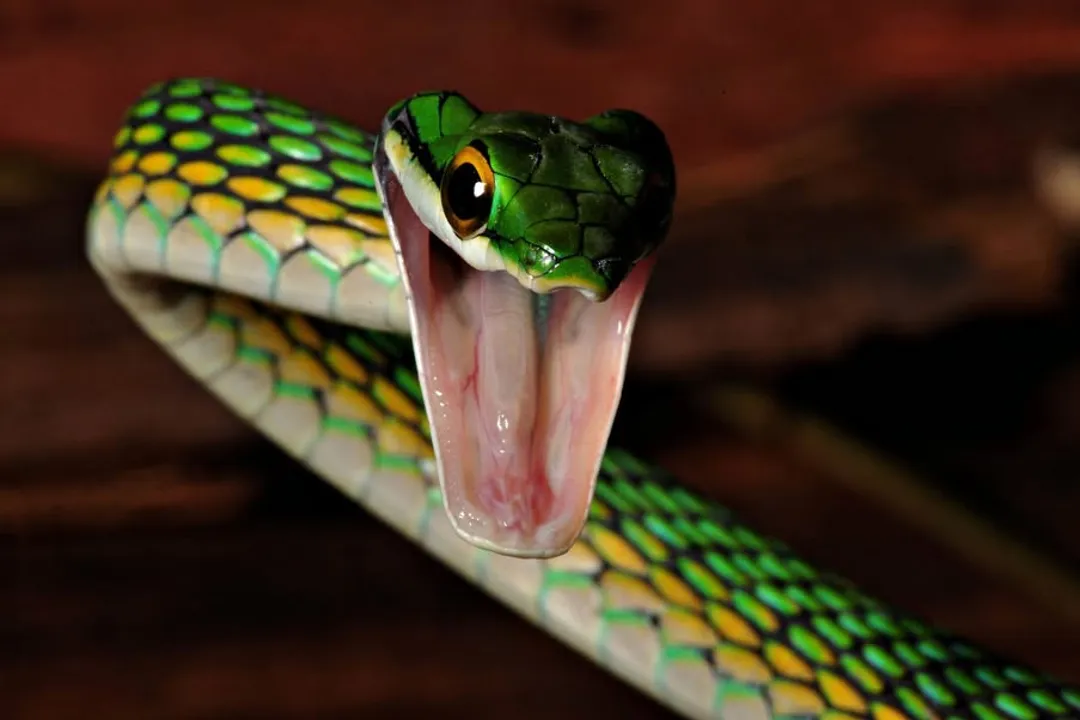
The term "parrot snake" typically points toward members of the genus Leptophis, with Leptophis ahaetulla being one of the most frequently referenced species. [1][5] Their common name derives directly from their striking, often brilliant coloration, which frequently features shades of bright green, sometimes accented with blue or yellow patterning, making them resemble the colorful birds sharing their tropical environments. [5][7] These snakes are recognized by their notably slender bodies and long tails, traits indicative of their lifestyle spent active in the trees and undergrowth. [2][6] They are generally diurnal, meaning they hunt and move during the daylight hours, a characteristic shared by many active visual predators in the rainforest. [2]
# Species Detail
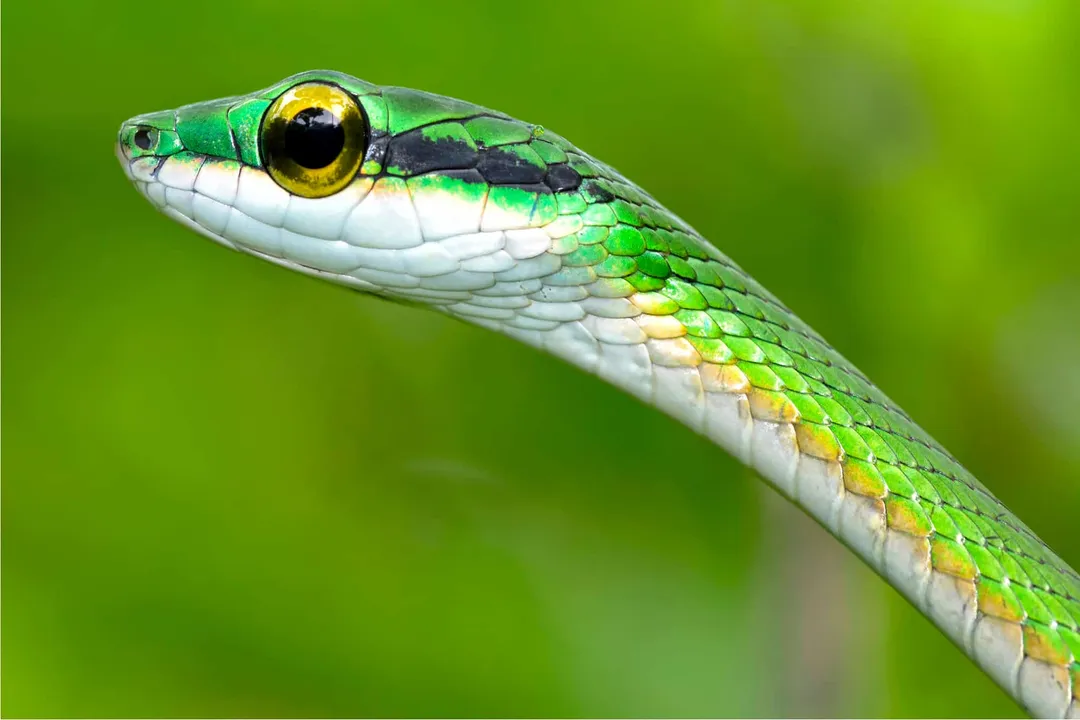
While Leptophis ahaetulla is the signature parrot snake for many, it is important to recognize that this common name can sometimes be applied loosely or applied to related species within the genus Leptophis. [1][9] For instance, in some regions, snakes like Leptophis depressirostris are also encountered and share many general characteristics with their more famous cousin. [8] The defining feature across the genus is their gracile, elongated physique. Adults of L. ahaetulla typically reach lengths between 3 to 6 feet, though specimens exceeding these dimensions are uncommon. [2] Their eyes are often large relative to their head size, supporting their visually oriented, daytime hunting strategy. [2]
A notable point of comparison, sometimes leading to confusion in identification, involves true vine snakes (genus Oxybelis). While both groups are slender and arboreal, parrot snakes belong to the family Colubridae, whereas vine snakes are sometimes grouped separately depending on the classification system used, and their head shapes can differ subtly. [6] Accurate identification often relies on precise scale counts or regional keys, but for the general observer, the vibrant green of Leptophis is a strong initial indicator. [9]
# Venom Status
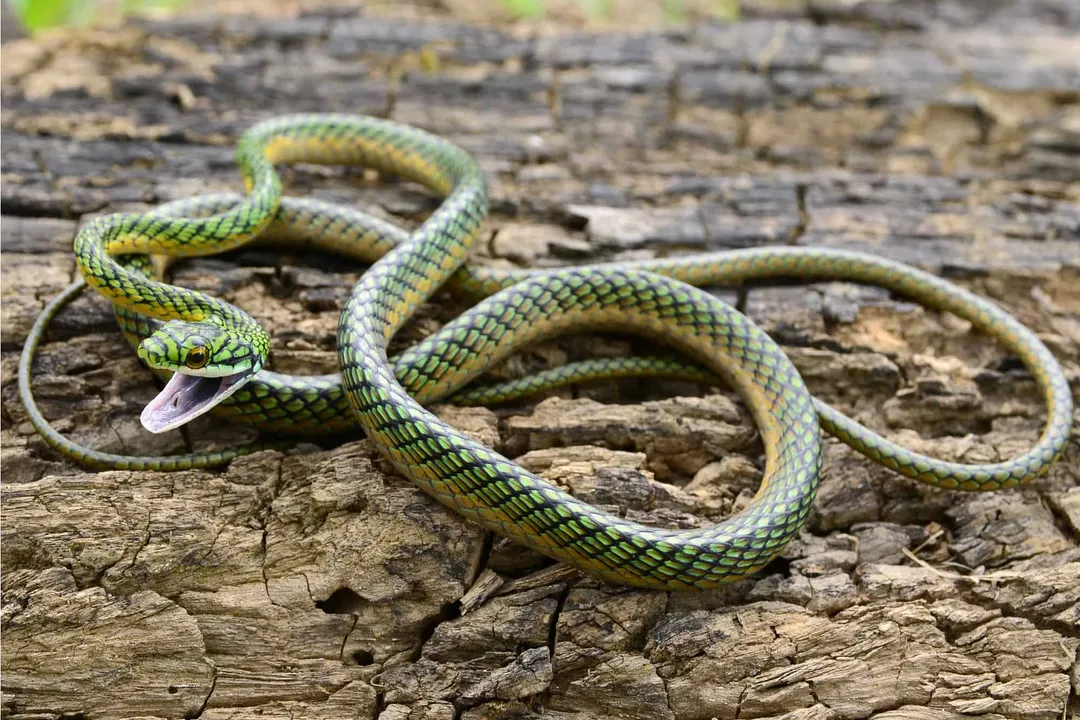
One of the most frequent inquiries regarding the parrot snake concerns its venom. It is factual that many Leptophis species possess venom, classifying them as technically venomous snakes. [3][4] However, the delivery system is crucial to understanding the actual risk they pose to humans. Parrot snakes are often described as being opisthoglyphous. [3] This means their venom-delivering structures—the fangs—are located in the rear section of the maxilla (upper jaw). [3]
This rear-fanged arrangement contrasts sharply with the front-fanged system seen in medically significant snakes like cobras or vipers. Because the fangs are positioned further back, the snake must often latch onto its prey or the threat, sometimes chewing slightly, to successfully inject venom deep enough to be effective. [4] Consequently, while they can deliver a bite and introduce venom, the amount transferred to a human during a typical defensive snap is usually negligible, and bites are rarely reported as causing serious medical issues. [4] They are not generally considered dangerous to people, although any bite from a wild animal should be taken seriously due to the risk of secondary bacterial infection. [3]
# Forest Habitat
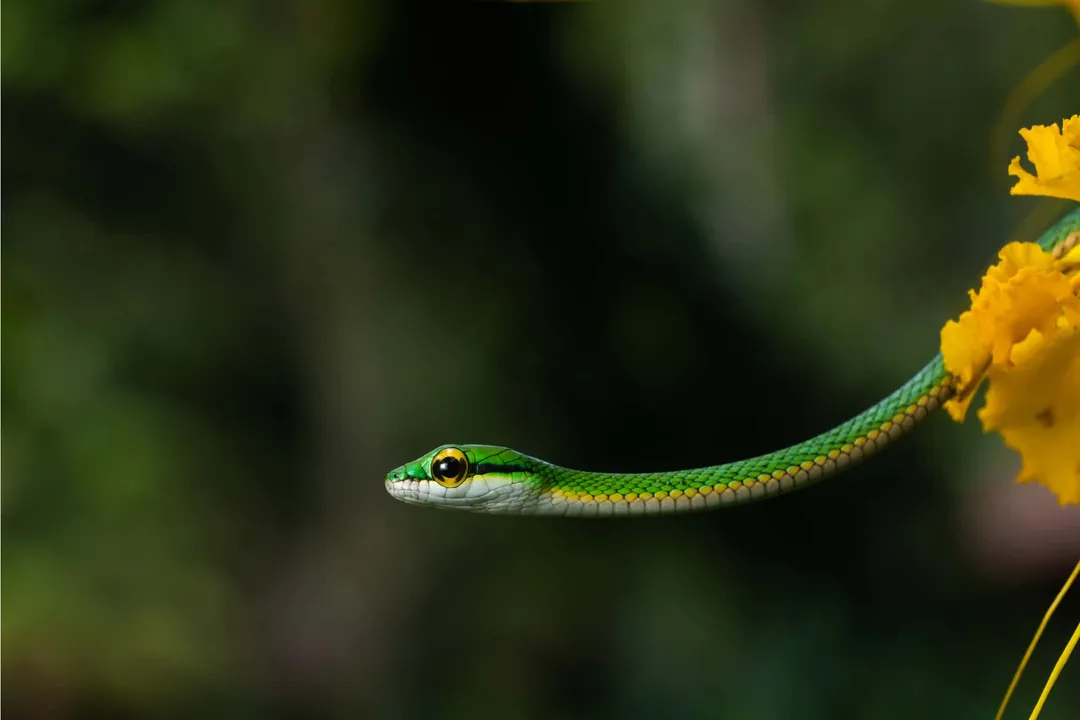
The distribution of the parrot snake genus is centered in the Neotropics, spanning across Central America down into South America. [1][7] They show a strong preference for environments with significant vegetation cover. You are most likely to find them in dense, humid forests, but they adapt well to secondary growth areas, forest edges, and sometimes even shrubby clearings adjacent to woodlands. [7]
This preference ties directly into their specialized hunting style. Being active, visually acute predators, they spend a great deal of time arboreally, climbing through the branches and foliage, which allows them to ambush prey that might not be available on the forest floor. [2] When they are not actively hunting high up, they can be found resting among leaf litter or low shrubs. [2] Their coloration serves as excellent camouflage in the dappled light filtering through the canopy, making them difficult for both predators and prey to spot. [5]
# Diet Habits

The primary diet of the parrot snake revolves around smaller ectotherms found within its habitat. Lizards constitute a major component of their meals, and they are particularly effective at preying upon smaller, faster-moving species. [2][6] Beyond lizards, they readily consume small frogs and tree frogs, again benefiting from their arboreal abilities to access these amphibian meals. [2][6] While less common, opportunistic feeding may include very small mammals or nesting birds, though this is not their staple diet. [6] They are known for being quite vigorous eaters, sometimes taking on prey items that approach their own size, showcasing their determined predatory nature. [2]
Since these snakes are diurnal, their feeding schedule aligns with the activity period of their primary prey—lizards and amphibians that are also basking or moving during the day. This shared active period increases hunting success rates for the snake. [2]
# Ecosystem Role
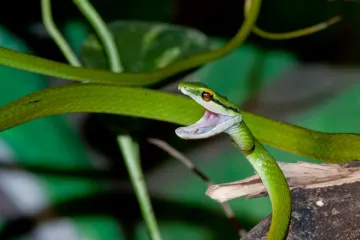
The presence of a thriving Leptophis population acts as a quiet barometer for the health of the local environment. These snakes are specialized predators, meaning they are sensitive to disruptions that affect their prey base—namely small reptiles and amphibians. [2][6] If one observes a consistent population of parrot snakes in a given area, it generally suggests that the local microclimate and food web structures are stable enough to support multiple levels of predator-prey interaction. [6] Conversely, a sudden disappearance might signal habitat degradation or a decline in amphibian populations, which are highly vulnerable to environmental changes like pollution or altered humidity levels. [5] This makes them an incidental, yet valuable, component of ecological monitoring in their native ranges.
# Handling Cautions
When encountering any wild snake, caution is always advised, and this holds true even for species generally considered mild like the parrot snake. Given their rear-fanged configuration, the risk of medically significant envenomation is low, but bites can still occur if the animal feels cornered or threatened. [4] If an observer needs to move the snake from a path or structure, the best approach is to avoid direct hand contact entirely. A long stick or hook can be used gently to guide the snake away, allowing it to retreat into cover naturally. [4]
It is worth noting that due to their slender build and speed, they are experts at escaping confinement. Any attempt to hold them tightly will invariably provoke a defensive reaction aimed at breaking free, which increases the chance of an accidental nip, even if the snake is not fundamentally aggressive. [2] Remembering their natural agility helps inform a respectful distance that ensures safety for both the observer and the snake.
#Videos
Green parrot snake (Leptophis ahaetulla) - YouTube
Related Questions
#Citations
Leptophis ahaetulla - Wikipedia
The Slender Parrot Snake Can Grow to More Than 5 Feet Long
Not so venomous venoms: the case of the parrot snake - BraeuNERD
Green parrot snake (Leptophis ahaetulla) - YouTube
Parrot Snakes: A Closer Look at a Vibrant Species
Parrot Snake - Leptophis ahaetulla - A-Z Animals
The brightly colored parrot snake (Leptophis ahaetulla), which is ...
Satiny Parrot-Snake (Leptophis depressirostris) - Reptiles of Ecuador
Giant Parrot Snake (Leptophis ahaetulla) - iNaturalist
Parrot Snake - Facts, Diet, Habitat & Pictures on Animalia.bio