Where are Ruby-throated Hummingbirds found?
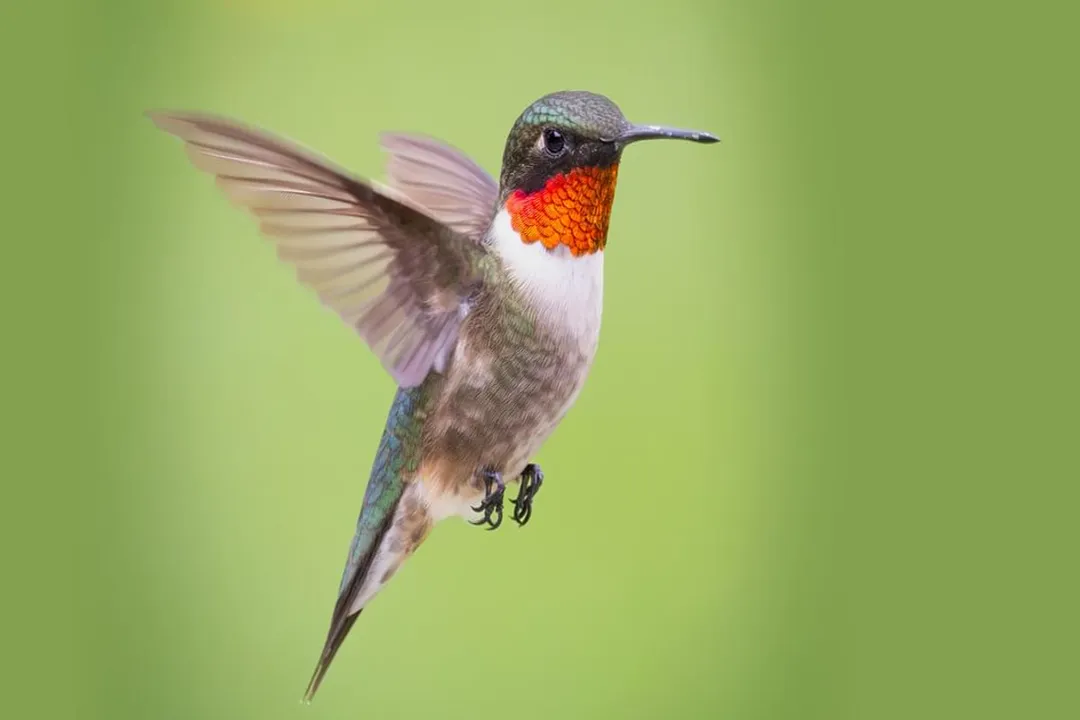
The Ruby-throated Hummingbird (Archilochus colubris) is perhaps the most widely recognized hummer in eastern North America, defining the presence of these jewel-toned birds across a vast swath of the continent. [3] For birdwatchers, knowing where to look for them throughout the year dictates when the backyard feeders should be ready and when the binoculars should be packed away for storage. Their geographic distribution shifts dramatically between the breeding season and the winter months, making them true migrants of significant stamina. [6]
# Summer Home
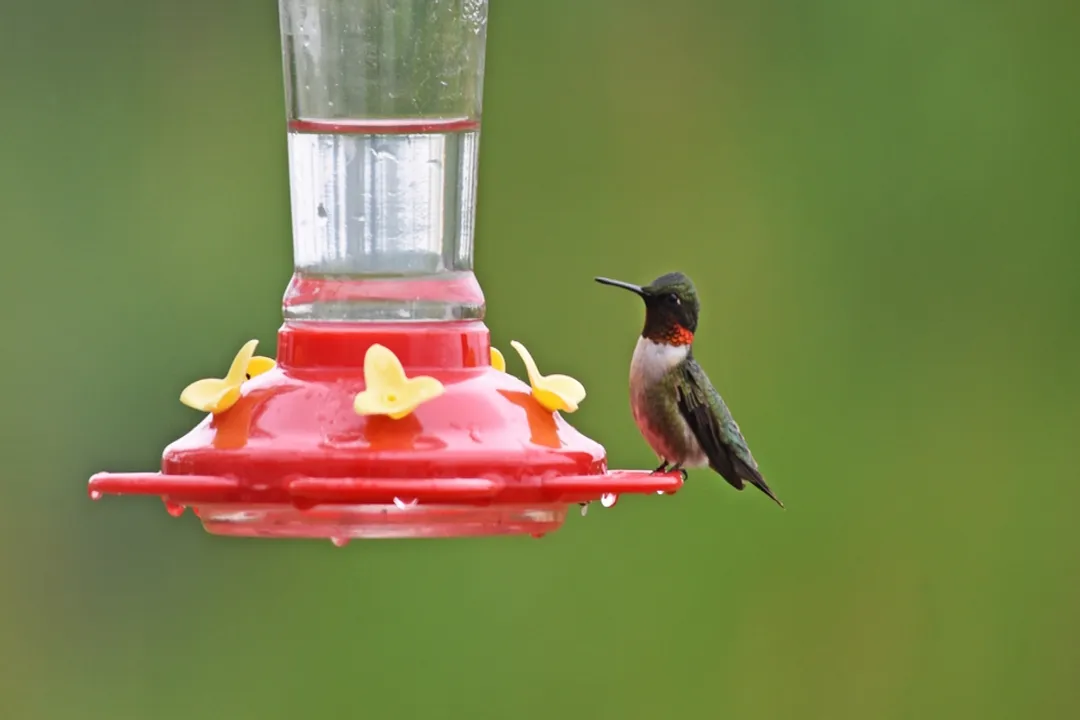
The breeding range for the Ruby-throated Hummingbird is centered firmly in the eastern half of the North American continent. [1][2] During the nesting period, which typically spans from spring through summer, these birds can be found generally from the Great Plains eastward to the Atlantic Coast. [2]
The northern reach of their nesting territory is surprisingly extensive. They venture well into Canada, occupying forested areas and open woodlands across much of southern Canada, reaching provinces like Ontario, Quebec, and the Maritime provinces. [9] In the United States, their breeding grounds extend as far north as areas where conditions support enough flowering resources and suitable nesting sites. [1][5] On the western edge of this summer domain, the birds generally avoid the arid regions west of the Great Plains, although occasional sightings occur further west, they are not considered regular breeders there. [2]
Within this eastern breeding area, the species is common, though density can vary based on local floral resources and habitat structure. [1] The map outlining their confirmed breeding locations shows a near-complete saturation across the entire eastern two-thirds of the contiguous United States. [2]
# Winter Grounds
When the cooling air signals the end of the nesting season, the Ruby-throated Hummingbirds undertake one of the most significant migrations relative to their small size, abandoning their northern homes for warmer climates. [7] Their wintering range is concentrated much further south than their summer range. [2]
The vast majority of the eastern breeding population travels south to winter in Mexico and Central America. [2][6] The primary wintering area is often cited as being in southeastern Mexico and extending down through the countries of Central America, including Belize, Guatemala, Honduras, Nicaragua, Costa Rica, and Panama. [2][6] Some individuals may also spend the non-breeding season in the Caribbean islands, though the bulk of the population follows the mainland route. [2]
Comparing the two ranges visually reveals a significant contraction. While the breeding range covers nearly all of eastern North America, the wintering range is highly concentrated in the tropics. [2] This concentration suggests that the resources available in their tropical wintering grounds, particularly nectar sources and insects, must be exceptionally reliable and dense to support such a large population through the non-growing season. [6] This difference in geographical spread highlights the specialized nature of their energy requirements year-round.
# The Long Flight
The movement between these two distinct areas is what makes the Ruby-throated Hummingbird a recognized long-distance migrant. [6][7] Their migratory schedule is dictated by resource availability, particularly nectar flow, making the timing crucial for survival. [7]
Spring migration northward typically begins in late February or early March, with the leading edge of birds reaching the Gulf Coast states by late March or early April. [7][4] The birds move rapidly, often reaching the northern limits of their range by May. [1]
The return south in the fall is a feat of endurance. The most dramatic leg of this journey involves crossing the Gulf of Mexico non-stop, a flight that can span 500 miles or more and take over 20 hours without rest or refueling. [6][7] Birds tend to bulk up substantially before this demanding crossing, relying on stored fat reserves. [6] While many take this direct oceanic route, others opt for a longer, safer route by hugging the coastline of Texas and Mexico. [2] Understanding this Gulf crossing is key; if your local flowering plants nectar late in the season, you are supporting a bird that is critically preparing for this perilous stage of its annual cycle. [7]
# Where They Live
While the geographical boundaries define where they are found seasonally, the specific microhabitats influence how they are encountered. [1][5] During the breeding season, Ruby-throated Hummingbirds show a preference for semi-open or partially shaded areas. [1]
They are frequently sighted in:
- Forest Edges: The transition zones between dense woods and open fields provide ample sun for flowers and nearby cover for nesting and protection. [5]
- River Corridors: Streams and riparian areas often support denser, more diverse flowering vegetation.
- Suburban Habitats: Human-altered landscapes are surprisingly critical. Bird feeders and nectar-rich gardens across the eastern US and Canada have become standard parts of their environment, especially in areas where natural foraging opportunities might be limited by development. [5][8]
It is fascinating to consider that in the winter, the habitat shifts from the deciduous and mixed forests of the north to the semi-open, shrubby, and disturbed tropical environments of Central America. [6] They are adaptable enough to utilize secondary growth forests and even shaded agricultural clearings, provided there is a steady supply of small insects and nectar-producing plants available. [6]
# Range Overlap Context
A point worth noting for the dedicated observer is the potential for range overlap confusion. Because the Ruby-throated Hummingbird is the only species regularly found east of the Rockies during the breeding season, identification is straightforward in the East. [1][3] However, once you travel west of the Great Plains, particularly during migration or winter, you must be aware that this bird shares space with other species like the Rufous Hummingbird or the Black-chinned Hummingbird. [2]
If you are tracking the arrival of hummingbirds in states like Montana or Colorado, you are likely observing transient Ruby-throats passing through on their way further west or south, rather than established summer residents. [2] This transient period, often characterized by rapid stops for high-energy refueling, means that a rare sighting far west of the typical breeding corridor is usually just a bird slightly off its established migratory track. [7] For instance, a single feeder in western Nebraska in May might see a mix of northbound Ruby-throats and already established western species, demanding closer inspection to confirm the identity of the newcomers. [1]
# Localized Presence Insight
Given that these birds rely so heavily on nectar, the timing of their arrival relative to local flora can be a bottleneck, especially for early migrants returning north. An early warm spell in the Northeast that triggers early blooms might attract the first wave of birds, but if a subsequent cold snap kills those flowers, those early arrivals face an immediate, localized food crisis requiring them to move on quickly or perish. [9] This creates a dynamic, sometimes fragile, window for backyard birders to provide supplementary feeding. Setting up nectar feeders before the first anticipated arrival—often by a week or two, depending on local climate trends—is essential if you wish to host these tiny travelers immediately upon their return, acting as an artificial, predictable nectar source during these critical early days. [8]
The sheer distance covered by an individual bird—perhaps flying from the tip of Florida to southern Mexico—illustrates why their distribution is so clearly defined by resource availability across continents. The path is not random; it is a lifeline traced between reliable summer blooms and reliable tropical flowers. [6]
Related Questions
#Citations
Ruby-throated Hummingbird | Audubon Field Guide
Ruby-throated Hummingbird Range Map - All About Birds
Ruby-throated hummingbird - Wikipedia
[PDF] Ruby-throated Hummingbird - NRCS Field Office Technical Guide
Identify and Attract a Ruby-Throated Hummingbird - Birds and Blooms
Archilochus colubris (ruby-throated hummingbird) | INFORMATION
August 2024, Bird of the Month - Ruby-Throated Hummingbird
Ruby-Throated Hummingbird Facts - Perky-Pet
ruby-throated Hummingbird - Archilochus colubris