Where are krait snakes found?
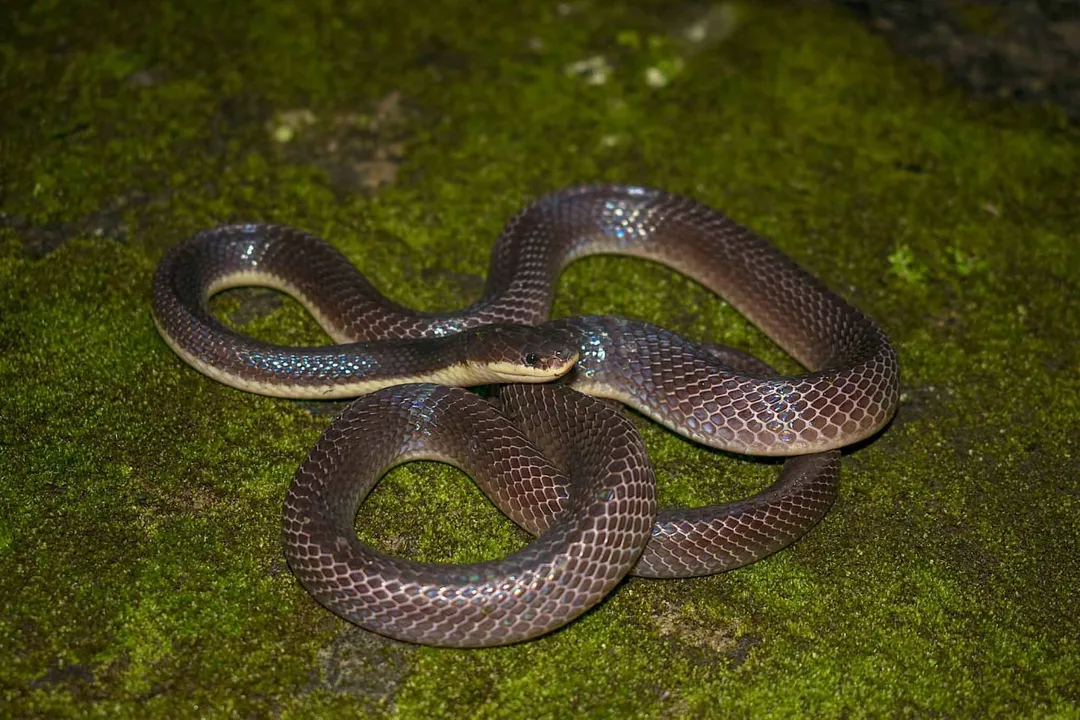
The geographical footprint of krait snakes is complex, spanning distinct terrestrial environments across Asia and specialized marine habitats in the tropics. These snakes, known widely for their potent venom, are not found uniformly across the globe but are rather clustered in specific regions of South and Southeast Asia, with a separate, entirely different group inhabiting warm coastal waters. [2][6] Understanding where they are found requires differentiating between the strictly land-dwelling species and their specialized marine relatives, the sea kraits. [1][6]
# South Asia Dominance
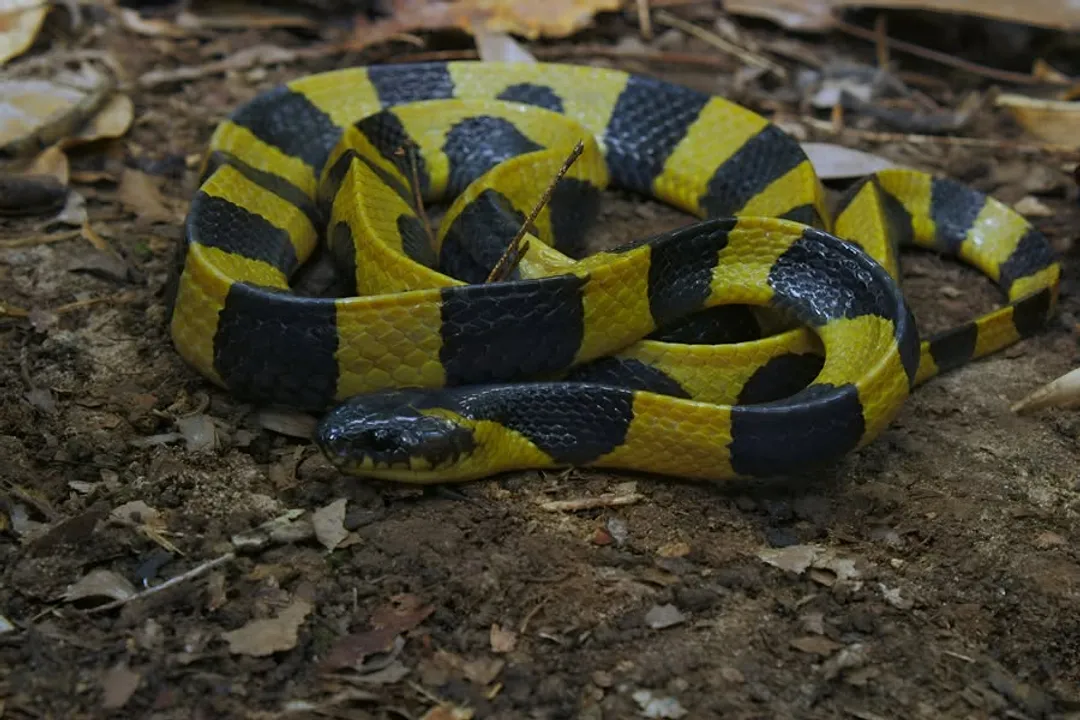
The most widely recognized krait, the Common Krait (Bungarus caeruleus), anchors the distribution firmly within the Indian subcontinent and surrounding nations. [4] You will find this species across much of India, as well as Pakistan, Nepal, Bangladesh, and Sri Lanka. [1] This concentration in South Asia makes the Common Krait a significant concern for local populations, particularly because of its nocturnal habits and tendency to wander near human settlements. [7]
When looking at the physical characteristics that help define this group in the wild, the Common Krait is often described by its dark, usually black or bluish-black body, frequently marked with pale, narrow crossbands. [1] While many terrestrial kraits share this high degree of toxicity, their specific locations can sometimes overlap or diverge slightly based on the species. [3] The identification of distinct species means that while India is a hub, pinpointing a krait in, say, rural Maharashtra versus coastal Sri Lanka means dealing with potentially different, though closely related, venomous members of the Bungarus genus. [1][3]
# Habitat Niches
The location of a krait is as much about the type of environment as the latitude. Terrestrial kraits generally prefer areas where they can easily hunt and hide under cover of darkness. [2] In the regions they inhabit, such as India, they are frequently observed in semi-urban and rural settings. [7] They do not typically favor high mountains or deep, dense jungles exclusively; rather, they thrive in agricultural lands, scrub forests, and areas close to human dwellings where rodent populations—their primary prey—are abundant. [7]
This nocturnal lifestyle, combined with their preference for ground cover, means that their discovery often happens after dark, or occasionally when they seek shelter in poorly secured buildings or piles of debris during the day. [2] It is important for residents in these areas to recognize that the snake's presence is often dictated by the availability of food rather than an intentional desire to inhabit human structures, though their proximity creates the potential for conflict. [7] Recognizing this pattern—that the snake is following rodents into areas of human activity—is a key insight for communities living within the krait's known range; managing the pest population indirectly influences krait sightings and safety concerns. [7]
# Southeast Asian Spread
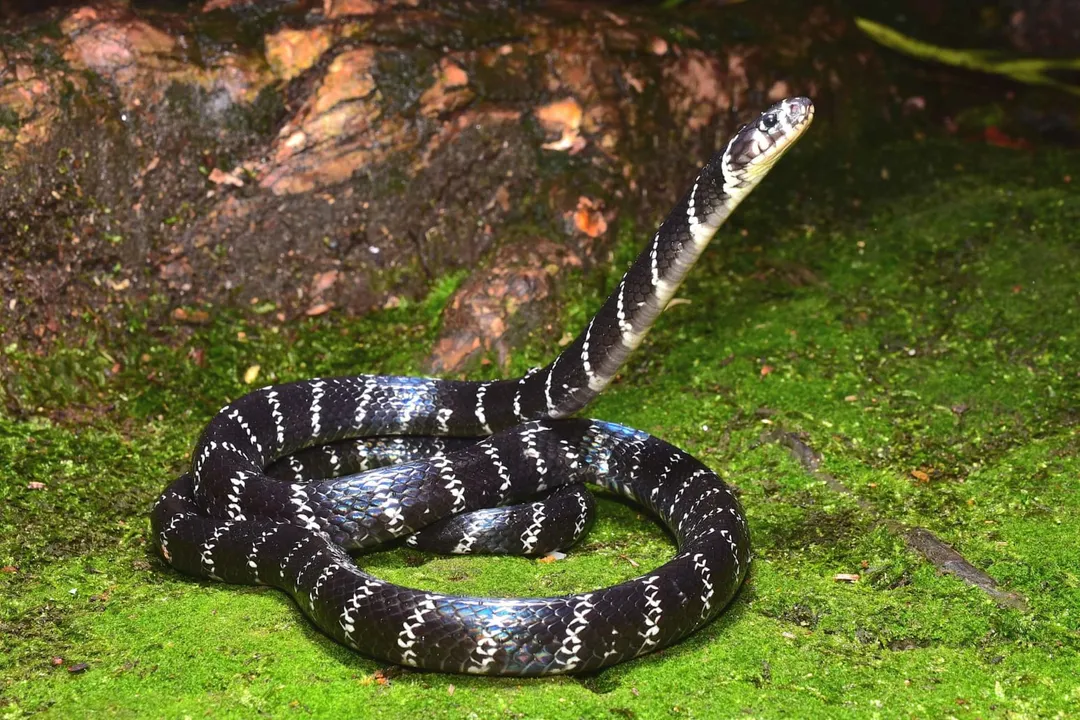
Moving eastward from the Indian subcontinent, other highly venomous krait species extend the geographical range throughout Southeast Asia. For instance, the Malayan krait (Bungarus candidus) and the Many-banded krait (Bungarus multicinctus) establish their presence further into the mainland and island territories of that region. [3]
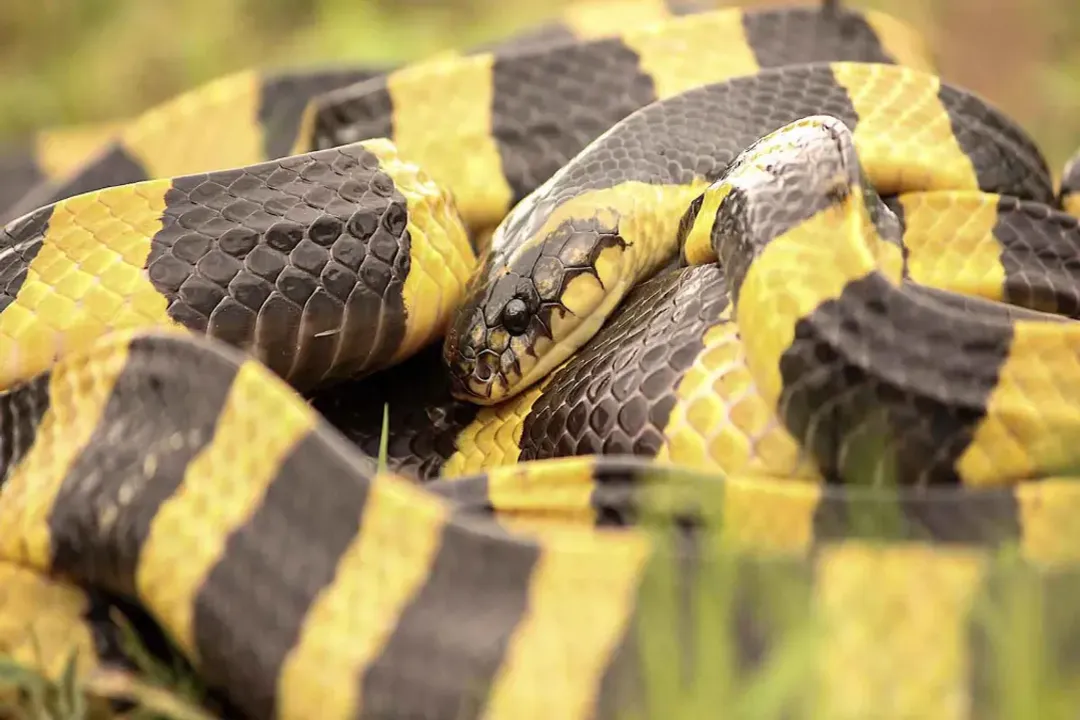
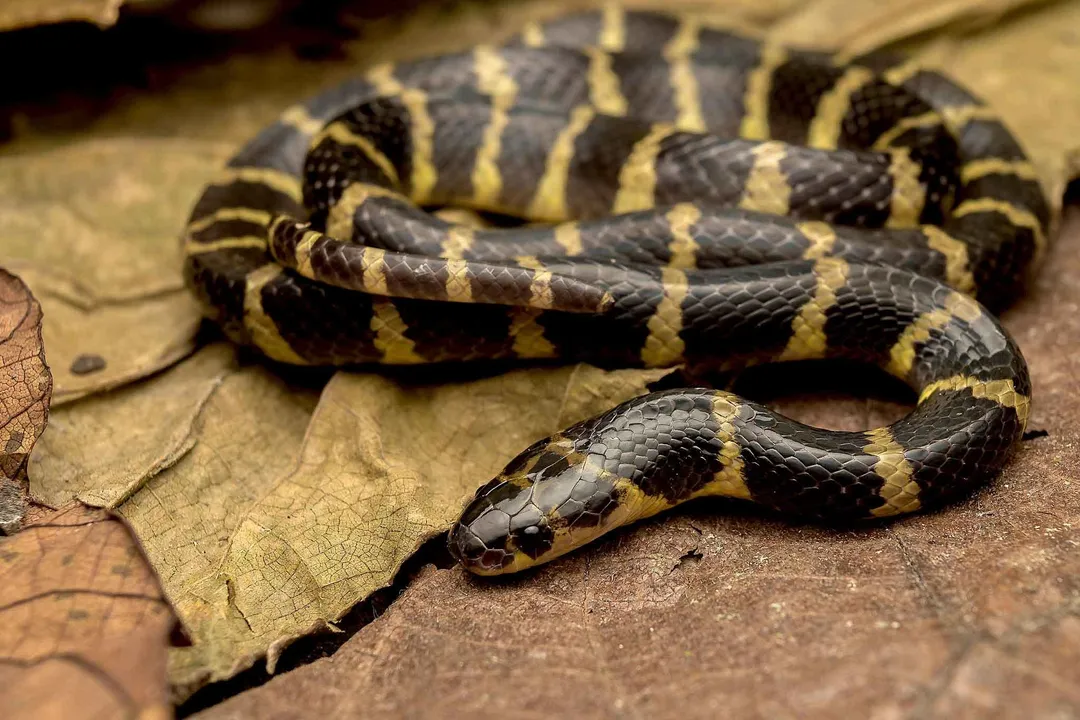
The Banded Krait (Bungarus fasciatus) also shares territory across a wide swath of South and Southeast Asia, often characterized by its distinctive yellow and black banding. [3] While the Bungarus caeruleus is strongly associated with the northwest part of this broader Asian distribution, these other species fill in the gaps across countries like Thailand, Malaysia, Indonesia, and potentially further east. [1][3] The fact that several distinct, highly toxic species coexist across this massive Asian landmass speaks to the adaptive success of the genus in various tropical and subtropical Asian climates. [3]
# Marine Territories
A completely different set of geographical rules applies to the sea kraits, which belong to the genus Laticauda rather than Bungarus. [6] These snakes are only found in the warm, tropical waters of the Indo-Pacific Ocean. [6] Their distribution is dictated by reefs, shallow coastal areas, and coral ecosystems, rather than terrestrial topography or vegetation types. [6]
Unlike their terrestrial cousins, sea kraits are amphibious, needing to return to land to rest and digest their meals, though they spend the majority of their time hunting in the water. [6] This requirement for land access means that while they roam the open ocean waters, their confirmed presence is tied to islands and coastal areas within their specific Indo-Pacific oceanic range. [6] A critical difference in where you find them boils down to the environment itself: terrestrial kraits need cover and ground prey across Asian continents, whereas sea kraits require saline, tropical, shallow marine environments adjacent to land masses. [6] This environmental partitioning—one group strictly continental and the other strictly coastal marine—is a remarkable example of how a common name can mask entirely separate distributions based on ecological requirements.

# Ongoing Classification Refinement
The known distribution maps are also subject to change as herpetologists continue their work. The process of identifying and officially describing new species remains active, meaning that the precise locations where kraits are found are continually being refined and updated. [3] For example, recent scientific efforts have led to the description of a brand-new venomous krait species, suggesting that the known boundaries for this group, even in well-studied regions, are not yet fully finalized. [3] This ongoing classification work underscores that while the general areas—South Asia for the Common Krait, Southeast Asia for others, and the Indo-Pacific for sea snakes—are well-established, the exact boundaries between species might shift as new data emerges about localized populations. [3]
Related Questions
#Citations
Common krait
Krait | Sea Snake, Venomous & Nocturnal
Meet 4 Deadly-Venomous 'Krait' Snakes—One Is Brand ...
Common Krait (Bungarus caeruleus)
Banded krait snake species information
Banded Sea Krait
Shot of Poison: Kraits of India