Where are Kokanee salmon found?
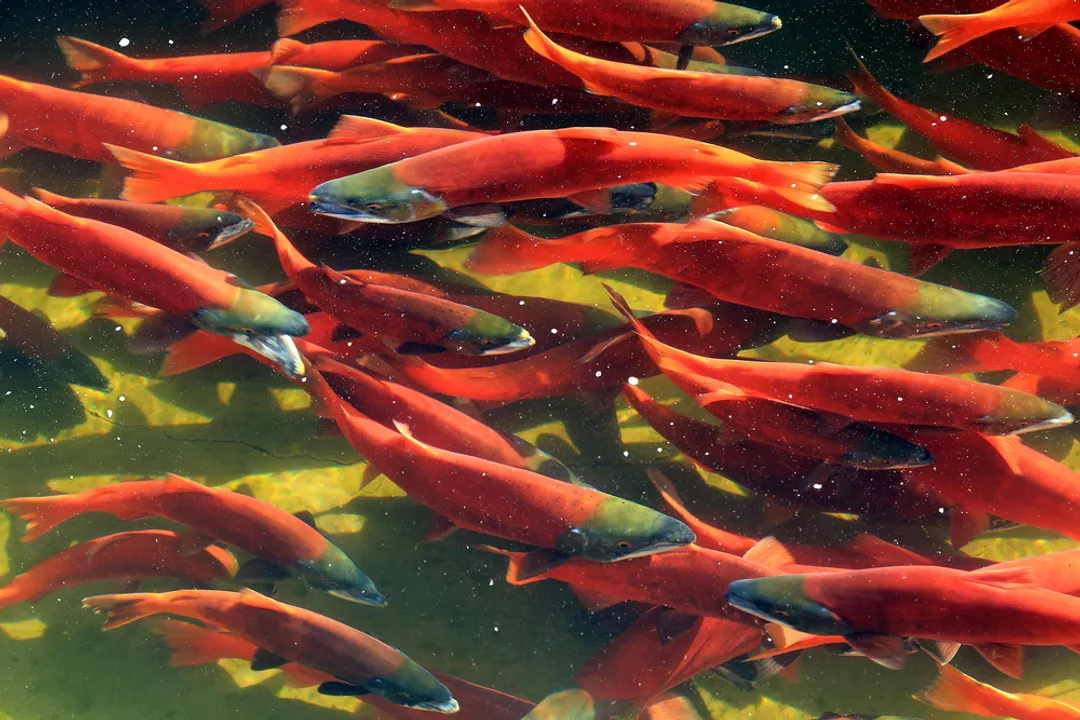
Kokanee salmon are perhaps best understood as the freshwater cousins of the ocean-going sockeye salmon, completing their entire life cycle without ever venturing to the sea. [1][7] This landlocked existence dictates precisely where you will find them: inhabiting deep, cold, clear lakes across large swaths of western North America. [1][6] While their native range historically extended through the Pacific coast drainages, their current distribution is maintained through both natural establishment in suitable inland waters and consistent stocking programs by state fish and wildlife agencies. [2][5]
# Western Distribution
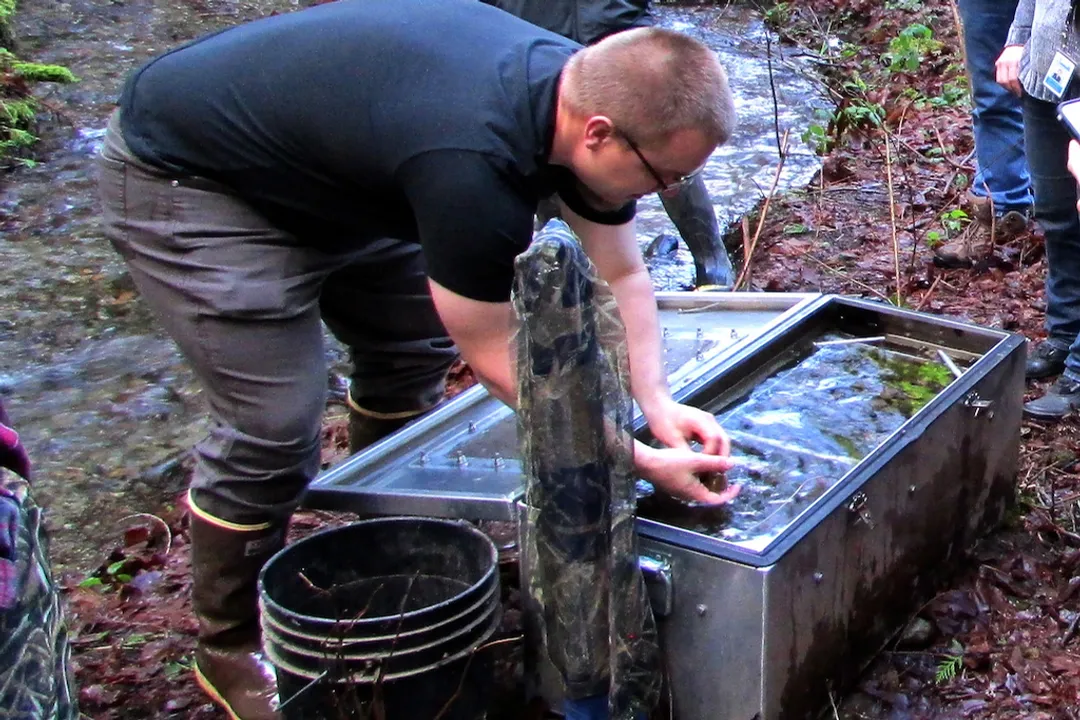
The primary contemporary distribution of Kokanee centers heavily around the mountainous regions of the western United States and Canada. [1] States renowned for their Kokanee fisheries include Washington, Oregon, Idaho, and Montana. [2][4][7] These fish thrive in environments that mimic the cold, nutrient-rich conditions they would find in their ancestral spawning streams, adapted now to large, stable lake environments. [9]
In Washington State, for instance, Kokanee are present in numerous lakes managed for recreational fishing, often requiring active management due to the specific thermal requirements of the species. [2][6] Similarly, in Montana, Kokanee populations are an important component of the fisheries in several key water bodies, reflecting the suitability of the Rocky Mountain environment for these cold-water species. [4] Oregon’s ODFW also actively manages Kokanee, recognizing their value as a popular sport fish in freshwater systems across the state. [7] While their historical range touched coastal areas, their presence today is overwhelmingly associated with inland, high-elevation, or glacially-carved lakes. [1]
# Habitat Needs
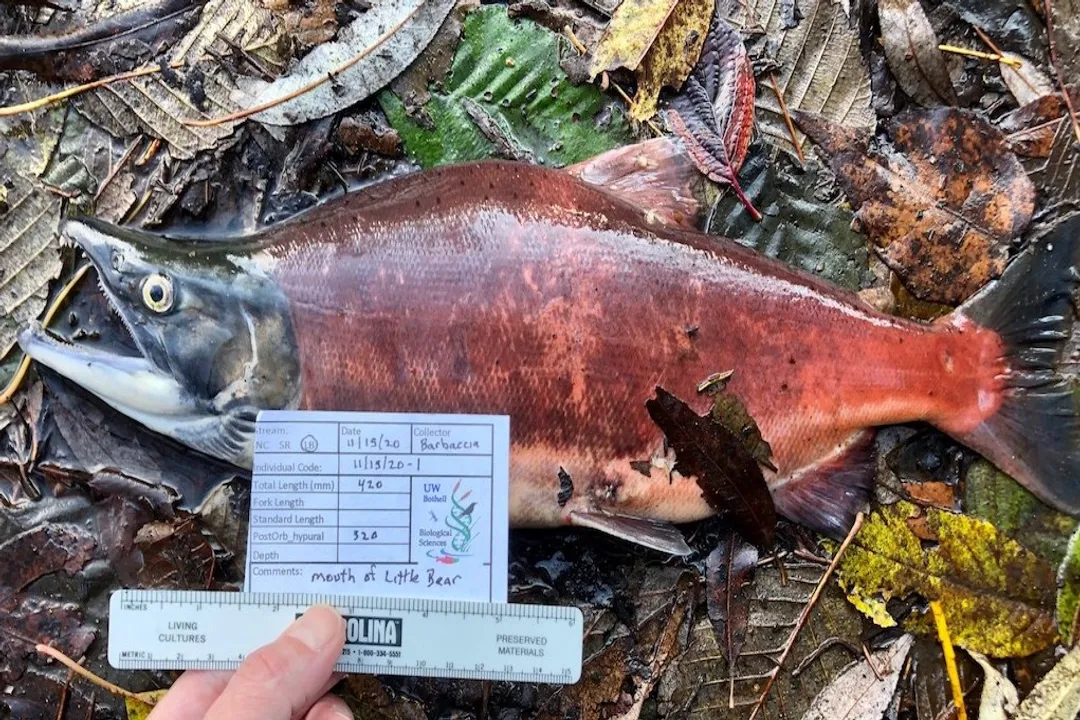
The location of a Kokanee population is fundamentally determined by the lake’s physical characteristics, as the species has very specific physiological requirements for survival and growth. [3] Unlike some salmon that can adapt to fluctuating water temperatures, Kokanee are highly sensitive to thermal changes, which dictate their distribution within the water column throughout the year. [6]
A critical factor is water temperature. While they can survive in a wider range, optimal feeding and metabolic activity occur when water temperatures hover between approximately 50 to 60 degrees Fahrenheit. [3][6] During the warmer summer months, surface waters frequently exceed this comfort zone, forcing the fish to move into the deeper, colder layers of the lake. [3][5] This reliance on a stable, cold thermal layer means that shallow, warm lakes simply cannot sustain a viable Kokanee population year-round. [5]
Furthermore, the clarity and depth of the water body are intrinsically linked to their food source. Kokanee subsist almost entirely on zooplankton, tiny aquatic invertebrates suspended in the water. [1][3][6] Zooplankton production is maximized in lakes with a healthy but not overly fertile—or mesotrophic—condition, providing ample food without causing oxygen depletion associated with heavy algal blooms. [6] Lakes that receive heavy sediment or nutrient runoff often experience reduced water clarity, which can negatively impact both zooplankton survival and the Kokanee's ability to feed visually. [10]
The depth of the lake, therefore, acts as the primary thermal refuge. The deeper the lake, the more volume of cold water is available during stratified summer periods, which directly correlates with the likelihood of long-term, self-sustaining Kokanee populations. [5] The geographic distribution is less about latitude and more about the morphometry of the water body. A large, deep lake offers a thermal refuge layer (the hypolimnion) that shallow, warm bodies of water simply cannot sustain year-round, making deep bathymetry a more accurate predictor of viable Kokanee habitat than just the state line.
# Established Systems
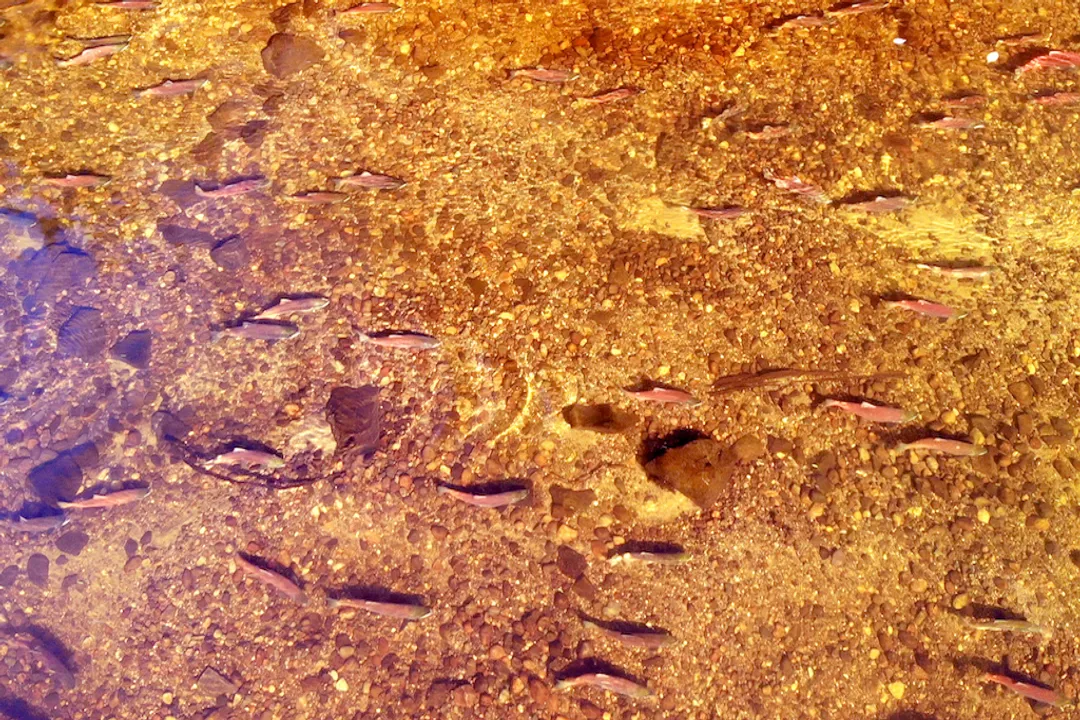
Many of the most well-known Kokanee fisheries exist in large, well-known reservoirs or deep natural lakes that have been intentionally stocked for decades. [2] For example, specific water bodies in Washington, such as Lake Sammamish or Lake Chelan, have long histories of supporting robust Kokanee populations, often requiring continuous management to maintain the delicate balance of food supply and population density. [2][6]
In the mountain west, specific lakes in Montana are managed with Kokanee as a primary attraction. [4] Management strategies here often involve regulating catch limits or implementing stocking schedules based on recent survival rates observed in monitoring programs. [4] The success of these specific locations illustrates a management principle: once a suitable, deep-water habitat is identified, these fish can be successfully maintained as a resident species. [1]
# The Landlocked State
Understanding where Kokanee are found requires understanding why they are not found in the ocean, unlike their sockeye relatives. [9] Sockeye salmon are anadromous, meaning they migrate to the ocean to spend their adult lives feeding and growing before returning to freshwater streams to spawn. [1] Kokanee, however, have evolved—or been isolated—in systems where ocean access is impossible or historically blocked by natural barriers like waterfalls or, more commonly today, by dams. [9]
This fundamental difference means that the entire life cycle, from egg deposition in gravel redds to maturation, occurs within the freshwater lake system. [7] They do not exhibit the massive size increases associated with ocean feeding, which is why Kokanee typically mature at much smaller sizes than their sea-run counterparts. [1][9] This adaptation has allowed them to colonize vast inland territories, provided the water remains cold enough. [9]
Because their food source is entirely planktonic and contained within the lake, anglers targeting Kokanee must pay close attention to the vertical positioning of their prey. Because their primary food source, zooplankton, often concentrates at specific light penetration levels or temperature breaks, anglers must view Kokanee location not just as a fixed 'depth' but as a 'zone' correlated with their prey. In mid-summer, targeting the 35 to 50-foot depth band might consistently place you near the densest plankton blooms, even if the surface water is quite warm. [3]
# Artificial Establishment
It is important to recognize that while some populations are native to their current lake, many Kokanee fisheries are entirely dependent on human intervention. When suitable deep, cold lakes are identified, state agencies often introduce Kokanee to provide angling opportunities. [2][7] These stockings are a key reason why Kokanee are found in non-historically native waters across the western US. [5]
The decision to stock Kokanee in a particular lake is a precise calculation. Biologists look for lakes with:
- Sufficient depth to provide year-round thermal refuge. [5]
- A stable, low-turbidity environment that supports zooplankton. [10]
- A lack of overly competitive predator species, or a management plan to control them. [2]
When these conditions are met, a planted Kokanee can successfully spawn in the tributary streams or along suitable lake shores, potentially leading to a self-sustaining fishery over time, though many fisheries still require annual supplemental stocking to maintain desired population levels. [7] For instance, local efforts, such as those around Lake Whatcom in Washington, involve specific local monitoring and management plans to ensure the resident Kokanee population coexists successfully with other species and water uses. [10]
# Key Locational Takeaways
In summary, when searching for Kokanee salmon, one must look to the deep, cold waters of western North America. [1] They are not distributed randomly; their presence is a direct function of lake quality, particularly depth and temperature stability. [3][5] A successful Kokanee angler, or a resident seeking to understand the local ecology, should always inquire about the specific lake’s thermal stratification, as this is the single most important factor determining where the fish will be found on any given day during the warmer seasons. [6] They are a testament to cold water ecology, thriving only where the deep, dark, chilly waters of inland North America persist. [9]
Related Questions
#Citations
Kokanee salmon - Wikipedia
Kokanee | Washington Department of Fish & Wildlife
All About Kokanee by Jason Brooks - Salmon Trout Steelheader
Kokanee - Montana Field Guide
Kokanee Salmon - Big Ed's Fishing Ventures Dillon, CO - Best Fishing
Lake Sammamish kokanee - King County, Washington
Kokanee salmon | Oregon Department of Fish & Wildlife
Lost freshwater salmon population may still inhabit Lake Washington
[PDF] Kokanee Salmon Facts
[PDF] Facts About Kokanee [ARCHIVED] - City of Bellingham