Where are copperheads found in the US?
The presence of the copperhead snake, scientifically known as Agkistrodon contortrix for the Eastern variety, spans a vast territory across the United States, concentrated heavily in the eastern and central regions. [2][5][6][7] For anyone looking to understand where these often-misunderstood pit vipers make their home, the answer involves tracing a broad geographical band that stretches from the Atlantic coast well into the interior of the country. [8] They are one of the most commonly encountered venomous snakes in the areas where they reside. [8]
# Range Overview
The overall distribution maps for the copperhead paint a picture of an animal that favors the milder climates and varied terrain found east of the Great Plains. [2][6] Generally speaking, the species inhabits the eastern half of the US. [5][8] This widespread nature means that residents across a significant portion of the nation might find themselves sharing a region with them, though proximity still depends heavily on local habitat features. [4] One source suggests that copperheads can be found in about thirty different states throughout their range. [2]
# Boundary Lines
Defining the absolute limits of the copperhead’s territory helps narrow down the areas of concern. Heading north, the range extends quite far, reaching as far as southern Maine. [2][7] This is quite a northern reach for a snake often associated with warmer climates. In contrast, the southern extent is typically defined by northern Florida. [2][6][7] This covers the entire Southeastern coastal plain region.
Moving westward, the distribution pattern follows the terrain. Copperheads push inland until they reach eastern Texas. [2][6][7] However, the northern edge of their western expansion is less uniform. While some sources indicate a western limit near the southern tip of Lake Michigan, [2] others point toward the southern Illinois or Indiana area as a more accurate western/northern demarcation line. [7] This suggests that the populations thinning out toward the Midwest are patchier and more tied to specific pockets of suitable land rather than a continuous swath. [7]
# Terrain Specificity
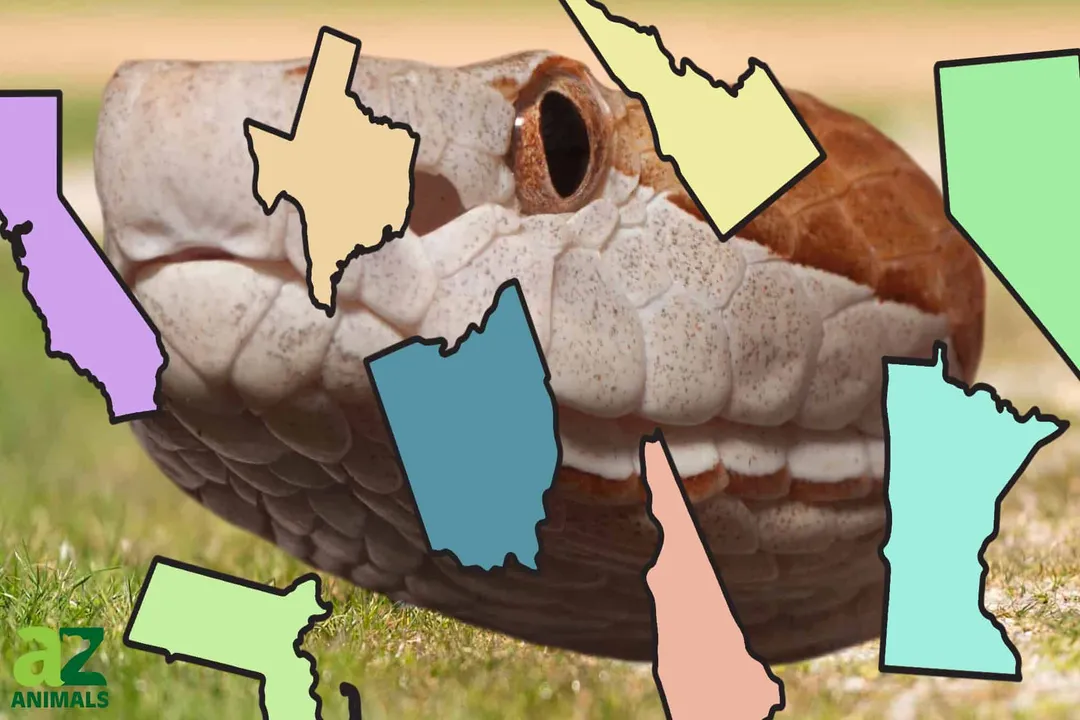
Knowing the general states is only half the equation; a snake’s survival relies on specific environmental conditions, and copperheads are particular about where they settle down. [4][9] They are known to frequent areas that provide cover, security, and appropriate hunting grounds. [9] You are much more likely to find them in specific micro-environments than scattered randomly across any given state boundary. [4]
Key habitat elements include rocky hillsides, which offer basking spots and crevices for shelter. [4][9] They also show a strong affinity for areas near water, specifically stream bottoms and swamp edges. [4][9] Furthermore, heavily wooded areas provide the necessary cover for both hunting and evading predators. [9] When considering state maps, it’s important to remember that a state like Georgia, where copperheads are cited as one of the most common venomous species, has the perfect mixture of these preferred environments—from mountain foothills to extensive lowland swamps. [4] If a particular county within a state lacks rocky outcrops or has been entirely cleared of substantial woods, the local copperhead population will likely be negligible, regardless of the state’s overall inclusion in the range map. [4] This reliance on specific geological and hydrological features means that even within a single state, local copperhead densities can vary dramatically based on micro-terrain, making generalized state maps less useful for precise prediction than a quick survey of the immediate landscape. [4][9]
# Adapting to Suburbia
Perhaps the most salient feature of the copperhead's presence for many readers is their tendency to live in close proximity to humans. [4][9] Unlike some other venomous species that strictly avoid human development, copperheads appear quite comfortable near human habitation. [4][9] This overlap means that yards, woodpiles, sheds, and garden areas—especially those bordering wooded tracts—can become inadvertent habitats.
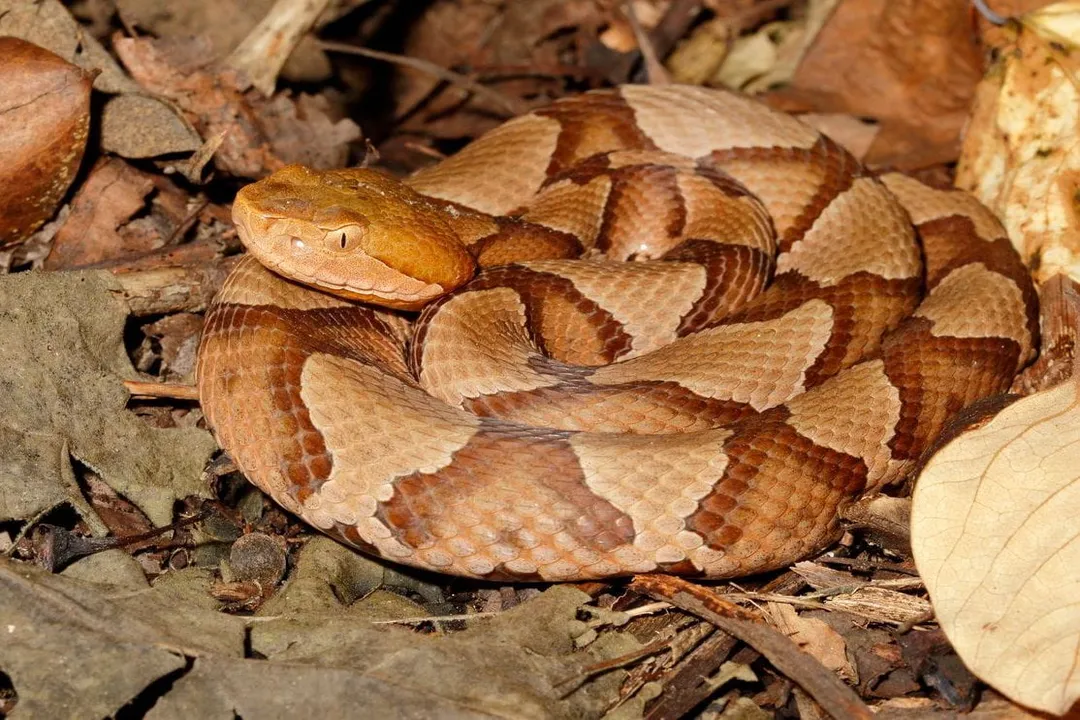
The reasons for this proximity are linked directly back to their camouflage and hunting success. [9] Copperheads rely on their banded, coppery-brown patterns to blend in with leaf litter, bark, and rocky ground. [6] Areas near homes that feature overgrown landscaping, debris piles, or unkempt wood storage piles offer the perfect combination of cover and thermal regulation opportunities. This similarity between a natural forest floor and a messy backyard corner is not coincidental; where the substrate matches their coloring, they thrive, making habitat modification around the home a critical factor in minimizing accidental encounters. [9] A simple visual assessment of how closely your property mimics the natural woodland floor—considering the amount of leaf litter, rock placement, and debris—offers a more immediate insight into risk than simply checking if your county is shaded on a general range map. [4]
# Species Variations
While the general discussion often centers on the Eastern Copperhead (A. contortrix), it is worth noting that the genus has regional variations that slightly alter the distribution picture. [7] The species is commonly divided into subspecies, such as the Northern Copperhead, which fits the broader description across the eastern US. [5][7] Other varieties, like the Broad-banded Copperhead, occupy territory further south and west, sometimes complicating the exact lines drawn on national maps. [7] The knowledge that distribution lines on broad maps often represent the cumulative range of several subspecies should encourage people to look up the specific subspecies common to their region for the most accurate local data. [7]
# Habitat Comparison
When comparing copperhead habitats to those of other snakes, their adaptability becomes clearer. They share many requirements with non-venomous snakes, such as preferring cover and access to rodents, but their affinity for the transition zone—the edge between woods and open areas—is notable. [4] For instance, while a rattlesnake might prefer higher, drier, and rockier outcrops, the copperhead is often found lower down near the bottom of slopes or near damp areas like stream banks. [4][9] This preference for lower, moister zones, especially in the South, can sometimes put them in areas that see more seasonal flooding or heavier ground cover, which further emphasizes the importance of their camouflage for safety. [9]

# Final Thoughts on Location
Ultimately, determining if copperheads are found near you involves more than just looking up a state on a list. [2][3] It requires an assessment of the immediate environment. [4] If you live in a state within the broad eastern half of the US—from Maine to Florida, and west to Texas—the potential exists. [6] But the real determining factor is the terrain: are there rocky areas, plenty of leaf litter, access to water sources, and bordering patches of dense woods? If the answer is yes, the likelihood of encountering Agkistrodon contortrix increases significantly, regardless of whether your county line falls exactly on a distribution chart. [9] They are masters of blending in, making them present wherever their preferred micro-ecosystem provides security and sustenance. : [6][2] Wikipedia (Eastern Copperhead): [3] A-Z Animals (Copperhead Population by State): [4] Georgia Wildlife (Venomous Snakes - Copperhead Fact Sheet): [5] National Zoo (Northern Copperhead): [6] Live Science (Copperhead Snake): [7] Animal Diversity (Agkistrodon contortrix): [8] Poison Control (Copperhead Snakes): [9] UGA Field Report (Natural History Series Copperhead): [1] Newsweek (Map shows copperhead snake habitats in US states)
Related Questions
#Citations
Copperhead Snake Map Shows Habitats In US States
Eastern copperhead
Copperhead Population By State
Copperhead
Northern copperhead
Copperhead snakes: Facts, bites & babies
Agkistrodon contortrix (Southern Copperhead)
Are Copperhead Snakes Venomous?
Natural History Series: Copperhead | CAES Field Report - UGA