Where are American cockroaches found in the US?
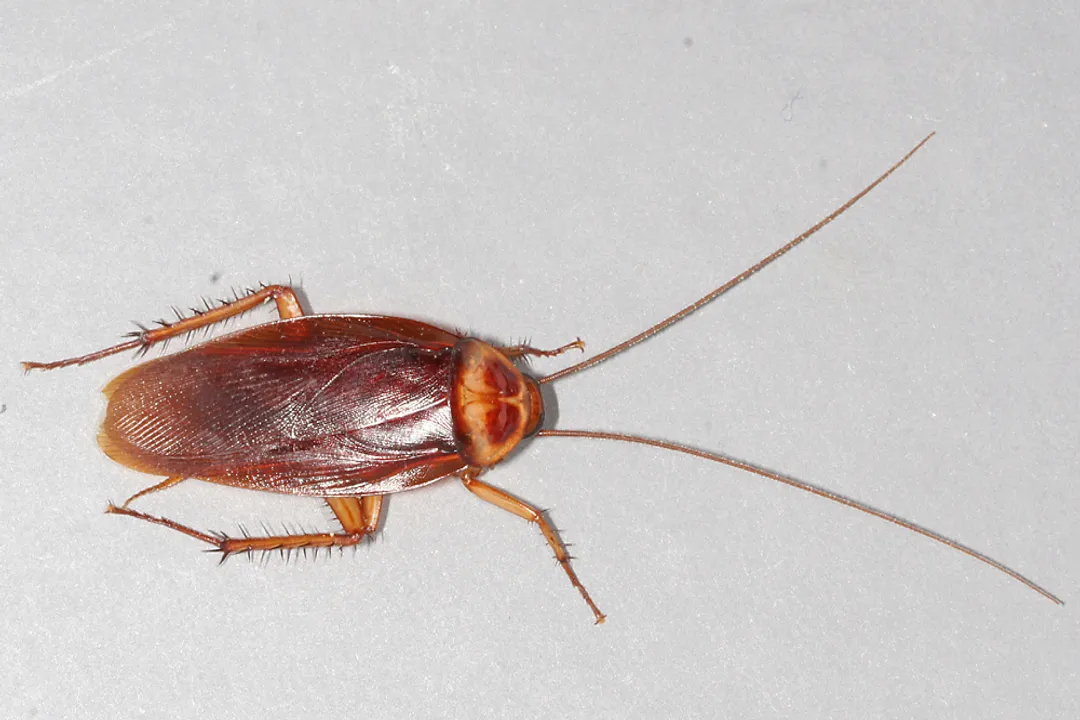
The American cockroach, scientifically known as Periplaneta americana, often conjures images of humid Southern summers, yet its presence is far more pervasive across the United States than many people realize. While certainly a dominant pest in warmer climates, these large, reddish-brown insects have established populations far beyond the tropics, making their location a matter of both climate suitability and human infrastructure. Understanding where these pests reside is the first step in managing them, and the answer isn't simply "the South". [1][3][5]
# Geographic Range
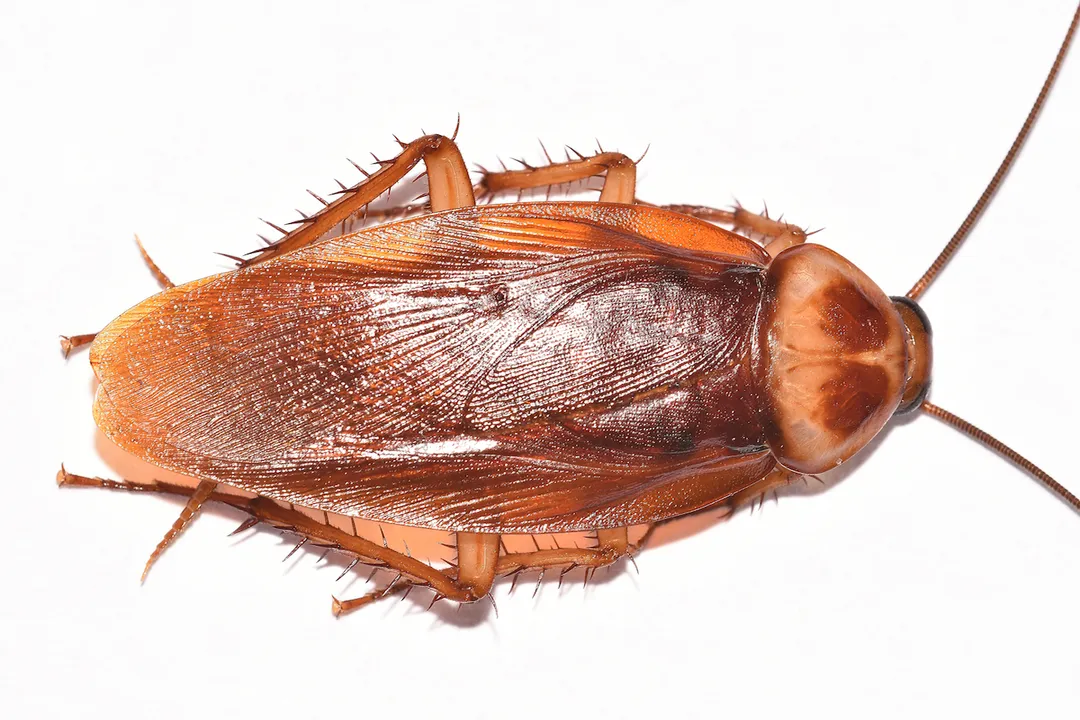
In North America, the American cockroach is generally considered established across the entire United States, though its sheer numbers and activity levels fluctuate dramatically with latitude and local conditions. [2][9] They are frequently referred to as palmetto bugs, particularly in the southeastern US, but this name can sometimes cause confusion as it is also applied to other large native cockroaches in that region. [5] Within the US, their highest densities and year-round activity are reliably found in the southern and warmer states. [1][5] This includes regions from Florida, where they are extremely common, stretching up the Atlantic coast and across the Gulf states. [5]
However, their distribution is certainly not limited by state lines that dip into cooler zones. In fact, pest control professionals frequently report dealing with American cockroaches in northern states as well. [6] While their outdoor survival in winter might be challenging in places like the Northeast or the upper Midwest, they readily seek the warmth and shelter provided by human dwellings. [3][9] They become more of an indoor pest in these cooler latitudes, relying heavily on structures like sewers, basements, crawl spaces, and boiler rooms to survive freezing temperatures outdoors. [3] This reliance on heated structures means that even in states with harsh winters, a consistent interior environment allows them to persist year-round, ready to emerge during warmer months or through plumbing penetrations. [1]
# Shelter Needs
The key determinant for where you will find an American cockroach is not just the state, but the immediate environment—specifically, the availability of moisture, warmth, and food sources. [1][3] These roaches prefer dark, damp, and warm areas. [3][7]
Outdoors, their preferred habitats are numerous and often connected to the ground level or below:
- Piles of wood or debris [1]
- Mulch and leaf litter [1]
- Tree holes [1]
- Around foundations [3]
- In storm drains and sewers [1][3]
- Underneath concrete slabs [3]
When considering where they are found in relation to a building, the connection to water management is critical. Because they require significant moisture, they are strongly associated with plumbing systems. [3] A common finding site is within floor drains, sumps, and especially sewer lines that run beneath or adjacent to structures. [3][7] If a home or business has poor drainage or excessive moisture accumulation, it creates an ideal breeding ground, regardless of whether the property is in Alabama or Ohio. [1]
Indoors, their presence often signals access points or areas of chronic dampness. They commonly inhabit:
- Basements and cellars [1][3]
- Utility rooms housing water heaters or furnaces [3]
- Around pipes and plumbing fixtures [7]
- Crawl spaces [3]
- Garages, particularly if they are damp or connected to sewers [1]
Their large size—they can reach up to two inches in length—often means that while small nymphs might hide deep in cracks, adults are sometimes seen scurrying across floors or emerging from drains, especially during the night or when seeking food or water. [7]
# Climate Dynamics
The contrast in behavior between the warm South and the cooler North illustrates the species' adaptability. In subtropical and tropical climates, the American cockroach is primarily an outdoor pest, thriving in sewers and storm drains, and only entering homes when conditions outside become too dry or when attracted by food odors. [5] They are prolific breeders in these consistently warm environments, leading to very large populations. [5]
In regions where winter temperatures regularly drop below freezing, their outdoor existence becomes precarious. [3] Here, the term "found" shifts from their natural habitat to their refuge habitat. [9] They essentially colonize the heated sub-structures of buildings. [9] A building in New England or the Pacific Northwest might have a significant, reproducing population thriving in the building's subterranean infrastructure, yet the residents might never see one during the coldest months because the roaches are contained within the building envelope, surviving off what little organic matter or moisture is available near pipes and heating units. [3] An interesting observation from pest control experiences is that a sudden, unseasonal warm spell, or a temporary failure in a basement heating system during winter, often forces these hidden populations to move, leading to an unexpected appearance of these large roaches inside living spaces as they search for stable warmth. [9]
# Traveling Pests
The presence of Periplaneta americana in newer or more isolated areas is often attributable to human transport rather than natural range expansion. [2] These roaches are excellent hitchhikers. Their ability to survive in the relatively stable, dark, and damp environments found within commercial shipments, packaging materials, or even used equipment means they can easily be moved across state lines or even continent-wide. [2]
For instance, a shipment of goods originating in a southern port city could inadvertently introduce a small population into a warehouse in Minnesota. If that warehouse maintains adequate moisture and warmth, a sustained infestation can develop, even if the local climate is generally unfavorable for outdoor breeding. [2] Furthermore, large municipal sewer systems act as interconnected highways, allowing the roaches to travel significant distances underground between properties, often bypassing barriers that would stop terrestrial insects. [3] This makes a single newly infested property near a sewer main a potential source for the entire block, regardless of the prevailing climate zone. [1]
We can look at this movement through the lens of infrastructure density. In older US cities with extensive, shared, and often leaky subterranean infrastructure—sewers, steam tunnels, and subways—the cockroaches have a continuous, climate-controlled network to spread through, which helps explain why even densely populated northern cities maintain persistent infestations despite cold surface temperatures. [6] This continuous subterranean network effectively creates an artificial, nationwide "Southern climate" just a few feet below the frost line.

# Risk Assessment Factors
To help homeowners assess their own risk of finding American cockroaches, it is useful to look beyond just the zip code and focus on structural vulnerability. This can be thought of as a localized risk calculation based on three primary factors: Water, Access, and Material.
| Risk Factor | Low Vulnerability Indication | High Vulnerability Indication |
|---|---|---|
| Water/Moisture | Home has excellent drainage, dry crawlspace, no plumbing leaks | Persistent condensation on pipes, chronic leaky faucets, sump pump running frequently |
| Access | Sealed utility penetrations, tight-fitting door sweeps, screened vents | Gaps around exterior piping, cracked foundation, open floor drains without water traps |
| Material | Concrete slab foundation with minimal soil contact | Wood piles near the house, heavy mulch touching the siding, aging mortar or brickwork |
An actionable step based on this assessment is to focus remediation efforts on connectivity. If you live in a dryer climate (like the arid Southwest) but find one, the source is almost certainly internal—a drain, a crack in the slab, or a utility penetration from a neighboring business's sewer line. Conversely, if you are in a humid environment like the Gulf Coast, the primary defense must be reducing outdoor harborage near the foundation and ensuring screens on foundation vents are intact. [3] A surprisingly common failure point that links exterior harborage to interior activity is poorly sealed utility lines where water, gas, or electrical conduits enter the home; these often serve as direct, sheltered pathways right into basements or utility closets. [7]
This species' ability to thrive indoors year-round in nearly all temperate US locations, provided there is a permanent warm, moist anchor point like a sewer junction, demonstrates that their presence is less about the US map and more about the integrity of a building's interface with the ground and its plumbing system. [3][9] Therefore, managing where they are found requires an integrated approach focusing on moisture control and exclusion, not just chemical treatments based on latitude. [1] They are successful in the US because, for every mile of above-ground winter weather, there are miles of subterranean pathways that remain warm and damp year-round. [2]
# Persistence and Identification
Even when American cockroaches are found, they are often confused with the German cockroach (Blattella germanica), which is a far more common indoor pest, especially in kitchens and dining areas. [4] A key distinction, besides the sheer size difference—the American is much larger, up to two inches—is their typical location within a structure. [4] German cockroaches prefer the warmth and humidity of kitchens and bathrooms, often hiding near appliances. [4] American cockroaches are more strongly tied to ground-level moisture sources like sewers, basements, and drains, though an adult may wander into living areas. [1][4] If you are seeing them frequently in your pantry or near food preparation areas, you may be dealing with a different species, even if the individual specimen is large. [4]
The sheer tenacity of this species in urban environments is another factor in where they are found—they are found where human activity supports them, even in places that seem inhospitable. [6] In dense city centers, the combined heat exhaust from buildings, subway systems, and extensive sewer networks creates localized microclimates that can support substantial populations even in northern winters, effectively extending their southern range indefinitely. [6] This reliance on man-made heat sinks suggests that urban density is as crucial a factor in their distribution as natural climate zones. [9]
The continuous presence of these large roaches across such a varied climate map—from Florida beaches to Chicago basements—confirms their status not just as a Southern pest, but as a widely established, synanthropic insect across the entire American built environment. [2][6] Their ability to survive requires only a small pocket of warmth and consistent moisture, resources that human engineering often inadvertently provides year-round, regardless of the season outside. [3]
Related Questions
#Citations
American Cockroaches Control - Facts & Information
American cockroach
American Cockroaches
American Roaches: Identification, Behavior & Control
American Cockroach, Periplaneta americana (Linnaeus ...
Are cockroaches a widespread problem across the US, or ...
American Cockroaches Identification | Pest ID
North American Cockroaches | Facts, Life Cycle, Size
American Cockroach - Plant & Pest Diagnostics
American Cockroach Identification | Behavior