Where are Belted Kingfishers found?
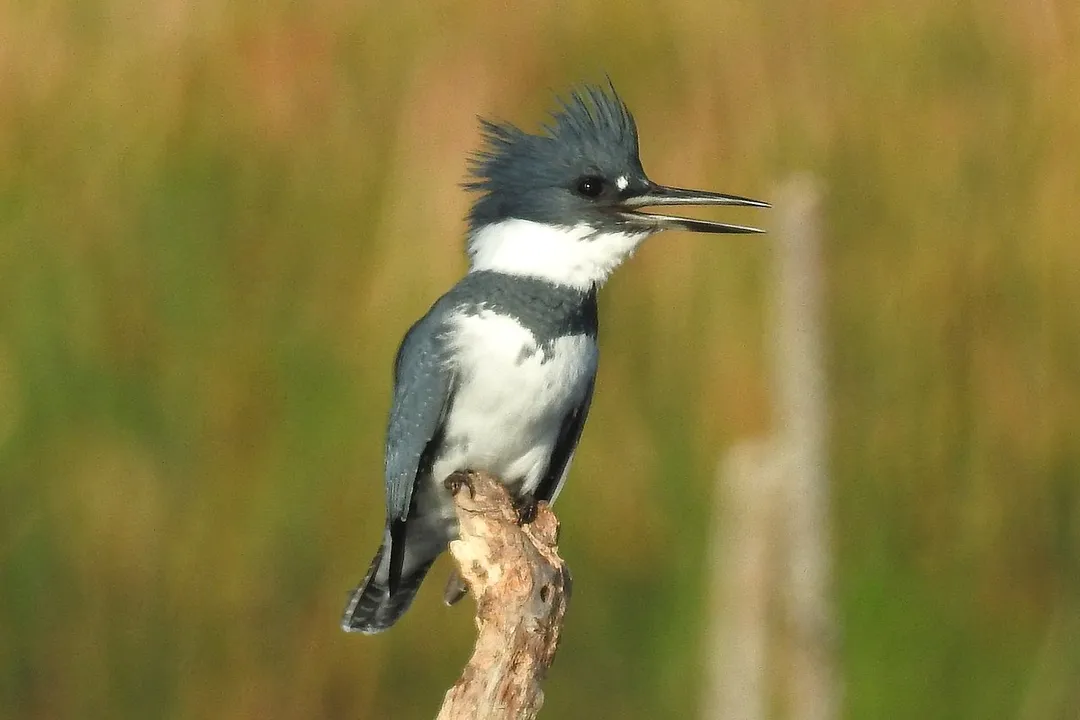
The Belted Kingfisher cuts a striking figure across the waters of North America, often heard before it is seen, announcing its presence with a rattling call that seems perfectly suited to its wild, watery domain. [2][4] Determining exactly where one might find this bird requires looking beyond just a continental map; it means understanding its specific, non-negotiable relationship with moving water and high banks. [7] This species, scientifically known as Megaceryle alcyon, is fundamentally tied to aquatic environments across a vast area spanning from the Arctic Circle south through Central America and the Caribbean. [2][3]
# North American Map
The breeding range of the Belted Kingfisher covers nearly all of North America, stretching impressively from Alaska and across the majority of Canada down through the United States. [1][2] This distribution makes them one of the more widespread kingfishers on the continent. [3] However, their presence is not uniform year-round across this massive territory. While they are abundant breeders throughout the northern latitudes, these northern populations undertake significant southward migrations when the cold weather locks their hunting grounds under ice. [2]
In contrast, populations found along the southern edges of the United States, particularly in the Gulf Coast regions, and those inhabiting Central America and the Caribbean islands, often maintain year-round residency. [2][3] They are year-round inhabitants of areas where water bodies remain unfrozen and productive throughout the winter months. [6] For those situated in the middle latitudes, observing a kingfisher is often seasonal; if the local pond or river freezes solid for the winter, the bird will have moved on in search of liquid water. [2]
# Water Requirements
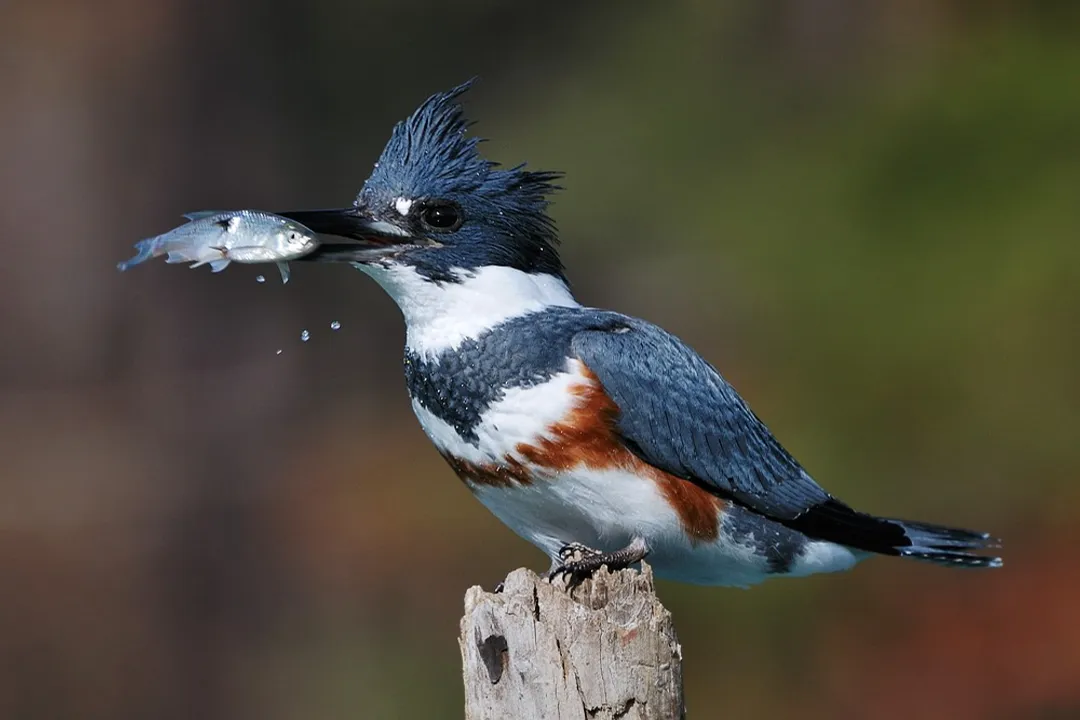
A Belted Kingfisher will never be found far from a suitable water source, making them an excellent indicator species for aquatic health. [7] Their existence depends on two main factors: accessible, fish-bearing water, and suitable substrate for nesting. [4] They are highly adaptable regarding the type of water, provided it holds fish and insects, which make up the bulk of their diet. [2]
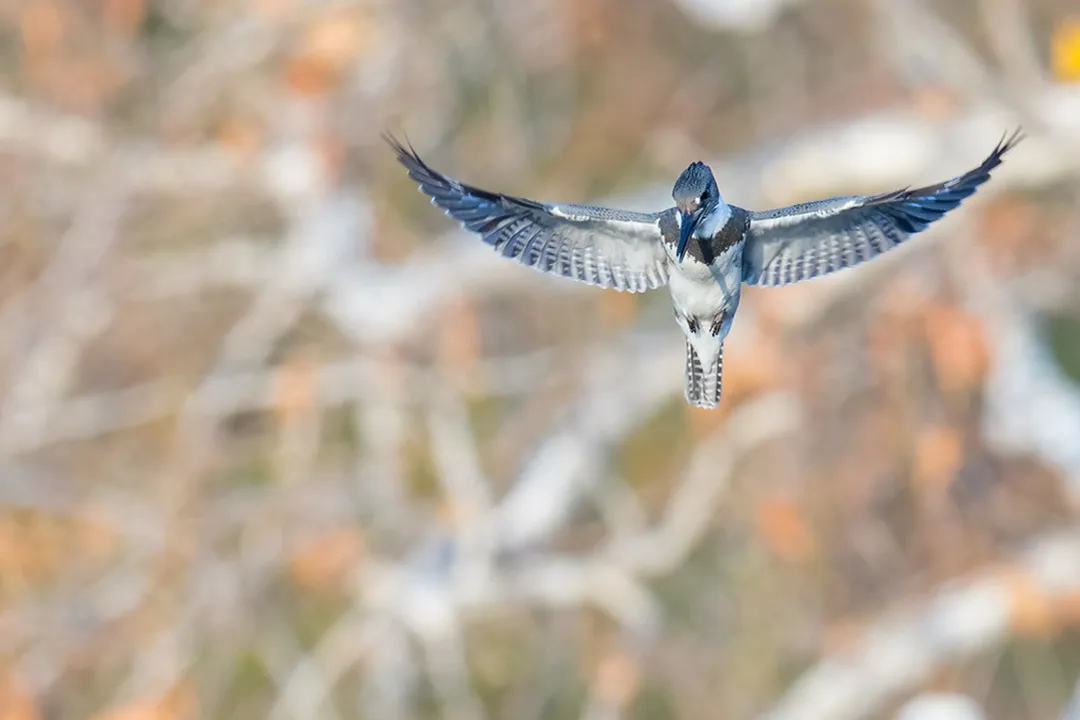
They utilize an array of aquatic habitats. This includes fast-flowing rivers, quiet streams, small ponds, and large open lakes. [4][6] Along the coasts, they frequent estuaries, saltwater marshes, and sheltered shorelines. [4] Even in increasingly developed areas, they can persist along canals, reservoirs, and urban retention ponds, so long as the water isn't too turbid or devoid of prey. [4] The key requirement for foraging is having a perch—a snag, a low-hanging branch, or a utility wire—from which they can survey the water before their characteristic headfirst plunge. [9]
If you are situated in a relatively flat, agricultural area with only slow-moving drainage ditches, finding a kingfisher might require patience, as they often prefer the slight elevation change that creates better vertical banks for nesting compared to broad, muddy lowland ponds. [7] While they can certainly hunt in slow water, the need for a safe place to excavate their tunnel often guides their final site selection. [7]

# Seasonal Shifts
The primary driver for the Kingfisher's geographic movements is the presence of open water suitable for diving. [2] In the far north, as autumn deepens and temperatures drop, the loss of fishing opportunities triggers a mass departure towards warmer climates. [2] This migration establishes a clear corridor through the middle latitudes, where birds might linger well into fall, taking advantage of any remaining unfrozen spots or slowly moving water systems.
Contrast this with the resident populations in warmer climes, such as the Chesapeake Bay region or the lower Mississippi Valley, where they can be observed throughout the year, maintaining territories even in winter. [6] For a birdwatcher in the central United States, noting the first arrival in spring or the last departure in late fall offers a tangible marker of the changing seasons, acting as a natural barometer for the region’s winter severity. [2]
# Visual Cues
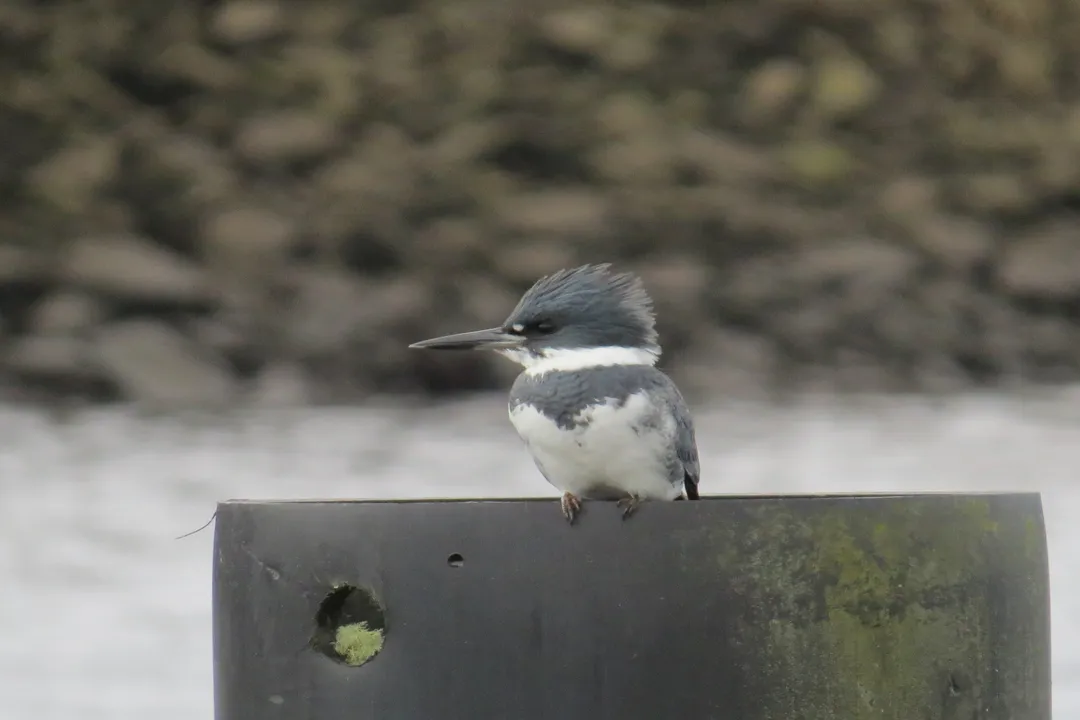
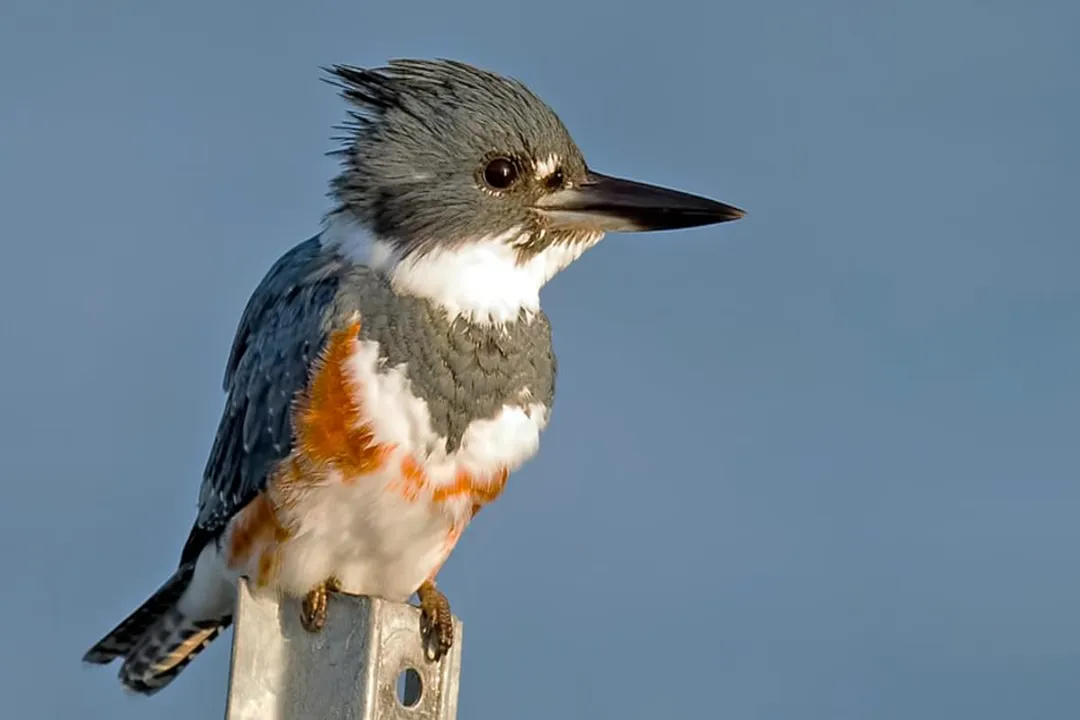
When searching for a Belted Kingfisher, it is helpful to know what you are looking for, as they possess distinctive features that set them apart from other fish-eaters like herons or terns. [4] The bird is relatively large with a somewhat comical, blocky head topped by a shaggy crest. [2] The plumage is generally blue-gray on the back, wings, and the sides of the head, contrasting sharply with a white collar and chest. [4]
The most reliable field mark for distinguishing sex is a second band across the lower breast. While all Belted Kingfishers have a blue-gray band across the chest, the female is distinguished by having an additional band of rusty or rufous color beneath that blue band, effectively giving her two bands. [2][4]
Observing a pair allows an easy check for sex ratios in a local breeding area; if you only ever see the blue-banded individual, you might be witnessing a solitary, non-breeding male or a female that has temporarily separated from her mate while foraging. [2][4] Their silhouette in flight is also quite unique—a direct, fast flight with deliberate wing beats, often accompanied by their distinctive, loud rattle. [2]

# Spotting Tips
To actively increase your chances of locating a Belted Kingfisher, focus your search around locations that meet both their hunting and nesting criteria. [7] While a river sounds obvious, look closely at where the riverbank changes elevation. Kingfishers prefer vertical or steeply sloped earthen banks where they can tunnel their nests, sometimes up to three feet deep. [6][7] If you find an area where a road cut or a natural bluff intersects a stream, that is prime real estate for a nesting pair in the spring. [7]
It can also be helpful to note local fish populations or dam outflows. Areas where water movement naturally concentrates small fish or where eddies form near structures can become reliable feeding stations. [9] While they are generally shy of human activity, they will tolerate areas with moderate disturbance if the fishing is good and nesting banks are undisturbed. Keep an eye on conspicuous perches overlooking clear water; scanning slowly along the water's edge from these vantage points is often more effective than watching the water surface itself. [4] Because they spend significant time scanning, stillness on your part, perhaps from a vehicle or from behind dense cover near a known water source, greatly enhances the viewing opportunity. [9]
Related Questions
#Citations
Belted Kingfisher Range Map - All About Birds
Belted kingfisher - Wikipedia
Belted Kingfisher | Audubon Field Guide
Belted kingfishers are back in town! - Jordan River Commission
Belted kingfisher - Chesapeake Bay Program
Belted Kingfisher: A Water Dependent Bird
Creature Feature: Belted Kingfisher (Megaceryle alcyon)
Bird of the Month: Belted Kingfisher - NH Audubon