What type of creature is the Aldabra?
The creature known as the Aldabra giant tortoise (Aldabrachelys gigantea) represents a profound success story in reptile conservation, standing today as one of the largest tortoises on Earth. Far from being a singular, modern discovery, this species is a living relic, the last surviving member of a group of Indian Ocean giant tortoises that once numbered at least eighteen distinct varieties. The primary stronghold for A. gigantea remains the Aldabra Atoll in the Seychelles, an archipelago in the Indian Ocean, where the largest wild population—estimated at around 100,000 individuals—thrives on this largely inaccessible landmass.
# Name History
The scientific name has seen some fluctuation over the years, adding a layer of complexity for those studying chelonian taxonomy. While it is widely known as Aldabrachelys gigantea today, efforts were once made to classify it under Dipsochelys dussumieri. Following a formal debate spanning two years, the International Commission on Zoological Nomenclature (ICZN) ultimately decided to uphold the conservation of the original name, Testudo gigantea, first assigned by Schweigger in 1812, thus securing Aldabrachelys gigantea as the protected genus and species name.
# Size and Form
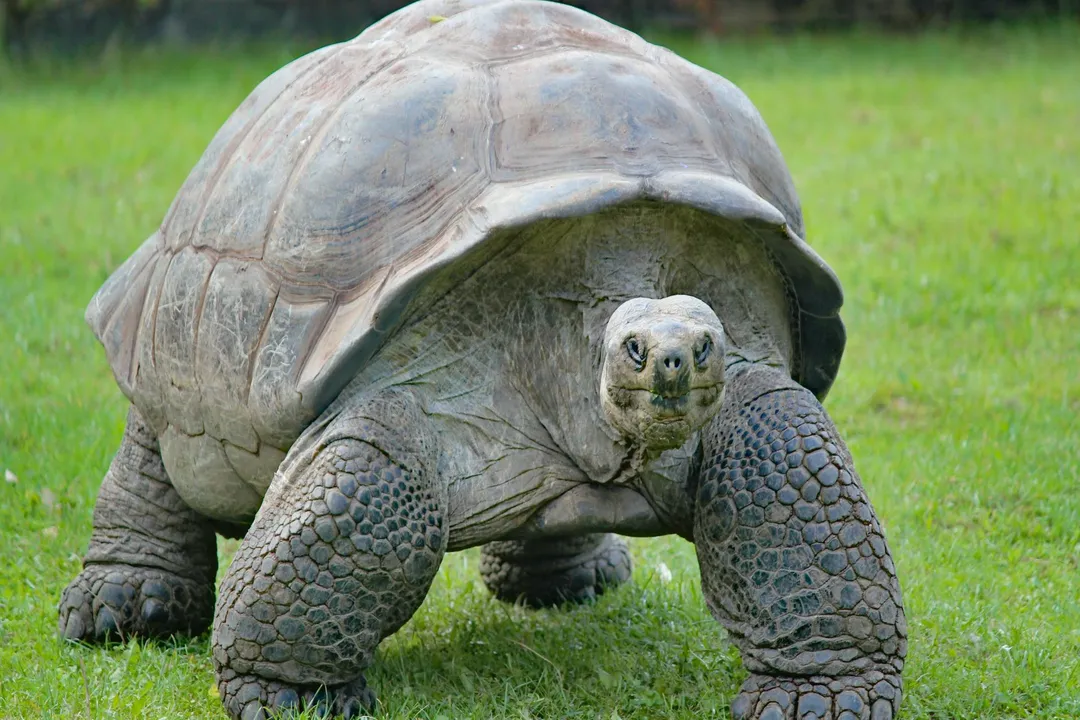
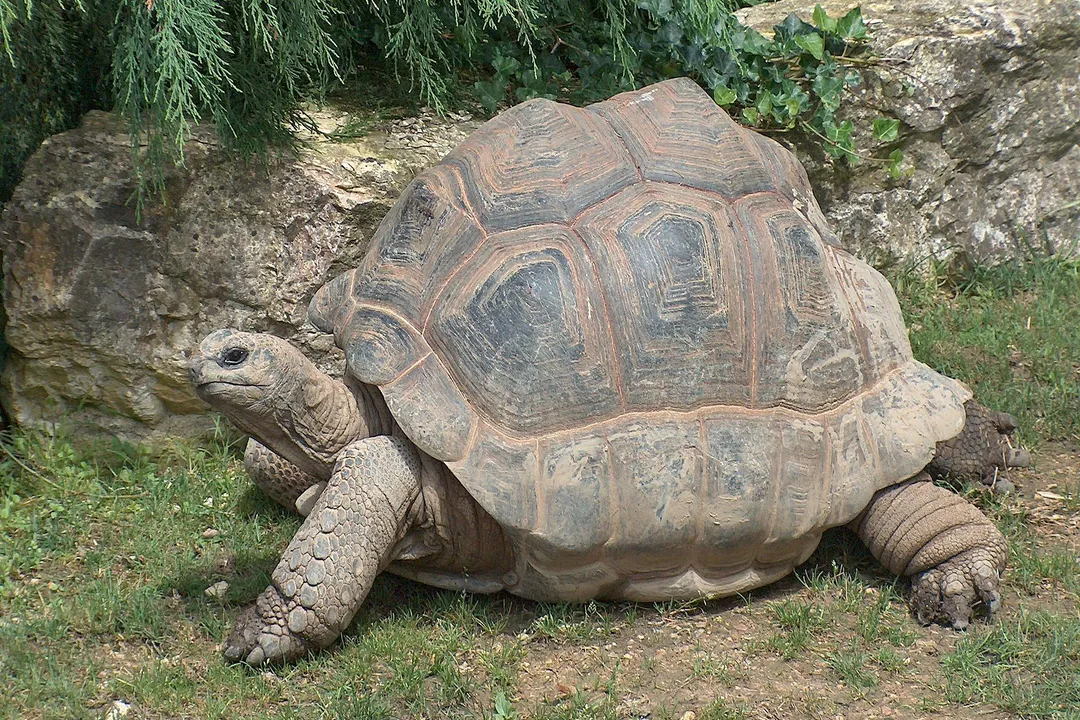
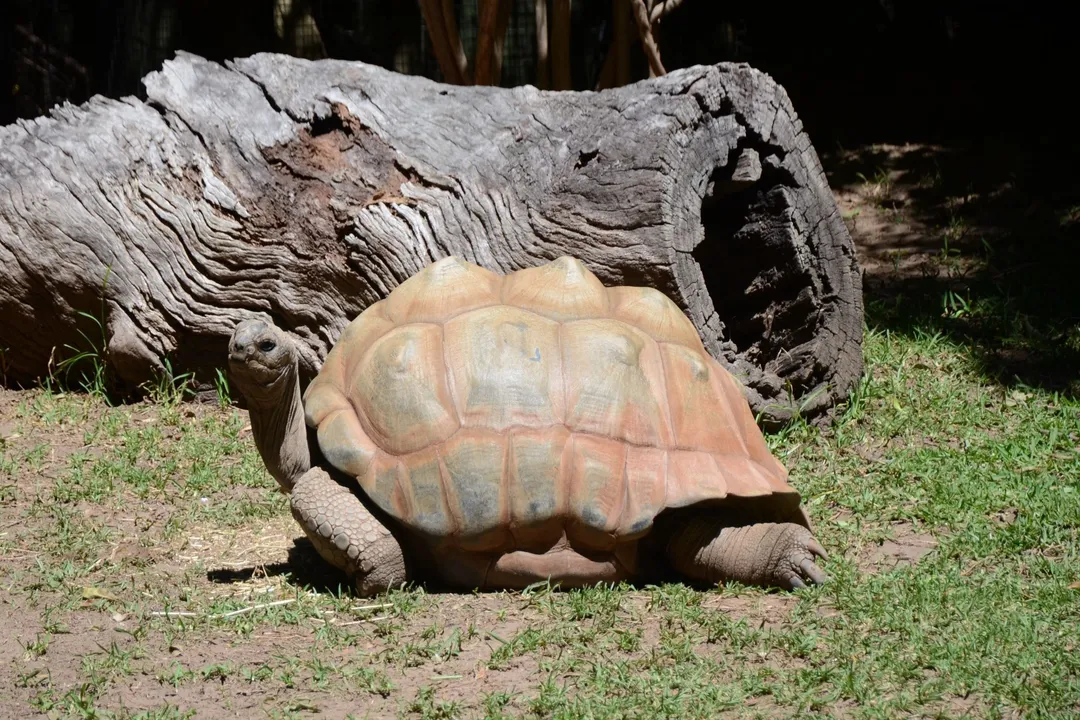
These reptiles command attention not only for their ancient lineage but also for their sheer size. They are truly gigantic, rivaling their famous cousins, the Galápagos giant tortoises, in bulk. There is notable sexual dimorphism between the sexes. Mature males are substantially larger, capable of reaching carapace lengths averaging about 122 cm (48 inches) and weighing in at an average of 250 kg (550 lb). Females, while still massive, are generally smaller, with an average carapace length closer to 91 cm (36 inches) and a weight around 159 kg (351 lb). In the wild, the largest recorded free-roaming individual was an Aldabra tortoise that tipped the scales at an astonishing 672 pounds.
The physical architecture of the Aldabra tortoise is highly specialized for its feeding habits. They possess stocky, heavily scaled legs necessary to support their substantial weight. Their neck is remarkably long, even considering their great size, which permits them to stretch upwards to access higher food sources, reaching branches up to a meter off the ground. Interestingly, the shape of the carapace itself can be indicative of the local environment. Tortoises living where food is found low to the ground often have a more traditional, deeply domed shell, while those in areas where they need to reach higher leaves develop a shell that is more flattened on top, allowing for greater upward neck extension.
# Ecosystem Engineering
On Aldabra Atoll, the tortoise occupies the apex herbivore niche, a role comparable in function to that of elephants in African or Asian ecosystems. This ecological parallelism is fascinating when one considers the scale disparity; these tortoises manipulate a small island environment with the same foundational impact that elephants manage on a continental scale. Their constant browsing and movement serve as powerful environmental shapers. As they search vigorously for sustenance, they knock over smaller trees and shrubs to access nutritious leaves, thereby clearing areas and establishing pathways that other fauna subsequently utilize.
This constant grazing pressure has led to a unique coevolutionary phenomenon in their habitat: tortoise turf. This specialized ground cover is a mixture of over twenty species of grasses and herbs that have adapted to survive the close cropping jaws of the tortoises. Many of these specialized plants have evolved to grow their seeds closer to the ground or employ different reproductive strategies to avoid being completely stripped bare by the grazing giants. Furthermore, the tortoises act as crucial dispersers of biomass; seeds pass through their digestive tracts and are deposited across the atoll, effectively becoming food sources for other species in a cycle initiated by the tortoise.
# Lifespan and Longevity Records
The longevity of giant tortoises is legendary, and the Aldabra species is certainly among the longest-lived animals known to science. While many individuals are thought to easily live past a century, verifying extreme ages presents a unique challenge: these tortoises often outlive the humans keeping meticulous records.
One of the most famous cases is that of Adwaita, who resided at the Kolkata Zoo in India. Reputedly captured in the Seychelles by British seamen in the 18th century as a gift to Robert Clive, Adwaita died in 2006, with his reported lifespan spanning an incredible 255 years, suggesting a birth year around 1750. The difficulty in confirming such figures illustrates a key challenge in gerontology related to long-lived, slow-reproducing fauna. We cannot rely on a single generation of observation; instead, our understanding of their maximum potential age must often be inferred from growth monitoring over many decades, or from historical logs that may lack consistent detail. As of recent reports, Jonathan, a Seychelles giant tortoise (closely related), is considered the oldest living giant tortoise at approximately 193 years old, with Esmeralda, an Aldabra, being a close second.
# Daily Life and Reproduction
Aldabra tortoises display social behavior, often congregating in herds on open grasslands. Their day is structured around temperature regulation and foraging. They are most active during the mornings when they dedicate significant time to grazing and browsing. As the midday heat intensifies, they seek relief by digging wallows, finding shelter under shade trees or in small caves, or even submerging themselves in pools of water to cool down.
Reproduction is a lengthy process. The primary mating season generally runs between February and May, with females laying their hard-shelled eggs between July and September. A female will dig a nest roughly 30 cm deep to deposit her clutch. While females may produce multiple clutches within a single season, typically less than half of the eggs laid are fertile. The clutch size is generally between 9 and 25 eggs. Incubation time is highly sensitive to environmental conditions; in warm temperatures, eggs might hatch in approximately 110 days, but in cooler conditions, the process can stretch to as long as 250 days. Sexual maturity is dictated more by size than by age, generally beginning when the tortoise reaches about half its full adult size, which often occurs around the age of 25.
# Diet Flexibility
While primarily herbivores, relying on grasses, leaves, woody plant stems, and fruit for sustenance and moisture—a necessity given the limited fresh water on the atoll—these tortoises are highly opportunistic feeders. They will readily supplement their vegetation intake with small invertebrates and, notably, carrion, including the remains of other deceased tortoises. An unusual instance documented in recent years involved a female on Fregate Island that was observed hunting and consuming a juvenile lesser noddy bird, suggesting a capacity for learning and adapting feeding behaviors beyond typical herbivory. This willingness to consume almost any available organic matter speaks to their ability to survive in the often-sparse island environment.
# Conservation Status and Legacy
The very fact that the Aldabra giant tortoise exists today is a testament to early conservation actions. They are currently classified as Vulnerable on the IUCN Red List of Threatened Species. They are the sole survivors of a once-flourishing group of giant tortoises across the western Indian Ocean islands, which were largely wiped out by the 1840s due to over-exploitation by European sailors, alongside predation on eggs and young by introduced species like rats, pigs, and cats.
Recognition of their peril led to significant protective measures starting in the late 19th century, involving prominent figures such as Charles Darwin and the Governor of Mauritius, who helped establish a captive breeding reserve. This early commitment paid dividends, culminating in the Republic of Seychelles establishing a permanent nature reserve on the Aldabra Atoll in 1981, followed by the designation of the atoll as a UNESCO World Heritage Site the next year.
While the main population flourishes on Aldabra, smaller groups exist on other Seychelles islands like Frégate Island and in marine parks, often serving as popular tourist features. Conservation groups have actively reintroduced individuals to islands like Aride. The ongoing work is now supported by modern science, with genetic analysis being employed to resolve the exact origins of zoo-housed individuals and map genetic differentiation within the main Aldabra population. The story of the Aldabra tortoise serves as a powerful reminder that intense human impact can lead to total extinction for entire island radiations, but focused protection—even on a small, remote atoll—can preserve a vital piece of Earth's megafauna heritage.



Related Questions
#Citations
Aldabra giant tortoise - Wikipedia
Aldabra Tortoise Facts and Information | United Parks & Resorts
Aldabra Tortoise - Clyde Peeling's Reptiland
Aldabra Tortoise Fact Sheet | Blog | Nature - PBS