What states do ringneck snakes live in?
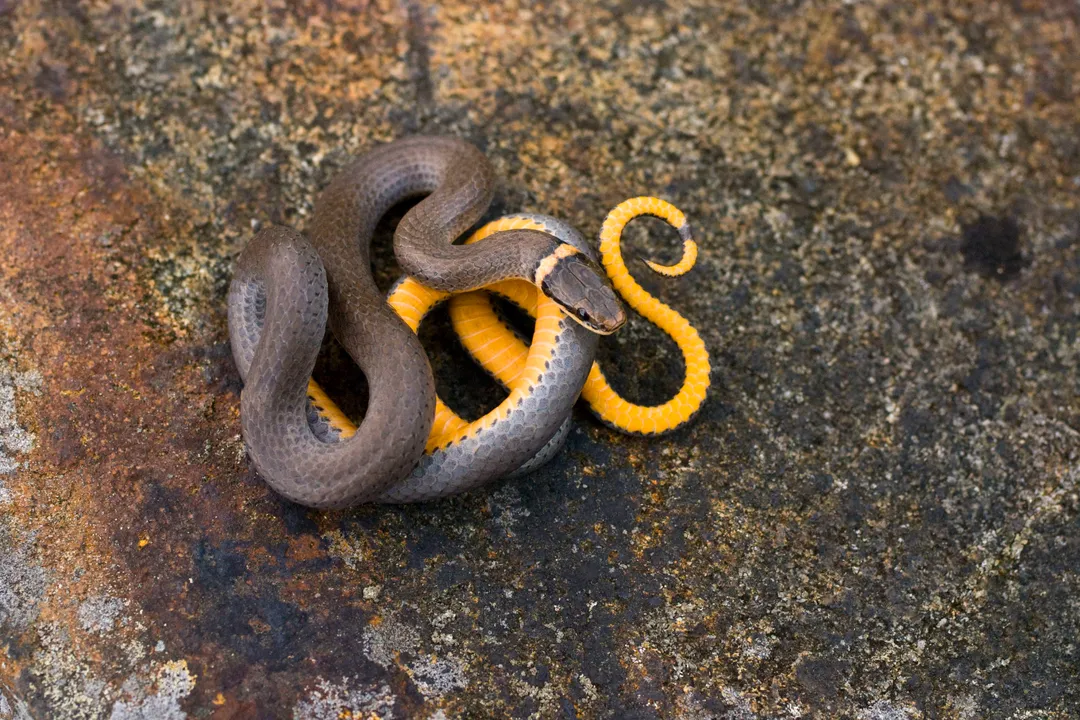
The ringneck snake, scientifically recognized as Diadophis punctatus, is one of North America’s more widely distributed, yet frequently unseen, small snakes. This species complex is known for its secretive nature, preferring damp, cool environments under rocks, logs, or leaf litter. [1][8] While they occupy a substantial portion of the continent, pinpointing their exact range requires looking at regional data, as distribution can vary by subspecies and local habitat suitability. [4][7] The common thread across their range is their preference for cover, often making them more of an auditory confirmation—a slight rustle—than a visual one for the casual observer. [6]
# Subspecies Distribution
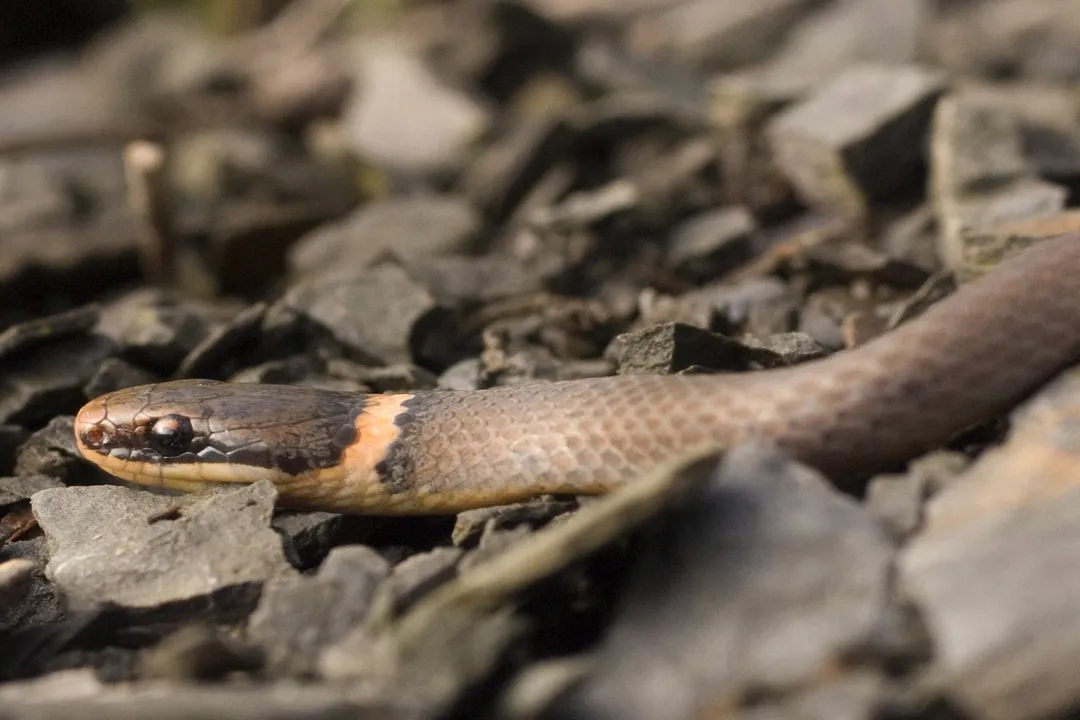
The common ringneck snake is actually a group of subspecies, each adapted to slightly different microclimates across their range. [4] This variation in subspecies is key to understanding why they can thrive in geographically distant places like the Pacific Northwest and the arid Southwest. For instance, the Prairie Ring-neck Snake, Diadophis punctatus arnyi, is a recognized form found in the central plains region. [7] Understanding which subspecies is present helps define the state-level distribution, as populations are often delineated by geographic barriers or environmental shifts. [4]
# Confirmed States

While the species has a very broad historical range throughout the United States, specific confirmed locations come from state-level wildlife guides that document local herpetofauna. For example, the presence of the ringneck snake has been well-documented in states spanning multiple regions, from the Southeast to the West Coast. [2][3][6][8][9]
In the Southeast, the species is known to reside in Alabama, where they are often associated with moist, wooded areas, seeking refuge under debris or in rotting logs. [2] Moving west into the South Central plains, areas like Kansas also host these secretive reptiles, fitting neatly within the range of subspecies like D. p. arnyi. [5]
The presence extends to the Midwest, with documented populations existing in Illinois, where the snakes favor habitats with sufficient moisture and cover, often near water sources or in rich, damp soil under stones. [8]
The western extent of their confirmed range, based on these sources, includes Arizona, where they might be found in higher elevation, cooler, or moister parts of the state, contrasting with the typically arid environments found elsewhere in the state. [3] Furthermore, the species is documented on the Pacific coast in Washington state, often inhabiting forested areas where moisture retention is high, such as under bark or ground cover in woodlands. [9] It is noteworthy that this distribution—from Alabama to Washington—covers vastly different climate zones, highlighting the snake's adaptability when core habitat needs (moisture and cover) are met. [1]
This mosaic of confirmed states suggests that the species, in its totality, occupies a range stretching across much of the contiguous United States, though specific state presence depends on local ecological factors. [1][4]
| State | Regional Context | Key Habitat Feature |
|---|---|---|
| Alabama | Southeastern US | Moist, wooded areas, under debris [2] |
| Arizona | Southwestern US | Cooler, potentially higher elevation spots [3] |
| Kansas | Central Plains | Likely Prairie subspecies habitat [5][7] |
| Illinois | Midwest | Damp soil, under stones or cover [8] |
| Washington | Pacific Northwest | Forested areas, good ground cover [9] |
# Habitat Overlap Analysis

Considering the presence in both the hot, dry state of Arizona and the cooler, perpetually damp state of Washington offers an interesting point of ecological comparison. In regions like Alabama or Illinois, the snake relies on surface cover—leaf litter, flat stones, and rotting wood—to maintain thermal and hydration balance during warm weather. [2][8] The snake’s small size and dark coloration make it an expert at exploiting small pockets of favorable microclimate. [1]
Conversely, in a state like Arizona, where surface temperatures can become lethal quickly, the ringneck snake likely spends much more time underground in burrows or deep under structures that insulate against extreme heat fluctuations. [3] While the type of cover may shift—from deciduous leaf litter in Illinois to rock piles or bark in drier areas—the principle remains the same: avoiding direct exposure is critical for survival. [1] This reliance on external insulation, rather than intrinsic physiological tolerance for high heat or cold, explains why they can be found across such diverse latitudes and longitudes, provided there is suitable substrate. [4]
# Finding Ringnecks
For naturalists interested in observing these snakes, the best approach is to focus on methodically searching their preferred cover types rather than scanning open ground. [5] Since they are nocturnal or crepuscular, daytime searching involves careful, slow lifting of objects they hide under. When flipping a rock or log, it is important to do so gently and slowly; the snake is easily frightened and will bolt toward the next available hiding spot, often disappearing before you can confirm its identity. [6]
A practical approach, especially if you are in a confirmed habitat area like those found in Kansas or Illinois, is to look for them just after a good rain. The moisture often encourages them to move slightly, and the wet ground can sometimes trap them temporarily near the surface as they hunt small prey like earthworms or slugs. [8] Another useful technique, particularly when working near stream banks or marshy edges common in the Eastern parts of their range, is to check under loose bark on fallen trees near water, a prime location where they can remain cool and close to moist soil. [2] This targeted search increases the chance of a sighting without disturbing large areas unnecessarily.
# Coloration Variation
The common name, "ringneck snake," stems from the conspicuous neck ring, which is typically a shade of yellow or orange, though this feature can vary in prominence or color depending on the specific subspecies and individual. [1][5] While the dorsal side is usually a dark gray, black, or sometimes a slate blue, the ventral side is often vividly colored with yellow or orange, sometimes featuring dark spots or blotches. [4] In some regional populations, this belly color can even approach red. [1] This bright underside is usually only revealed when the snake feels threatened and curls its tail up in a defensive posture, a behavior that researchers sometimes refer to as displaying its "warning flash". [6] It's an excellent field mark, but remember that the neck ring itself can be incomplete or absent in some individuals, making the belly color the more reliable identifier for the species complex overall. [4]
# Seasonal Movement Patterns
The life cycle and activity periods of the ringneck snake are heavily regulated by temperature, which dictates when they are most accessible to observers across their broad distribution. [9] In the northern extremes of their range, like Washington state, they are likely to be heavily reliant on brumation for much of the year, emerging only during the warmer summer months to feed and mate. [9] Conversely, in more temperate areas like Alabama or Illinois, the active season is longer, potentially stretching from early spring well into the fall. [2][8] A key observation across these varied environments is that the snake’s primary activity window often centers around moderate temperatures, usually between 60°F and 80°F. [1] If you are tracking their presence across a state like Arizona, you might find them active only in the early morning or late evening during the summer heat, shifting their primary hunting time to midday only during the cooler spring or fall shoulder seasons. This temporal flexibility allows them to maximize foraging time while minimizing lethal exposure, showcasing an important behavioral adaptation for surviving temperature extremes in geographically separated habitats. [3]
Related Questions
#Citations
Ring-necked Snakes - The Orianne Society
Ringneck Snake | Outdoor Alabama
Ring-Necked Snake | Arizona Highways
Ringneck Snake (Reptiles, Amphibians and Fish of the ... - iNaturalist
Ring-necked Snake - Kansas Herpetofaunal Atlas
Ring-necked Snake | Oklahoma Department of Wildlife Conservation
Prairie Ring-necked Snake - coparc
ring-necked snake - Illinois Department of Natural Resources
Ring-necked snake | Washington Department of Fish & Wildlife