What species is the may beetle?

The question of specific species identification when referring to the "may beetle" is deceptively simple, as this common name usually points toward an entire genus rather than a single creature: Phyllophaga. [1][2][3][6] Across North America, numerous species fall under this umbrella, leading to interchangeable use of terms like May beetle, June bug, or May bug. [2][3] This group belongs to the scarab beetle family, Scarabaeidae, a massive and diverse collection of beetles known for their robust bodies and often impressive size. [1][6]
# Common Names
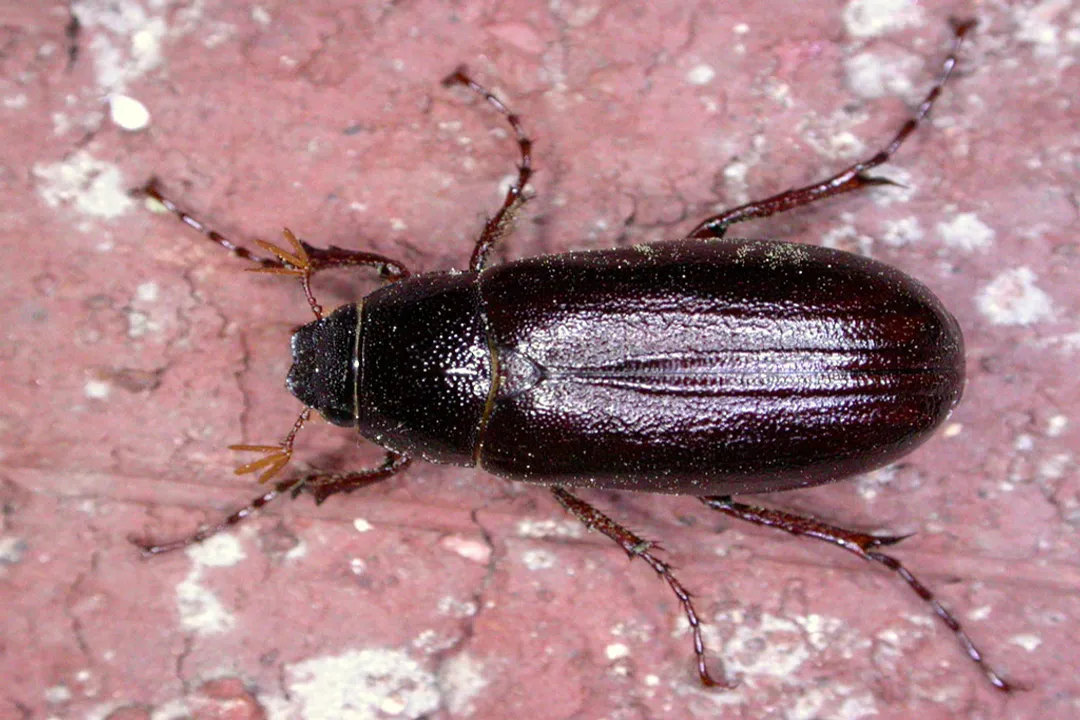
The confusion surrounding the exact species is largely due to overlapping common nomenclature tied to the time of year these insects become most noticeable. [2] In many regions, when the adults emerge in late spring or early summer, they are called May beetles or June bugs. [2][4] The Missouri Department of Conservation notes that the term June bug is frequently used for species in the Phyllophaga genus. [2] Similarly, in other areas, these insects are simply known as May beetles. [7] While Phyllophaga is the key identifier for the group, different regional species may predominate, causing local variation in the exact name preference. [8]
# Insect Order
To understand the may beetle, one must look at its classification within the Linnaean system. As mentioned, these beetles belong to the order Coleoptera, the beetles, and the family Scarabaeidae. [1][6] Scarab beetles are characterized by lamellate antennae—antennae that end in club-like structures made of movable, leaf-like plates. [6] This family includes many recognizable insects, such as dung beetles and chafers, but the Phyllophaga genus specifically encompasses the large, nocturnal chafers known colloquially as May or June beetles. [1][6] The sheer size of the genus, with hundreds of species documented across the Americas, is why a single species name rarely applies universally. [1][6]
# Appearance Forms
The life of a Phyllophaga beetle involves two very distinct physical forms: the adult and the larva. [2][7]
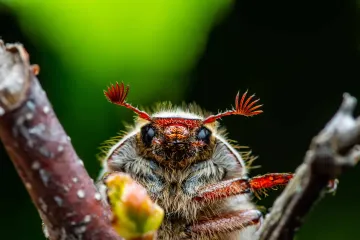
The adult beetle is generally oval-shaped, smooth, and varies in color from light brown to dark reddish-brown or black. [2] Most adults encountered measure between a half-inch and a full inch in length. [2] They are well-known for their clumsy, noisy flight patterns, particularly when drawn toward outdoor lights after dusk. [2][4]
In stark contrast to the hard-shelled adult is the larval stage, commonly referred to as the white grub. [2][7] These larvae are C-shaped, off-white or grayish, with a distinct brown or black head capsule and three pairs of legs near the head. [2] The size of the grub depends heavily on its age within the multi-year life cycle, ranging from small, newly hatched individuals to substantial worms capable of causing significant root damage. [7]
# Life Cycle Timing
The developmental timeline for May beetles is often the source of their pest status and explains population fluctuations. [1][7] These insects undergo complete metamorphosis, known as holometabolous development. [1] Depending on the specific Phyllophaga species and local climate—such as the difference between northern states like Wisconsin and warmer areas—the total development time from egg to adult can span one, two, or even three years. [1][7]
The vast majority of this time is spent underground as a grub, actively feeding on roots. [7] Adult emergence usually happens in late spring or early summer, corresponding to the common names. [2][4] For instance, in areas with a three-year cycle, massive, synchronized emergences of adults may occur only every third year, leading to years where their presence seems overwhelming, followed by comparatively quiet years as the new cohorts develop underground. [1] This cyclical nature means that while the adults appear in May or June, the most active feeding damage by the immature stage might occur much earlier or later in the season depending on temperature and developmental stage. [4]
# Feeding Habits
Both life stages of the May beetle consume plant material, but their targets are vastly different, leading to distinct types of damage. [4][7]
Adult beetles feed primarily on the leaves of various trees and shrubs. [4][7] While they can cause noticeable defoliation, the damage is usually cosmetic and rarely fatal to established, healthy plants. [4] They favor broadleaf species, and in agricultural settings or landscapes, they might chew irregular holes in foliage. [7] Their nighttime activity means this feeding occurs under cover of darkness. [4]
The larval stage, the white grub, is where the major impact often lies. [7] Grubs feed voraciously on the roots of grasses and other plants. [7] This subsurface feeding is what causes turf to thin, turn brown, and pull up easily, as if the sod has been disconnected from the soil. [2][7] In lawns, vegetable gardens, or nurseries, heavy grub populations can cause extensive, irreparable damage to the root systems, necessitating intervention. [4][7]
If we consider an area like Alabama, where different species of Phyllophaga are prevalent, [5] the impact varies seasonally. The spring bloom of adults is immediately followed by egg-laying, meaning the small, newly hatched grubs begin their damaging root feeding by mid-to-late summer, often causing the first visible turf damage that fall or the following spring. [4]
# Local Presence
The genus Phyllophaga is widely distributed across North America, with specific species being dominant in different geographical areas. [1][2][8]
In the Midwest, such as Missouri, species are commonly encountered in late spring and early summer, often attracted to lights. [2] Similarly, in Wisconsin, these beetles are noted for their springtime appearance and the associated damage caused by their larvae. [7] Texas also hosts numerous species of June beetles, where they are a recognized part of the insect fauna. [8] Even in regions like Alabama, these insects are a regular feature of the local environment. [5] The fact that entomologists track these insects across the continent underscores that "May beetle" is a functional description for a broad taxonomic group rather than a precise scientific identification. [6][9]
To put this into a practical context for a homeowner, consider a lawn with thin, spongy turf. If the area is in the central or eastern US, finding C-shaped white grubs when digging up a patch of damaged sod points strongly toward a Phyllophaga issue. [2][7] A precise species identification usually requires examining specific morphological characteristics, such as the arrangement of spines on the underside of the last abdominal segment of the grub, a task better left to entomologists or extension agents. [1]
When monitoring for potential turf damage, it helps to remember that while the adults are drawn to light sources at night in late spring, [2] the grubs are most actively feeding near the soil surface when temperatures are warmer, typically late summer through early fall or again in the spring before pupation. [4][7] A good rule of thumb for checking grub density is to sample a square foot of turf in the damaged area. If you find more than 5 to 12 grubs per square foot, depending on the lawn's value and the time of year, control measures might be warranted. [4] This threshold concept helps differentiate minor population fluctuations from truly damaging infestations.
Another point of synthesis relates to seasonality and control timing. Because the adults are strongly nocturnal and attracted to light, [2][4] placing sticky traps or simple light/water traps near the lawn during their brief adult flight window in May/June can give you an early warning system for the next year's potential grub population surge, allowing for proactive, targeted grub treatment later in the summer when the new eggs have hatched and the young larvae are actively feeding. [4] This approach separates the observation period (adult flight) from the treatment period (larval feeding).
Related Questions
#Citations
Phyllophaga - Wikipedia
May Beetles (June Bugs) - Missouri Department of Conservation
May Beetle, also called June Bug (genus Phyllophaga)
May or June Beetle - Integrated Pest Management
May beetle species identification needed - Facebook
May Beetles (Genus Phyllophaga) - iNaturalist
May/June Beetles - Wisconsin Horticulture
June Beetle - Field Guide to Common Texas Insects
May and June beetles - Forest Pests of North America