Are Blue Death Feigning Beetles hard to care for?
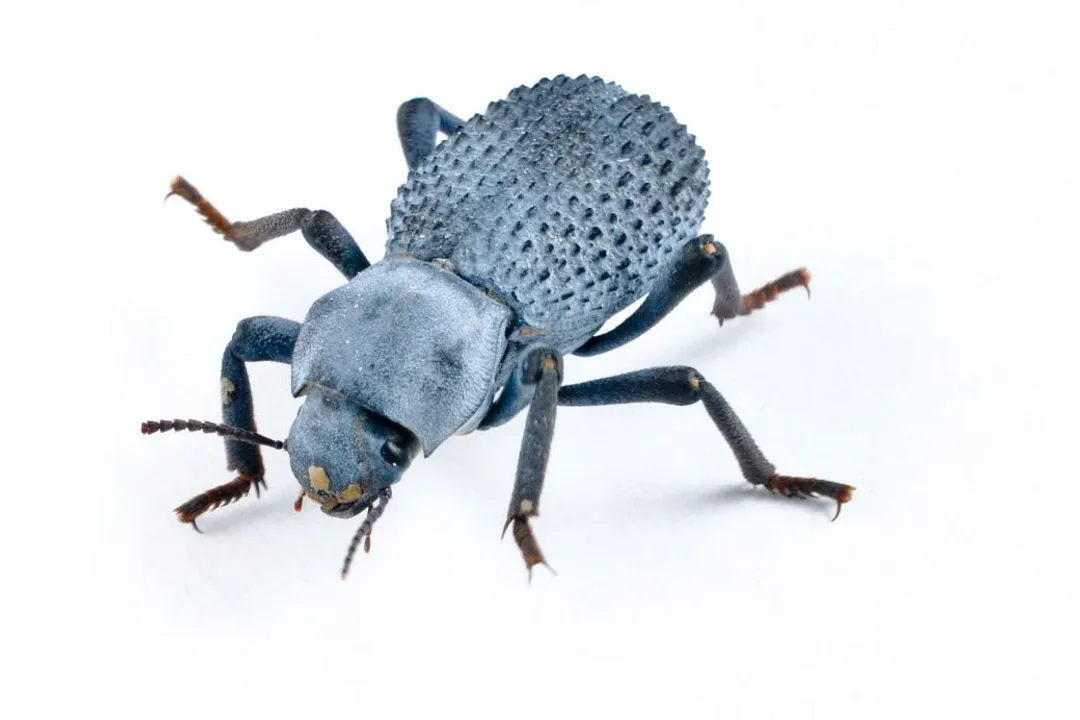
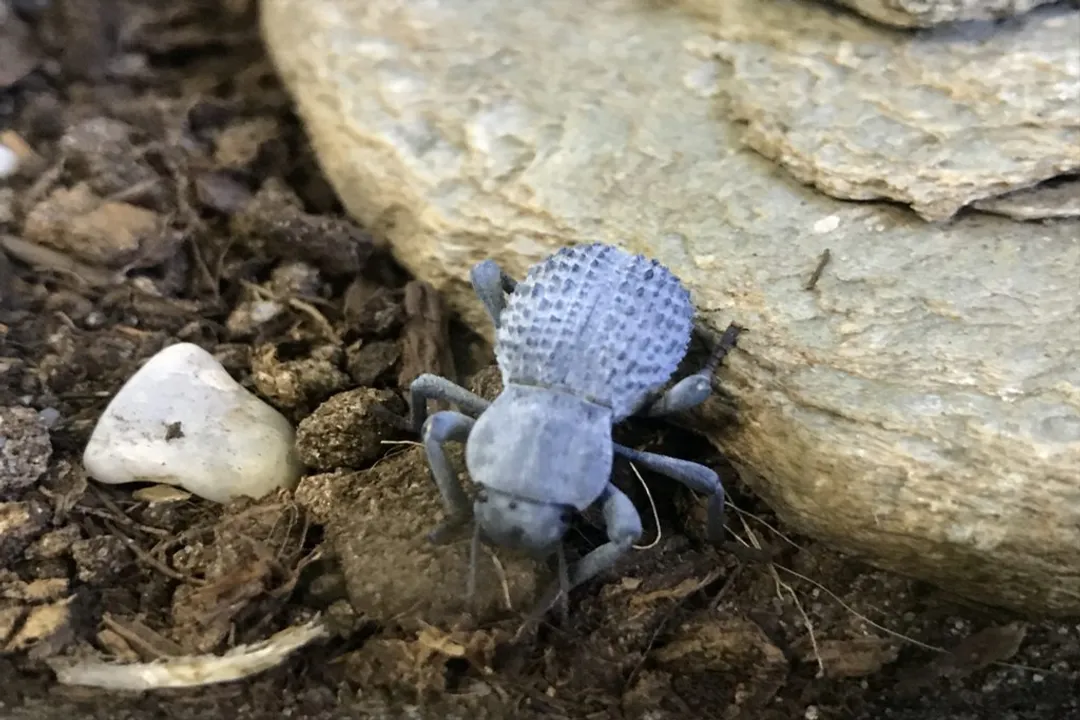
The perception that Blue Death Feigning Beetles (Asbolus verrucosus) are simple pets is only half true. These fascinating desert inhabitants are indeed extremely hardy and can tolerate a surprisingly wide range of conditions, which is why they frequently appear in beginner invertebrate setups. [2][5] Many keepers confirm they can easily survive for years in suboptimal care, such as a small container with only sand and a sugary jelly treat. [3] However, this "survival" capability masks a higher ceiling for what constitutes thriving husbandry. If the goal is to see them at their best—vibrant blue, highly active, and perhaps even breeding—the care required moves from basic survival to specific environmental replication. [3] The question of difficulty, therefore, hinges entirely on the keeper's aspirations for their little "blueberries". [3]
# Housing Basics
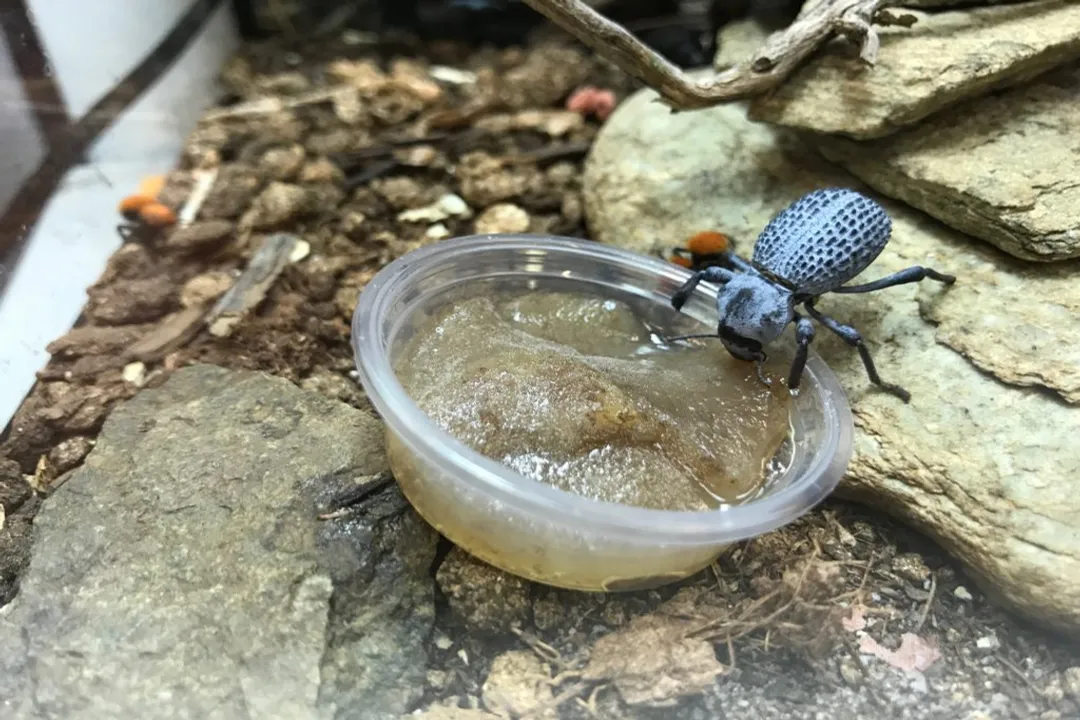
The enclosure itself is perhaps the simplest aspect to get right, provided ventilation is prioritized. Blue Death Feigning Beetles (BDFBs) are active and need adequate floor space to move around. [2] A glass enclosure, often a repurposed 10-gallon or 20-gallon reptile tank, is highly recommended because it offers great visibility and supports thermal gradients well. [2][7] Since these beetles cannot scale smooth glass surfaces, glass tanks offer an excellent escape-proof barrier, which is a major advantage for keepers worried about containment. [2][7]
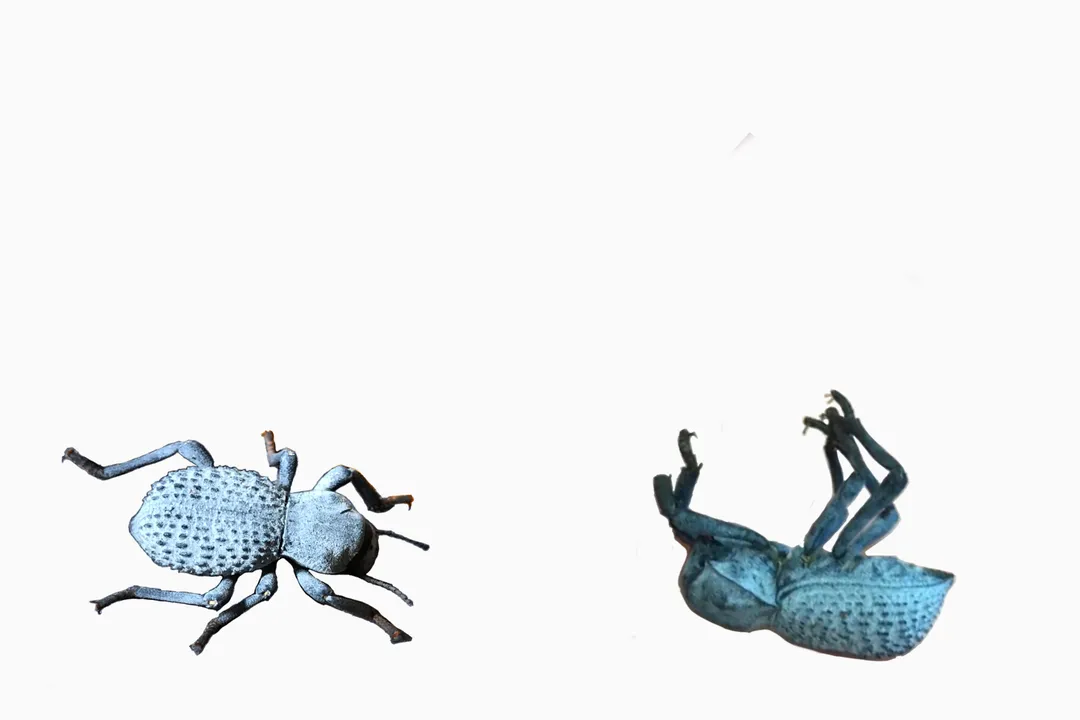
Crucially, airflow must be excellent. [3] Because these are desert species, too much moisture and stagnant air are their enemies. A screen lid is often cited as the ideal choice for this reason, as it prevents humidity from spiking and allows warm, dry air to circulate effectively. [2][5][3] Some dedicated keepers even run their tanks lid-less when ambient humidity is high, confirming that keeping the air dry and moving is paramount to maintaining their characteristic blue color. [3] If the beetles appear dark or black, it is a clear visual indicator that they are too damp, and ventilation needs immediate improvement. [2][6]
# Substrate Layers
While setting up a desert enclosure might tempt a novice keeper to simply pour in a bag of fine play sand, this approach is insufficient for a truly thriving BDFB habitat and can actually be detrimental to the beetles' physical health. [3][5] The substrate needs complexity to serve both the adults and any potential larvae. [2]
A successful substrate should generally be layered, mimicking the varied composition of the Mojave or Sonoran deserts where they originate. [7] The base layer needs to retain some moisture to support the larvae, which desiccate easily, while the top layer must remain consistently dry and loose for the adults. [2]
| Layer Function | Recommended Composition | Keeper Note |
|---|---|---|
| Deep Base | Organic topsoil mixed with safe, non-calcium sand or clay. [3][5] | This layer supports the less hardy larval stage. [2] |
| Surface Layer | Coarse desert sand, crushed granite, or clay. [3] | Essential for adult locomotion and creating a vital moisture barrier to keep the deeper soil from becoming saturated or dusty. [3][7] |
Relying only on fine sand is discouraged because it is physically difficult for the beetles to walk on, causing them to expend excessive energy. [3][5] Similarly, substrate mixes that hold too much moisture, like pure coconut fiber, should be avoided or used sparingly, perhaps only as a small, localized damp area designated for egg-laying females. [5][7] If you consider the depth, a practical recommendation is to ensure the total substrate depth allows for several inches of the primary digging medium, especially if you hope to successfully rear any larvae, as they need depth to burrow and process the environment. [2][7] This layered approach is more demanding than just pouring in sand, but it directly addresses the different environmental needs of the life stages present in the enclosure. [2]
# Temperature Light
BDFBs are native to environments that experience significant temperature swings, making them adaptable but also responsive to thermal management. [5][7] While they can technically survive at standard room temperature, keepers aiming for high activity levels and better overall health establish a thermal gradient using overhead heating. [2][3]
The ideal gradient usually involves a hot spot ranging from to ( to ) on one side of the enclosure, with the cooler end remaining in the mid- range ( to ). [2][3][5] This heat source should come from a basking bulb or lamp positioned over the screen top, mimicking the sun. [2][3] It is important to note that, unlike many reptiles, these beetles do not have a requirement for UVB lighting. [2]
A key point of difference in husbandry philosophy appears around heating methods. While some sources suggest heat mats as an option, [7] experienced keepers often express caution regarding under-tank heating. [3] A primary concern with overhead heating, like a low-wattage halogen bulb adjusted via a dimmer or thermostat, is the need to experiment slightly to find the right intensity for the specific enclosure size. [3][5] However, overhead heating is superior because it aids in keeping the air dry—a critical factor—whereas a heat mat might only warm the substrate bottom without addressing the necessary surface and air conditions. [3] If you live somewhere that stays warm, the heat lamp might be overkill during warmer months, and relocating the tank or ensuring deep substrate provides enough cool refuge becomes the primary strategy to prevent them from overheating past the maximum comfort level. [3]
# Hydration Diet
The dietary requirements offer another area where "survival" care diverges sharply from "optimal" care. In the wild, these beetles are scavengers, consuming whatever they can find, which largely consists of dead animals and low-sugar plant matter. [3]
For optimal health and lifespan, this translates to a diet that is high in protein and low in sugar. [3][5] Feeding staples should include freshly killed invertebrates, such as crickets, dubia roaches, or dead, dried shrimp. [3] Dog food, fish flakes, or commercial, high-protein insectivore pellets can supplement this protein base. [5][6] One actionable tip often shared among seasoned keepers is to avoid the commercial beetle jellies that are readily available, as these are typically pure sugar and offer little nutritional value, even though they can provide some hydration. [3]
Regarding moisture, the BDFBs obtain most of their required water from their diet. [5][7] Juicy vegetables like organic carrots, zucchini, or sweet potato offer both nutrition and hydration. [2] If offering fruit, native options like prickly pear are preferred due to lower sugar content compared to common fruits. [3] Rather than providing a standing water dish—which poses a drowning risk to arid insects—a weekly, light misting in one corner of the enclosure is sufficient to allow them to drink droplets from surfaces without raising overall humidity. [2][7]
# Breeding Hurdles
While BDFBs are known to mate readily in captivity when sexes are housed together, [2] successfully raising the next generation is frequently cited as the single most difficult aspect of their care. [5][7] The larvae, which resemble slightly larger mealworms, present a significant challenge during the pupation phase. [2]
The consensus among those who have successfully bred them is that pupation cannot happen under the standard low-humidity, ambient conditions that suit the adults. [2] Breeders have found success by isolating the larvae in their own containers and providing very specific, high-humidity conditions—often cited around 75\text{%} to 80\text{%} relative humidity—paired with warmer temperatures, sometimes between and . [2] Achieving these precise, consistent conditions, especially for the delicate larval stage, is a considerable step up in commitment from basic adult care, proving that while they are hardy adults, their life cycle is not entirely without complexity. [3]
In summary, Blue Death Feigning Beetles are not hard to care for if the expectation is survival and observation of their death-feigning behavior. They are low-maintenance survivors. However, they become a moderately difficult pet if the keeper aims for the high standard of husbandry that promotes longevity, peak coloration, and successful breeding, demanding meticulous attention to substrate layering, precise thermal gradients, and diet composition. [3]
#Videos
Blue Death Feigning Beetles Care Guide - Asbolus verrucosus
Related Questions
#Citations
Let's talk about Blue Death Feigning Beetles! : r/InvertPets - Reddit
How to keep Blue Death-Feigning Beetles (Asbolus verrucosus)
Blue Death Feigning Beetles Care Guide - Asbolus verrucosus
Blue Death Feigning Beetle Care - Chicago Exotics Animal Hospital
Blue Death Feigning Beetles - Rainbow Mealworms
Building a natural Blue Death Feigning Beetle habitat - Ali's Menagerie
Blue death feigning beetle care sheet