How rare is it to see a rose-breasted grosbeak?
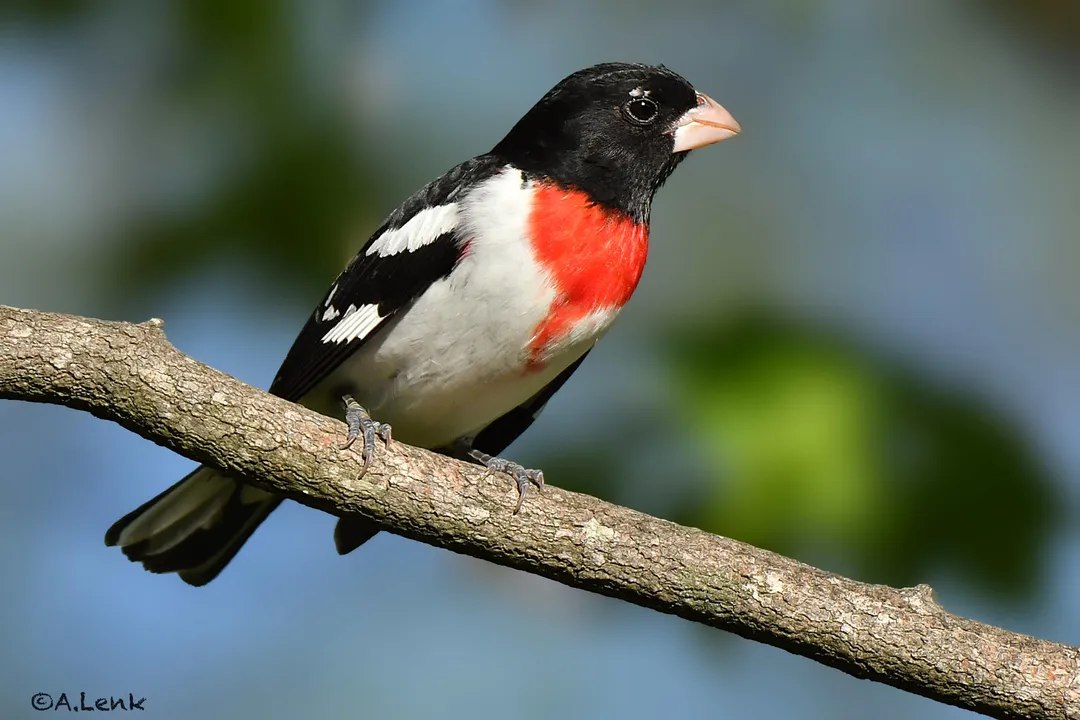
The sight of a male Rose-breasted Grosbeak, with its striking black-and-white pattern punctuated by that brilliant splash of rosy red across the breast and beneath the wings, often stops birdwatchers in their tracks, prompting the very question: just how unusual is this sighting? The answer rests entirely on geography and the calendar. This isn't a bird that maintains a static, year-round address across the continent; its visibility fluctuates dramatically based on the season and your precise location relative to its vast migratory path. [1]
For those in the heart of its breeding territory during late spring and summer, seeing a Rose-breasted Grosbeak is far from rare; it's an expected, albeit welcome, fixture of the deciduous and mixed woodlands. [1][7] However, if you are west of the Rockies, or if you spot one in a backyard in, say, December, that sighting immediately jumps into the realm of the truly uncommon, even newsworthy for a local birding group. [2][5]
# Range Defined
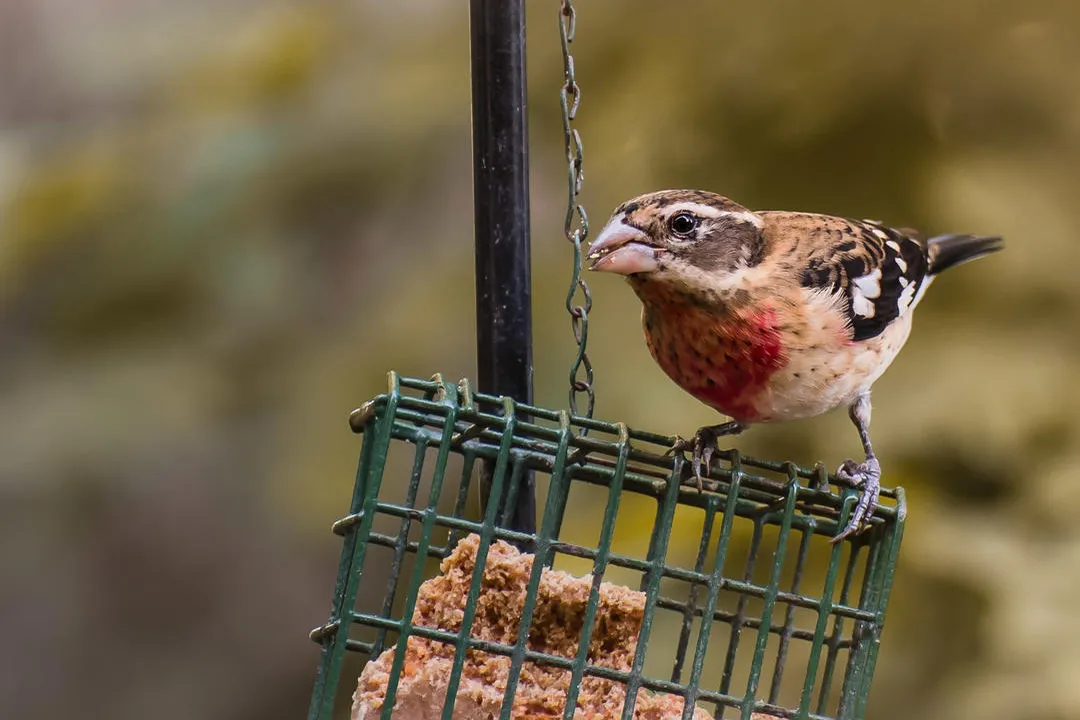
The Rose-breasted Grosbeak establishes its summer home across much of eastern North America. [1] Its breeding range generally spans from the southern edge of the boreal forest in Canada, moving south through the eastern and central United States, often reaching as far west as the Great Plains. [1][7] The birds prefer the canopy of mature broadleaf woodlands, often near streams or forest edges. [1] When they are present in these areas—from late April through July—they are common residents, often heard before they are seen, thanks to the male's loud, melodic, whistle-like song that sometimes mimics the American Robin. [1]
When assessing rarity, it is essential to look at where they don't breed. The western half of the United States and the Pacific coast are not part of their regular summer itinerary, making any confirmed sighting there inherently unusual. [2] A bird spotted on the wrong continent or subspecies is often what triggers the immediate designation of "rare" in a field report. [6]
# Seasonal Movements
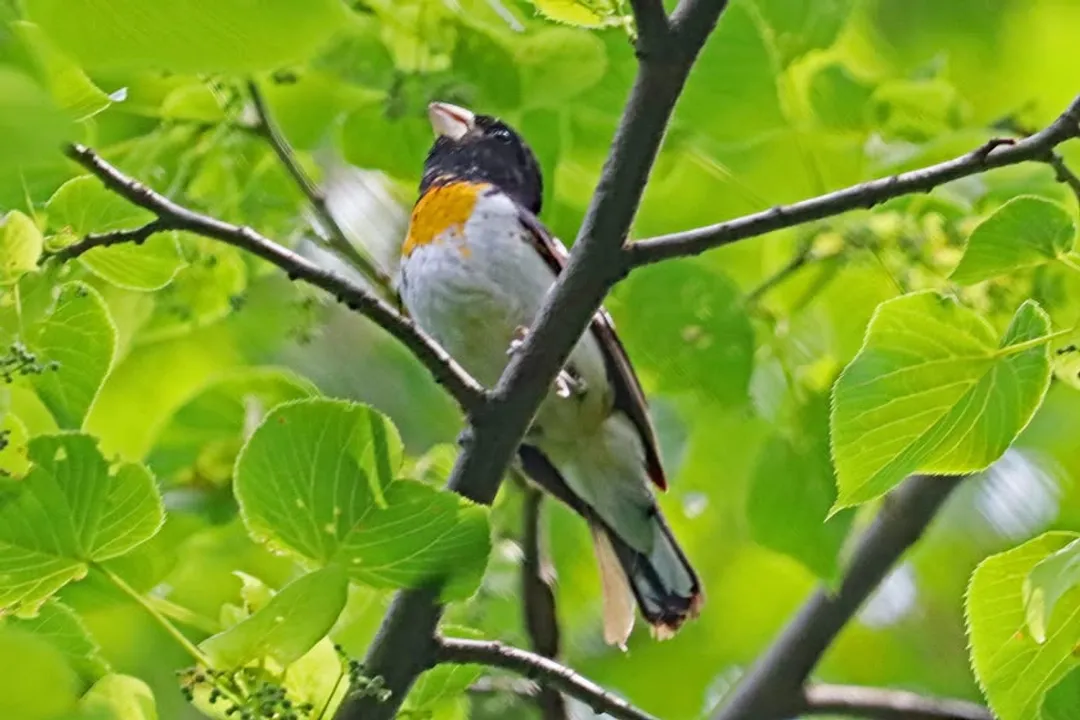
Understanding the grosbeak's annual schedule is the key to calibrating expectations. These birds are neotropical migrants, meaning they spend their winters far south of the U.S. border. [1] Their winter destinations include the dense tropical forests of Central America, stretching down into parts of South America. [1]
The appearance of the grosbeak in a northern backyard is a highly predictable event dictated by spring arrival and autumn departure. They typically migrate north in the spring, often arriving between April and May. [1] The fall migration south begins around August and can stretch into October. [1] If you live in a northern state where they breed, seeing one outside that May-to-August window—especially outside of the peak migration periods in early May or late September—is unusual. A bird encountered during the height of winter in a non-tropical latitude has either perished, been delayed severely, or is an extremely rare vagrant. [1]
Many people report seeing these birds for the first time because they are passing through during migration, an event that often concentrates birds in smaller areas, like suburban yards, where they might not typically forage during the breeding season. [3] For instance, a flurry of activity might occur near a window feeder during a heavy migration wave, leading someone to believe they are more common than they are when the birds settle into their preferred, denser nesting habitat. [3]
This migratory behavior means that while the species population might be stable across the continent as a whole, your local availability is highly ephemeral. [7] If you miss the brief window of arrival or departure, you might miss the species entirely for the year.
# Backyard Perception

For many backyard birders, rarity is gauged by feeder attendance. The Rose-breasted Grosbeak is not an everyday visitor like a House Finch or a Northern Cardinal in many regions. [1] They have specific dietary preferences that dictate when and how often they visit a platform or tube feeder. [1] They strongly favor sunflower seeds and often show a marked preference for darker oil sunflower seeds over lighter safflower seeds, which many other common backyard birds enjoy. [1]
If you live in an area where they are expected breeders, the rarity might stem from not having the right food out during the right time. If you live in a region they merely pass through, your odds are lower regardless of your feeder setup. [2] The very fact that many observers note their arrival as an exciting "first-time" experience, even in eastern states, suggests that while not globally rare, they are not guaranteed backyard fare for the average homeowner. [3][4]
If we think about the observation effort required, a casual observer walking through a forest during June in Indiana has a decent chance of hearing or spotting one. Compare that to the daily vigilance required by someone in Southern California hoping for a glimpse during spring migration; the rarity scale shifts dramatically based on the expected density. If we consider the percentage of feeding stations visited daily across the entire eastern U.S. during peak summer, the number is modest compared to year-round residents. If the goal is to see one in your yard, the effort-to-reward ratio outside of the immediate breeding core can feel like chasing a rare bird simply because their appearance is brief and seasonal. [5]
# Feeding Habits and Attraction
To decrease the perceived rarity of seeing this bird, focusing on creating an ideal habitat is the direct approach. While they consume insects, berries, and buds, during migration and backyard visits, seeds are key. [1]
| Preferred Seed Type | Notes on Grosbeak Preference | Frequency of Visit (Relative) |
|---|---|---|
| Black Oil Sunflower Seed | Highly favored; a staple offering. [1] | High (When present) |
| Safflower Seed | Often ignored or taken only after other options are depleted. [1] | Low |
| Peanuts (Shelled) | Attracts them, though not as primary as sunflower. [1] | Medium |
| Suet | Generally less preferred than seeds, but may be taken in winter if present. [1] | Low |
One often-overlooked detail when trying to attract grosbeaks is the delivery method. While some birds are perfectly happy at a hanging tube, Rose-breasted Grosbeaks frequently prefer to feed on platform feeders or directly on the ground beneath a feeder, taking their time to select the best seeds. [1] If you are using only hanging feeders, you might be missing opportunities for them to stop by on their way through. Providing a clear, low platform feeder close to the edge of good tree cover increases the likelihood of an encounter during their short stay. [1]
# Status and Conservation Context
While the species' wide distribution suggests general stability, conservation groups track populations closely, indicating that even common birds can face localized pressures. [7] For example, the North Carolina Audubon Society lists the Rose-breasted Grosbeak as a Priority Bird, signaling that local habitat loss or specific threats within that state warrant focused attention. [7] This designation means that even within the broad eastern range, pockets of the population may be declining or experiencing significant challenges related to human activity or changing forest composition. [7]
It is important to realize that the feeling of rarity often stems from a desire to see the bird consistently at the feeder. A bird that is common in a forest interior but avoids residential areas will always feel rare to the suburban birder. [5] The species' general conservation status seems relatively sound continent-wide, as they haven't faced the dramatic population crashes seen in some other migratory songbirds, yet their life cycle makes them inherently sporadic visitors to any single location. [1][7]
When a particularly dazzling male appears, it certainly has the visual impact to stun researchers and casual observers alike, leading to memorable sightings that feel exceptional even if the bird is technically "expected" nearby. [6] The rarity, therefore, is often perceptual—a momentary gift of incredible color against the backdrop of everyday brown and gray feeder fare.
Related Questions
#Citations
Rose-breasted Grosbeak Overview, All About Birds, Cornell Lab of ...
The Rose-breasted Grosbeak--A Rare Bird - OC Birder Girl
Rose-Breasted Grosbeak, never seen one till now : r/BirdBuddy
Is this a mutant or hybrid rose-breasted grosbeak? - Facebook
Rose-Breasted Grosbeak - Pittsburgh Quarterly
Rose-breasted Grosbeak stuns US researchers - BirdGuides
Rose-breasted Grosbeak - NH Audubon
Rose Breasted Grosbeak Question!!! | BirdForum
Priority Bird Profile: Rose-breasted Grosbeak | Audubon North ...