What kills box tree moths?
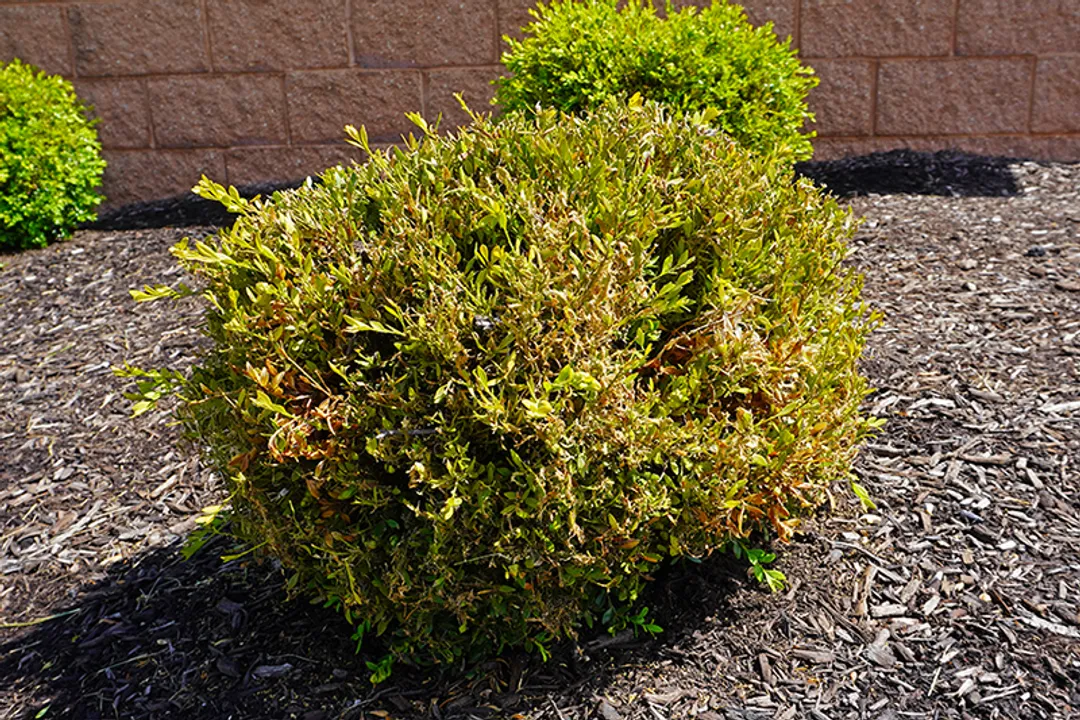
The presence of the box tree moth, Cydalima perspectalis, marks a significant threat to boxwood plantings across affected regions, demanding prompt and effective intervention to prevent the complete defoliation and eventual death of these favored landscape shrubs. [5][8] Understanding what effectively terminates this pest—whether through chemical intervention, physical removal, or biological pressure—is central to successful boxwood preservation. The life stages of the moth, from egg to adult, each present different vulnerabilities that managers must target for the greatest impact. [3]
# Pest Stages
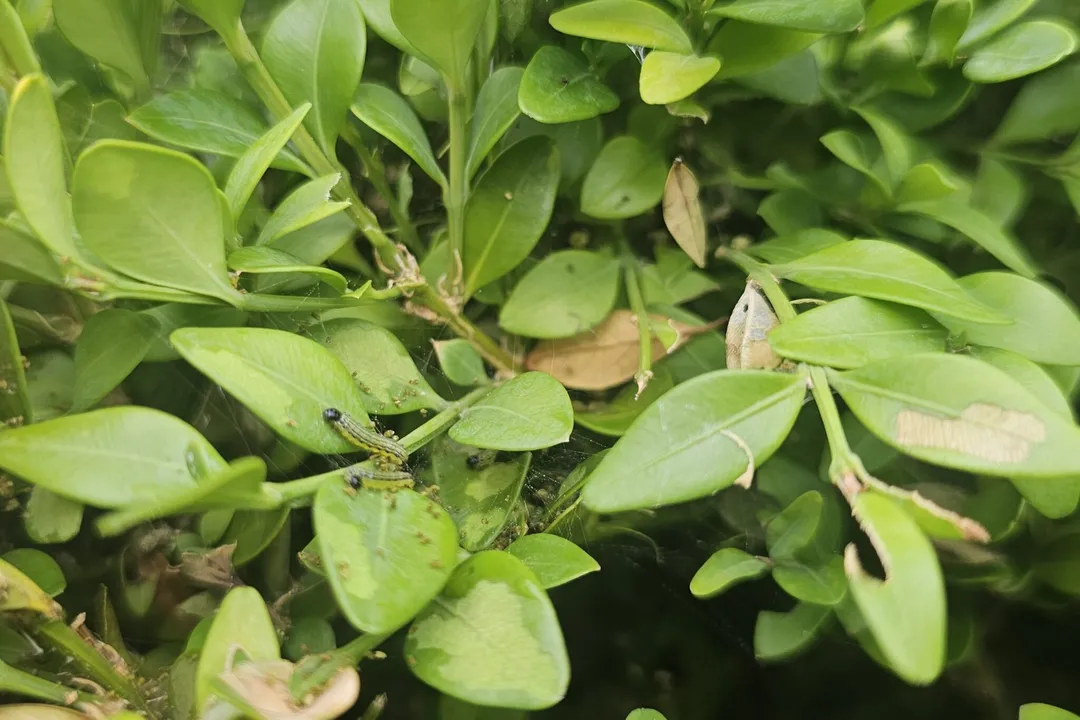
Controlling the box tree moth requires knowledge of its life cycle, as effectiveness varies significantly depending on whether one is targeting the egg, the feeding larva (caterpillar), or the adult moth. [2][3]
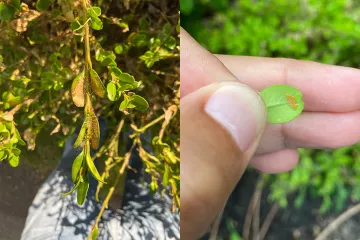
The damage is almost entirely caused by the larvae, which voraciously consume the leaves of boxwood (Buxus) species, often leaving only the tougher veins or stripping the plant bare. [2][3][9] The caterpillars are distinctive, displaying colors ranging from light green to dark green or even black, frequently featuring pale stripes running lengthwise, though color can be variable. [2][3] They may hide deep within the shrub or in leaf litter at the base during the day, making detection challenging. [3]
The adult moth, with its white wings often marked with black borders and dark spots, is highly mobile and responsible for reproduction and dispersal. [2][3][9] The timing of management is crucial because control efforts must interrupt the feeding stage before the damage becomes irreparable, or target the flying adults to reduce the next generation's egg load. [1]
# Chemical Tactics

For many serious infestations, chemical control options become a necessary component of an integrated strategy, especially for high-value specimens or when populations are high. [3][6] The selection of an effective insecticide often depends on the targeted life stage and regulatory approval in the specific jurisdiction. [1][5]
# Larval Control
Since the caterpillars are the primary cause of destruction, insecticides are frequently aimed directly at them. [2] Many effective products target the actively feeding stages. For instance, certain chemical classes, such as spinosyns (like spinetoram or spinosad), have shown efficacy against the larvae. [1][3] These are often grouped with products that require contact or ingestion to be effective. [1]
Another category includes insecticides that disrupt the insect's growth process, such as those containing diflubenzuron, which acts as a chitin synthesis inhibitor, preventing the caterpillar from successfully molting into the next stage or pupa. [1][3] Furthermore, products containing Bacillus thuringiensis (Bt), specifically kurstaki variety, can be used; this bacterium produces toxins that must be ingested by the caterpillar to kill it, making it an option for growers seeking a biologically derived chemical control. [1][3]
When applying these chemicals, thorough coverage is essential because the larvae often feed deep within the canopy or shelter themselves when not actively eating. [7] If the caterpillars are already fully grown or have pupated, the efficacy of most standard treatments drops considerably. [7]
# Adult Management
Controlling the flying adults is a preventative measure aimed at limiting the number of eggs laid for subsequent generations. [1] Some insecticides registered for caterpillars may also provide suppression of the adult moths. [1] Mating disruption techniques, which confuse the male moths, can also be employed to reduce successful reproduction, though this method may require specific deployment protocols. [6]
When considering chemical interventions, timing applications to coincide with peak egg hatch or peak larval feeding provides the best return on investment for chemical input. [3] It is also noted that boxwood foliage itself can sometimes pose a challenge, as the waxy coating on the leaves may affect how well sprays adhere or penetrate, necessitating careful formulation and application. [10]
# Physical Removal
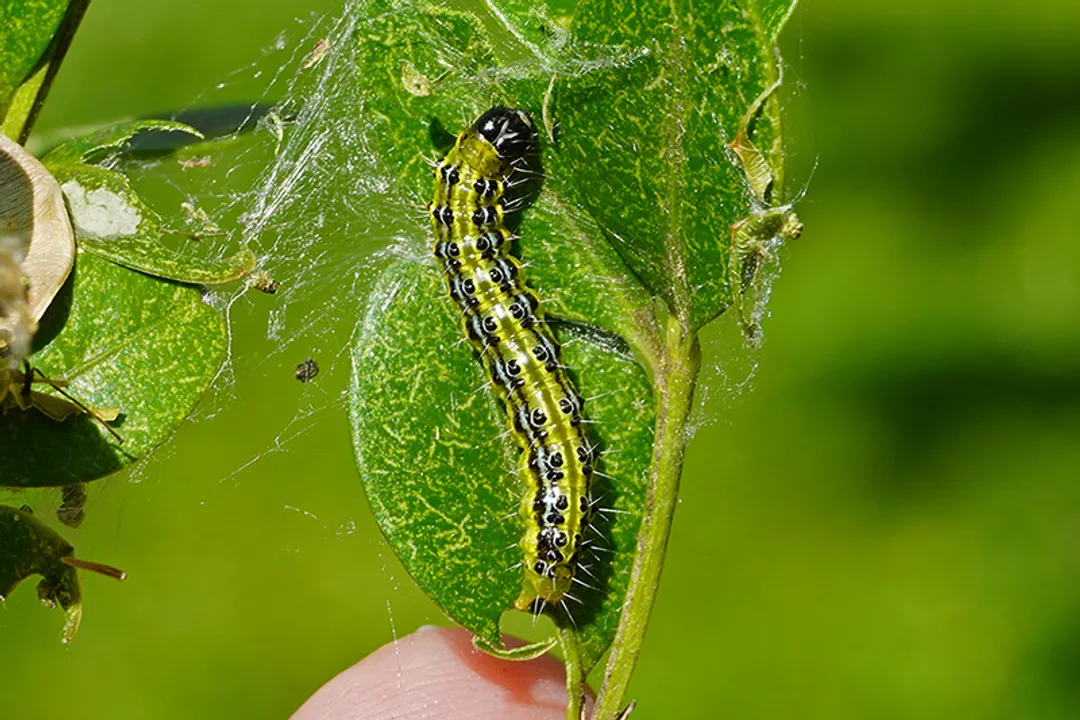
Before resorting to chemical treatments, or as a means of managing smaller infestations, direct physical removal often proves to be the most immediate and least environmentally broad-spectrum method to kill the target pests. [7][8]
# Handpicking Caterpillars
For the home gardener or in smaller landscape settings, inspecting boxwoods thoroughly and physically removing the caterpillars is highly effective. [7] This method works best when populations are detected early, before the pests have retreated deep into the dense shrubbery. [3][7] You can place the collected larvae into a sealed bag or a bucket of soapy water to ensure they are destroyed. [7] Consistent scouting allows for repeated removal as new generations emerge throughout the season. [3]
# Trapping Adults
Monitoring and trapping adult moths can serve a dual purpose: reducing the flying population and providing an early warning system for population buildup. [6] Specific pheromone traps designed for the box tree moth are available. [2][6] While a single trap may not eliminate an infestation, deploying multiple traps across a property can significantly reduce the number of females available to lay eggs. [6] If monitoring shows a high capture rate, it signals an immediate need to ramp up larval control measures. [1]
# Biological Factors
While management often focuses on human intervention, natural enemies can play a part in suppressing box tree moth populations over time, though their effectiveness alone against a new, invasive pest is often limited. [5]
# Natural Enemies
In their native regions, box tree moths are kept in check by a variety of predators and parasitoids. [5] However, in new environments, these natural enemies are often absent or have not yet adapted to the invasive pest. [5] Some generalist predators, such as certain species of birds or wasps, may consume the larvae, but relying on these organisms for complete control is usually insufficient when dealing with a rapidly spreading pest like Cydalima perspectalis. [5]
It is important to note a key difference: the box tree moth is a new invasive species, meaning the established local ecosystem has not yet developed strong, consistent checks against it, which is why human intervention via methods like registered pesticides or hand removal is frequently stressed by agricultural extension offices. [5][6] For example, a comparison between older, established pests and this newcomer often shows that the latter overwhelms local biological controls until specialized, co-evolved enemies are introduced or recruited. [4]
# Synthesis and Strategy
Effective management against the box tree moth involves integrating several of these lethal methods, often cycling between them as the moth progresses through its life cycle. [3] A successful strategy is one that prioritizes timing and thoroughness.
# Lifecycle Timing Insight
One critical factor often overlooked when planning control is the overlapping nature of generations, particularly in warmer climates. While treatments might kill the first wave of caterpillars, a second or even third generation can emerge shortly after if temperatures remain warm. [2][3] This means a single treatment is rarely enough; a follow-up application, timed approximately 4 to 6 weeks after the first, is frequently necessary to intercept the next cohort of emerging larvae. [1] If you observe active adult flight in late summer, anticipate needing another round of larval treatment in early fall.
# Monitoring Protocol Checklist
To ensure you are applying the correct "killer" at the correct time, a simple monitoring routine is invaluable:
- Scout Regularly: Inspect the interior and exterior of boxwoods weekly during the growing season. [3]
- Look for Signs: Search for telltale signs like webbing, chewed leaves, or dark fecal pellets (frass). [2][9]
- Confirm Life Stage: If caterpillars are found, determine their size. Small larvae (< 1/2 inch) are easiest to kill with almost any treatment, including Bt or handpicking. [7] Large larvae are harder to eradicate with less potent options. [7]
- Deploy Traps: Use pheromone traps to gauge adult moth activity and predict the next hatch. [6]
- Apply Targeted Control: Select the appropriate chemical or manual method based on life stage, scale of infestation, and local regulations. [1][3]
# Informed Application Tip
When applying foliar sprays, especially insecticides, consider that boxwood leaves can be dense and waxy. A helpful technique to maximize contact—and therefore efficacy—is to use a wetting agent or surfactant if the product label permits, or ensure the spray solution is agitated frequently to maintain the suspension of active ingredients. More importantly, on a calm, sunny day, angle the spray wand upwards to drive the solution into the lower canopy where many caterpillars hide and where eggs are often laid, ensuring you are treating the entire plant structure, not just the easily visible outer leaves. [10] This aggressive under-canopy treatment is often the difference between survival and defoliation when dealing with pests that prefer interior feeding sites.
In summary, what kills the box tree moth ranges from simple, diligent handpicking for small issues, to scientifically formulated insecticides targeting specific vulnerabilities in the larval stage, supported by trapping adults to curb future generations. [1][3][6] Success hinges on recognizing the pest early and applying the lethal measure appropriate for the life stage present. [7]
#Videos
How to prevent box tree moth damage in your garden this summer
Related Questions
#Citations
Insecticide Options for Box Tree Moth Management - Integrated Pest ...
Box Tree Moth: What Should You Do? - Ohioline
Box Tree Moth: Management Guide - Penn State Extension
How to treat boxwood box tree moth infestation? - Facebook
Box Tree Moth | Animal and Plant Health Inspection Service
[PDF] Insecticide Options for Box Tree Moth Management
Is there anything that really helps against the Box tree caterpillar ...
Box Tree Moth on Cape Cod: What Gardeners Need to Know
Box Tree Moth Alert: What Gardeners Need to Know – Gullo's ...
How to prevent box tree moth damage in your garden this summer