How rare is a box tree moth?
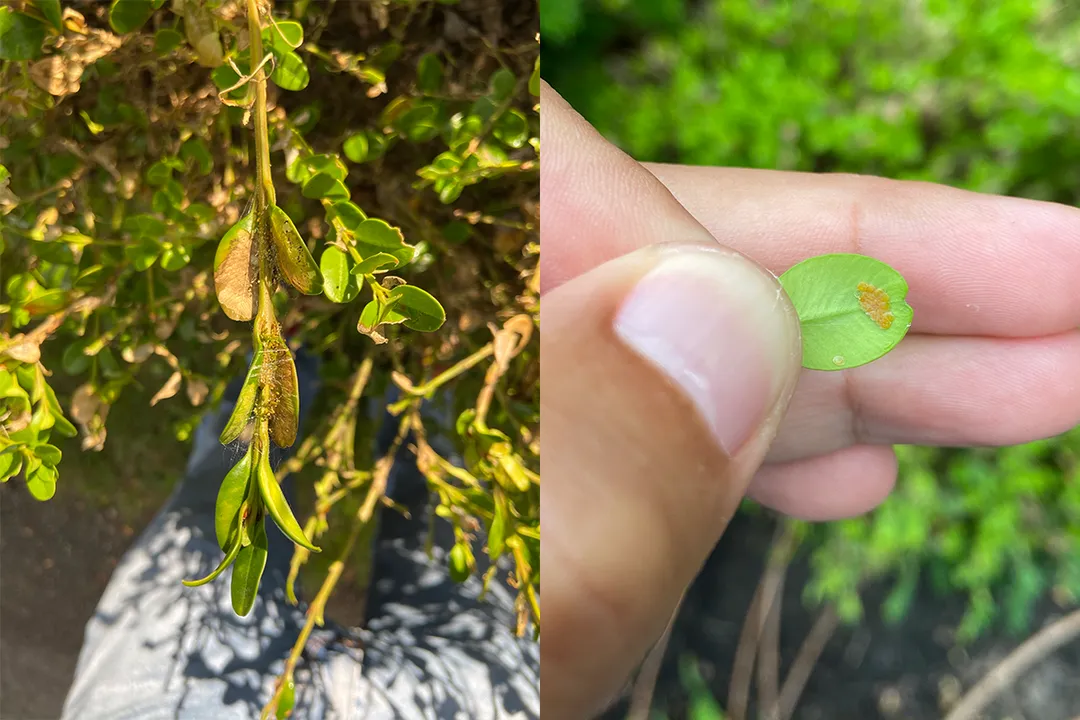
The question of how rare the box tree moth (Cydalima perspectalis) is depends entirely on where you are standing. For gardeners in its native East Asia, it is not rare, but rather a manageable part of the ecosystem, kept in check by native predators. In large swaths of Europe, the moth is unequivocally not rare; it is an established, spreading, and serious pest that has, in some areas, decimated boxwood plantings within a handful of years. However, within North America, the situation is defined by its status as a relatively new, federally regulated invasive species. Its confirmed presence is limited to specific states and counties, meaning that in the vast majority of the continent, it remains extremely rare—though this rarity is a fragile state constantly challenged by its arrival on nursery stock.
# Native Range Ecology
The box tree moth, scientifically known as Cydalima perspectalis, calls Eastern Asia home, encompassing regions like Japan, China, Korea, and India. In this native setting, the moth coexists with native boxwood species (Buxus spp.) that have evolved alongside it. This historical association likely means the Asian boxwoods possess defensive traits against the pest. Critically, the moth's presence in its homeland is not associated with the catastrophic damage seen elsewhere; natural regulation—through the action of local natural enemies like parasitoid wasps and flies—keeps populations from becoming overwhelmingly destructive.
# European Invasion History
The moth’s journey to becoming a widespread problem began when it was accidentally introduced to Europe, first recorded in Germany in 2006. From there, it spread with astonishing speed, reaching Switzerland and the Netherlands by 2007, and Great Britain by 2008. By late 2023, it had colonized much of Europe.
This rapid expansion across the continent can be attributed to a few key factors that create a perfect storm for an invasive insect. Firstly, unlike in North America, there are native, wild boxwood species across Europe. Once the moths were introduced, they found an abundant, unchecked food source not just in ornamental gardens but in natural wooded areas. These wild boxwood stands acted as pathways, allowing the moth to spread rapidly between urban centers where the plants were originally used in landscaping. Secondly, the moth arrived in Europe without its Asian natural enemies, a phenomenon known as "enemy release," allowing its populations to expand unchecked by the predators that contained them in their native range. This high level of infestation can lead to the complete defoliation and death of boxwood hedges and plantings, causing significant disfigurement to ornamental landscapes.
# North American Establishment
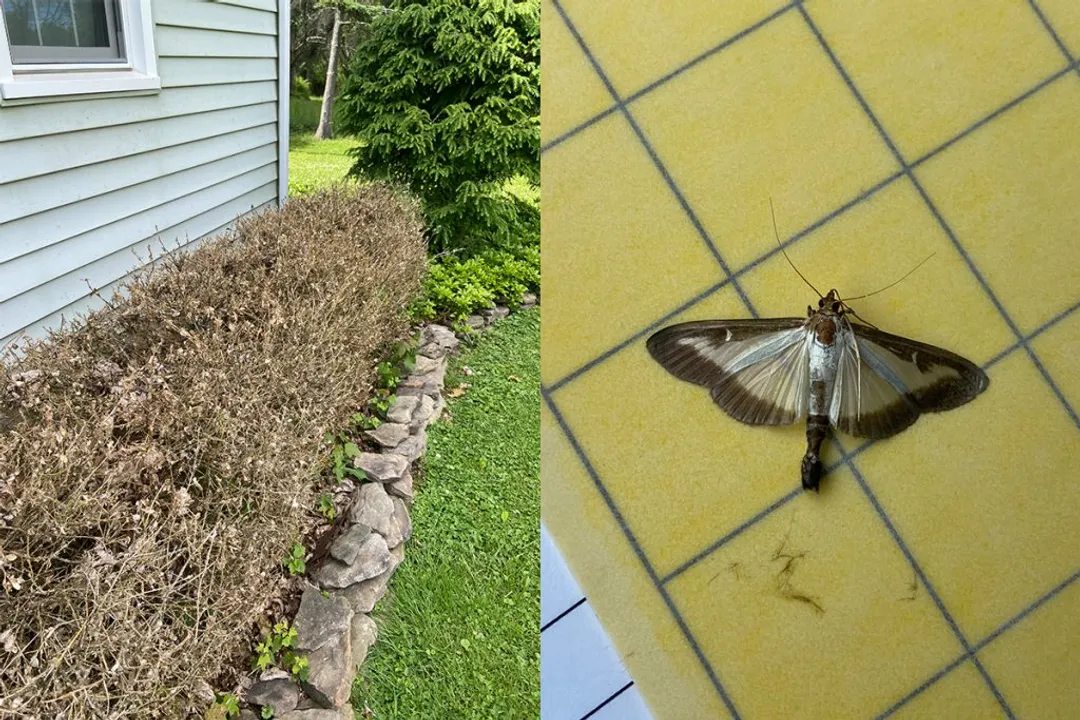
The arrival of Cydalima perspectalis in North America was traced to Canada, where it was first detected near Toronto in August 2018. The jump into the United States occurred in 2021, initially confirmed in New York State. Since then, the pest has been confirmed across several states, moving its status from an isolated curiosity to a serious regional threat. As of late 2023/early 2024 reports, confirmed detections span Delaware, Kentucky, Maryland, Massachusetts, Michigan, New York, Ohio, Pennsylvania, and West Virginia.
The dynamic of rarity in North America is fundamentally different from Europe, and this difference offers a small measure of hope for containment. There are no boxwood species native to continental North America, meaning the moth’s host plants are confined only to those that have been intentionally planted as ornamentals. Because these ornamental plantings are often clustered in urban and suburban settings, rather than being widely dispersed in rural woodlands as they are in parts of Europe, the moth’s pathway for massive, unchecked dispersal might be naturally segmented. This semi-isolated nature of the host plant can potentially enhance containment efforts, such as regulatory actions like quarantines imposed by federal and state agencies, which aim to slow down the rate at which the pest moves between major population centers.
One interesting consideration when tracking the moth's "rarity" across the US is recognizing that establishment likely begins with nursery trade, not just accidental long-distance flight. For instance, following the initial detection in New York, potentially infested plants shipped to retail locations in Michigan led to confirmations there later. This suggests that while the adult moths can fly several miles, the moth’s presence in a new, distant county often correlates more directly with the movement of infested boxwood material than with natural dispersal alone. Therefore, the moth’s rarity in a specific state or county is less about its overall national distribution and more about the stringency of inspection protocols at nurseries and garden centers that move plant stock across regulatory lines.
# The Exclusive Host
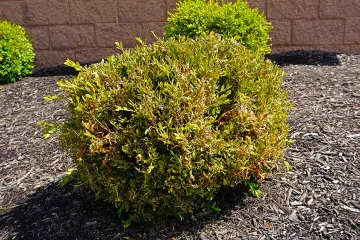
The entire concern surrounding this moth centers on its highly restricted diet. Box tree moth caterpillars feed exclusively on boxwoods (Buxus species). Boxwood is beloved in North America for its dense, evergreen foliage, deer resistance, and suitability for shaping into formal hedges and topiary. It is one of the highest-selling evergreen shrubs in the US nursery trade, with a significant market value in states like Ohio alone estimated in the hundreds of millions for inventory. Because this plant has historically suffered from few serious pests, the arrival of the box tree moth—a potential "boxwood killer" that can cause over 95% decline in stands in less than eight years where left unchecked—represents a major shift in landscape management challenges.
# Visual Identification
Determining whether the box tree moth is rare or established in your neighborhood requires knowing what signs to look for, as the adult moths are often nocturnal and difficult to spot. The damage progresses through the moth's life stages:
# Caterpillar Signs
The larvae are the primary agents of destruction. They go through several instars, starting small and growing larger and more destructive.
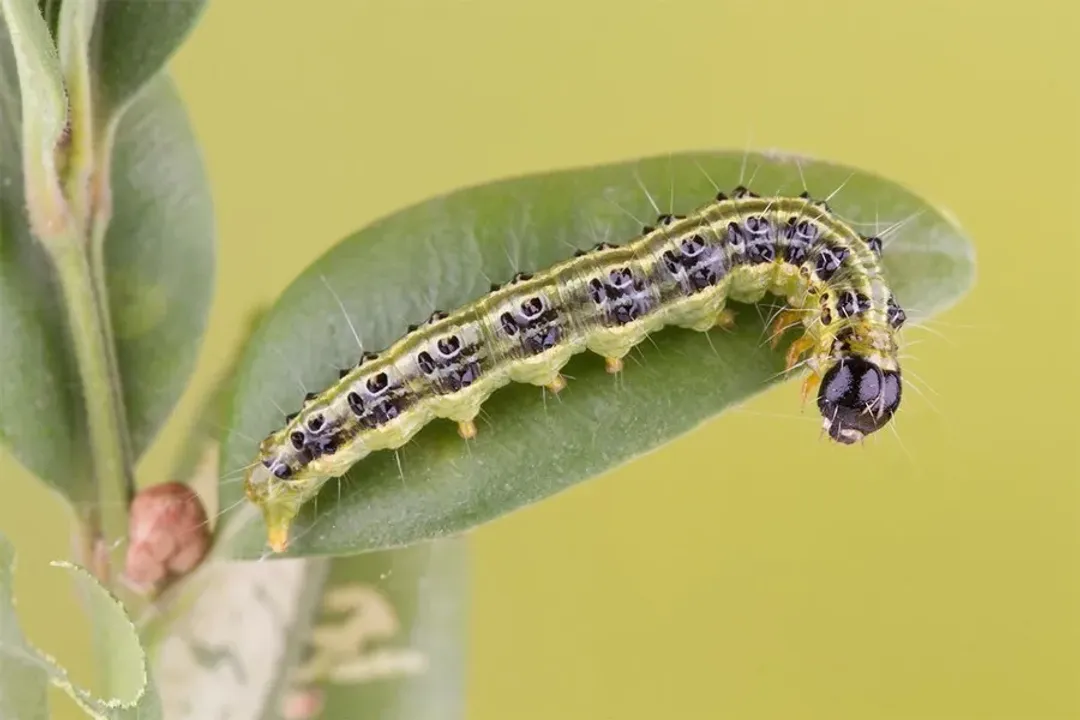
- Appearance: Caterpillars are easily recognized by their distinctive coloring: lime-green to yellow bodies featuring black, white, and yellow longitudinal stripes, along with black spots.
- Feeding Damage: Young caterpillars feed on the underside of leaves, leaving them looking "peeled" from above, with only the midrib remaining. Older, larger caterpillars consume the leaves entirely.
- Webbing and Frass: A telltale sign is the presence of silken webbing, where caterpillars hide and construct retreats, often webbing together foliage or damaged leaves. Another key indicator is frass, which appears as small, green or brown, sawdust-like pellets on the foliage or ground beneath the plant.
# Adult Moths
Adult moths are strong fliers, capable of dispersing 4–6 miles, but their activity is mostly nocturnal.
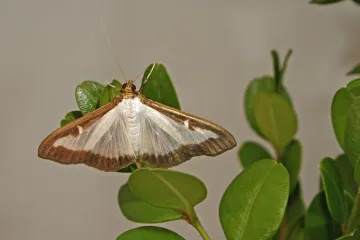
- Coloration: Most adults observed are white with a distinct brown border around the wing edges. A minority, perhaps 5–10%, exhibit a melanic (darker) phase, being almost entirely light brown but featuring small white spots on the forewings.
- Confusion: The common white morph can be superficially confused with the melon worm moth in the southeastern US, but the box tree moth has distinctive white commas on its forewings and a white prothorax interrupting the brown border.
# Life Cycle Complexity
The moth's potential to spread and cause damage quickly is tied to its life cycle variability, which shifts depending on latitude and local climate. In warmer areas, there can be up to five generations per year, while in cooler regions, two or three generations are more common. They begin the season by overwintering as late-stage larvae (instars 2 through 5) in a state of physiological deep sleep called diapause, sometimes surviving temperatures as low as -22°F (-30°C).
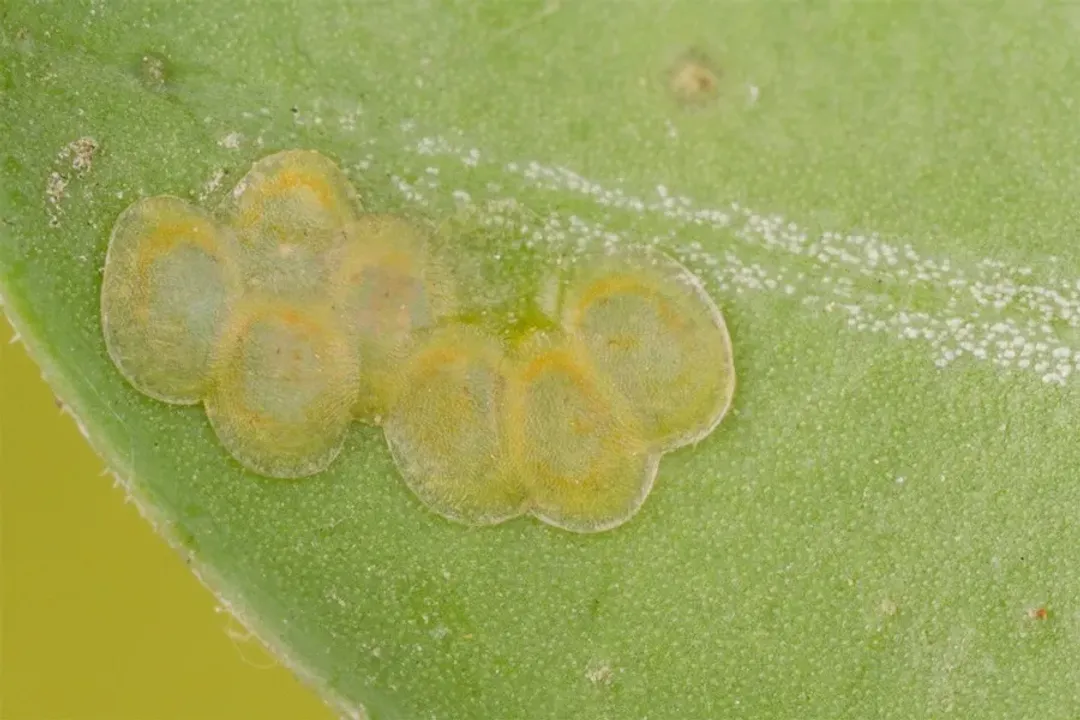
A particularly interesting aspect of their life cycle, especially in temperate zones, is the "split generation". Eggs laid in the fall hatch into small caterpillars that feed slightly before entering diapause for the winter, resuming heavy feeding in the spring after emerging from their protective silken "hibernaculum". This early spring feeding by overwintered larvae means that damage can begin before many gardeners start their seasonal inspections, making early detection challenging. For example, in Pennsylvania, feeding resumes in early to mid-spring after the caterpillars break diapause, which occurs when day lengths trigger the cycle again.
# Management and Regulatory Zones
Because the box tree moth is federally regulated in the US, surveillance and response protocols are critical to managing its distribution. Agencies like the USDA APHIS work with state departments of agriculture to restrict the movement of boxwood nursery stock from known infested areas, establishing quarantines in affected counties in states like Michigan and Ohio.
For the homeowner or manager facing a confirmed sighting, the immediate response is crucial for keeping the moth "rare" in surrounding, uninfested properties.
- Monitor and Report: Regular inspection of the interior foliage is necessary, and any confirmed or suspected sightings should be reported immediately to state agricultural departments or local Extension offices.
- Small Infestations: Hand-picking caterpillars and disposing of them in soapy water can be effective for small populations. Knocking small larvae off with a strong jet of water is also suggested, as they struggle to climb back up the plant before starving.
- Chemical Control: Insecticides like Bacillus thuringiensis (Bt) or Spinosad are effective, especially against young caterpillars, though complete coverage is difficult due to the caterpillars feeding inside the dense foliage and webbing. Professional application is often recommended for thorough coverage.
If a plant is too heavily damaged, removal and destruction—by chipping or sealing in plastic bags to be left in the sun—is advised to prevent spreading the pest. If replanting is necessary, selecting alternatives like Inkberry holly or Japanese holly can future-proof the landscape against this specific threat.
Ultimately, the perceived rarity of the box tree moth outside of designated quarantine zones is a direct measure of the success of regulatory efforts and, perhaps more importantly, the diligence of the public. The true measure of its current "rarity" in any given non-quarantined county is the vigilance of local garden centers ensuring certified stock and the awareness of homeowners checking their hedges before the moths have a chance to establish multiple breeding generations. The transition from rare to established can happen astonishingly fast when boxwoods are abundant and inspection is lacking.
Related Questions
#Citations
Box-tree moth | Butterfly Conservation
Box Tree Moth - Cornell CALS
Cydalima perspectalis - Wikipedia
Box Tree Moth on Cape Cod: What Gardeners Need to Know
Box Tree Moth: Range and Spread - Ohioline
Box Tree Moth | Animal and Plant Health Inspection Service
Box Tree Moth - Penn State Extension
Invasive pest devastating popular landscaping shrub arrives in ...
Box Tree Moth | National Invasive Species Information Center