What is very special about the kangaroo mouse?
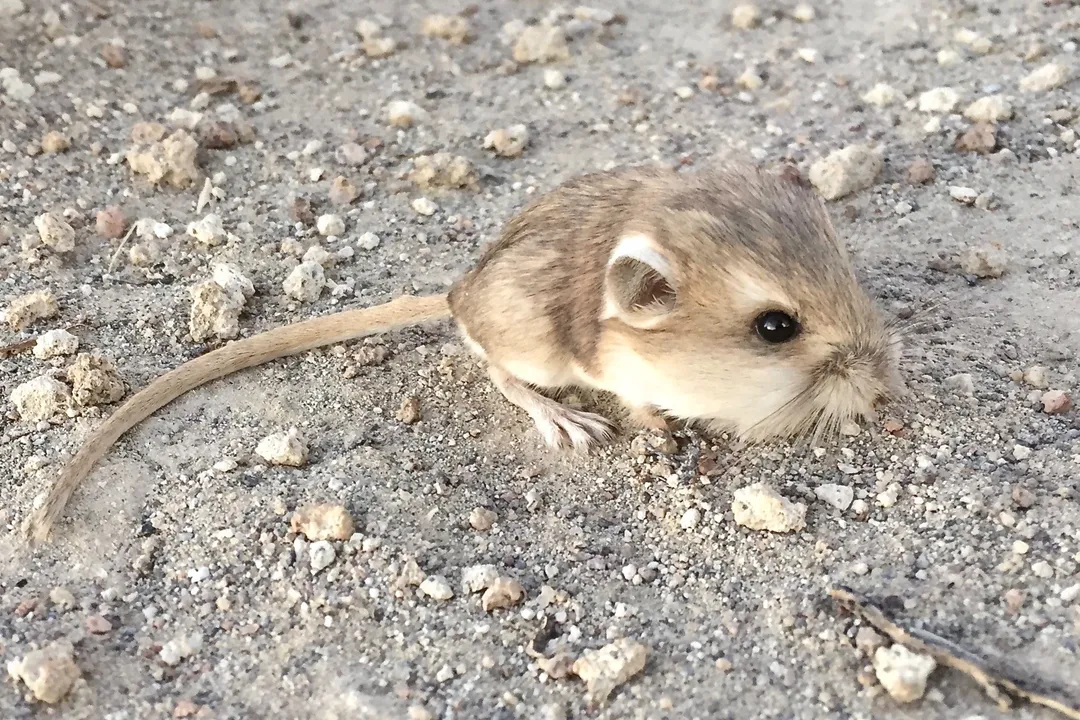
The kangaroo mouse, belonging to the genus Microdipodops, captures attention immediately because its method of movement defies expectations for a creature barely larger than a typical house mouse. These small rodents are famous residents of the arid landscapes of the American West, distinguished by adaptations that allow them to thrive where other mammals might perish from dehydration. Their very name hints at their most obvious peculiarity: a hopping gait that mimics that of much larger marsupials, a behavioral trait born from necessity in their open, desert environment.
# Bipedal Motion
The physical structure of the kangaroo mouse is optimized for this bounding motion. They possess disproportionately long hind legs and correspondingly short forelimbs, a morphology that makes them look somewhat comically unbalanced when viewed resting or moving slowly. When moving slowly, they may use all four limbs, but when covering distance or escaping predators, they switch to hopping exclusively. This bipedal locomotion is remarkably energy-efficient for traveling across the terrain they inhabit. In this regard, they share an evolutionary pathway with creatures like the jerboa, another small desert rodent known for its powerful hind legs and hopping technique. The tail, which is relatively long compared to the body, acts as a crucial counterbalance during these high-speed leaps, ensuring stability and control.
# Thirstless Survival
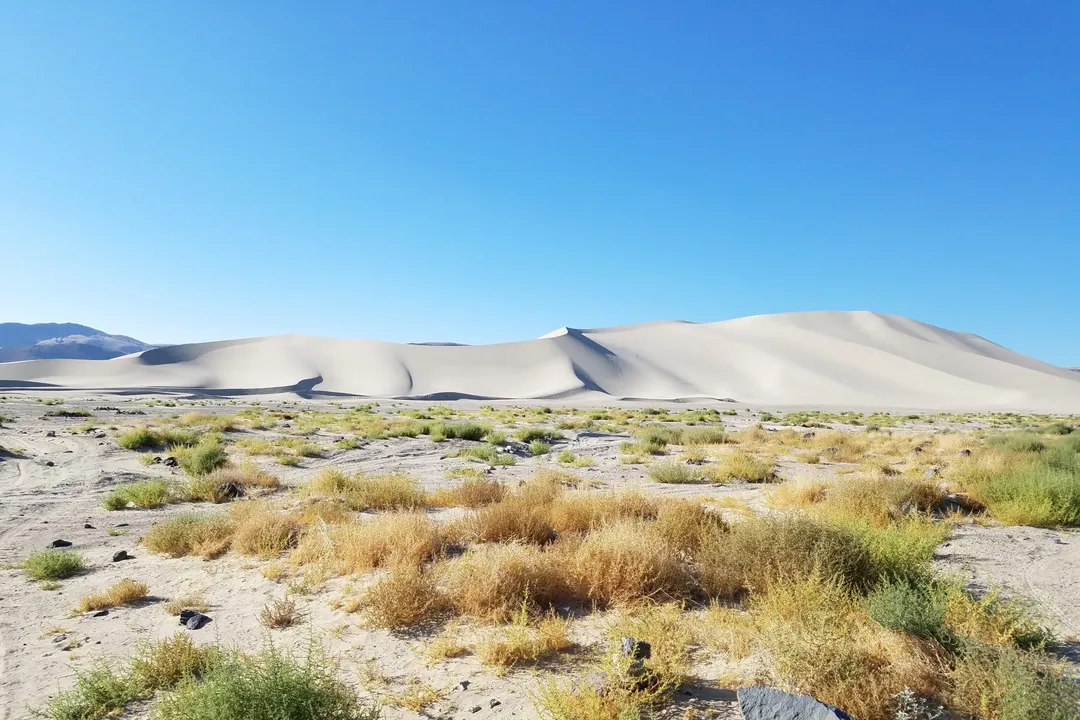
Perhaps the most extraordinary specialization possessed by the kangaroo mouse is its near-total independence from liquid water. These animals can subsist entirely on the moisture they derive from the seeds they consume. This adaptation is critical for survival in the extremely dry environments of the Great Basin and other Western deserts where standing water is rare or nonexistent.
Their efficiency hinges on highly developed physiological mechanisms. They possess exceptionally concentrated urine, meaning their kidneys are expert at retaining necessary water while excreting waste products with minimal fluid loss. Furthermore, the metabolic breakdown of dry seeds releases water as a byproduct—this metabolic water is enough to sustain their basic bodily functions. To make the most of this scarce resource, they are strictly nocturnal, avoiding the extreme evaporative heat loss that would occur during daytime activity. This reliance on metabolic water underscores a fundamental link between their specialized diet and their ability to colonize some of the harshest terrestrial habitats.
It is fascinating to consider the energy budget required for such conservation. While a quadrupedal mammal might need to travel further to find both food and water, the kangaroo mouse concentrates its entire hydrological strategy around a single food source. This trade-off means that the availability of their preferred, lipid- and carbohydrate-rich seeds directly dictates both their energy intake and their water intake, creating a finely tuned, self-contained survival loop in an environment where external resources are unpredictable.
# Species Variation
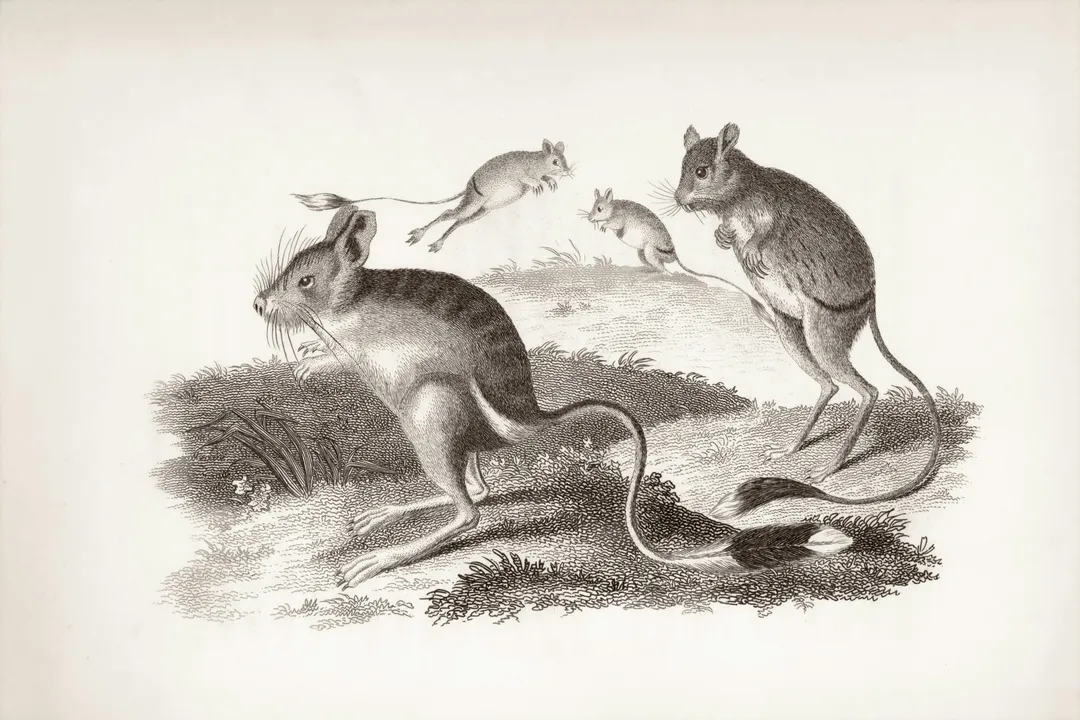
The genus Microdipodops actually encompasses two recognized species, each occupying slightly different ecological niches within the Western United States.
The Dark Kangaroo Mouse (Microdipodops megacephalus) is commonly associated with the alkali flats and sagebrush habitats of the Great Basin region. They are known to prefer substrates with a higher clay or loam content rather than pure sand.
In contrast, the Pale Kangaroo Mouse (Microdipodops pallidus) has a more restricted range, often found in the sandier, more open areas of Nevada. Their coloration tends to be lighter, offering better camouflage against the pale, sandy soils where they often burrow.
While both species share the core characteristics—nocturnal habits, seed diet, and bipedal movement—the subtle differences in preferred soil composition highlight a sensitivity to microhabitat variations within the desert ecosystem. For instance, the Dark Kangaroo Mouse seems adapted to areas where sagebrush can anchor the soil, whereas the Pale Kangaroo Mouse appears more specialized for dune or sand field environments.
# Night Activity
As is typical for many desert specialists, the kangaroo mouse is intensely nocturnal. Their large, dark eyes are an immediate visual cue to their nighttime existence, enabling them to navigate the dark expanses and spot predators or suitable food caches. They spend the daylight hours safely sequestered in underground burrows, which provide a stable, cooler microclimate insulated from the extreme surface temperatures of the day.
These burrows are intricate, often featuring multiple entrances and chambers for resting and food storage. This underground existence minimizes water loss through respiration and sweating when the sun is highest and the humidity is lowest. When foraging, they are generally solitary, relying on their excellent hearing and eyesight to locate seeds, which they often transport back to their burrows in cheek pouches for later consumption.
# Managing Seed Stores
Their survival hinges on effective foraging and long-term food management. Kangaroo mice collect seeds, which serve as both their energy source and their water source. Given the boom-and-bust cycles inherent to desert seed production, the ability to accurately cache and retrieve these stores is paramount. They are not just casual foragers; they are dedicated gatherers, ensuring a steady supply through periods of scarcity.
This reliance on stored seeds, rather than constantly hunting for fresh forage, is an excellent example of energy conservation in a high-stress environment. If a local area experiences a prolonged drought, the resulting lack of seed production would immediately threaten the population, as their entire physiological structure—from kidney function to their very need for metabolic water—is locked into this granivorous lifestyle. This ecological dependency means that even small-scale ground disturbances, such as agricultural conversion or off-road vehicle use, can disrupt the critical seed base, proving far more damaging than just paving over a nesting site.
# Comparative Traits
While the kangaroo mouse is often compared to the jerboa due to their shared hopping style, it is important to remember they belong to entirely different families and evolved on different continents. The jerboa is found in Afro-Eurasian deserts, while the kangaroo mouse is endemic to North America. Both represent classic examples of convergent evolution—where similar environmental pressures lead to similar physical solutions, even in distantly related animals. The jerboa's hind limbs are often even more exaggerated, and some species exhibit even more extreme water conservation traits, but the Microdipodops genus occupies a similar specialized niche in its own corner of the world.

# Sensory World
The kangaroo mouse perceives its world through highly developed senses tuned for darkness and subtle ground vibrations. Their hearing is acute, helping them detect predators or the rustling movements of other animals or seeds. Their large eyes, as mentioned, grant superior night vision, allowing them to navigate the moonlit desert landscape effectively. This reliance on sound and sight at night contrasts with other desert burrowers that might rely more heavily on tactile senses or olfaction while above ground. Their entire existence is a calibrated response to the dangers and opportunities presented only after the sun sets.
# Conservation Status
While they are highly adapted to their specific environment, the localized ranges and specialized needs of the kangaroo mice make them sensitive indicators of environmental health. Monitoring the populations of both M. pallidus and M. megacephalus provides scientists with valuable data on the stability of the delicate sagebrush and alkali flat ecosystems they call home. Their success is directly tied to the undisturbed presence of the right types of seeds and soil structure in their limited territory.
Related Questions
#Citations
Microdipodops pallidus (pale kangaroo mouse) - Animal Diversity Web
Dark Kangaroo Mouse - Nevada Department of Wildlife
Kangaroo mouse | Adaptations, Habitat & Diet - Britannica
The Kangaroo Mouse (genus Microdipodops) are native to ... - Reddit
Kangaroo Mouse Facts & Photos | Wowzerful
Kangaroo mouse Facts for Kids
The Nighttime Kangaroo Mouse: Fascinating Facts About the Jerboa
Baby jerboa desert kangaroo mouse facts - Facebook
Microdipodops megacephalus - NatureServe Explorer