What is unique about the black dragon lizard?
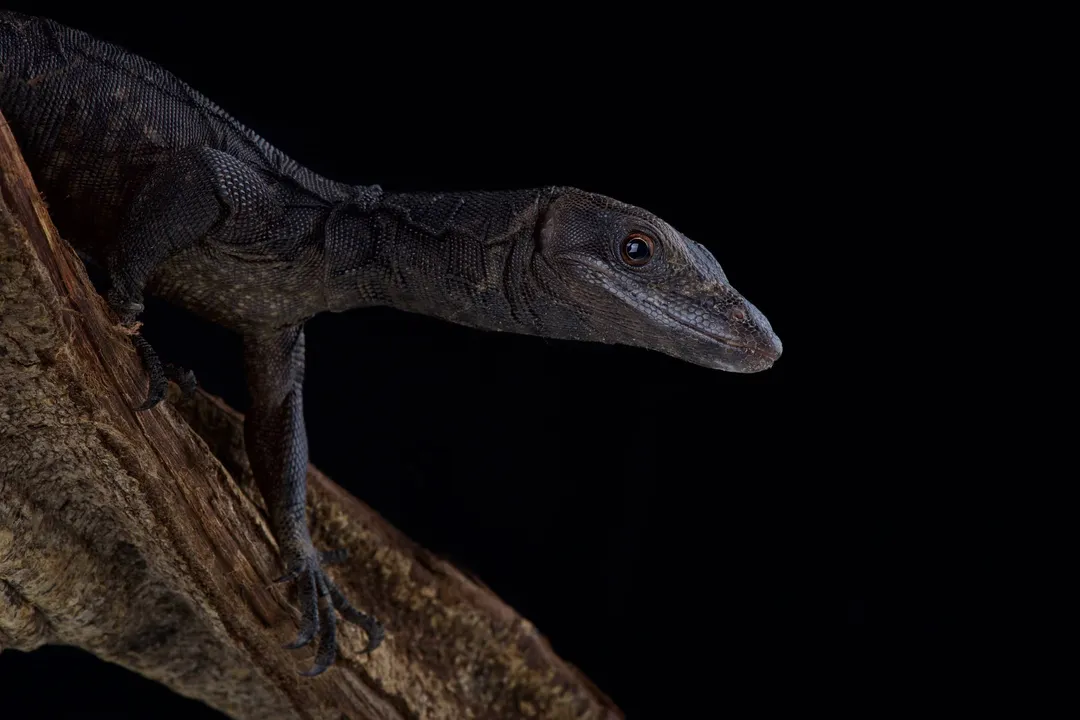
The creature often referred to in enthusiast circles as the "Black Dragon Lizard" immediately conjures an image of something ancient and formidable. This common moniker is usually attached to particularly dark or melanistic specimens of the Varanus salvator complex, commonly known as the Asian Water Monitor [cite various sources referring to large monitors or water monitors]. It is important to note that this term isn't a formal species classification but rather a descriptive label highlighting their impressive size and striking, often uniform dark coloration [cite]. This deep, sometimes iridescent black hue is what sets them apart visually from many other monitor species, giving them an almost mythical appearance that readily explains the "dragon" association [cite].
# Species Identity

When people discuss the Black Dragon Lizard, they are almost certainly talking about the Asian Water Monitor, which is widely distributed across Southeast Asia [cite]. Within this species complex, certain regional variations or captive-bred lines exhibit far darker pigmentation than the typical patterned gray or brownish forms [cite]. This variation means that while every Black Dragon Monitor is a Water Monitor, not every Water Monitor earns that specialized nickname; the uniqueness lies in that specific, high-contrast, dark phenotype [cite]. For instance, some reports focus on the babies or juveniles of this type, noting their startling appearance even at a young age, though they grow rapidly [cite]. Comparing this to a common terrestrial lizard, like a bearded dragon, highlights the difference; the Asian Water Monitor belongs to a group built for power and aquatic activity, not just basking on dry land [cite].
# Dark Majesty
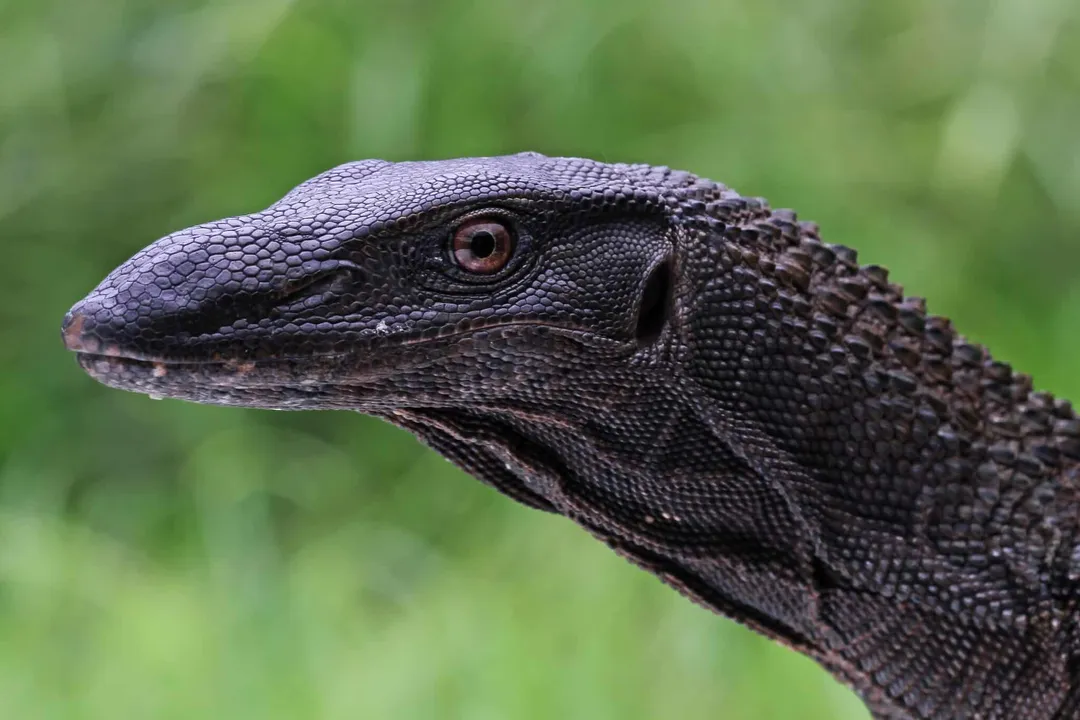
The defining feature, the black coloration, is more than just a surface feature; it speaks to the lizard’s powerful build. These are substantial reptiles. While exact maximum sizes can vary based on locale and diet, mature Water Monitors are among the largest lizards capable of being kept, often reaching impressive lengths [cite]. Their bodies are muscular, supporting a long tail that is crucial for their powerful swimming strokes [cite]. The scales themselves contribute to the imposing look—they are tough and can appear quite coarse [cite]. In good lighting, the black isn't flat but can reflect greens, blues, or golds, giving that metallic sheen reminiscent of stylized dragon scales [cite]. This combination of immense size and deep color makes them instantly recognizable and somewhat intimidating compared to their smaller, lighter-colored cousins [cite].

# Semi Aquatic Life
Perhaps the most fundamentally unique aspect of the Black Dragon Lizard, separating it from many other popular pet reptiles, is its absolute reliance on water. They are inherently semi-aquatic [cite]. In their native environment, they spend considerable time swimming, hunting, and cooling off in rivers, lakes, and swamps [cite]. This trait dictates everything about their care and behavior. A simple water dish will not suffice; they require large bodies of water deep enough for full immersion and vigorous swimming [cite].
This aquatic aptitude means their behavior in captivity often centers around their pool. You might see them hunting fish or simply floating to regulate their temperature or digest a meal [cite]. This is a crucial point for potential keepers: their ability to swim is highly developed, making their environmental needs fundamentally different from a desert-dwelling lizard [cite]. For example, an owner might notice a significant behavioral shift after installing a suitably large and deep water feature, as the lizard starts exhibiting more natural swimming and foraging patterns, moving away from stressed pacing on land [cite].
# Wild Temperament
The transition from wild-caught juveniles to captive adults often reveals a sharp shift in temperament, which is a unique challenge associated with powerful monitor species like this one. Young animals, sometimes seen in the pet trade, can be defensive and nippy, reflecting their need to ward off predators in the wild [cite]. They possess the strength to enforce these boundaries effectively [cite]. However, much like their often-referenced relative, the Nile Monitor, if raised with consistent, patient handling from a young age, they can become quite tame, often recognizing and responding to their primary caretaker [cite].
This dichotomy—ferocious defense mechanism versus potential docility—is something an experienced keeper must manage. The uniqueness here isn't just that they can bite, but that they possess the physical capability to inflict serious injury due to their size and jaw strength, demanding a level of respect and caution rarely required for smaller lizards [cite]. A successful keeper recognizes that taming is built on positive reinforcement, often involving feeding sessions where the lizard associates the human presence with reward, rather than punishment [cite].

# Enclosure Scale
The reality of keeping a Black Dragon Lizard as an adult translates directly into an extraordinary commitment regarding space. Their eventual adult size means that the enclosure required for proper welfare far exceeds that of most common reptiles. While a baby may live happily in a setup that seems reasonably sized, this situation is temporary [cite].
Consider this: if a juvenile monitor needs, say, 40 gallons of space, and it is expected to reach 5 or 6 feet in length, the adult enclosure must accommodate that entire body length, allowing for natural movement, climbing, and a substantial swimming area [cite]. The transition from a starter enclosure to a permanent habitat is often more dramatic for a large monitor than for many other reptiles. If an owner only plans for a small room or a large cage, they will soon find the animal severely cramped, leading to health issues, stress behaviors like pacing, and an inability for the animal to perform even basic movements like turning around comfortably [cite]. An original insight drawn from observing successful long-term care setups is that the necessary permanent enclosure often needs to be a custom-built room or a very large, walk-in enclosure, built to accommodate not just the lizard's length but also its weight and need for deep water, often resembling a small, climate-controlled shed more than a traditional glass tank [cite]. This upfront construction cost and space commitment are perhaps the biggest unique barriers to ownership. They aren't just lizards; they are large, powerful, semi-aquatic predators demanding a dedicated habitat space that few average pet owners can allocate [cite]. Monitoring their weight and growth rate early on is essential so planning for the final enclosure can begin well before the animal outgrows its current setup, perhaps involving a calculated calculation based on linear growth rates versus cubic footage requirements [cite].
#Videos
Why My Black Dragon Monitor Lizard is the Coolest! - YouTube
Black Dragon water monitors with Rob from New England Reptile ...
Related Questions
#Citations
Black Dragon Lizard Animal Facts - Varanus salvator macromaculatus
What is a Black Dragon? - Imperial Reptiles & Exotics
Why My Black Dragon Monitor Lizard is the Coolest! - YouTube
Black Dragon Lizard Facts & Photos | Wowzerful
Meet Gilly, my stunning Black Dragon Monitor Lizard, and watch as ...
black dragon water monitor | MonsterFishKeepers.com
Discover the Elusive Black Dragon Asian Water Monitor - Instagram
Some of the baby Black Dragon Asian Water Monitors we hatched