What is the appearance of a dragon lizard?
The very name "dragon lizard" conjures images of mythic beasts, scaled and powerful, but in the real world, this description most accurately fits the incredible Komodo dragon (Varanus komodoensis), the world's largest lizard. [1] When considering their appearance, it is their sheer scale that immediately commands attention. These reptiles can achieve truly colossal dimensions, leading to a powerful and intimidating presence in their native Indonesian island habitats. [3][4]
# Colossal Dimensions
The most striking physical characteristic of the Komodo dragon is its size. Adult males are generally larger than females, reaching lengths up to 10 feet (3 meters). [1][8] In terms of weight, these giants can weigh around 150 pounds (70 kilograms) or more, with some specimens reported to weigh up to 300 pounds in captivity. [1] A visual appreciation of this size is often captured in footage showing them alongside humans, emphasizing their bulk and making them look truly gigantic among lizards. [2][3][4] The sheer mass they carry is evident in their somewhat lumbering gait when on the move, a necessary trade-off for such a large terrestrial predator. [1]
# Scaly Armor

Examining a Komodo dragon up close reveals a dense, powerful covering. Their skin is not smooth; instead, it is covered in thousands of tiny, bead-like scales that feel rough and incredibly tough, almost like armor plating. [1] This dermal armor provides excellent protection in a predatory lifestyle. [8] Coloration is another key aspect of their appearance. They typically exhibit a muted palette, ranging from dull brown to gray. [1] However, the exact hue can vary based on factors like age and even their immediate environment, sometimes incorporating reddish or darker undertones. [8] Interestingly, younger dragons tend to be much more brightly colored, often displaying vivid patterns of yellow and green spots or bands, which helps them blend into the foliage where they spend more time hiding from larger adults. [1] As they mature, this vibrant camouflage fades into the adult's more uniform, earth-toned skin. [1]
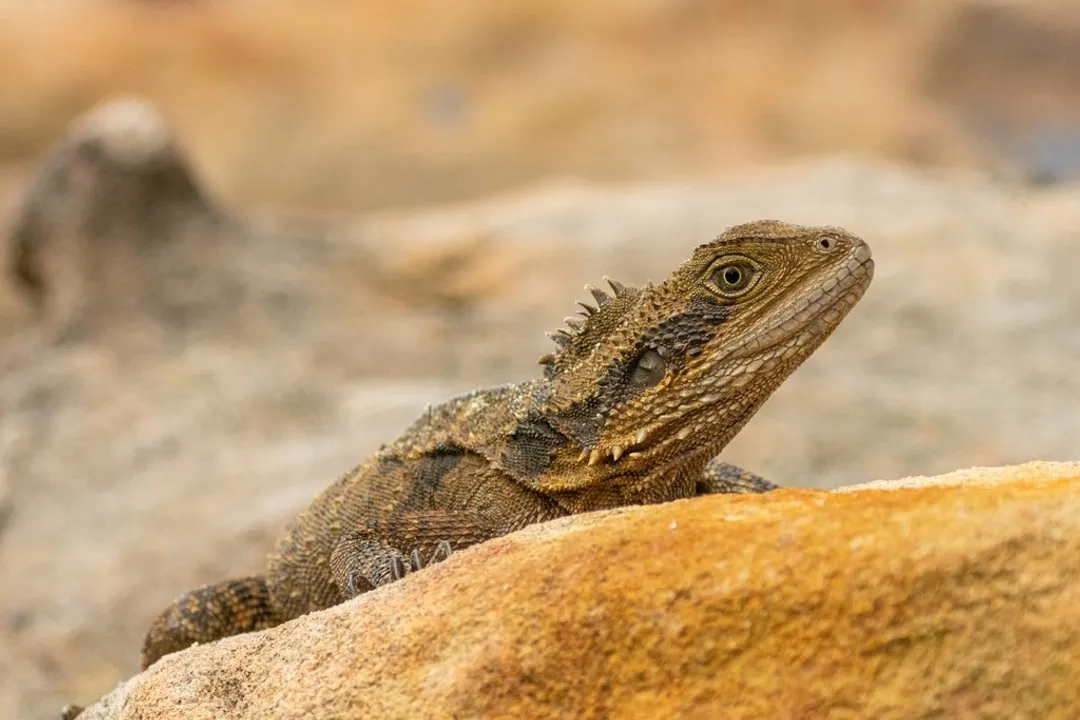
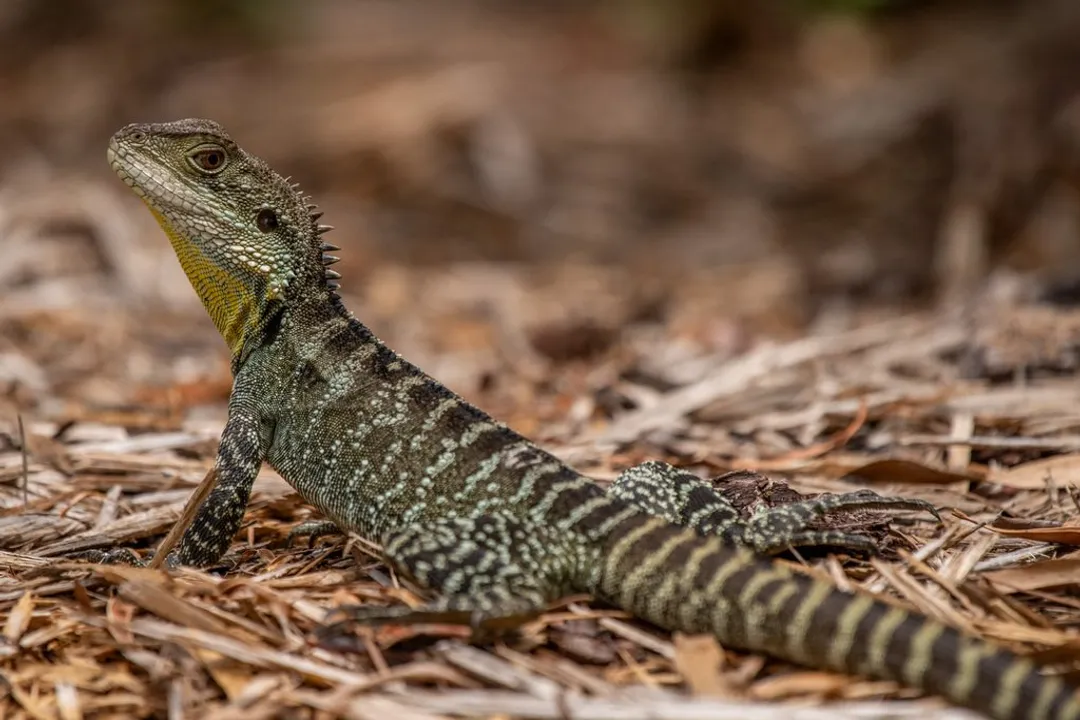
When observing videos of them, the heavy folds of skin, particularly around the neck and shoulders, contribute significantly to the perception of immense power, suggesting underlying musculature built for bursts of speed and grappling with prey. [4] Thinking about how this rough, irregular scaling differs from the smoother, sometimes iridescent skin of smaller lizards like the Australian Water Dragon, which is typically green or brown with lighter undersides, [5] really highlights the specialized, heavily fortified look of the Komodo. [5]
# Head Features
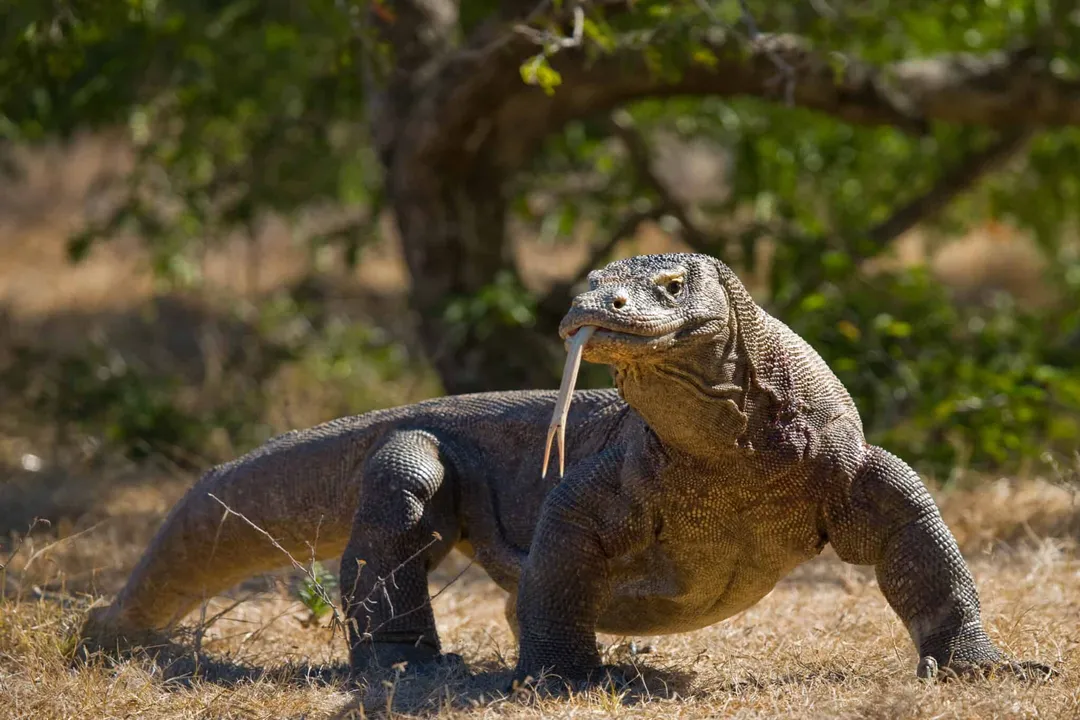
The head of the Komodo dragon is robust and broad, contributing to its menacing profile. [1] Their eyes are relatively small for their head size, but they possess good eyesight, especially for moving objects. [8] Perhaps the most famous feature related to their face is their forked, yellow tongue. [1][8] This tongue flicks constantly, sampling the air to detect scents, a critical tool for locating food. [8] The appearance of the mouth itself, when opened, is often described as fearsome, revealing rows of sharp, serrated teeth designed for tearing flesh. [1] Furthermore, many older Komodo dragons possess a noticeable dewlap—a flap of skin hanging from the throat area—which can look quite prominent when the animal is agitated or displaying dominance. [1]
# Variations in Form
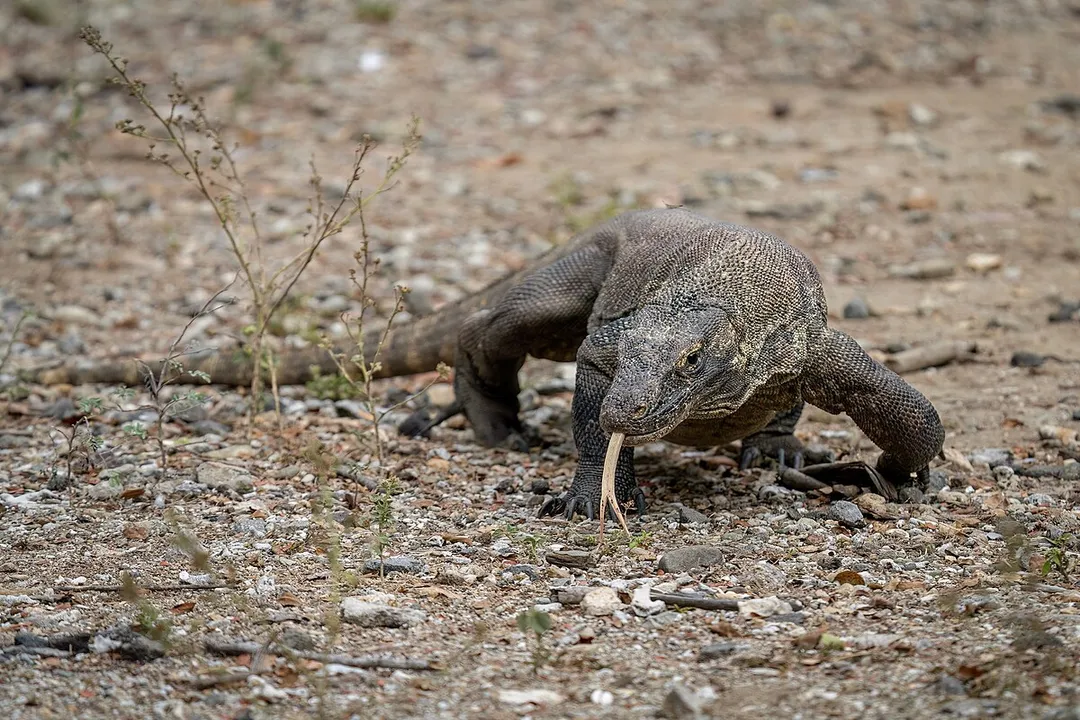
While the Komodo dragon is the undisputed giant, the term "dragon lizard" can sometimes be used more broadly for other reptiles that evoke a similar image, though they pale in comparison to the Varanid titan. [6] For instance, the Australian Water Dragon is a much smaller lizard, usually reaching lengths around 3 feet, and is known for its more slender build and brighter coloration, often featuring a distinct crest running down its back, which adds to its reptilian, almost miniature-dragon look. [5]
When considering the Komodo dragon's appearance, it is important to remember that bulk isn't static. A recent photograph of a Komodo dragon showed one appearing particularly slender yet alert, which provides a useful contrast to the often-portrayed image of the massive, somewhat sluggish giant. [9] This fluidity in appearance is likely linked to feeding cycles; an animal that has recently consumed a large meal will look significantly more distended and heavy than one that is fasting or between large kills. [8] This constant potential for visual change, depending on recent feeding activity, is a fascinating element of their appearance that isn't always captured in static images.
Here is a simple comparison to illustrate the visual difference between two commonly referenced 'dragons':
| Feature | Komodo Dragon (Varanus komodoensis) | Australian Water Dragon (Intellagama lesueurii) |
|---|---|---|
| Maximum Length | Up to 10 feet (3 meters) [1] | Up to 3 feet (1 meter) [5] |
| General Build | Extremely robust, heavy-bodied | Slender, agile |
| Skin Texture | Rough, armored scales [1] | Smoother appearance |
| Color Range | Dull brown to gray, sometimes reddish [8] | Green or brown with lighter undersides [5] |
| Distinctive Feature | Large dewlap, prominent tongue [1] | Dorsal crest [5] |
If you were to encounter one of these giants, the visual impact would be undeniable. It’s one thing to read that a lizard is ten feet long, but another entirely to see the sheer breadth of its torso and the thickness of its limbs supporting that weight. The visual impression of a large, heavy lizard moving across open ground is perhaps far more intimidating than a purely numerical understanding of its length suggests. [3][4] It’s the density of the animal that truly defines its appearance as a "dragon" among lizards.
# Subtle Visual Cues
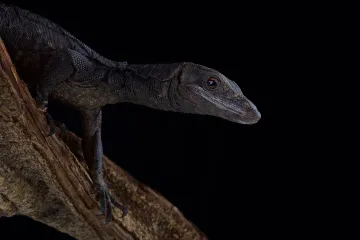
Beyond the obvious massive size, the appearance conveys specific information about the lizard's status and activity. The shape of the tail, for instance, is a thick, muscular appendage that makes up nearly half of its total body length, giving the animal a powerful, balanced silhouette necessary for sudden movement. [1] When observing the head, one might notice how the nostrils are positioned far forward, giving the snout a somewhat elongated appearance, which aids in scent tracking. [1] The dark, heavy eyelids often give the lizard a somewhat ancient or lethargic look, even when it is fully alert and surveying its surroundings. [8]
It's worth noting that the appearance of raw power is often exaggerated by the way they hold themselves. When moving, they drag their bellies somewhat close to the ground, but when standing to survey an area, they can prop themselves up on their strong legs, briefly adopting a more upright posture that showcases their impressive chest depth. [1] This momentary change in stance significantly alters the visual perception of their overall bulk and threat level. The sheer, uncompromising flatness of their large feet, designed for traction on uneven terrain, adds to the impression of a grounded, unstoppable creature. [1]
#Videos
Komodo Dragons Aren't Giants, They're Dwarfs! - YouTube
Related Questions
#Citations
Komodo dragon - Wikipedia
Meet the Bearded Dragon: A Lizard with Stylish Facial Scales!
Giant Komodo Dragons! The World's Largest Lizards - Facebook
Australian Water Dragon - The Australian Museum
9 Incredible Lizards That Look Like Dragons - A-Z Animals
Komodo dragon, facts and photos - National Geographic
DIFFERENCE BETWEEN MONITOR LIZARD AND KOMODO ...