What is unique about Harrier behavior?
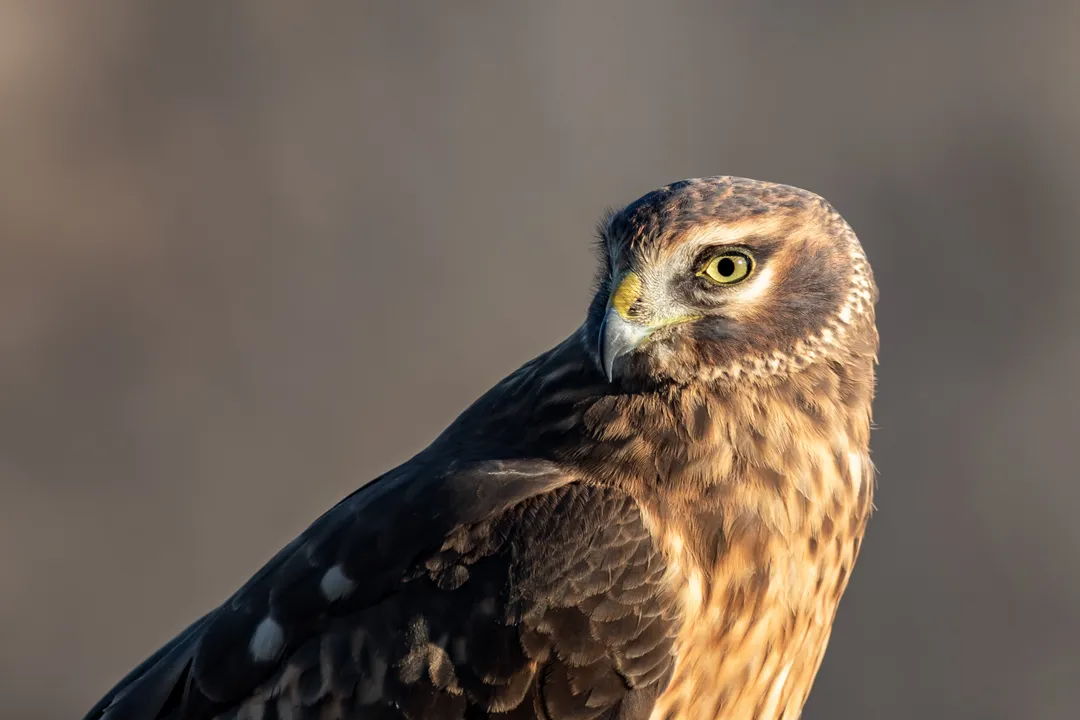
The term "Harrier" immediately brings two distinct creatures to mind: a centuries-old breed of dog developed for the hunt, and a graceful, low-flying bird of prey that patrols our open fields. While both share a name often tied to the concept of pursuit, their behaviors are separated by the evolutionary paths of canine and raptor. Understanding what makes each unique requires looking past the shared moniker into their specialized worldviews, whether navigating by scent through dense briar or scanning the marsh floor from above.
# Dog Temperament
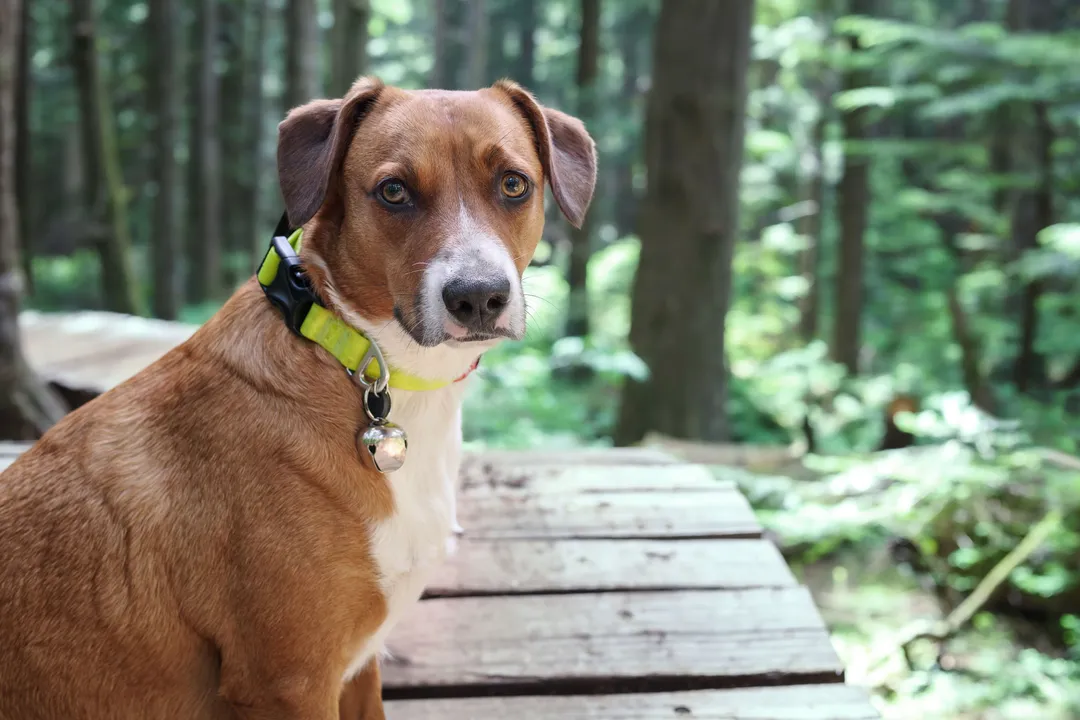
The Harrier dog is fundamentally a scent hound, sharing ancestry with the Beagle and the larger Foxhound. [8][3] This heritage dictates much of its unique behavioral patterning. They are generally known for being happy, easygoing, and affectionate companions. [1][7] This breed thrives on companionship and is often described as outgoing, rarely showing excessive shyness or aggression toward strangers. [1]
A hallmark of the Harrier's disposition is its sociability. They typically exhibit excellent behavior around children and often integrate well with other dogs. [1][5] This pack orientation is an essential trait for a breed historically used to hunt in relays, meaning they are seldom content being left entirely alone for long stretches. [7] A Harrier’s happiness is often directly linked to the presence of their family group, whether canine or human. [1]
However, their hunting instinct remains very much alive, which colors their daily behavior. As a true scent hound, when a Harrier picks up an interesting smell, their singular focus can become intense. [8] This devotion to scent can translate into a stubborn streak during training, as they may prioritize following an olfactory trail over heeding a command. [7] They possess a significant need for physical activity; their energetic nature requires more than just a quick trot around the block. [5] Without adequate outlets for their energy and drive, this latent hunting behavior can manifest in undesirable ways, such as excessive barking or digging. [1]
For owners, recognizing this drive is key. A Harrier is not just a friendly lap dog; it's an athlete with a specialized sensory system. Consider this: while a Beagle might pause to investigate a trail, the Harrier, built for endurance, might follow that scent for a considerable distance if given the chance. This is why secure fencing and consistent training that channels their energy, perhaps through scent games or organized tracking activities, is more effective than simply trying to suppress the instinct entirely. [7] They are happiest when their minds and bodies are engaged in activities that mirror their historical purpose, even in a modern context. [8]
# Bird Flight
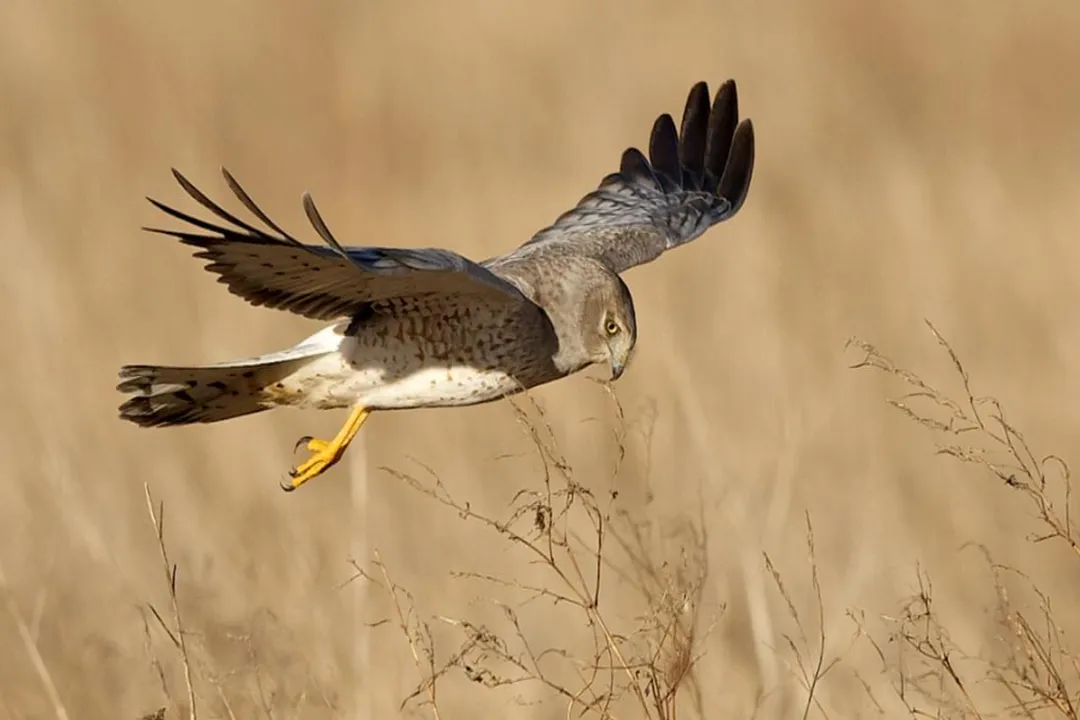
The Northern Harrier presents a stark behavioral contrast, defined entirely by its aerial prowess and hunting strategy. Its flight is perhaps its most recognizable and unique behavior among North American raptors. [2] Instead of soaring high like many other hawks, the Harrier patrols or cruises close to the ground, typically only 10 to 30 feet up. [4]
This low flight is often described as erratic, buoyant, or buoyant, almost a low, buoyant rocking motion. [2][9] This method allows the bird to take maximum advantage of the terrain—marsh, field, or open grassland—allowing it to flush out small prey like voles, mice, or young birds hiding in dense vegetation. [4] The bird appears to be systematically quartering the ground, moving in an organized search pattern rather than simply waiting on a perch. [9]
One of the most fascinating aspects linking the bird's behavior to its anatomy is the facial disc. [2] Like an owl, the Northern Harrier possesses stiff feathers surrounding its face that form a concave structure, directing sound waves toward its ears. [4] This adaptation is highly unusual for a diurnal raptor. When combined with its signature low flight, this keen sense of hearing allows the Harrier to locate prey hidden beneath grass or snow, effectively hunting by sound as much as by sight, especially in poor visibility or dense cover. [2][9] This dual sensory hunting mechanism sets it apart from many other hawks whose success relies almost entirely on sharp eyesight from elevated positions. [4]
# Plumage Distinction
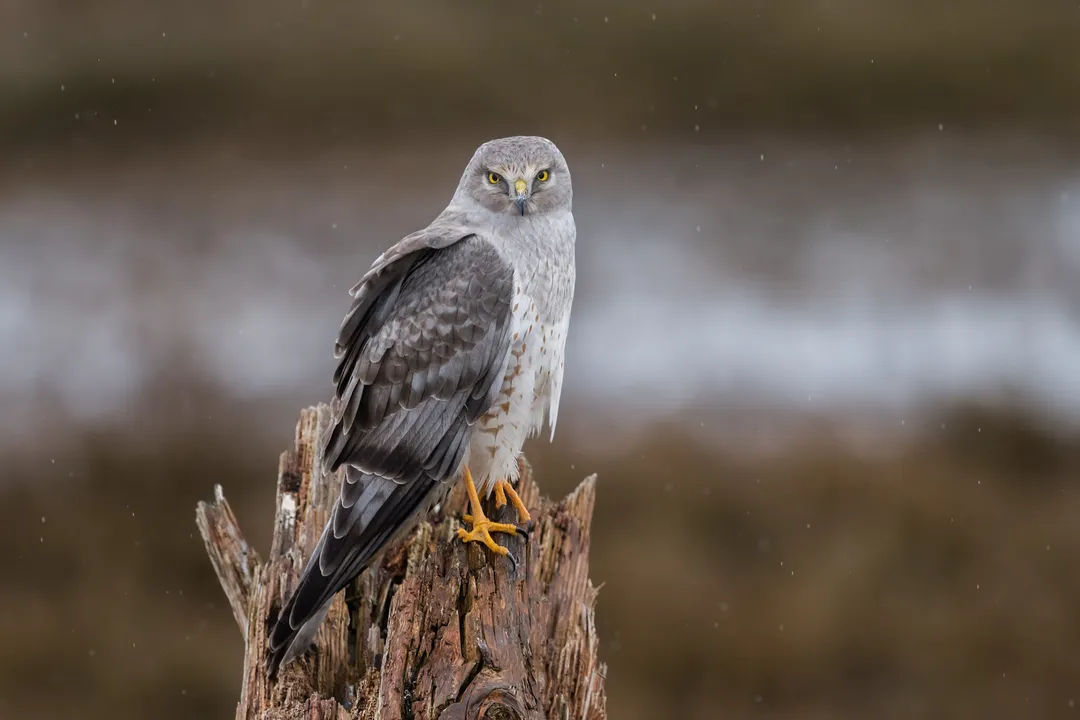
The visible behavior is further complicated by marked sexual dimorphism, a striking difference between males and females. This affects how the two sexes might be observed, though their core hunting techniques remain the same. [2] Adult males are pale gray and often earn the evocative nickname "Gray Ghost" as they float silently over the reeds. [2] Females, conversely, are a rich, dark brown above and lighter below, often showing white patches on their rump, making them look substantially different from their mates. [2] If you are observing a Harrier in the field, recognizing this visual difference is crucial for accurate identification and understanding the pair dynamics, even though both sexes employ the same low-hunting flight pattern. [2][6]
# Hunting Niches
When we place the behaviors side-by-side, the specialization becomes clear. The Harrier dog is a pursuit predator in a social context, driven by the nose and motivated by the pack. [8] Its behavioral focus is on ground-level scent tracking and endurance.
The Northern Harrier is an ambush predator in an aerial context, driven by both sight and sound, and is generally solitary outside of the breeding season. [9][6] Its unique behavior is mastering the air currents just above the vegetation to surprise ground-dwelling prey. [4]
| Feature | Harrier (Dog) | Northern Harrier (Bird) |
|---|---|---|
| Primary Sense | Olfaction (Scent) [8] | Sight and Hearing (Facial Disc) [2][4] |
| Primary Movement | Ground-based running/tracking [3] | Low, buoyant aerial cruising [2][9] |
| Social Context | Highly social, pack-oriented [1][7] | Generally solitary hunter [6] |
| Key Behavioral Trait | Following scent trails, high energy [5][8] | Flushing prey from dense cover [4] |
In analyzing their respective environments, the dog's behavior is shaped by cooperating with humans and other dogs to run down game over varied terrain, requiring stamina and nose work. [8] The bird’s behavior is shaped by surviving in open, often wet, environments where prey hides effectively in thick cover, demanding stealth and acute sensory input right at ground level. [6][9] This suggests that for the bird, the successful execution of its slow, low flight is an extreme adaptation for sensory gathering where traditional high-altitude raptor hunting is inefficient. [4] For the dog, maintaining high energy while being manageable indoors is the central behavioral challenge for its caretakers. [5]
# Social Dynamics
For the Harrier dog, the emphasis on sociability translates into a need for consistent interaction, which is a behavioral requirement just as fundamental as feeding. If an owner is frequently away, the Harrier’s need to belong to a "pack" can lead to separation distress, which might manifest as destructive chewing or vocalizing. [7] Unlike some independent breeds, the Harrier often exhibits a strong desire to be physically near its people, making them excellent, if sometimes overly enthusiastic, family members. [1]
Conversely, the Northern Harrier’s social behavior is most pronounced during mating and nesting. They construct simple nests on the ground in dense vegetation. [6] The male bird will often perform spectacular aerial courtship displays involving dives and maneuvers to impress the female, a stark contrast to the generally reserved, solitary existence of their non-breeding life. [2]
# Training and Focus
When working with the dog, trainers frequently note the breed's intelligence, but this intelligence is channeled through the nose. [7] An interesting behavioral observation for prospective owners is that Harriers are often described as being willing participants in an activity, but they may not always be eager to please in the manner of a Border Collie; they are pleasing themselves by following the scent. [1] This means positive reinforcement methods work well, but the handler must make the activity more rewarding than the distraction.
The bird, of course, cannot be trained, but its focus is entirely predatory. Its success hinges on a near-perfect equilibrium between slow, almost hesitant movement and sudden, precise striking. The entire flight pattern is a behavioral commitment to maximizing the element of surprise against creatures that rely on camouflage within dense grasses. [9]
Ultimately, the unique behaviors of these two Harriers showcase nature's efficiency: one bred for relentless, social, nose-driven tracking over land, and the other evolved for quiet, sensory-enhanced, aerial surveillance over open wetlands. Both are creatures whose defining characteristics are deeply rooted in their specialized methods of finding sustenance in their respective domains. [8][4]
Related Questions
#Citations
Understanding Harrier Personality Traits: A Comprehensive Guide
Northern Harrier Overview, All About Birds, Cornell Lab of Ornithology
Harrier Dog Breed Information - American Kennel Club
The Northern Harrier: A Most Unusual Hawk | The Outside Story
Harrier Dog: Breed Characteristics & Care - The Spruce Pets
Northern Harrier - Nevada Department of Wildlife
About Harriers
Northern Harrier | Hawk Mountain Sanctuary: Learn Visit Join