What is unique about Mississippi Kites?
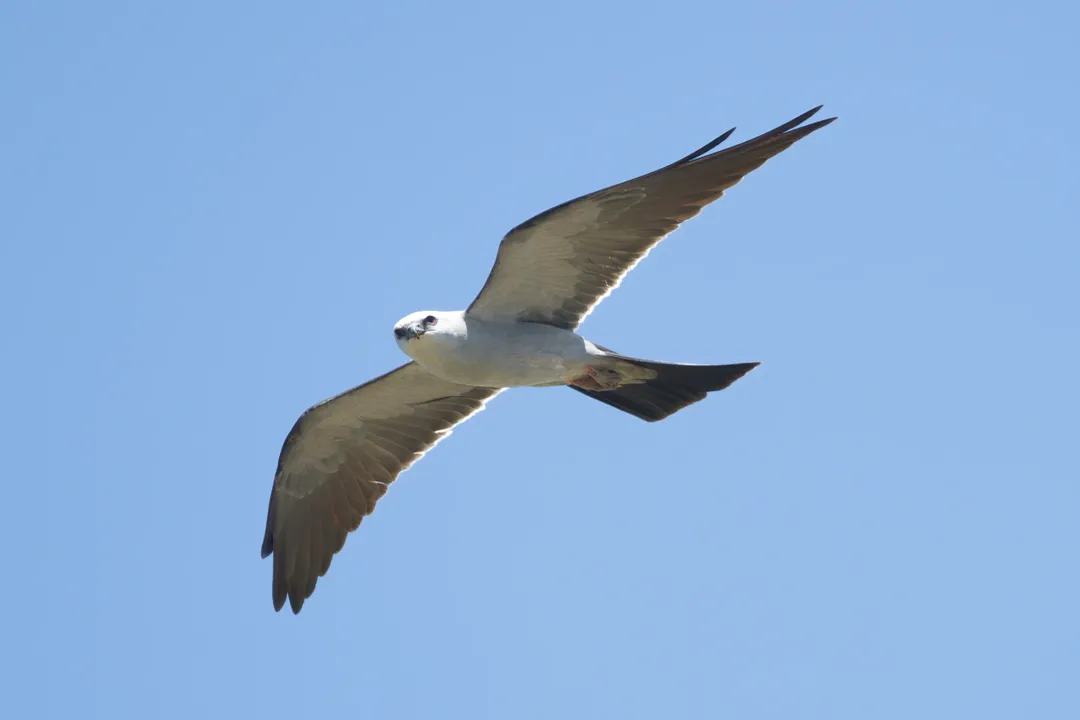
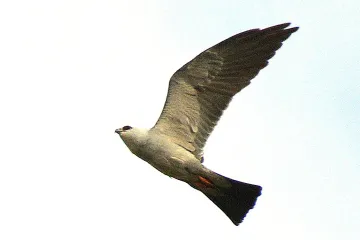
The Mississippi Kite presents itself as one of North America’s more elegant raptors, immediately distinct from bulkier hawks or falcons by its slender profile and acrobatic grace in the sky. [1][5] Adults are medium-sized birds, presenting a generally uniform, dark slate-gray plumage across the body, which can sometimes appear almost black in poor light. [2][5] The eyes are dark, but the most striking feature, especially when viewed from below, is the tail—it is deeply forked, giving the bird an unmistakable silhouette, even from a distance. [2][5] Another subtle but important detail for field identification is the cere (the fleshy area above the bill) and the legs, which typically show a pale pinkish or reddish hue in mature birds. [2] This combination of color and shape sets the Mississippi Kite apart from its often more boldly marked relatives. [1]
# Aerial Feeds
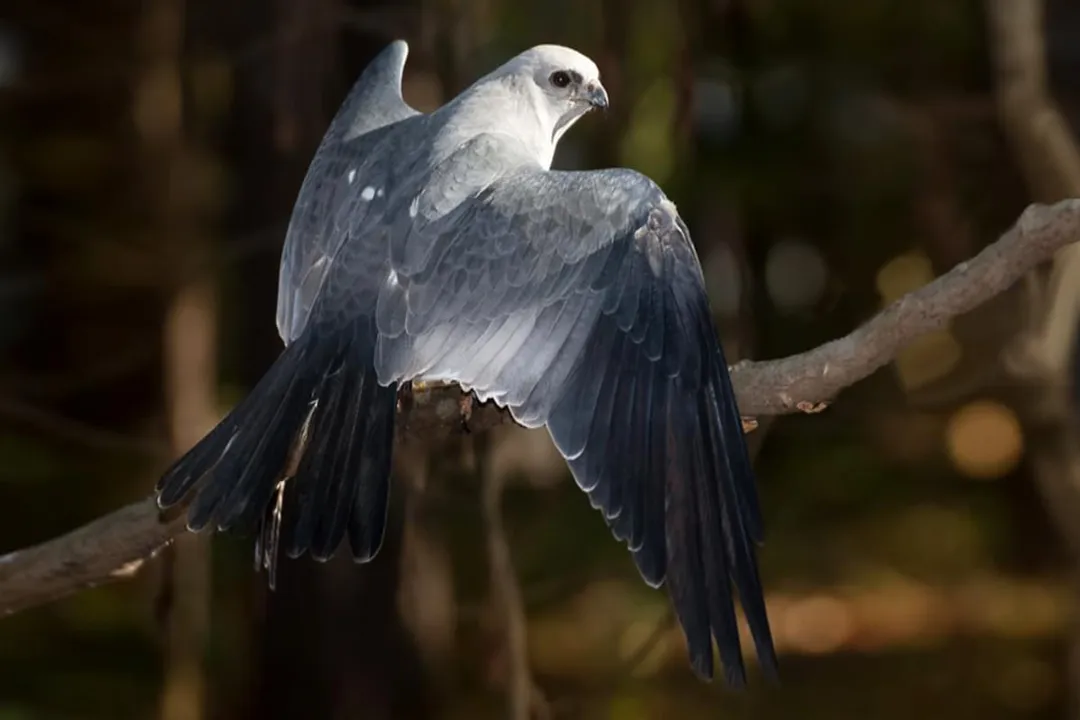
What truly sets the Mississippi Kite apart from many other birds of prey in its range is its specialized feeding strategy, which relies almost entirely on aerial capture. [3] These birds are masters of hawking, meaning they catch their prey while in continuous, active flight. [1][4] Their diet consists primarily of large insects, which they snatch from the air with remarkable precision. [1][2] This preference for airborne meals means you rarely see them perched or stalking prey on the ground like many buteos or accipiters. [3] They are known to consume vast quantities of large invertebrates, including grasshoppers, cicadas, dragonflies, and moths. [1][2] One source notes that they have even been documented successfully capturing prey as substantial as small snakes or frogs while soaring, demonstrating incredible agility and quick reflexes in the open air. [4]
When observing a flock of these kites during the evening, especially near water or open fields, you might witness a spectacular synchronized feeding effort. [1][3] They often hunt in groups, an activity that seems to benefit the entire group as they sweep through insect swarms. [3] This specialized insectivorous niche during the breeding season means that in areas like central Texas or Oklahoma, they play a significant, perhaps underestimated, role in regulating populations of specific large flying insects throughout the summer months. While many raptors rely on rodents or smaller birds, the Mississippi Kite effectively cleans the air of flying invertebrates, providing a unique ecological service that complements the diets of species like insectivorous bats. [1][2]
# Colony Structure
The social and nesting behaviors of the Mississippi Kite also offer fascinating deviations from the norm for birds of prey. [1] While some raptors are fiercely solitary outside of the immediate breeding pair, Mississippi Kites often establish nesting sites in loose colonies. [1][4] They frequently choose tall trees located near water or within open woodlands for their nesting grounds. [1][2] Their nests, however, are often less substantial than those of larger hawks; they are typically constructed of a relatively thin platform of small sticks. [1][2] Given the relatively fragile nature of these twig nests, it is interesting to note that they sometimes choose to nest in close proximity to other, potentially larger birds, including Great Horned Owls. [1][4] This tolerance or shared spatial arrangement highlights a level of social tolerance during the breeding season unusual among territorial hunters.
# Defense Tactics
The protective nature surrounding the nest is another area where the Mississippi Kite earns its unique reputation. [1] If an animal—or a person—comes too close to a nest, the parent birds are known to engage in aggressive aerial defense displays. [1][4] This behavior involves swooping down rapidly, often making physical contact with the intruder. [1][3] This "dive-bombing" tactic is executed with surprising force and accuracy, designed to harass and drive away the perceived threat. [1] For anyone attempting to survey wildlife or simply walking through an area where they are nesting during the summer months, recognizing this behavior is crucial. If you find yourself the target of these repeated, aggressive passes, the best countermeasure is simple: retreat from the immediate vicinity of the nest site until the birds settle down, as they are generally defending territory rather than attempting serious harm. [3][4]
# Life Development
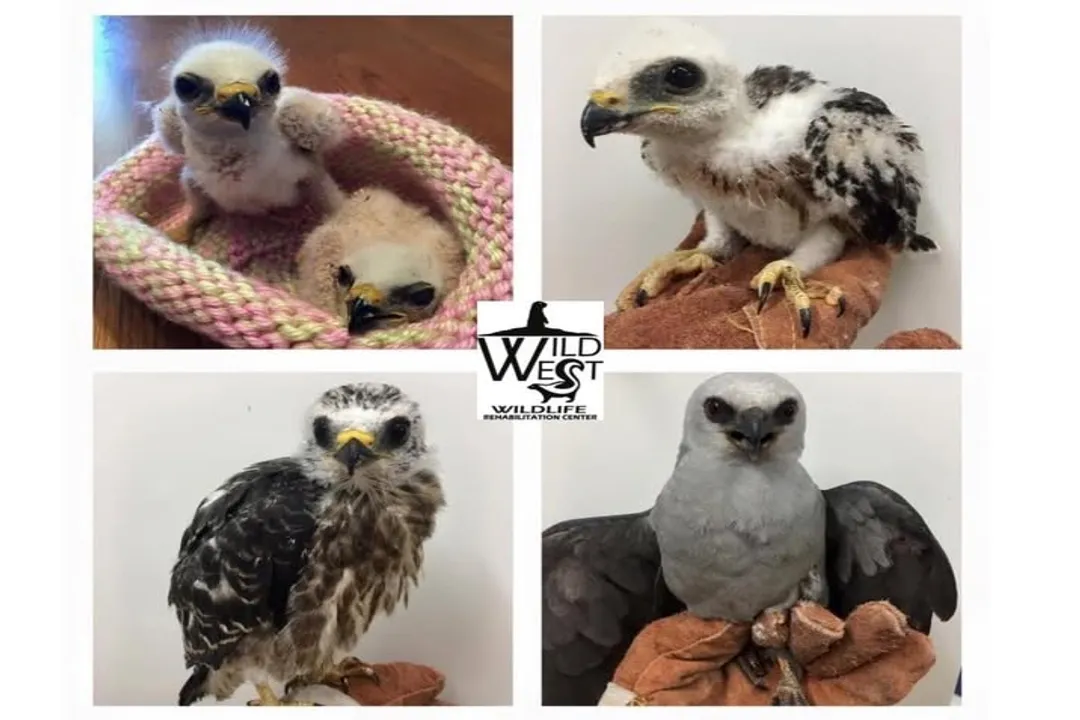
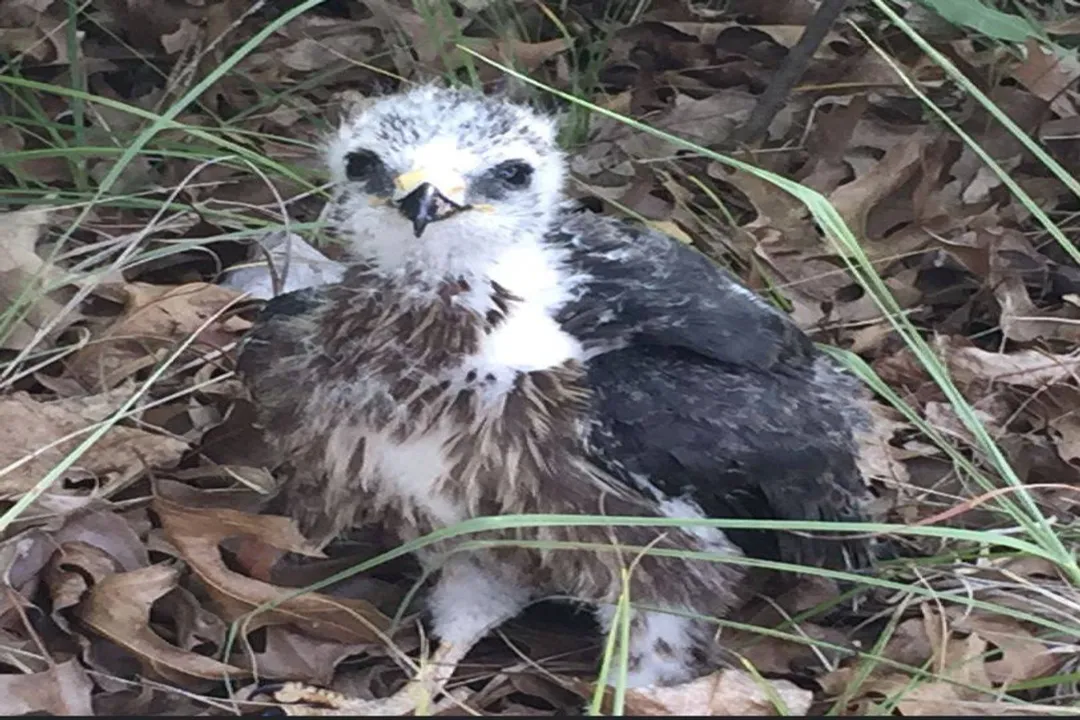
The appearance of a young Mississippi Kite differs significantly from the sleek gray adult, marking a clear developmental transition. [6] Hatchlings start out covered in white down, which gradually gives way to a brownish, heavily streaked or spotted plumage as they mature. [6] The tail of a juvenile is noticeably different, too; instead of the deeply forked look of the adult, the young bird possesses a squared-off tail. [5][6] As they fledge, they gradually acquire the adult coloration, a process that takes time. This brownish, more heavily marked look can sometimes cause confusion in the field if an observer is only familiar with the adult appearance, making proper identification of immature birds a subtle challenge. [5] The transition from that initial brown, square-tailed youngster to the elegant, gray, forked-tailed flyer is one of the notable transformations in North American raptor life cycles. [6]
# Migratory Schedule
Mississippi Kites are migratory birds, which means their presence in the United States is seasonal. [1] They are summer residents across the south-central portions of the country, with breeding populations concentrated in areas like Texas, Oklahoma, and Mississippi itself. [1][5] Once the breeding season concludes, they undertake a substantial migration southwards, spending their non-breeding months deep into South America, reaching areas such as Argentina, Paraguay, and Brazil. [1][2] The southern limits of their wintering grounds extend far beyond the southern US border. [2] This massive annual transit is often undertaken in flocks, where the birds rely on their flight efficiency to cover the great distances between their northern feeding grounds and their southern havens. [1]
# Observing Flight
For birders interested in distinguishing this raptor from other fast-flying birds, such as swallows or swifts, a few key observational points can be helpful. While a swift's flight might be more erratic and a swallow’s tail less dramatically split, the Mississippi Kite holds its wings in a shallow 'M' shape while soaring or maneuvering, which differs from the flatter wings of many other aerial insectivores. [5] Furthermore, when actively hunting or maneuvering, the kite appears to be sailing or gliding with remarkable steadiness between quick turns, rather than the constant, rapid wing-beating characteristic of smaller aerial feeders. [1] If you are watching a sky full of birds at dusk, noting the size—it is significantly larger than a swallow—and the graceful, almost deliberate motion of the wings can confirm your identification. [5] Knowing that they are generally active during daylight hours, unlike many nocturnal insectivores, also aids in timing your observations for the best chances of seeing them actively feeding or moving in large numbers during migration periods. [1][3] This graceful, deliberate movement in the air is a trademark that stays with the bird from its first flights as a fledgling to its maturity. [6]
#Videos
The Mighty Mississippi Kite: Everything You Need to Know - YouTube
Related Questions
#Citations
Mississippi Kite Overview, All About Birds, Cornell Lab of Ornithology
Mississippi kite - Wikipedia
Mississippi Kite - The Peregrine Fund
Mississippi Kite - | Outdoor Alabama
Mississippi Kite | Audubon Field Guide
From Fluff to Flight: The Stages of a Mississippi Kite One of the most ...
The Mighty Mississippi Kite: Everything You Need to Know - YouTube
Mississippi Kite - American Bird Conservancy
Mississippi Kites | Hutchinson Zoo, KS