How rare is a Mississippi kite?
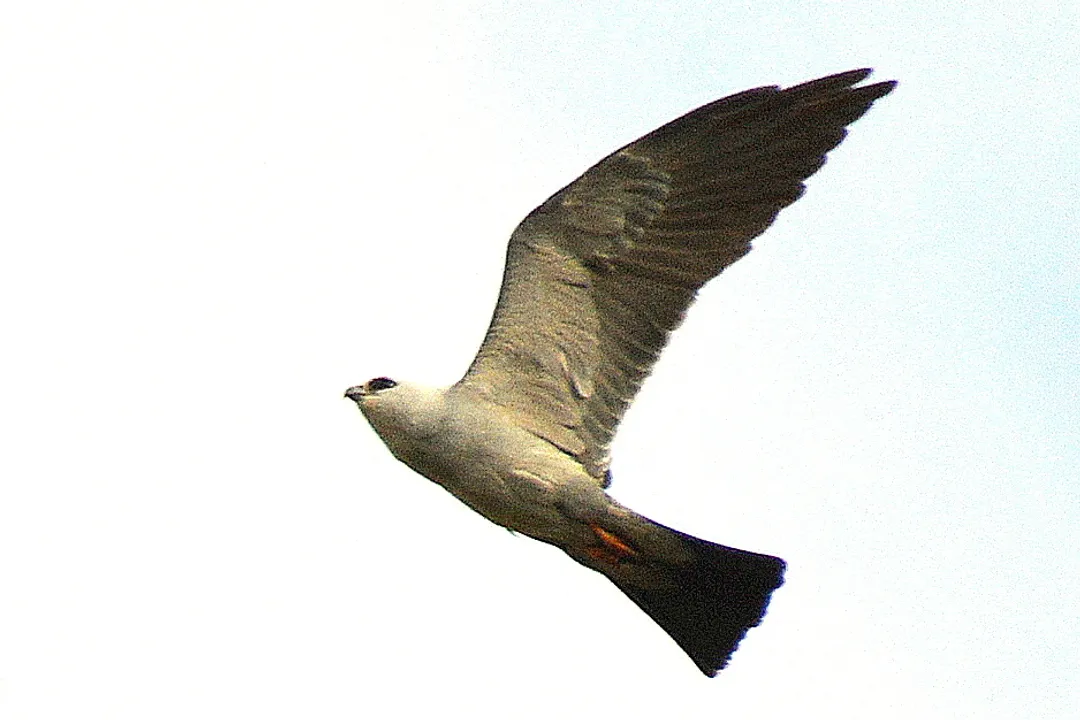
The Mississippi Kite presents an interesting study in avian distribution, where the concept of "rarity" depends entirely on where you happen to be standing. For observers within the bird's core breeding range, this sleek, slate-gray raptor is a relatively common, if sometimes overlooked, summer resident. [1][2][3] However, catching sight of one significantly north of its established territories turns it instantly into a significant event for local birdwatchers. [6][5] Understanding how common this bird is requires mapping its movements across the continent, distinguishing between its breeding grounds and its wintering grounds, and appreciating the nuances of its aerial lifestyle.
# Geographic Reach
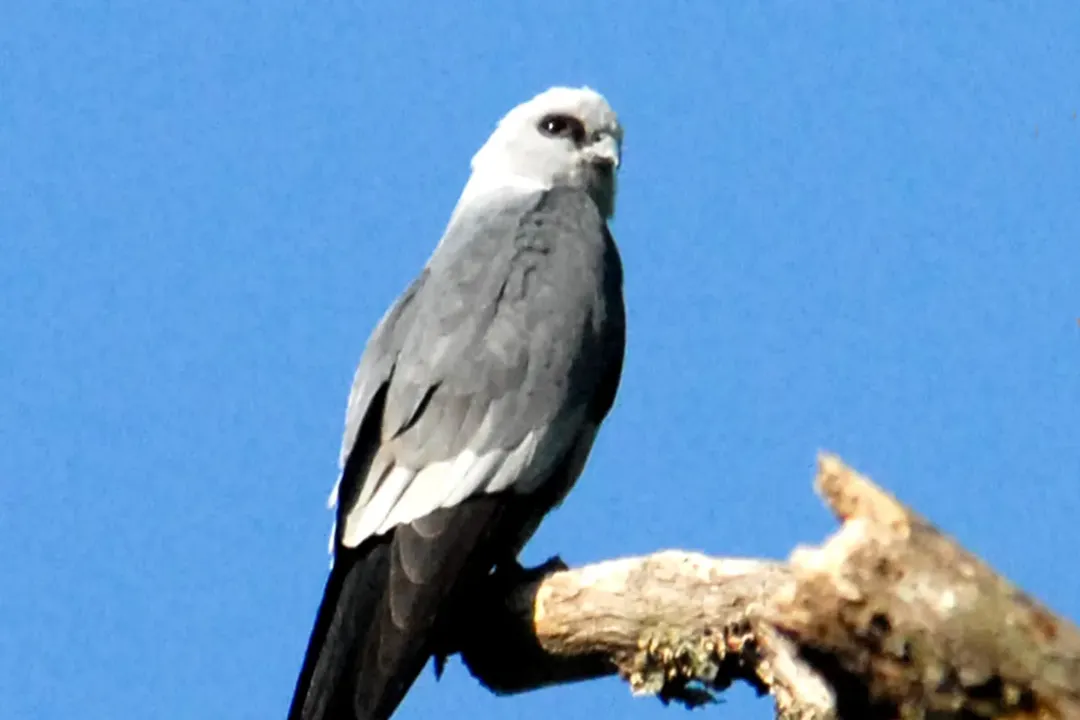
The primary territory for the Mississippi Kite spans across the south-central and southeastern United States. [1][3] Breeding populations are generally found from central and eastern Texas eastward, covering areas like Louisiana, Mississippi, Alabama, Georgia, and northward into states such as Tennessee, Arkansas, and Oklahoma. [2][3][7] In these states, the bird is considered common during the warmer months, often being described as the most common raptor found in certain regions of Texas. [9] This species is migratory, heading south to winter in Central America, Mexico, and possibly northern South America. [2][1]
While common within this southern belt, its presence dramatically diminishes outside of it, making it a rarity elsewhere. For example, while they are known to breed in Missouri, the Missouri Department of Conservation notes that sightings outside the usual breeding range are less frequent. [7] A confirmed sighting in areas like Indiana, far to the north of the typical breeding range, becomes noteworthy precisely because of that geographic limitation. [6] Similarly, while the kite does migrate through North Carolina, a local birdwatching group post highlighting a specific sighting suggests that even in states bordering the core range, the presence of a kite is always worth documenting. [5]
The distinction between a common species and a rare one often hinges on human perception shaped by local context. If a resident of Houston, Texas, expects to see these kites maneuvering overhead during the summer, they are common. [9] If a birder in, say, Maine sees one, that bird represents a significant northward vagrant, effectively making it locally rare or even a first-state record.
# Appearance Details
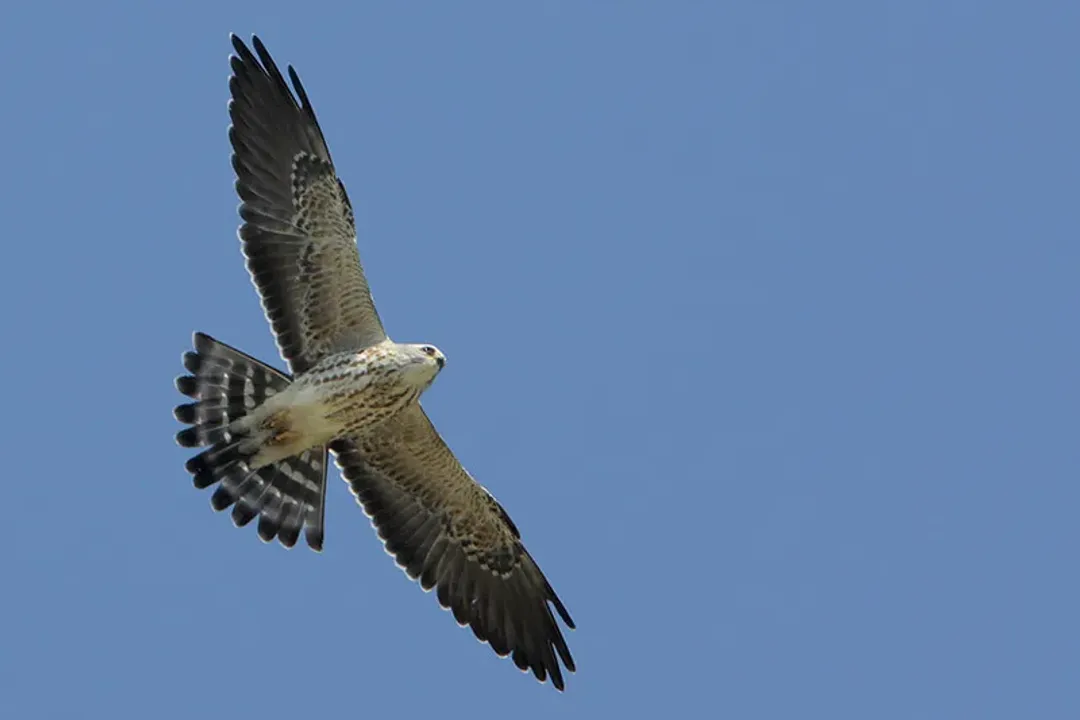
The Mississippi Kite is distinctively streamlined, which aids in its aerial hunting style. [1][4] Adults are mostly slate-gray, but the defining features are the dark eyes, the black cere (the fleshy part above the bill), and the sharp, contrasting white or pale patch near the base of the primary flight feathers, which is most visible when the bird is soaring. [1][4]
The tail is long and distinctly forked, resembling that of a swallow or a true kite, which helps distinguish it from other raptors in the area. [2][4] They are slender, with long, pointed wings. [1] Juveniles present a slightly different look; they are generally brownish or rusty above with pale underparts and noticeable dark scalloping or streaking, and their tails are shorter and less deeply forked than those of adults. [1][4]
One helpful observation for field identification, especially when trying to confirm a fleeting sighting, relates directly to its specialized feeding method. Because Mississippi Kites feed almost exclusively on large insects caught in mid-air—such as grasshoppers, cicadas, and dragonflies—they spend extraordinary amounts of time aloft. [1][2][3] They are less likely to be observed perched for long periods on utility wires or branches compared to species like the Red-shouldered Hawk. Therefore, when looking for them, focus on the sky during warm, clear mornings or afternoons when insect activity is high, rather than scanning tree lines exclusively. The rarity of seeing one perched should not be confused with the rarity of the bird itself within its proper habitat. [1]
# Population Status
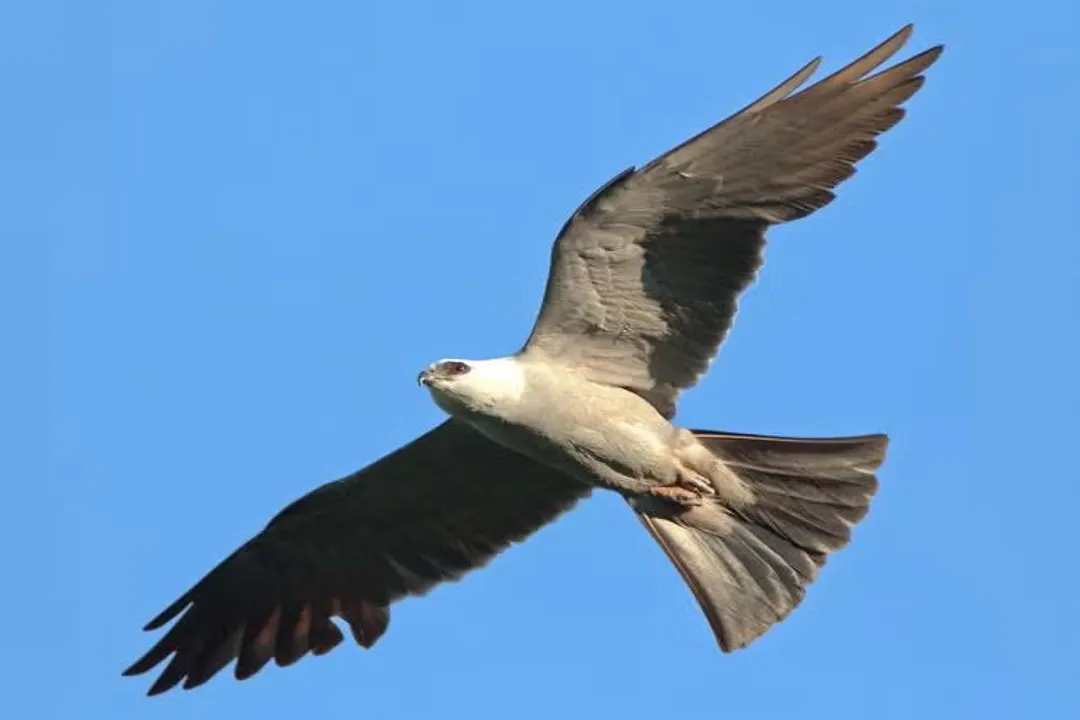
From a broader conservation standpoint, the Mississippi Kite is generally not considered globally rare or endangered. [2] The species has a fairly large population size, and while local declines or shifts in distribution happen, the overall trend across the primary range appears stable. [1][2] The Tennessee Wildlife Resources Agency, for instance, lists them as a Species of Greatest Conservation Need in some contexts, yet they are still regularly observed summer visitors in the western part of the state. [3]
However, population stability is relative to habitat availability. The proliferation of utility lines, which provide convenient perches for hunting and nesting, has been suggested as a factor potentially supporting bird numbers in developed areas. [4] Conversely, habitat loss in nesting areas could suppress numbers locally.
When comparing the Mississippi Kite to its closest relative in North America, the Swallow-tailed Kite, differences in range and frequency become clear. The Swallow-tailed Kite has a more restricted breeding range, typically staying further east and south, making it often more locally rare or specialized in its habitat requirements than the Mississippi Kite, which has successfully adapted to urban and suburban environments across a wider swath of the South. [7] This adaptability in the Mississippi Kite contributes to its perceived commonality within its established range, contrasting sharply with truly rare, highly specialized raptors.
# Breeding Behavior
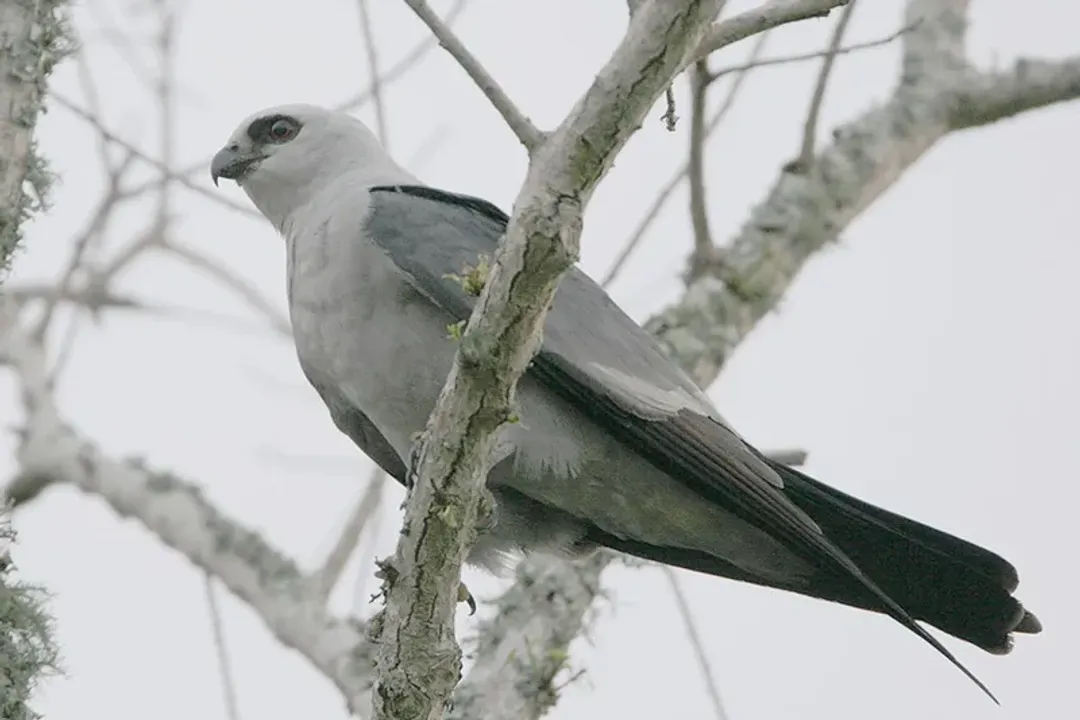
The nesting season, which occurs over the summer months, is when these birds are most tied to a specific location. [1] They construct relatively small, flimsy nests, often using twigs and lining them with soft materials like leaves or even plastic strips if available. [1][4] These nests are typically placed on the upper, often bare, branches of deciduous trees, and they frequently choose isolated trees or those on the edges of wooded areas. [1] It is common to see pairs nesting surprisingly close to human activity, often in yards, parks, or along busy streets, provided there are suitable tall trees available. [8]
Mississippi Kites frequently nest in loose colonies, a behavior that can sometimes make them easier to spot when they are present, as several pairs may occupy the same general area. [1] A local observer might believe the birds are suddenly more common simply because a small colony has established itself nearby for the season, only to find they have departed entirely by late summer. [3] This colonial nesting habit, coupled with their preference for high perches, means that the local "rarity" fluctuates dramatically between the breeding season (late spring/summer) and the non-breeding season (fall/winter).
The timing of their departure is also key to understanding when they transition from a summer resident to a rarity elsewhere. By August and early September, most kites are leaving the northern edges of their range, heading toward their wintering grounds. [1][3] A kite seen in Indiana in mid-September, for instance, is well past the norm and is likely part of the southbound migration, increasing its status as an unusual sight for that region. [6]
# Summer Sightings in Northern Climates
The occasional sighting of a Mississippi Kite far north of the expected breeding range provides the strongest evidence of its status as a rarity outside the Southeast. These birds, sometimes seen in states like Indiana or perhaps even further north, are typically considered stragglers or early migrants that have overshot their typical destination or individuals whose migratory instincts have been slightly misaligned. [6]
When researchers or birders document these outliers, it confirms that while the species is common within its core area, the individual bird found far outside that area is unusual. [6] These isolated northern reports are valuable, as over many years, tracking these stray sightings can help scientists understand if the overall range boundary is gradually shifting northward due to climate change or other environmental factors. The fact that reports from places like Southwestern Indiana are deemed newsworthy enough for local press coverage underscores that, for that latitude, the Mississippi Kite is decidedly rare. [6]
This phenomenon is not unique to this species, but for the Mississippi Kite, the shift is often noticeable because its entire life cycle—nesting, feeding, and migration—is so tied to the warm, humid conditions of the Gulf Coast and the South Central states. [2]
# Tips for Local Detection
For residents living within the known summer range, knowing how to look for these birds increases the chance of noticing them, thus lowering their perceived rarity in your own backyard.
- Seek Out Open Air: Look for them hunting high above open fields, waterways, parks, or even suburban developments, rather than deep within dense forest canopies. [1][4]
- Observe Morning and Evening: Peak activity often occurs during the warmer parts of the day when insect populations are most abundant in the air column. [1]
- Watch for Soaring: Unlike many hawks that soar more lazily, Mississippi Kites have a distinctive, buoyant, almost buoyant flight, often described as looking like they are "dancing" or "stalling" mid-air as they snatch insects. [2][4] This smooth, high-altitude motion is a giveaway even from a distance.
By understanding that the Mississippi Kite is a creature of the open sky and warm air currents during the summer, observers in the correct geographic zone will find them much more frequently than they might expect based on seeing them perched. The bird is rarely rare where it breeds, but its specialized lifestyle means you must look up and out to find it.
Related Questions
#Citations
Mississippi Kite Overview, All About Birds, Cornell Lab of Ornithology
Mississippi kite - Wikipedia
Mississippi Kite, Ictinia mississippiensis, Images and Information
Mississippi Kite | Audubon Field Guide
How rare are Mississippi Kites in North Carolina? - Facebook
Mississippi Kite Birds: Once rare, spotted multiple times in area
Mississippi Kite - Missouri Department of Conservation
Out My Backdoor: Kites Can Be Backyard Birds, Too
Mississippi Kite | Bird Gallery - Houston Audubon Society