What is the taxonomy of the blue iguana?
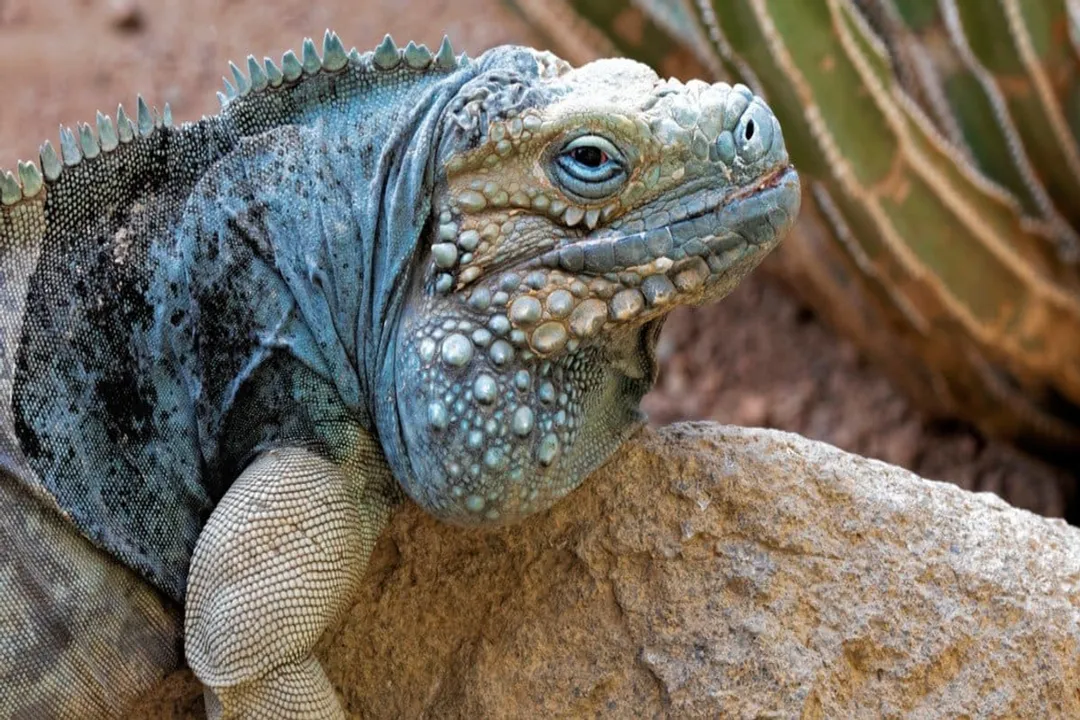
The scientific journey to classify the Blue Iguana, native only to Grand Cayman, reveals a dynamic history of changing opinions regarding its precise place in the tree of life. This lizard, known locally by various names including the Grand Cayman Rock Iguana and the Cayman Islands Ground Iguana, is formally recognized today under the binomial name Cyclura lewisi. Yet, for much of the 20th century, this unique island reptile was relegated to a lower taxonomic rank, illustrating how new scientific data can prompt significant shifts in official nomenclature.
# Taxonomic Ranks
The Blue Iguana firmly belongs within the lizard lineage, occupying a specific position defined by the Linnaean system. This classification places it within a well-established group of large, herbivorous West Indian lizards known as rock iguanas.
The accepted scientific hierarchy is detailed as follows:
| Rank | Classification |
|---|---|
| Kingdom | Animalia |
| Phylum | Chordata |
| Class | Reptilia |
| Order | Squamata |
| Family | Iguanidae |
| Genus | Cyclura |
| Species | C. lewisi |
The genus Cyclura itself is composed of several species of rock iguanas, and the Blue Iguana’s closest relatives are typically cited as the Cuban iguana, Cyclura nubila, and the Northern Bahamian rock iguana, Cyclura cychlura.
# Naming History
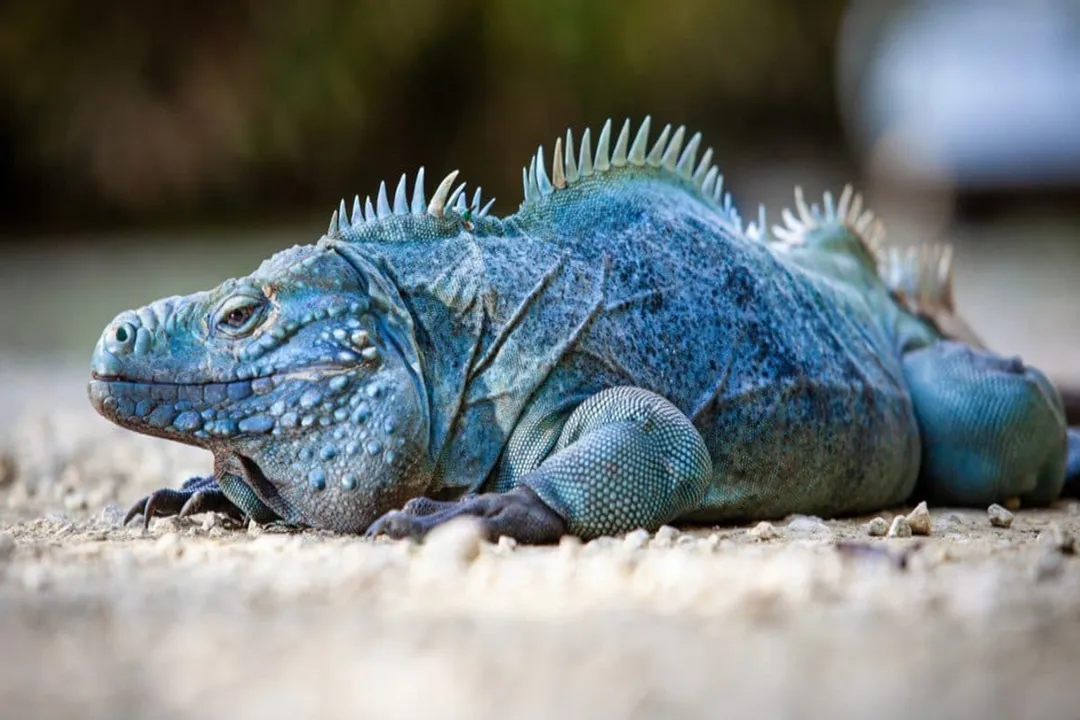
The naming process for the Grand Cayman endemic has seen three distinct official designations reflecting evolving scientific understanding of its relationship to other Cyclura species.
Initially, when first formally described by Chapman Grant in 1940, the iguana was classified with a trinomial name: Cyclura macleayi lewisi Grant, 1940. This placement associated it with C. macleayi, which today is understood within the context of C. nubila.
The next significant shift occurred in 1975 when Albert Schwartz and Richard Thomas reclassified it, assigning it subspecies status under the Cuban iguana: Cyclura nubila lewisi. This designation grouped it closely with the mainland Cuban population, suggesting a recent shared ancestry or minimal evolutionary divergence warranting separate species status.
The current, preferred scientific name, Cyclura lewisi, elevated the taxon to full species rank, a decision supported by Frederic J. Burton in 2004. This change reflects the view that the genetic differences observed between the Grand Cayman population and the Cuban population were substantial enough to merit independent species recognition.
It is important to distinguish C. lewisi from its other island relatives. The Lesser Caymans iguana, Cyclura nubila caymanensis, which inhabits Little Cayman and Cayman Brac, is considered a subspecies that is genetically closer to C. nubila. While C. lewisi can interbreed with C. n. caymanensis to produce fertile offspring, the distinctness of the Grand Cayman population is maintained on morphological and genetic grounds.
# Genetic Delimitation
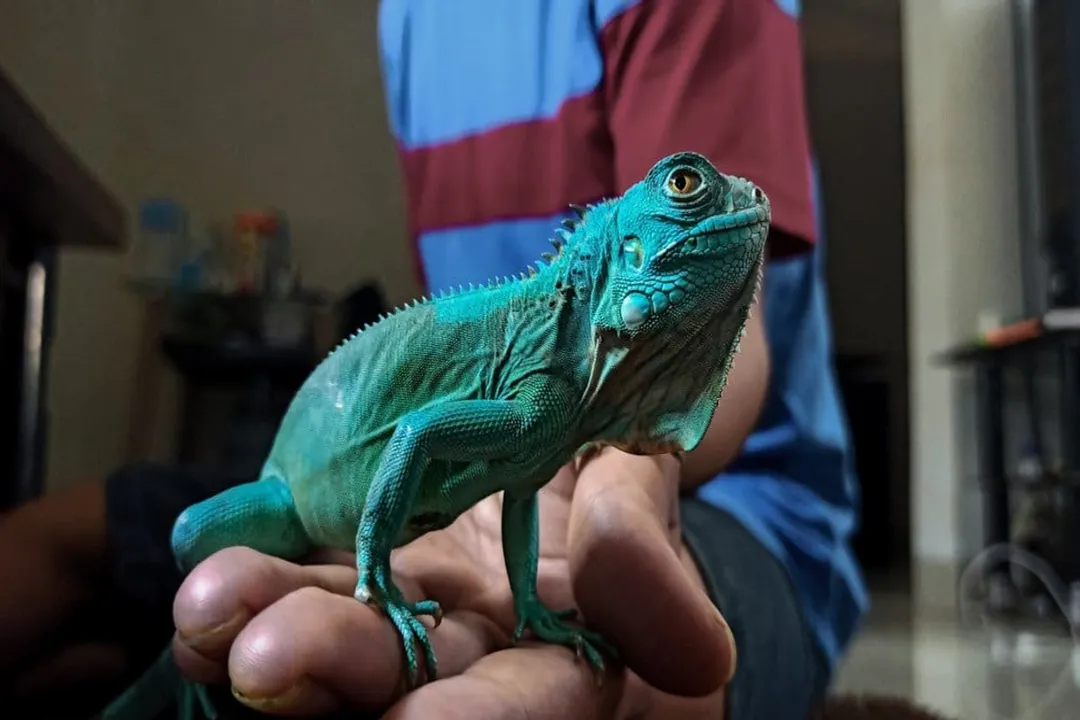
The push to recognize Cyclura lewisi as a distinct species was heavily rooted in genetic evidence rather than solely on visual traits, which can sometimes be misleading in taxonomy. Mitochondrial DNA analysis conducted by Malone et al. in 2000 indicated different haplotypes for the various Cyclura populations being studied.
While scale characteristics (like head scale counts) were found to be inconsistent across the three recognized taxa (lewis, nubila, and caymanensis), skin color was proposed by Burton as a potentially appropriate, albeit generally unsatisfactory, taxonomic marker. Blue iguanas become more uniformly bluish with age, distinguishing them from the more variable coloration of the other taxa. However, the core argument for elevation involved interpreting the genetic data through a broader conceptual lens, such as the "general lineage concept," to delineate species boundaries where traditional morphological metrics failed.
# Regulatory Adoption

The taxonomic status has significant implications for international protection and domestic regulation. The U.S. Fish and Wildlife Service (FWS) formalized the change in 2016 through a direct final rule. The FWS adopted Cyclura lewisi because this was the most recently accepted scientific name by bodies like the Integrated Taxonomic Information System (ITIS), the IUCN, and CITES. This update eliminated confusion by aligning the regulatory listing with the broader scientific consensus. Furthermore, the FWS simultaneously adopted "Grand Cayman blue iguana" as the standardized common name for regulatory consistency, replacing the less consistently used "Grand Cayman ground iguana".
The recognition of C. lewisi as a species, rather than a subspecies of C. nubila, is more than an academic exercise; it reflects the degree of evolutionary isolation the Grand Cayman population has achieved. While genetic studies support a divergence dating back perhaps three million years from a common ancestor shared with C. nubila and C. cychlura, elevating the status may also bring increased conservation ranking and attention.
The very fact that the Blue Iguana is endemic to a single, small island underscores why its taxonomic placement is so critical. When a species is geographically restricted, any threat impacting that locality—like habitat conversion or invasive predators—puts the entire species at extreme risk.
It is interesting to consider how a species-level designation impacts conservation funding and prioritization, even when regulatory protections remain static. While the FWS explicitly stated that the 2016 rule did not alter the regulatory protections afforded under the Endangered Species Act, the perception associated with a full species designation often translates into stronger political will and easier access to targeted conservation grants worldwide. When resources are scarce, convincing an international body or a private foundation that a unique species, rather than a subspecies, is at stake can provide the necessary edge for securing sustained financial and technical support for recovery programs. This concept is directly tied to the recovery goals, which seek to restore the population to a number that keeps the species viable in the long term.
# Confusing Overlap
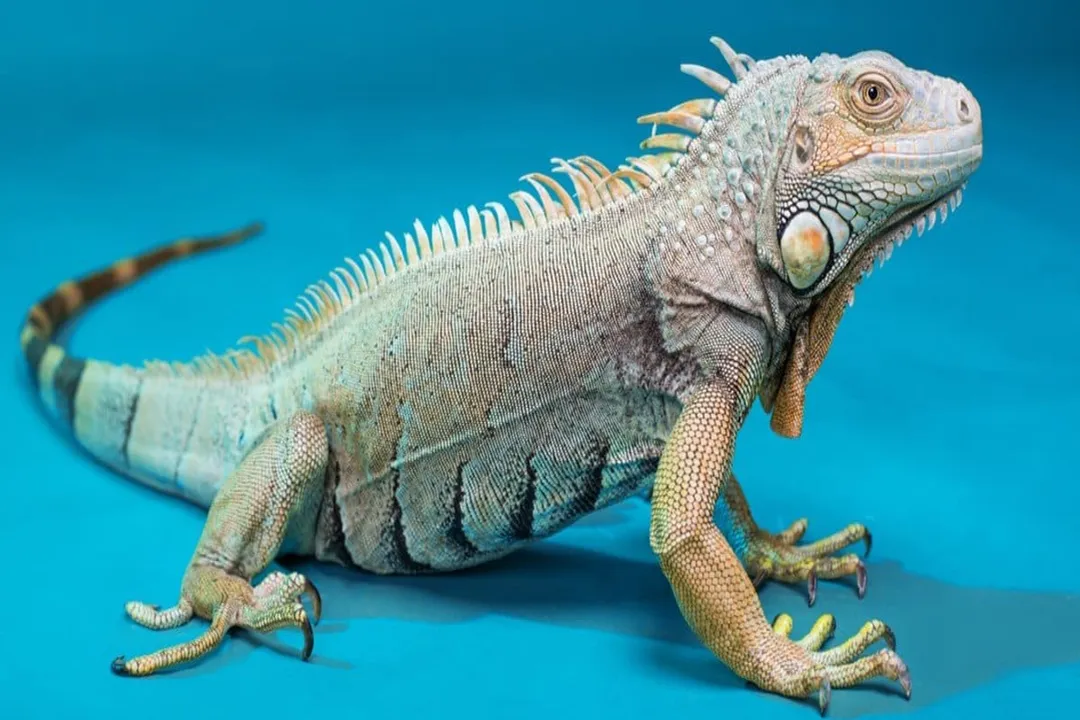
The taxonomic situation is further complicated by the presence of a similar, but distinct, invasive species on the island: the Common Green Iguana, Iguana iguana. Because Iguana iguana far outnumbers the native Blue Iguana, its presence causes public confusion regarding conservation messaging. Efforts to educate the public must actively focus on distinguishing between the two, given their similar general appearance.
The Blue Iguana is a large, heavy-bodied lizard—the largest native land vertebrate on Grand Cayman—with mature males displaying a distinct dusky blue to turquoise coloration, especially during the breeding season. In contrast, the common green iguana lacks this intense endemic blue and can often be seen in suburban areas, leading residents to doubt the native species’ claimed rarity. Furthermore, the risk of accidental hybridization exists, as individuals of the closely related Sister Isles Rock Iguana (Cyclura nubila caymanensis) have been found on Grand Cayman due to human transport, posing a potential genetic threat to C. lewisi.
Ultimately, the definition of Cyclura lewisi as a distinct species validates the intensive, multi-partner conservation efforts required to save this unique Grand Cayman endemic. The species-level classification anchors the conservation strategy—from head-starting juveniles and controlling feral predators to securing critical inland shrubland habitat—firmly in the necessity of protecting a single, irreplaceable evolutionary line. The clarity provided by this final taxonomic acceptance, supported by bodies like CITES, ensures that Cyclura lewisi receives precisely the attention commensurate with its unique and precarious status on the global conservation stage.
Related Questions
#Citations
Blue iguana
Grand Cayman Blue iguana Cyclura lewisi Taxonomy and ...
Grand Cayman Blue Iguana - Cyclura lewisi
Taxonomic Correction for the Grand Cayman Ground Iguana
Blue Iguana Animal Facts - Cyclura lewisi
Grand Cayman blue iguana
Cyclura lewisi, Grand Cayman Blue Iguana
Taxonomic Correction for the Grand Cayman Ground Iguana
Cyclura nubila lewisi | INFORMATION