What is the snake cat theory?
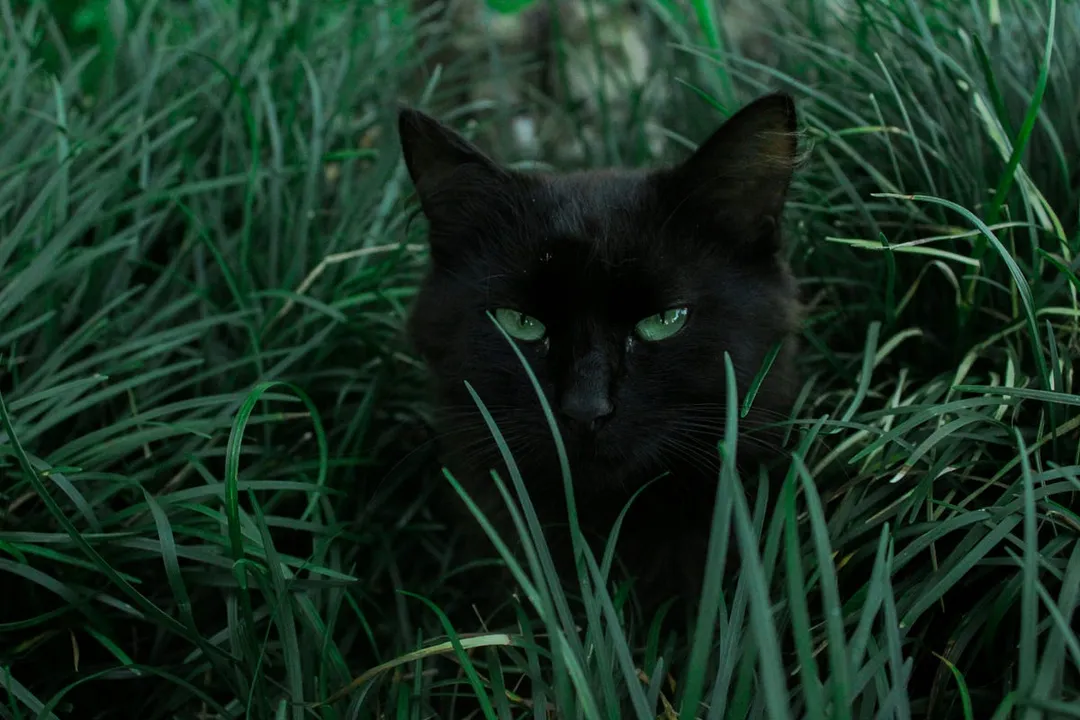
The observation that domestic cats possess unsettling similarities to snakes is a recurring theme, one that has recently gained traction through digital means, yet its roots lie in shared physical traits and behavioral patterns. This comparison often leads people to question the perceived overlap between a sleek mammal and a limbless reptile, prompting discussions that border on folklore and genuine biological curiosity. [4][5]
# Pupil Shape
One of the most striking points of comparison centers on the feline eye. Many observers note that the vertical slit pupil of a cat looks remarkably like that of a snake. [1] This isn't merely a superficial likeness; it is tied to their respective ecological niches. Cats, particularly domestic ones, are generally crepuscular or nocturnal hunters, often engaging in ambush predation in lower light conditions. [1]
The specialized, vertically elliptical pupil is highly efficient at rapidly contracting to a tiny slit in bright light, shielding the sensitive retina, and expanding into a near-perfect circle in the dark to maximize light intake. [1] This mechanism allows for superior depth perception and light control essential for pouncing predators. Interestingly, this pupil shape is shared by other ambush predators that hunt close to the ground, such as some vipers, which also rely on stealth and precise judgment of distance in varying light. [1] While the general structure of the mammalian eye is fundamentally different from the reptilian eye, this functional convergence—the need for extremely fine control over light entry—creates a powerful visual association with snakes. [1]
# Threat Displays
Beyond visual anatomy, certain feline behaviors trigger an immediate association with serpentine danger signals. The sound a cat makes when highly agitated or threatened—the hiss—is a classic example. [7] While hissing is a common defensive noise across many animal species, in cats, it serves to convey an immediate threat, often accompanied by an arched back and flared fur, communicating that an attack is imminent if the threat does not retreat. [7] Snakes employ hissing as a primary warning, often preceding a strike, making the acoustic similarity disconcerting for those accustomed to mammalian vocalizations. [7]
Furthermore, subtle body language can reinforce the connection. Some individuals note the way a cat's tail twitches, or the specific shape of its mouth when agitated, suggesting a link to serpentine characteristics. [5] When a cat is preparing to stalk or is highly focused, the low-to-the-ground posture and the focused, unblinking stare can mimic the fixed, intense focus attributed to snakes. [4][5]
We can map some of these overlapping traits for clarity:
| Feature | Feline Presentation | Serpentine Parallel | Source Context |
|---|---|---|---|
| Vision | Vertical slit pupil | Vertical slit pupil in ambush predators | Efficient light control [1] |
| Vocalization | Sharp, drawn-out hiss | Primary defensive warning sound | Threat indication [7] |
| Posture | Low, intent stalk | Ground-level stealth | Ambush hunting style [4][5] |
It is perhaps the primal programming within humans that responds so strongly to these cues. When domestic cats display these traits, they tap into an ancient, inherited caution regarding venomous or predatory reptiles. [5]
# Ancestral Links
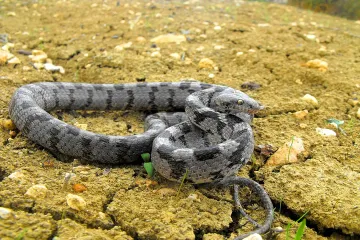
The question of whether cats actually evolved from snakes is a common query, likely driven by the collection of similarities noted above. [4][5] Biologically, this is not the case. Cats belong to the class Mammalia, order Carnivora, and family Felidae. Snakes are reptiles, belonging to the class Reptilia, order Squamata. [4] They share a common vertebrate ancestry millions of years ago, but they diverged long before the recognizable forms of either animal existed. [4]
The comparison is therefore one of convergent evolution or shared predatory tactics, not direct lineage. Both groups, independently, evolved efficient means to hunt small prey in environments where stealth and quick judgment of distance are necessary for survival. [1] The appearance of fangs or certain mouth shapes that remind observers of snakes is more likely due to the functional demands of a carnivorous diet rather than a shared evolutionary branch stemming from snakes themselves. [5]
# AI Image
The recent digital surge around the "snake cat" concept often relates back to a specific instance of digital creation. An AI-generated image depicting a creature that was undeniably a hybrid—part feline, part serpentine—went viral. [2] This image, created by pranksters or digital artists, visually merged the most alarming or curious traits into a single being, immediately captivating the internet. [2] This sort of digitally rendered creature takes the abstract comparisons people already make and presents them as concrete reality, amplifying the discussion instantaneously across social platforms like TikTok. [2][8] The viral nature of this single piece of art demonstrates how readily people accept the 'snake cat' concept once it is visually confirmed, even if the image is synthetic. [2]
# Perception Startle
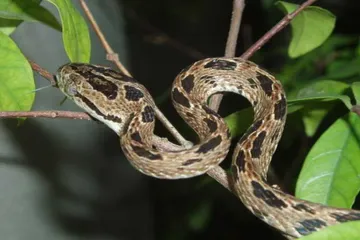
Understanding why this comparison feels so visceral can also involve examining unrelated feline startle responses. For instance, many cat owners have experienced the phenomenon of their pet reacting with extreme alarm to common household items like cucumbers placed nearby. [9] Behavior experts suggest that this exaggerated reaction stems from the cat startling due to something unexpected appearing suddenly in its peripheral vision—it mistakes the inert object for a potential predator or threat, such as a snake. [9] The cat's instinctual reaction is a defense mechanism against sudden, low-to-the-ground shapes that resemble coiled threats, highlighting how deeply ingrained the aversion or caution toward serpentine forms is within the feline psyche. [9]
Furthermore, a cat's visual processing itself can play into perceived weirdness, even relating to optical illusions involving snakes. When shown certain rotating snake patterns, cats react differently than humans, suggesting their visual machinery is tuned for different kinds of motion or threat recognition, reinforcing the idea that their visual world is uniquely adapted for ambush hunting—the same world that requires that slit pupil. [6]
Developing a deeper appreciation for the functional reasons behind these traits—the need for precise light adjustment in the pupil, the use of the hiss as a clear, unambiguous boundary warning—moves the discussion past mere spookiness. When we see a cat contract its pupils to a thin line on a sunny afternoon, we are observing a highly refined piece of biological engineering designed for hunting small prey, which happens to share an aesthetic feature with a reptile whose survival depends on similar stealth but in a very different context. [1] This convergence, rather than shared family history, is the real substance behind the "snake cat" fascination.
#Videos
Superposition Explained (Schrödinger's Cat) | Perimeter Institute for ...
Related Questions
#Citations
Why is it that cats have the same looking eyes as snakes and other ...
The truth behind the fake 'snake cat' that fooled the internet - Daily Mail
Superposition Explained (Schrödinger's Cat) | Perimeter Institute for ...
Cats & Snakes Have More In Common Than You'd Think - Medium
Did cats evolve from snakes? The eyes, the hiss, the twitching of the ...
Can my cat see the rotating snake optical illusion? - easternblot.net
Why Do Cats Hiss? The Curious Link Between Cats and Snakes
Why Do Cats Have Reptilian Eyes? Exploring the Fascinating ...
Cats and Cucumbers - Our Behavior Expert Talks About Why Cats ...