Wire Fox Terrier Scientific Classification
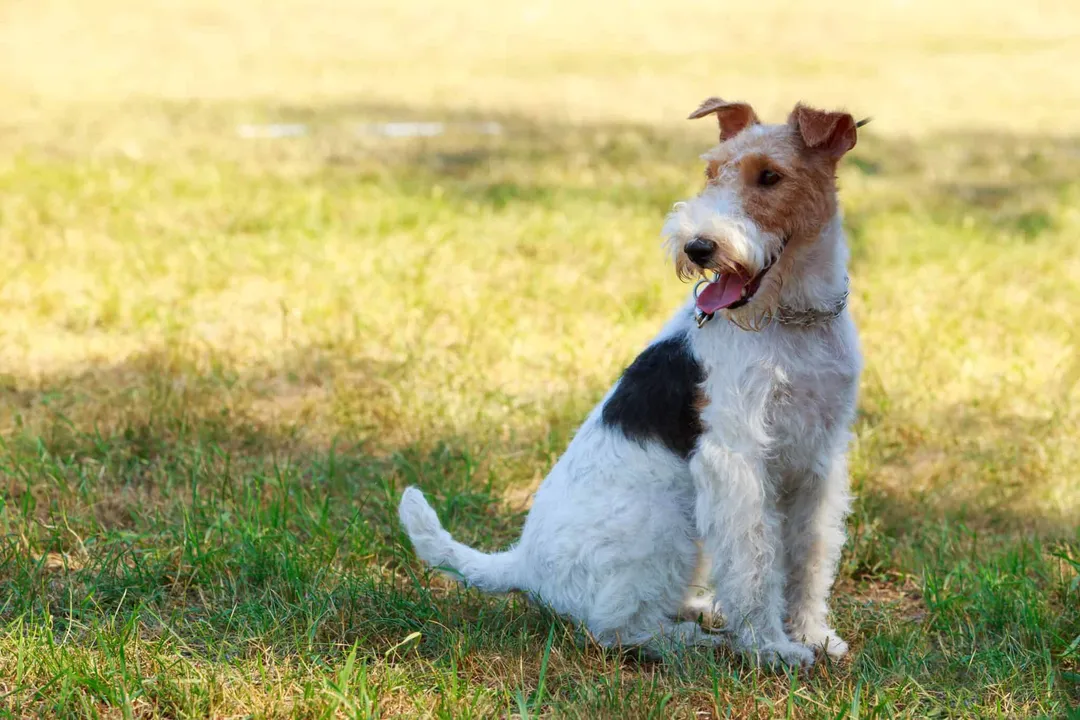
The journey to understanding any breed, even one as spirited as the Wire Fox Terrier, begins far beyond the kennel or the show ring; it starts deep within the structured language of biological science. Placing this popular terrier within its Linnaean classification reveals its ancient lineage and explains many of the instinctive behaviors that define it today. [1][2] While most people recognize the breed by its energetic disposition and that characteristic coarse, broken coat, its scientific placement confirms its identity as a domesticated descendant of wild canids, firmly rooted in the order of meat-eaters. [2][5]
# Ranks Defined

The scientific classification system, often attributed to Carl Linnaeus, organizes life based on shared characteristics, moving from the broadest grouping to the most specific. [2] For the Wire Fox Terrier, this hierarchy firmly establishes its position within the animal kingdom as a mammal, a carnivore, and most specifically, a member of the dog family. [1][5]
Here is the established taxonomic breakdown for the species that gives rise to the Wire Fox Terrier, sometimes listed under the domestic dog designation:
| Rank | Classification |
|---|---|
| Kingdom | Animalia |
| Phylum | Chordata |
| Class | Mammalia |
| Order | Carnivora |
| Family | Canidae |
| Genus | Canis |
| Species | C. familiaris or C. lupus familiaris |
| [1][2][5] |
This structure shows that while the Wire Fox Terrier is instantly recognizable as a distinct breed, genetically and evolutionarily, it shares its most immediate classification—the genus Canis—with wolves and coyotes, placing it securely within the tribe Canini. [2]
# Order Carnivora

The placement of the Wire Fox Terrier within the Order Carnivora is perhaps the most direct explanation for its tenacity, drive, and historical purpose. [2] This order groups together mammals whose primary evolutionary adaptation involves a diet centered on meat, characterized by specialized dentition designed for shearing flesh and bone. [5] Even though modern nutritionists and owners feed these dogs highly processed commercial kibble—which often contains significant grain and vegetable protein fillers—the dog’s digestive tract and metabolic pathways remain optimized for processing animal protein. [1]
It is fascinating to consider how the historical role of the Wire Fox Terrier directly informed its membership in this order. Bred in England primarily for bolting foxes out of their dens, the dog needed the stamina, alertness, and physical structure of a true hunter. [4] This intense, focused prey drive, characteristic of Order Carnivora members, remains a highly visible trait in well-bred lines today. An interesting thought experiment arises when contrasting the ancestral diet with the contemporary reality: a well-managed Wire Fox Terrier’s health profile depends significantly on the owner understanding that while the scientific classification allows for a high-meat diet, modern breeding standards have inadvertently made the breed adaptable to a much wider, albeit sometimes less biologically appropriate, range of foodstuffs compared to its direct wild ancestors. [1]

# Family Canidae
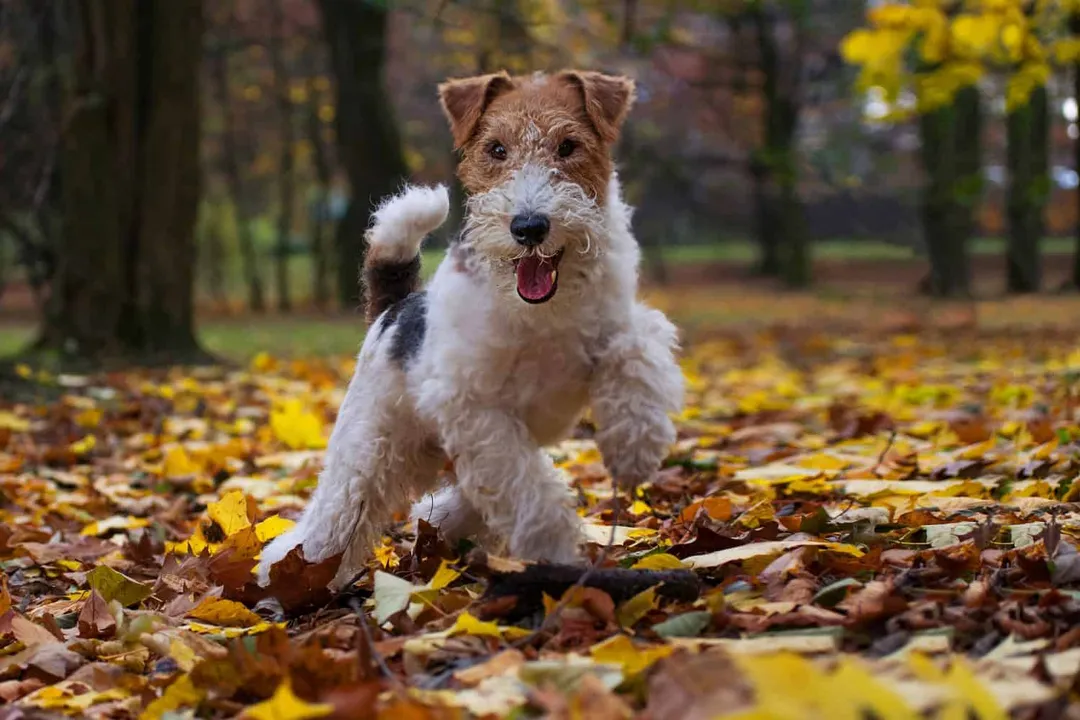
Moving down to the Family Canidae, we place the Wire Fox Terrier alongside jackals, foxes, and wolves. [2] This family is characterized by long muzzles, non-retractable claws, and generally cursorial (running) adaptations. [5] Genetically speaking, all domestic dogs, including this spirited terrier, are considered subspecies of the gray wolf (Canis lupus), hence the modern classification Canis lupus familiaris. [2]
The shared Canidae membership explains the breed’s strong pack mentality and social needs. While the terrier’s job required independence and grit when working underground, its history as a companion animal means it bonds intensely with its human family unit, viewing them as its pack. [4] A clear difference emerges, however, when comparing the Wire Fox Terrier’s build to its larger Canidae relatives. Where a wolf requires sheer size and endurance for long-distance hunting, the Terrier family selection emphasized compact power and the ability to maneuver in tight subterranean spaces, leading to their famously sturdy, compact structure despite their shared ancient blueprint. [1]
# Genus and Species

The genus Canis is reserved for the most closely related canids, including wolves, coyotes, and domestic dogs. [2] Within this genus, the Wire Fox Terrier belongs to the single domestic species, Canis familiaris. [5] This specific classification confirms that the genetic divergence from wild Canis populations happened long enough ago to warrant a distinct species designation for the collective of domestic dogs, even as specific breeds within that species vary wildly in appearance. [2]
# Breed Differentiation
What sets the Wire Fox Terrier apart from its closest sibling, the Smooth Fox Terrier, is not a shift in the grand scientific ranks—both share the same Kingdom, Phylum, Class, Order, Family, and Genus—but rather a selection process that occurred much later, closer to the breed level. [2][4] The differences are entirely rooted in human intervention and artificial selection, specifically concerning the coat.
The Smooth Fox Terrier possesses a short, flat coat, while the Wire Fox Terrier exhibits a hard, dense, and distinctly wiry outer coat with a softer undercoat. [4][10] This difference in integumentary structure is what led to the recognition of two separate breeds, although their underlying biological classification remains identical. [2] Considering this variation highlights a key aspect of modern taxonomy: at the higher levels (Order, Family), the classification describes fundamental, shared ancestry and physiology (e.g., being a carnivore), but at the breed level, classification becomes a cultural designation based on highly specific, often aesthetic or functional, physical traits selected by humans over generations. [4] The wiry coat, originally selected for weather resistance and protection against dirt and debris while working earthwork, demonstrates how human preference can create distinct breed populations within the same biological species framework. [10]
Related Questions
#Citations
Wire Fox Terrier - A-Z Animals
Wire Fox Terrier - Wikipedia
Wire Fox Terrier - Discover Animals
Wire Fox Terrier Dog Breed Information - American Kennel Club
Fox Terrier (Wirehaired) - Breed Info – Jolly Road Veterinary Hospital
Wire Fox Terrier Dimensions & Drawings
Wire Fox Terrier Facts - Wisdom Panel™ Dog Breeds
[PDF] Wire Fox Terrier - Squarespace
Wire Fox Terrier Facts for Kids