What is the physical description of a tick?
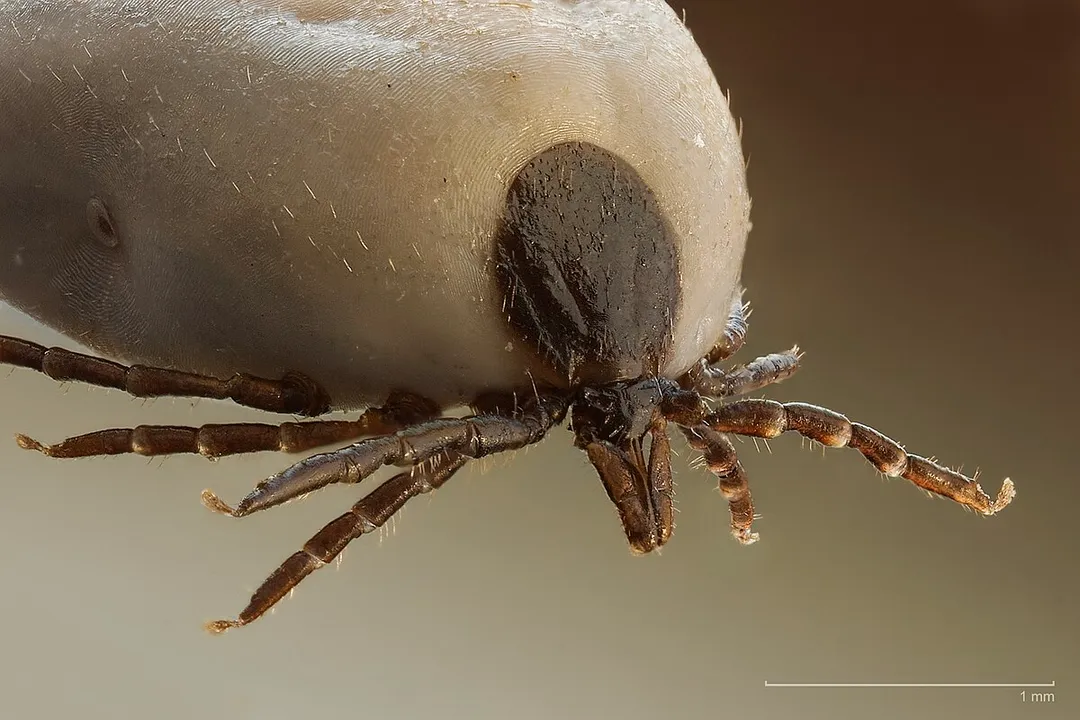
Ticks, often mistaken for insects due to their small size and parasitic habits, are actually arachnids, placing them in the same class as spiders and mites. [3][8] Visually distinguishing them requires looking past the general assumption of a small, dark blob and observing specific anatomical details that separate them from other tiny pests. [6] At their simplest, unfed ticks present an oval, somewhat flattened appearance. [4][9] However, their description changes drastically depending on their life stage and whether they have recently fed.
# Body Count

One of the most fundamental ways to distinguish a tick from an insect is by counting its legs and observing its body segments. [8] Unlike insects, which possess three distinct body parts and six legs, ticks belong to the subclass Acari and exhibit characteristics closer to spiders. [3][8]
Ticks possess only two main body segments: the fused anterior segment, which includes the head region (capitulum) and thorax, and the posterior segment, called the idiosoma. [3] More visibly, the number of legs shifts throughout their development. Tick larvae hatch with only six legs. [1][4][7] Once they molt into the nymphal stage and subsequently into adulthood, they develop eight legs. [3][4][8] This shift from six to eight legs is a definitive marker when attempting to identify the age or developmental stage of a tick found attached or crawling. [6]
# Mouthparts Capitulum
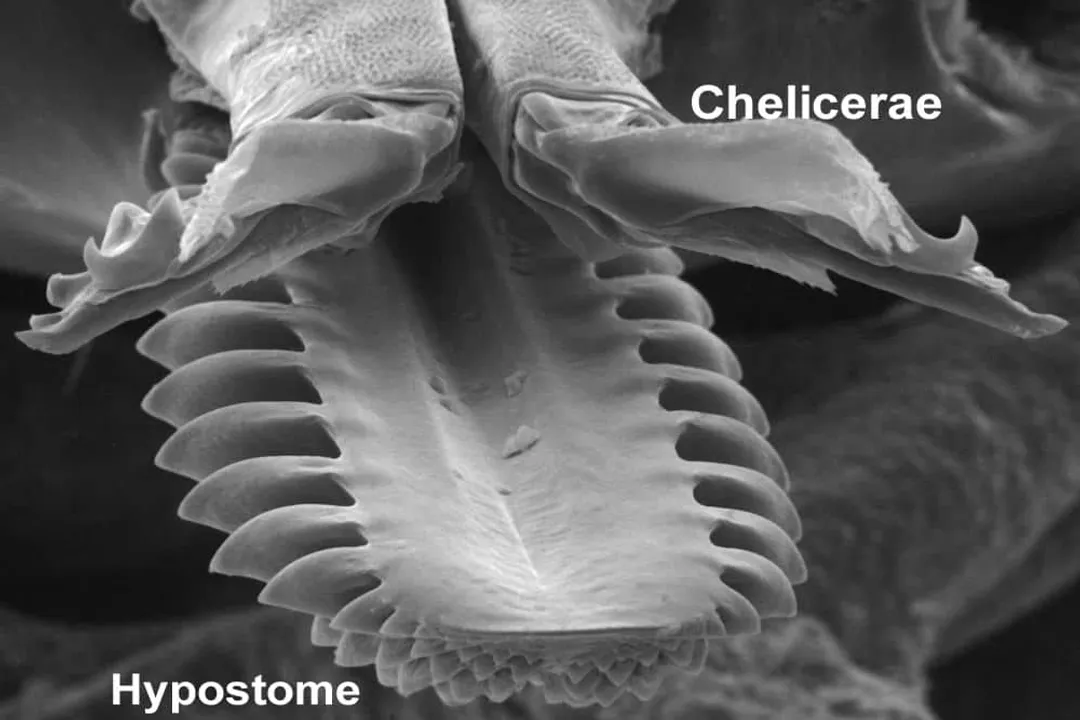
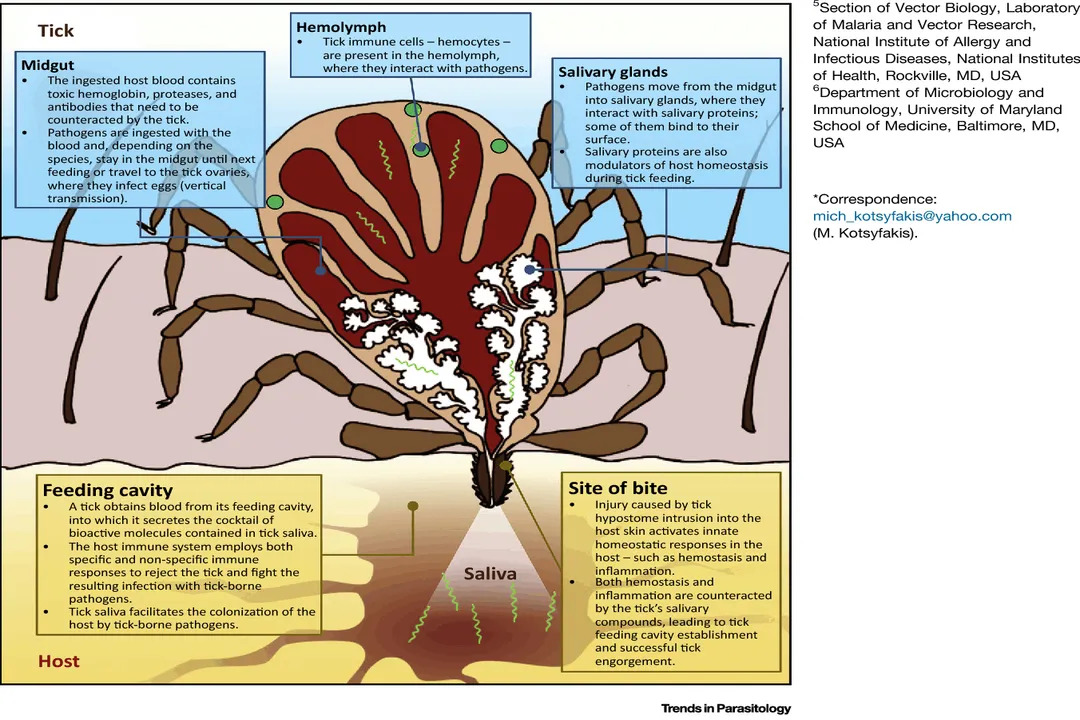
The anterior portion of the tick's body houses its specialized feeding apparatus, known as the capitulum or the "head" region. [1] This area is critical because it contains the structures used to attach to and feed from a host. [1]
The most noteworthy structure within the capitulum is the hypostome. [1] This is a complex, barbed structure that the tick uses to anchor itself firmly into the host's skin while it feeds. [1] This barbed nature explains why removing an attached tick requires careful, steady traction—the barbs are designed to resist easy removal, which is why using fine-tipped tweezers to grasp the mouthparts close to the skin is frequently recommended over simply grabbing the engorged body. [1]
# Size Engorgement
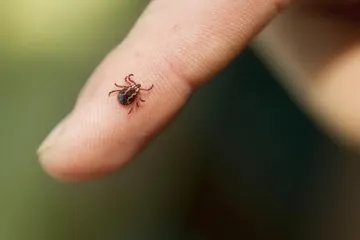
The size of a tick is perhaps its most variable physical trait, fluctuating immensely based on its feeding status. [4] Unfed adult ticks might only measure a few millimeters, while nymphs and larvae are much smaller. [3] For instance, a newly hatched larva can be smaller than a single poppy seed. [7]
When a tick feeds, it consumes blood, causing its soft body (the idiosoma) to expand considerably in a process called engorgement. [4] This dramatic change in volume is essential for identification. A tick that starts off barely visible to the naked eye, perhaps the size of a grain of salt or a speck of pepper, can swell significantly. [1] For context, some fully engorged ticks can grow to the size of a small grape seed or even an apple seed, depending on the species and the duration of the feeding period. [1] This dramatic swelling is what makes a previously unnoticed tick suddenly conspicuous on skin or clothing. Because size changes so much, relying solely on the absolute measurement of a tick can be misleading unless you know whether it has recently fed. [4]
# Color Variation
The overall coloration of ticks contributes to why they can sometimes blend into their environment or be confused with other small debris. There is no single, universal color for all ticks. [4] Instead, the appearance varies widely across different species. [4][5]
Common colors reported include shades of black, brown, reddish-brown, and tan. [4] This variation is often linked to sexual dimorphism or species-specific traits. For example, in some species, like the common blacklegged tick (or deer tick), the female often appears more reddish-brown or orange beneath the black legs and scutum, while the male may be uniformly darker. [5]
Another striking visual difference belongs to the Lone Star tick, particularly the female, which is frequently identified by a distinct, silvery-white spot located in the center of her back shield, or scutum. [5] This single dot is a key characteristic that helps differentiate her from other local species that lack such a prominent marking. [5]
# Nymphal Stage
While adults are easier to spot due to their larger size, the nymphal stage often presents the greatest practical challenge for detection because of its minute size. [7] Nymphs have fully developed all eight legs but remain tiny, sometimes measuring only about a millimeter or two across. [1][3] Their small stature allows them to attach to a host unnoticed, yet they are fully capable of transmitting pathogens. [7] When searching for ticks, one must look for these minuscule moving specks, especially after spending time in grassy or wooded areas, as they are often the life stage responsible for the majority of human encounters. [1]
Furthermore, the appearance of the scutum, the hard plate on the tick's back, differs between sexes in many species. [3] In males, this shield often covers a larger portion of the body dorsally, making them look sturdier or more uniformly dark. [3] In contrast, females have a smaller scutum, allowing the idiosoma beneath it to stretch substantially during feeding, leading to that dramatic, balloon-like inflation. [3] Paying attention to the proportion of the hard shell versus the softer body beneath can offer a clue to the tick's sex, even when its size is moderate. [3]
Related Questions
#Citations
Tick Anatomy (A Basic + In-Depth Look) | TickSafety.com
Tick Photo Gallery | Washington State Department of Health
Tick - Wikipedia
What Do Ticks Look Like? - Identifying ticks - Orkin
Guide to different tick species and the diseases they carry
Tick Identification Tips | PA Tick Research Lab
Ticks - Nebraska - Backyard Farmer
Are you sure it is a tick? - Ticks for Science!
Tick bites: Learn More – What are ticks and how can they be removed?