What is the most amazing fact about the insect?
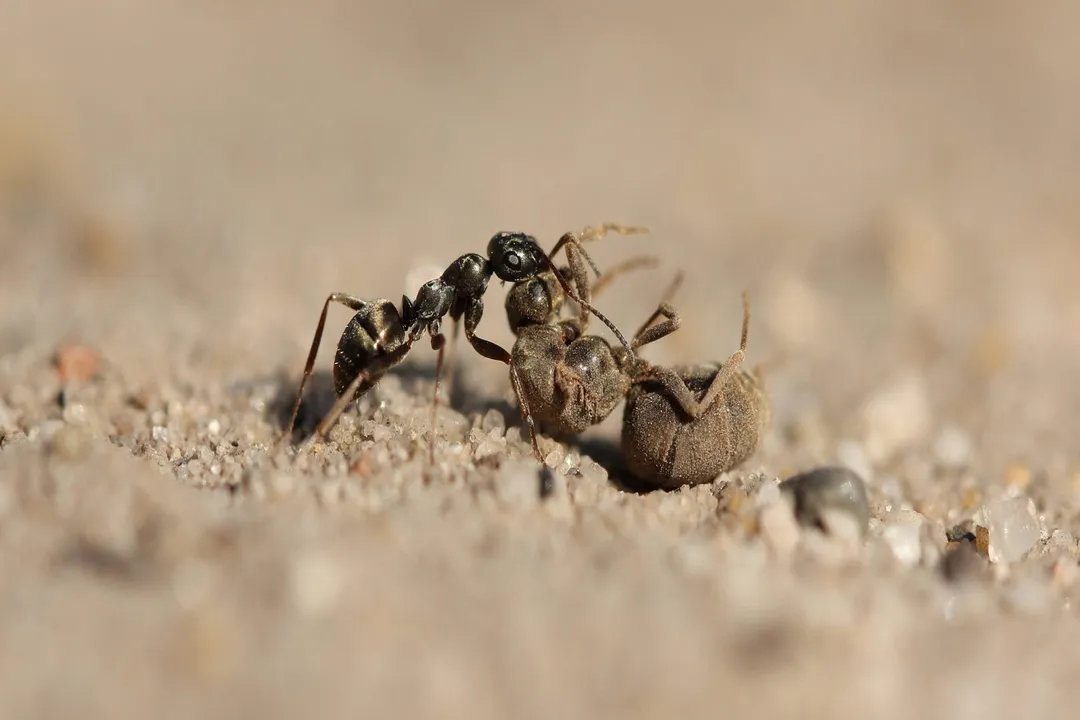
The sheer variety and numerical dominance of insects make picking a single "most amazing fact" feel almost impossible, like trying to select the most interesting star in a galaxy. Do we choose the incredible longevity, placing them on Earth before the dinosaurs even took their first steps? Or perhaps the dizzying mathematical reality of their presence: scientists estimate there are as many as 10 million distinct insect species, with perhaps 10 quintillion individuals alive at any given moment? That number, ten thousand million million million, dwarfs the estimated one quintillion meters of the Milky Way galaxy's length.
However, when people ask this question, they are often seeking an astonishing physical feat that defies our human scale. If we narrow the scope to sheer, measurable power or adaptability, a few contenders rise to the top, each painting a picture of biological engineering that seems straight out of science fiction.
# Superlative Strength
One of the most frequently cited, and certainly one of the most impressive, statistics concerns the strength-to-weight ratio. The male horned dung beetle, Onthophagus taurus, has been scientifically documented as the strongest insect on the planet. This beetle can pull a load equivalent to 1,141 times its own body weight.
To put this staggering engineering achievement into a relatable context, imagine a person weighing about 180 pounds possessing the same relative strength. That individual would be capable of hauling over 100 tons—the equivalent of several fully loaded tractor-trailers or, as suggested in online discussions, roughly six double-decker buses stacked end-to-end. This isn't just lifting; it's sustained pulling, often while navigating uneven terrain, to bury food or a nesting ball for its young. Compare this to the Hercules beetle, which, while incredibly strong, is noted for lifting about 850 times its weight. The difference shows a highly specialized, almost unbelievable, mechanical advantage rooted in their tiny bodies.
# Ancient Architects

The second area where insect facts astound is their deep history. Insects have populated the planet for at least 400 million years, meaning they were flourishing across the land while fish were still dominating the seas during the Devonian period. They predate the rise of the dinosaurs by roughly 170 million years.
This longevity allows for the evolution of truly monumental forms. We are used to thinking of insects as small, but the ancient world housed giants. The fossil record includes a dragonfly predecessor, the griffenfly, which boasted an astonishing wingspan of 28 inches, or 2.5 feet. To visualize this, that wingspan is wider than a standard dinner plate and rivals the size of some modern raptors. While these massive flyers eventually vanished, their existence demonstrates that the basic insect body plan is capable of supporting much larger structures than we see in the majority of species today.
# Ecological Success
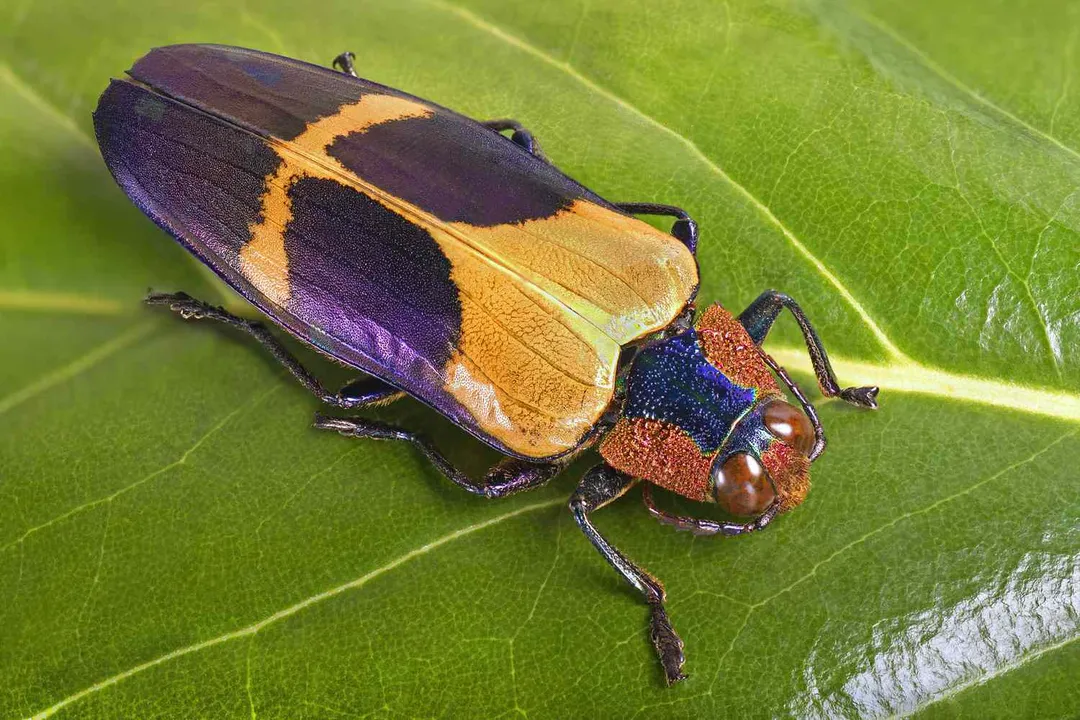
If the "most amazing fact" is interpreted as the greatest overall testament to evolutionary success, then the answer lies in their sheer abundance and ecological roles. As a collective, insects are unrivaled among terrestrial animals. They are estimated to constitute up to 90% of all animal species on Earth. The Royal Entomological Society estimates that for every human being, there are approximately 1.4 billion insects, and their combined weight is about 70 times that of all people combined.
This massive biomass is not accidental; it is the result of millions of years of successful specialization. Take, for example, the sophisticated roles they inhabit. While most caterpillars eat plants, the Ceratophaga vicinella moth caterpillar has evolved to scavenge exclusively on the tough keratin in the shells of dead gopher tortoises. Such hyper-specialization suggests a balance where every resource is accounted for, often by an insect perfectly adapted to exploit it.
# Brains and Behavior
Beyond strength and numbers, complexity in behavior offers another candidate for the most amazing fact. Many insects seem to operate on instinct alone, yet evidence points to surprising cognitive depth.
Consider the incredible process of metamorphosis in butterflies and moths. During this transformation, the larval body essentially dissolves into a nutrient-rich soup inside the pupa. Despite this radical internal reorganization, research suggests that butterflies retain memories and preferences learned when they were caterpillars. If a caterpillar developed an aversion to a certain taste, the resulting butterfly often still dislikes that taste, implying that some fundamental structures supporting learned behavior survive the chemical soup of transformation.
This cognitive flexibility is mirrored in the social insects. We know ants, termites, and bees form complex societies, but the depth of their cooperation is remarkable. Leaf-cutter ants, for instance, have been practicing fungus farming for an estimated 8 to 10 million years. They don't just bring leaves; they cultivate specific fungi for food, showing an agricultural sophistication that predates human agriculture by millions of years. Moreover, individual ants exhibit unique personalities, with some showing more leadership or timidity during colony emergencies, yet they coordinate flawlessly. It’s a society built not just on instinct, but on the interaction of distinct individuals working toward a superorganism goal.
# Sensory Wonders and Defense
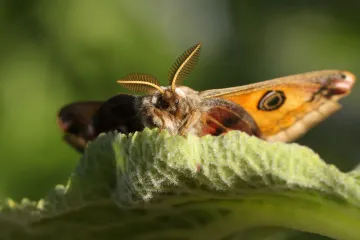
The way insects perceive the world is so alien that any single aspect could be deemed the most amazing. Butterflies and moths, for example, can often taste with their feet. When they land on a flower, specialized receptors instantly tell them if the nectar is worth the effort, saving them time and energy. In contrast, bees process visual information incredibly fast, with the fastest color vision of any animal, allowing them to spot flowers while moving at high speeds.
For defense, the adaptations are equally bizarre. Moths, often hunted by bats using echolocation, have evolved fuzzy scales that are highly effective sonar-blocking material. These scales absorb the incoming sound waves, preventing the echo that would reveal the moth’s location to the predator. This fluff is not just for looks or flight; it is sophisticated, passive stealth technology.
If you are looking for an astonishing fact that bridges capability and necessity, consider the nearly perfect predatory success of the dragonfly. While wolves secure about 20% of their attempted prey captures and lions manage about 30%, dragonflies execute successful hunts over 95% of the time. Their independent wing control, speed (up to 90 mph in some horseflies), and sophisticated compound eyes, which can have over 10,000 light sensors (ommatidia) in a single eye, combine to make them the planet's most efficient aerial predator.
# A Synthesis of Astonishment
Ultimately, the most amazing fact about insects isn't any single record—it's the combination of all these facts that defines their dominion. The dung beetle’s strength, the ancient griffenfly’s size, the caterpillar's memory, and the moth’s stealth technology are not isolated wonders; they are the solutions that allowed the insect class to dominate the terrestrial environment for over 400 million years. Their success lies in the principle of mass-market specialization. They have a small body plan that is highly efficient, allowing forces like air resistance to work in their favor (slowing falls), combined with the ability to evolve specialized solutions for virtually every ecological niche—from the wingless midge surviving on Antarctic ice to the specialized aphid concentrating its nearly tasteless food source by folding its digestive tract.
If you ever find yourself questioning the marvel of the insect world, pause and apply this practical observation: walk outside and look closely at the nearest patch of weeds or flowers. You are not looking at simple pests; you are looking at ten million different blueprints for survival, each finely tuned to its environment. To appreciate this truly, try sitting still for fifteen minutes, focusing only on a small area, perhaps a single square foot of soil or a blade of grass. You might observe evidence of life that moves slower than the human eye expects, like the Ceratophaga vicinella caterpillar’s specialized consumption or the incredible engineering of a spider’s web, which some insects are equipped to bypass using specialized scales. The sheer density of life operating by such varied, yet universally successful, rules is the most amazing fact of all. They aren't just on the planet; they are the planet's dominant form of complex, moving life.
#Videos
Most Amazing Insect Facts! | SciShow Kids Compilation - YouTube
Related Questions
#Citations
Your coolest bug facts : r/Entomology - Reddit
Facts and figures - Royal Entomological Society
Most Amazing Insect Facts! | SciShow Kids Compilation - YouTube
20 Interesting Insect Facts - Hulett Environmental Services
10 Amazing Bug Facts: Why Insects Are So Cool - Flocking Around
25 Fun Facts About Bugs and Pest Control
10 Fascinating Facts About Insects - ThoughtCo