What is the lifespan of a brown snake?
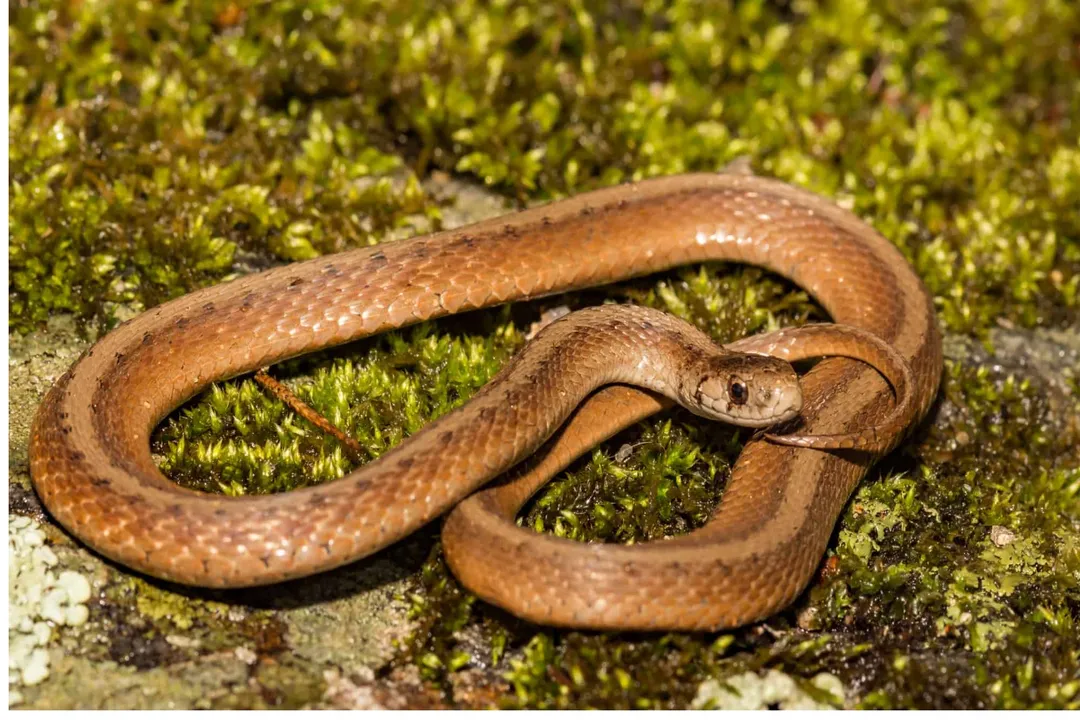
The query regarding the lifespan of a "brown snake" requires an immediate clarification, as this common name applies to at least two vastly different reptiles documented in modern herpetology: the small, secretive North American Dekay's Brown Snake (Storeria dekayi) and the highly venomous Australian Eastern Brown Snake (Pseudonaja textilis). [1][3][4][7][9] Determining how long one of these snakes lives depends entirely on which species we are observing, as their environments, biology, and documented longevity figures differ significantly.
# Small Tenant
The Dekay's Brown Snake, Storeria dekayi, is a diminutive reptile found across a wide range in North America, from southern Canada down through the eastern half of the United States and into Mexico. [4] These snakes are often beneficial to gardeners because their diet centers on slugs and earthworms, along with snails and soft-bodied insects. [2][3]
When examining the longevity of S. dekayi, the data available leans heavily on captive observations. Multiple sources report that a snake kept in captivity has lived for seven years. [4][8] One account suggests an individual captured as an adult lived for seven more years in captivity, leading to a minimum recorded age of at least nine years. [3] Another source notes that while the wild lifespan is much lower than these captive figures, the species can potentially live for more than 10 years. [3][9]
This small snake is viviparous, meaning the female retains the eggs internally and gives birth to live young between mid-July and September. [4] Litter sizes vary, ranging from as few as three to as many as 41 young, though averages often hover around 12 to 20 neonates. [3][4] The newborns are quite small, often measuring between 3.5 and 4.5 inches long. [4][8] A significant hurdle in their life path is juvenile mortality, which is noted as being high. [8]
A fascinating detail concerning the survival of this small species is its social behavior during the inactive season. Dekay's Brown Snakes frequently share hibernation spots, known as hibernacula, often found underground in anthills, rock crevices, or beneath logs. [4] This congregation with other species, such as garter snakes and red-bellied snakes, suggests that communal wintering may be a critical, perhaps necessary, mechanism for surviving periods when food resources like earthworms are inaccessible, directly influencing how many individuals manage to reach maturity and extend their lifespan potential beyond the first year. [4][9]
# Australian Giant
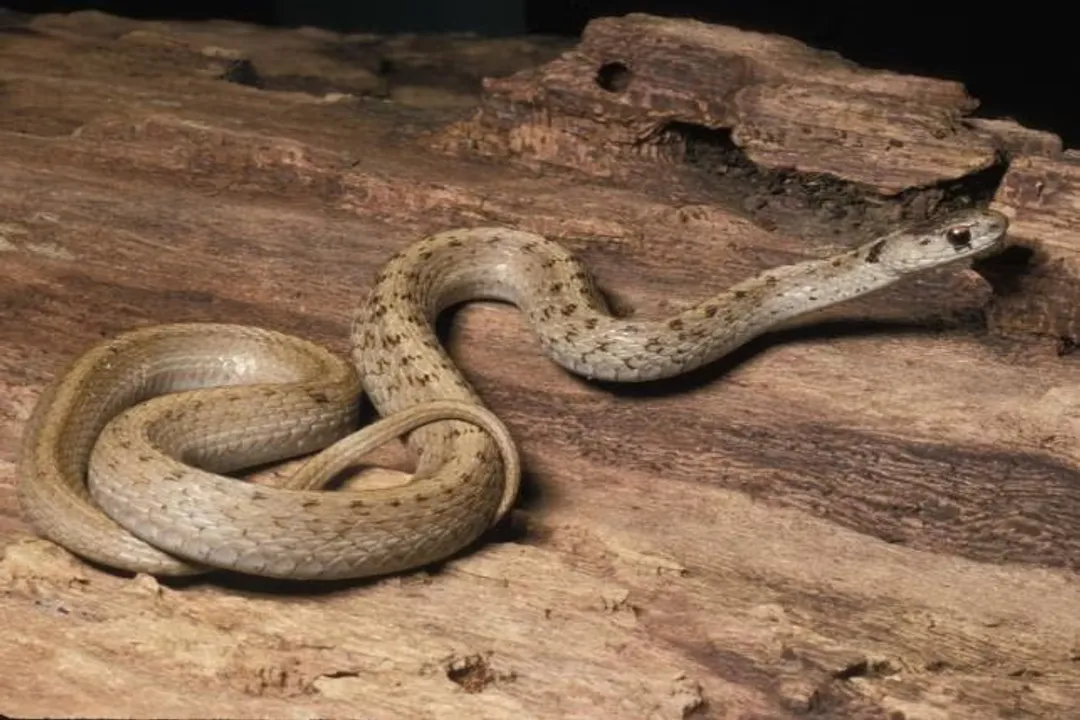
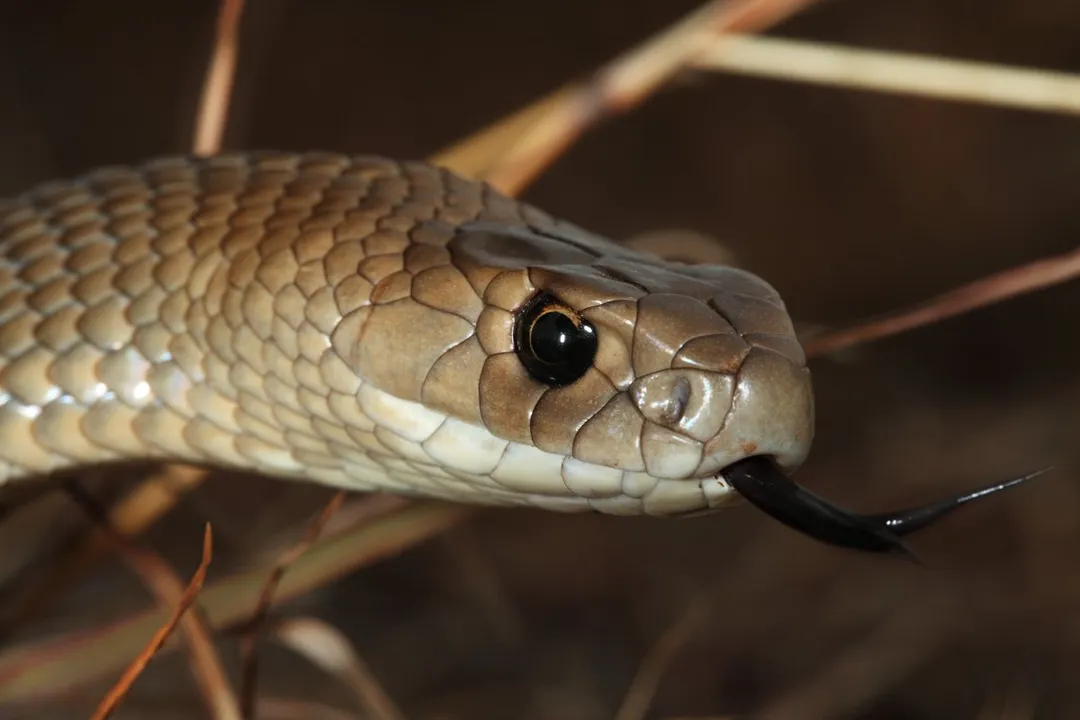
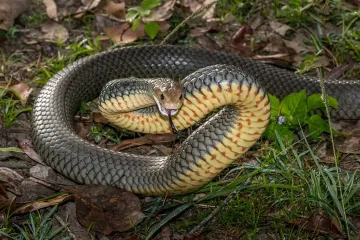
Switching continents, the Eastern Brown Snake (Pseudonaja textilis) is an imposing reptile, averaging between 1.5 to 2 meters (5 to 6.5 feet) in length. [1][6] This species, native to Australia and southern New Guinea, is not only physically impressive but medically significant; it is recognized as the world's second-most venomous land snake. [6][8]
The information concerning the lifespan of the Eastern Brown Snake presents a slight divergence in recorded data. One source indicates an average lifespan of 7 to 15 years for these snakes. [1] However, another account, while noting the potential for a long life, states the lifespan in the wild is unknown, though captive individuals have been recorded living up to seven years, suggesting they can probably live for at least a decade. [5] A third source simply lists the life span as 15 years. [7]
Eastern Brown Snakes are oviparous, laying clutches of 10 to 35 eggs in sheltered spots like abandoned rabbit warrens or under logs. [6] Hatchlings are independent immediately, and sexual maturity can be reached around 31 months of age in females under optimal conditions. [6] Their adaptability is noteworthy; they thrive in modified landscapes, including rural and suburban peripheries, where their diet of rodents like rats and mice helps control pest populations. [1][6]
# Longevity Factors
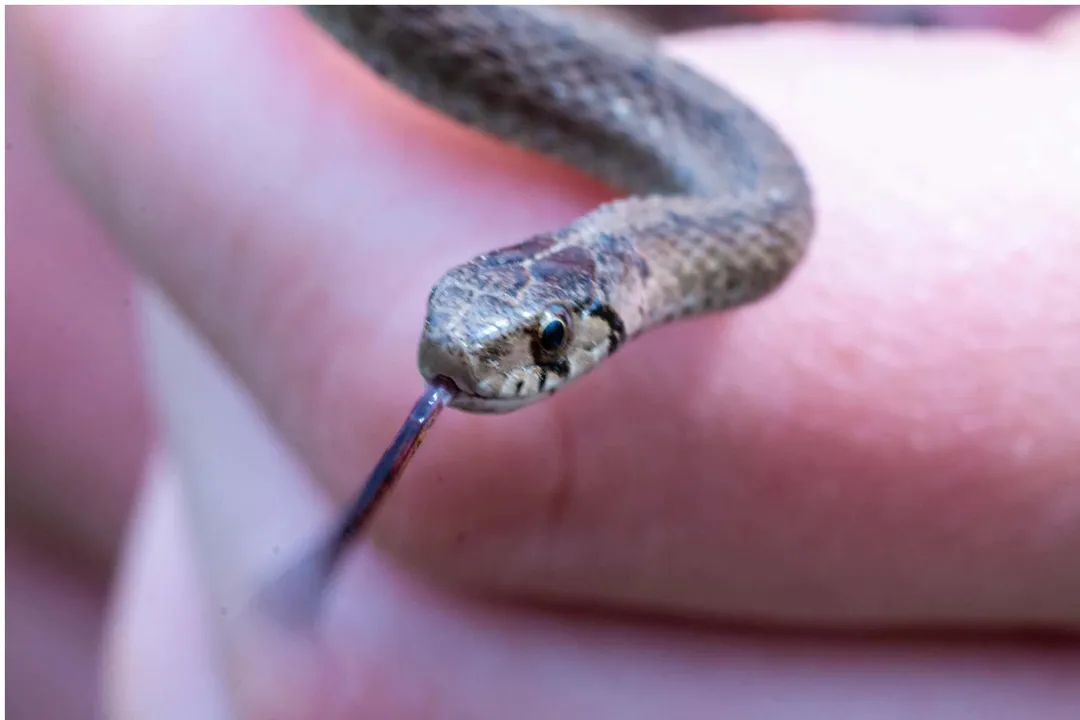
Comparing the two species reveals a stark contrast in life strategy. Storeria dekayi is an iteroparous, small, secretive predator whose primary survival threat appears to be predation by numerous larger animals due to its size. [3][4] Its lifespan is generally known only up to about seven or nine years based on captive records. Conversely, P. textilis is a large, medically significant snake whose longevity appears more limited by human interaction—being killed on sight or by vehicles—than by natural predation, despite the high potency of its venom. [3][5][8]
The data regarding P. textilis longevity requires careful interpretation. If the average wild lifespan truly is 7 to 15 years, [1] this indicates a high degree of success in surviving the risks of their environment, which includes competition, natural predators, and high heat periods that cause them to forage at dusk. [1][6] The fact that some sources claim the wild lifespan is "unknown" while simultaneously suggesting a decade or more in captivity [5] suggests that while the species has the biological potential to live long, the intense pressures of their native, populated range—where encounters with humans are frequent—likely result in a higher mortality rate than suggested by the higher average estimate. [5][8] For the Eastern Brown Snake, living to its potential seems strongly linked to avoiding human encounters, which is a constant challenge given their adaptability to agricultural and suburban fringes. [6]
# Conservation Context
The conservation status of these snakes also reflects their differing relationship with human activity, which is inherently tied to their potential lifespan. The Dekay's Brown Snake is classified as Least Concern (LC) by the IUCN and is considered Secure by NatureServe across its range. [4][9] Its success in urban and disturbed habitats contributes to this stable status. [3][4]
The Eastern Brown Snake is also listed as Least Concern (LC) on the IUCN Red List, with stable numbers. [6] Despite their general stability, they are often persecuted by landowners, even though they provide "free pest control" by preying on introduced rats and mice. [5] While the species' adaptability is a key survival trait, widespread human conflict results in many individuals being killed, artificially truncating their potential lifespan. [5][8]
# Reading Survival
Understanding the life history of either snake provides insight into its success or limitations. For the Dekay's Brown Snake, successful survival is often about being unseen. Since they spend most of their time under rocks, logs, or in burrows, a useful observation tip for someone hoping to spot one is to look right after heavy rains in the spring or fall, or during cooler parts of the day. [3][4] These are the times they move to or from their overwintering sites, making them temporarily more visible, but also more vulnerable to becoming road casualties. [3][4]
For the Eastern Brown Snake, their eyesight is a primary hunting tool, unlike many other snakes that rely more heavily on chemoreception while foraging. [6] They actively survey the landscape, often finding prey in their refuges rather than chasing them down. [6] This visual dependency, combined with their speed of up to 8 kilometers per hour, is key to subduing prey like rodents and birds, which fuels their large body size and potentially supports the upper range of their decade-plus lifespan estimate. [1][6]
In summary, while the small Dekay's Brown Snake has a confirmed captive life approaching a decade, its wild existence is likely shorter due to high infant mortality and general predation, though communal hibernation might aid survival. [3][4] The magnificent Eastern Brown Snake is believed to have a lifespan potential of 15 years or more, constrained by environmental hazards and human interference in its highly utilized Australian habitats. [1][5][8]
Related Questions
#Citations
Storeria dekayi (Brown Snake) | INFORMATION
Dekay's Brownsnake | Missouri Department of Conservation
Eastern Brown Snake - The Australian Museum
Dekay's brown snake
Eastern Brown Snake - Facts, Diet, Habitat & Pictures on ...
Kansas Herpetofaunal Atlas: Dekay's Brownsnake
Eastern Brown Snake Facts & Photos
Storeria dekayi
De Kay's Brown Snake Animal Facts - Storeria dekayi